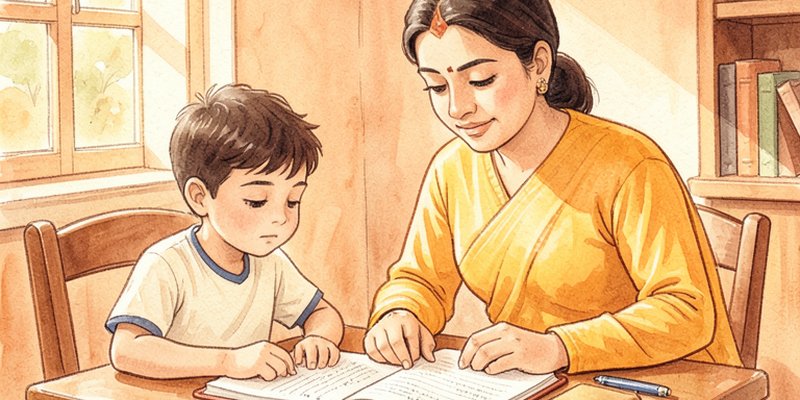
Age 6
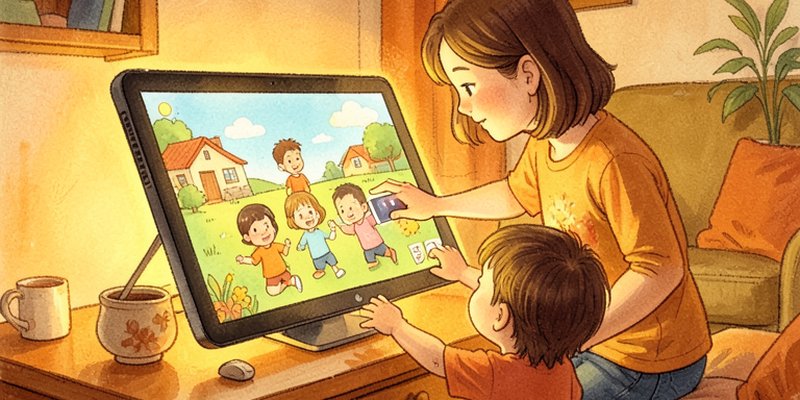
The books sit untouched on the shelf, and the screen wins every spare moment.
A Child Who Reads ·12 months ·2 – 12 years
Reading isn't lost to screens the way it looks. It's usually lost to pressure — reading turned into homework, improvement and performance. This is a slow programme on getting the pressure out of the way and letting the habit form.
Reading habits form through availability, visible adult reading, and the absence of pressure — children who are made to read for improvement tend to read less over time, not more. Letting a child choose what they read, including material adults find unimpressive, matters more than what they actually read.
Read this first
One thing this programme is not. If your child finds decoding words genuinely hard — letters that reverse, reading that stays laboured long after peers have eased into it, a visible struggle rather than a lack of interest — that is a different question from motivation, and worth raising with a paediatrician or a learning specialist. A love of reading can't be built on top of an unaddressed difficulty, and no amount of availability substitutes for the right assessment.
How this changes as they grow.
Age 6
The books sit untouched on the shelf, and the screen wins every spare moment.
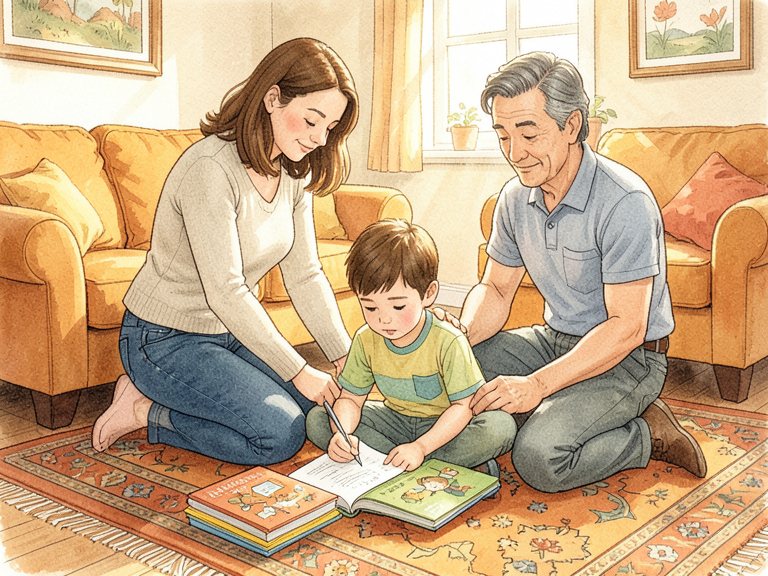
Age 9
The only reading that happens is what school has set — and it stops the instant the assignment is done.
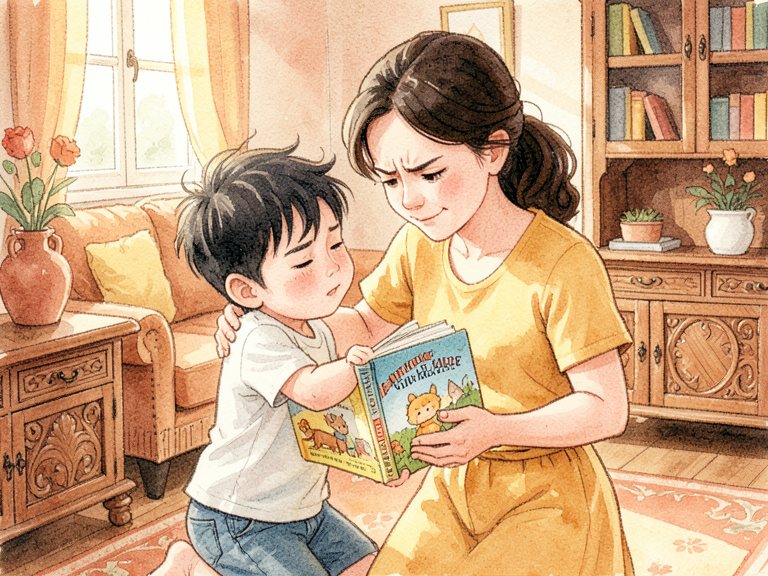
Age 12
You pushed, and it worked once, and now the book is a fight before it's even opened.
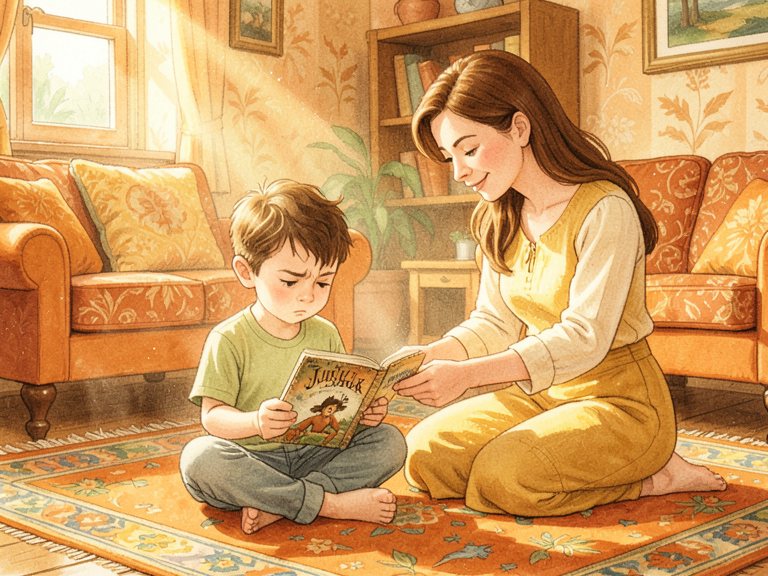
Age 14
You loved reading as a child and you can feel yourself failing to hand it down.
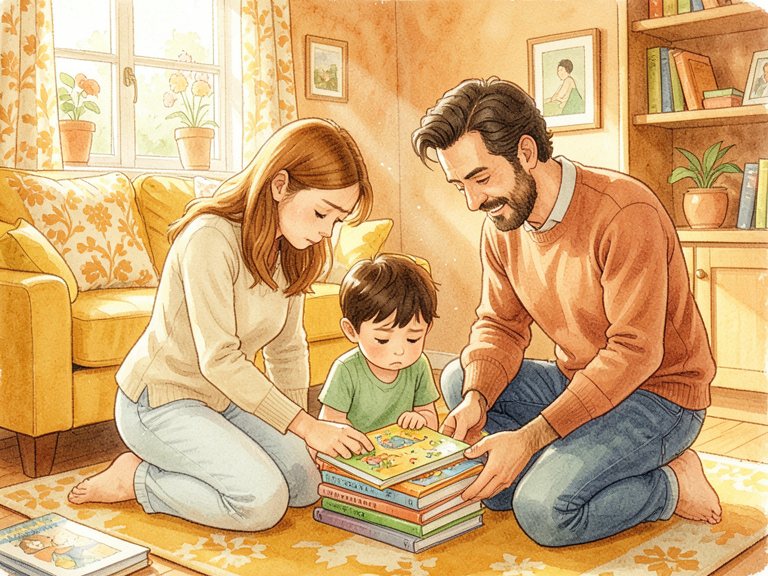
Age 16
You've bought the 'right' books, the improving ones, and they are the ones gathering dust.
Now
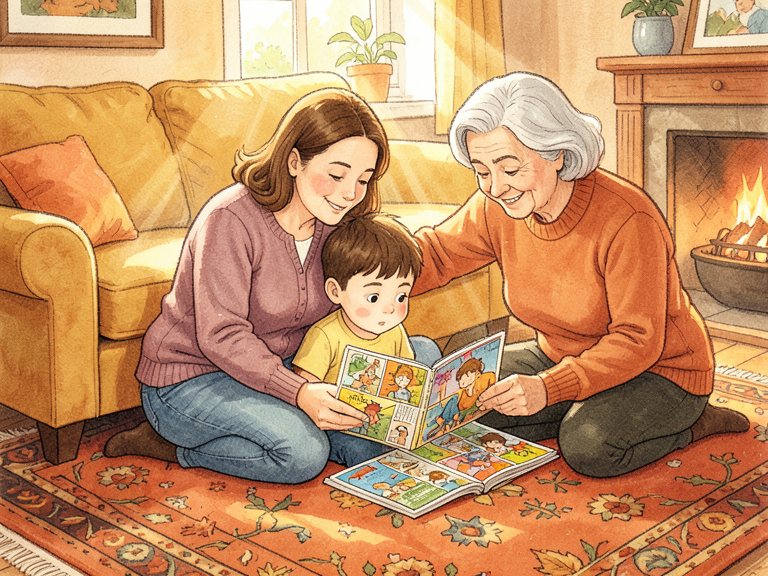
The reading that does happen is comics or the same book for the fortieth time, and you're not sure that counts.
Swipe through the day
It is easy to believe that reading has simply lost to screens — that there was a fair contest for your child's attention and the phone won. That story is comforting because it makes the loss nobody's fault.
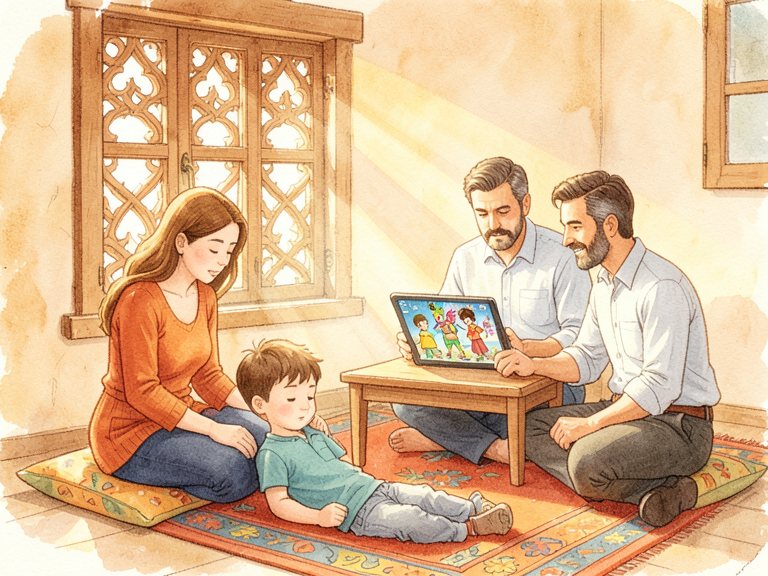
But look closely at the houses where children still read, and screens are present in most of them. The difference is rarely that those families banned the devices. It is that reading, in those houses, never turned into work.
That is the thing worth sitting with. For most children who have gone off reading, the decisive event was not the arrival of a screen. It was the moment reading stopped being something they did and became something that was being done to them — for their vocabulary, for their marks, for their improvement.
There is a particular way of caring about a child's reading that quietly destroys it.
It looks responsible. You choose books that will stretch them. You steer away from the ones that won't. You ask what they learned. You keep a gentle eye on whether the reading is the right kind, at the right level, doing the right work. Every part of it comes from love.
And the child feels all of it. They register that reading is being watched, measured, and improved — that it belongs to the same category as homework and marks. A thing that is watched and measured is a thing you can fail at, and children are extremely good at avoiding things they can fail at.
This will not turn a reluctant reader into a voracious one overnight, and any programme that promised that would be lying. What it can do is remove the specific pressure that is holding the habit down, and let it come back at its own pace — which, for reading, is the only pace that lasts.
Strip away everything and three plain conditions do most of the work.
Availability. Books within arm's reach, in the rooms where the child actually spends time — not shelved neatly in a study nobody uses. A book that has to be fetched is a book that competes badly with a screen that is already in hand.
Modelling. A child who never once sees an adult read for pleasure has been shown exactly what reading is for: it is a school thing, a children's thing, something you're made to do and then grow out of. A parent reading their own book, visibly, unbidden, teaches more than any encouragement.
Autonomy. The child chooses. Comics count. Graphic novels count. The same book for the fortieth time counts. Something well below what you know they're capable of counts. The act of reaching for a book by choice is the entire habit you are trying to build, and it does not form when the choosing is quietly overruled every time.
None of these is complicated. What makes them hard is that they require an adult to stop doing the things that feel like helping.
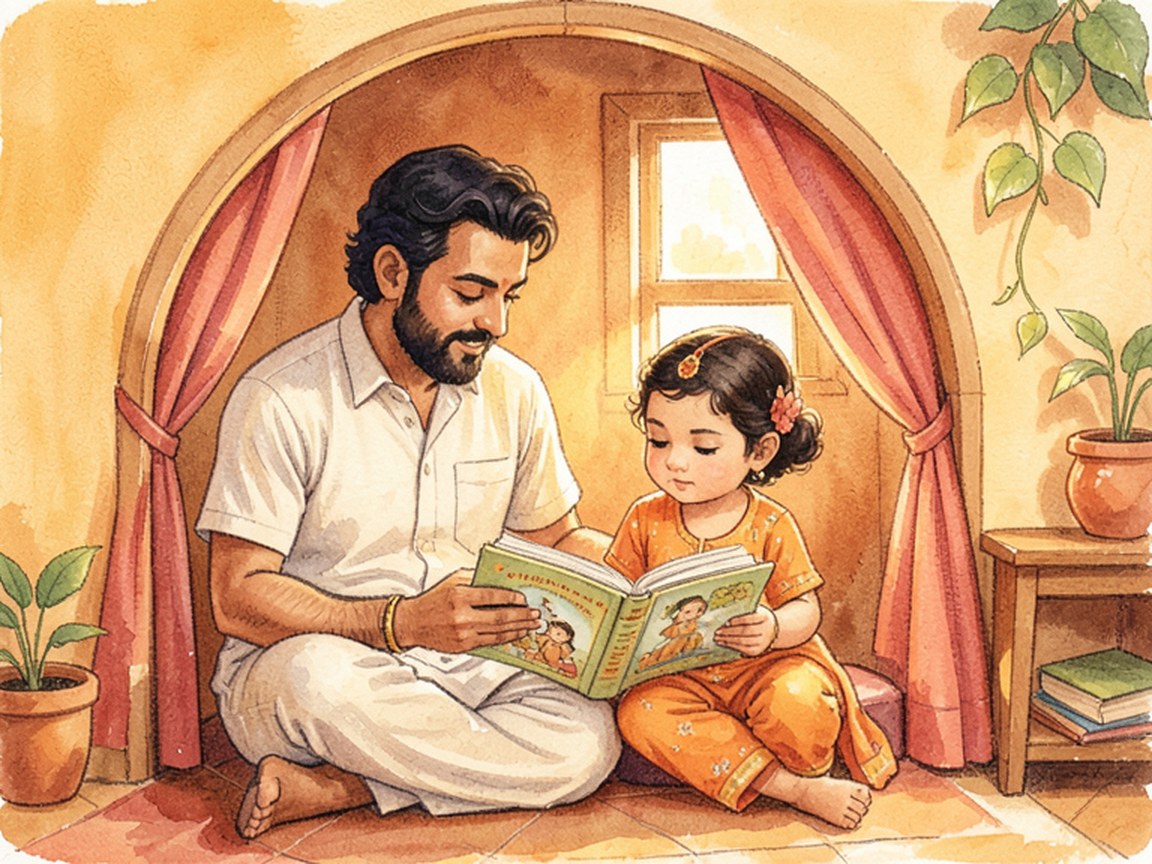
Most parents stop reading aloud around the time a child can read independently, on the reasonable assumption that the job is done.
It is worth reconsidering. Being read to is a distinct pleasure — it asks nothing of the child, carries no risk of getting it wrong, and keeps reading bound up with closeness and comfort. That matters most precisely at the age when independent reading starts to feel like effort and school has begun to claim it.
Continuing to read aloud, well past the point it seems necessary, is one of the quietest and most effective things a parent can do. It keeps a warm association alive through the years when it is most likely to cool.
There is a version of this whole question that is specific to Indian homes, and it deserves naming.
Reading here often arrives freighted with English-language pressure. Reading well in English is treated as a proxy for a bright future, and so the reading a child does gets quietly conscripted into that project — which brings back the exact improvement-pressure that kills the habit. Meanwhile the supply of genuinely appealing children's material in most Indian languages is thin, so a parent who wants their child to read in the mother tongue is often working against a real scarcity, not just a preference.
There is no clean solution to hand you, only an honest way to work with it: keep the pleasure ahead of the language question, use what is actually available to you, and resist letting reading become one more arena of competitive achievement. A child who reads happily in any language is far more likely to grow into a reader across languages than one who has been made to read anxiously in the "right" one.
None of this asks you to care less about your child's future. It asks you to trust that a child who loves reading will, over years, out-read a child who has been made to perform it — and to hold your nerve while that slow thing happens.
This week, let your child pick their own reading, and let the pick stand even when it's a comic, a joke book, or something far below what you think they're capable of. The choosing is the habit. What they choose matters far less than that they chose it.
Read something yourself, in the same room, where they can see you — not to demonstrate, just to be a person in a house where adults read. A child who never sees an adult read for pleasure has been told, without a word, what reading is for.
If you stopped reading aloud when they learned to read alone, start again. Being read to stays pleasurable long after a child can decode words themselves, and it keeps reading warm at exactly the age it usually turns into work.
That helps in the moment. Changing the pattern takes something else.
A year with the founder, spent slowly, on the one thing that no reading chart or reward system can produce — a child who picks up a book because they want to.
We start by taking the pressure off, because it is almost always the real problem. Reading turned into improvement — better vocabulary, better marks, a better child — becomes a task, and tasks get resisted. We look honestly at what reading has come to mean in your house, and begin separating it from achievement.
The two conditions that do most of the work. Books within easy reach, in the rooms where life happens, chosen with the child rather than for them. And genuine autonomy over what gets read — comics, graphic novels, re-reading the same book, the lot. We work out what your particular child actually reaches for.
Keeping reading aloud alive past the usual age, and finding an honest place for it alongside screens rather than in a losing war against them. Screens are not the enemy of reading so much as pressure is — but the balance is real, and we work on yours specifically.
Turning a season of change into something durable, so it survives exam terms and busy months. And the question most Indian families carry — English versus the mother tongue, and the thin supply of good regional-language material for children — addressed directly rather than wished away.
Small group — deliberately. Few enough that everyone is known, and no one is a spectator.
Message us to hear about dates, structure and fees for the next cohort.
Purnam is an AI-native parenting companion for modern Indian families. A structured programme, a smart companion that knows your family, and a small, honest community of parents — built to take you from surviving the day to thriving across the years.
Parenting that hasn't been handed down — for the generation that wants to parent differently than they were parented, but has no cultural template for it.
Purnam · our positioning
Purnam is built by a founding team with 18+ years across big tech, startups, and growth-stage technology companies — and, more to the point, by parents currently inside the early-childhood years themselves.
Parents to a toddler ourselves — building Purnam to help Indian families move from surviving to thriving.
Purnam's approach draws on modern developmental psychology — attachment, emotional regulation, behavioural coaching — held alongside Indian contemplative traditions as practical tools rather than belief.
We are advised by senior practitioners in human transformation and behavioural coaching. Where the evidence for something is strong, we say so. Where it is contested, we say that too.
Message us on WhatsApp about A Child Who Reads — dates, structure, fees, and whether it fits your situation.
Or just ask your actual question. That's what the line is for. Someone from the Purnam team will get back to you.
Purnam offers parenting support and education. This is not paediatric, medical, or mental-health treatment, and it is not a substitute for care from a qualified professional. Every child and family is different; nothing here is a promise of any particular outcome.