Monday
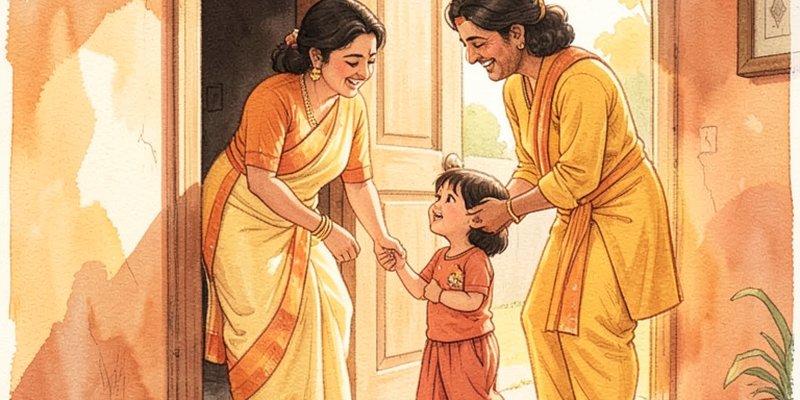
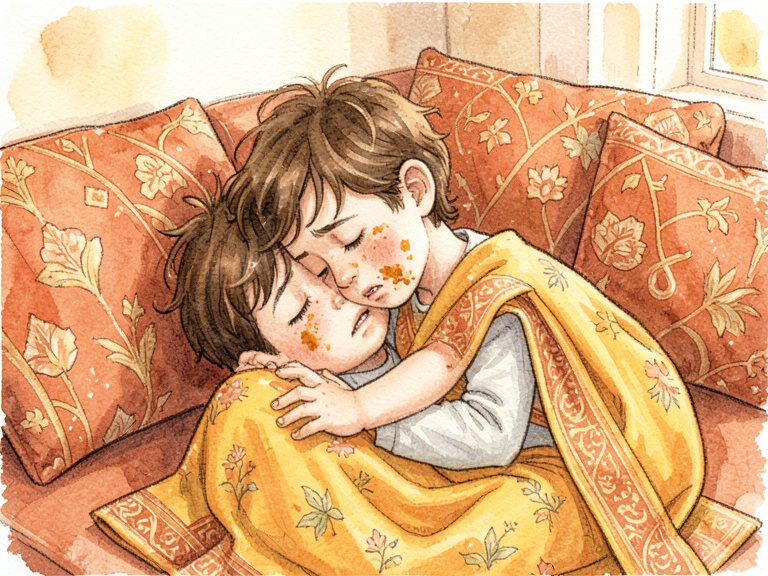
A previously settled child regresses after the move — bedwetting, baby talk, wanting to be carried.
Through the Change ·1 month ·3 – 14 years
Regression, clinginess and irritability after a relocation or a school change are how children process disruption — through behaviour, before they have the words for it. This is a focused month on reading that, protecting a few anchors, and getting your family through the change.
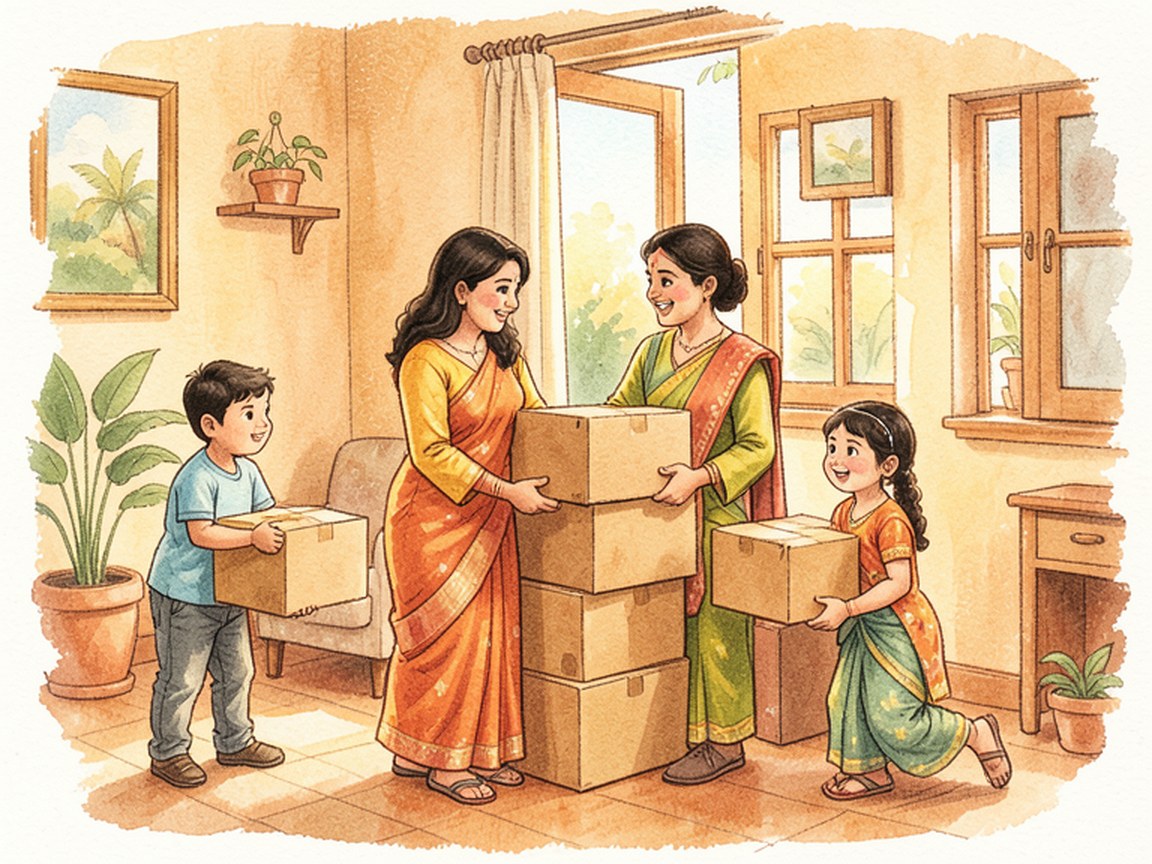
Children process disruption through behaviour before they process it through words, so regression, clinginess or irritability after a move are usually adjustment rather than a new problem. What helps most is keeping a few small routines completely unchanged while everything else shifts, and naming the loss out loud rather than rushing past it.
Read this first
When it's more than a move. Adjustment after a disruption usually eases over weeks. If it doesn't — if the withdrawal, the sleeplessness or the distress deepens instead of settling over a couple of months, or if the move sits alongside a loss or a family rupture that is its own weight — that is worth taking to a child psychologist or counsellor, not a settling-in programme. Bringing in the right help early is a sign of good parenting, not a failure of it.
One ordinary week in your house.
Monday
A previously settled child regresses after the move — bedwetting, baby talk, wanting to be carried.
Tuesday
The new school is met with a flat refusal, every morning, for weeks.
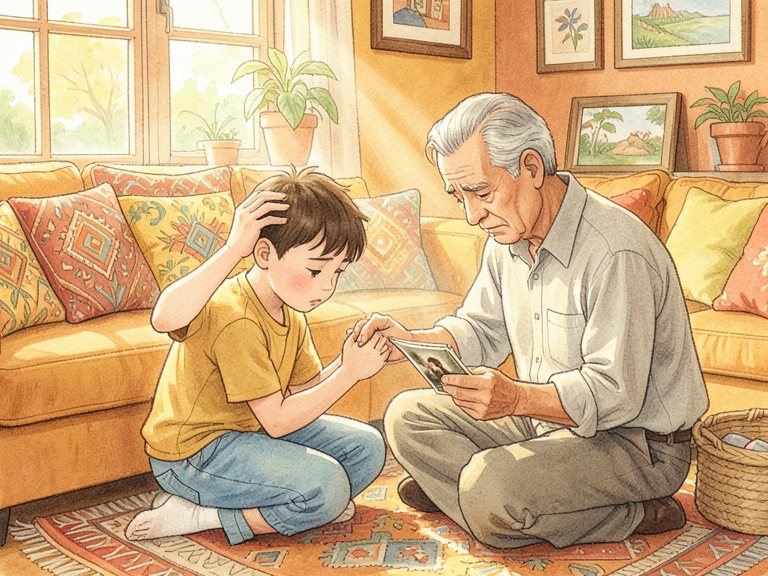
Wednesday
They miss their old friends with an intensity that surprises you.
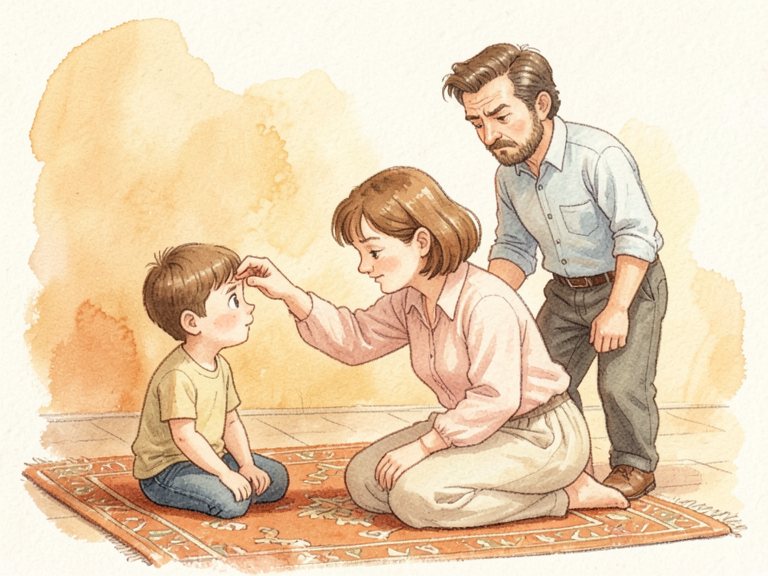
Thursday
Behaviour changes and you can't place why — nothing obvious has happened.
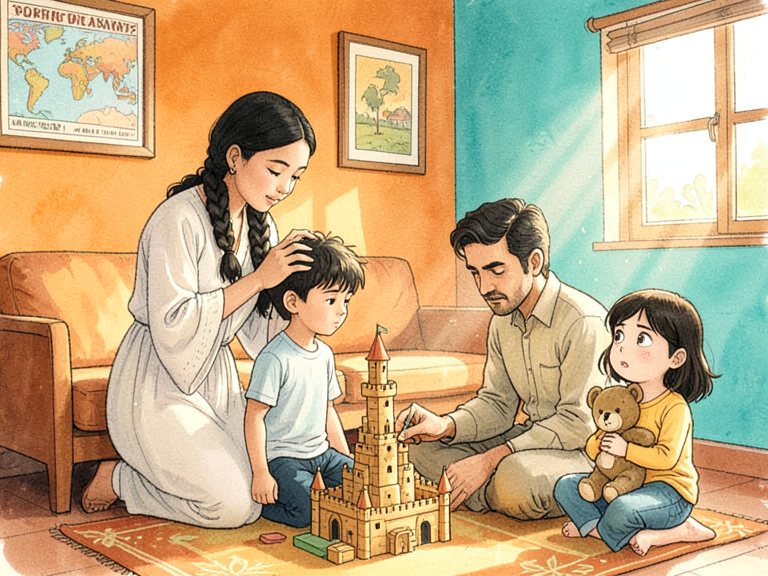
Friday
Your own stress about the move is leaking through, and you can feel it landing on them.
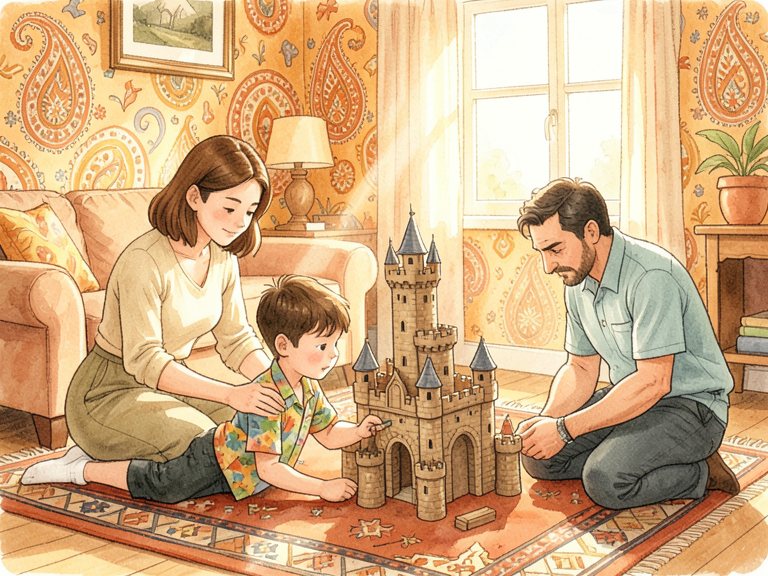
Saturday
You keep waiting for them to 'settle', and you have no idea whether the timeline is normal.
Swipe through the day
Parents are often blindsided by this. The move made sense. The new flat is bigger, the new school is better, the new city holds a better job. On paper it is all upside — and then the child who slept through the night for two years is awake at 2am, the child who was toilet-trained is having accidents, the confident one won't let go of your leg at the school gate.
It looks like something has gone wrong. Almost always, nothing has. What you are watching is a child processing a large change in the only way a child can.
Adults process disruption through words. We talk it over, we rationalise, we make lists, we tell ourselves the story of why this is good. Children — especially younger ones — don't have that machinery yet. They process through behaviour. The upheaval they can't articulate comes out as clinginess, irritability, regression, or a flat refusal to cooperate with the very thing that has changed. The behaviour is the processing. It is not a new problem layered on top of the move; it is the move, being metabolised.
Naming this correctly changes what you do next. A parent who reads regression as misbehaviour reaches for discipline, and discipline applied to grief makes everything worse. A parent who reads it as adjustment reaches instead for steadiness and patience — which is exactly what the child needs.
The instinct during a move is to change everything at once. New home, new room, new school, new routine, often a fresh start on habits you'd been meaning to fix anyway. From an adult's point of view it's efficient. From a child's point of view it is the floor dropping away.
The single most useful idea in this whole programme is the anchor. An anchor is a small routine you hold completely constant while the larger world shifts around it. The same bedtime story. The same breakfast. The same weekend call to the grandmother you've moved away from. The same soft toy, the same cup, the same song in the car.
Anchors work because they are proof. A young child can't reason their way to things will be okay, but they can feel it when the bedtime routine is identical to what it was in the old house. The message travels through the routine rather than through your words: some things still hold. You do not need many. Three, protected absolutely, do more than a dozen held loosely.
This is also where honesty about scope belongs. Protecting anchors will not make a move painless, and any programme that promised to would be lying. Children are allowed to find a big change hard, and part of the work here is letting them, rather than engineering the difficulty away.
There is a particular trap that loving parents fall into. Because the move is good news — and because seeing your child sad is painful — you find yourself talking them out of the sadness. You'll make new friends. The new school is so much nicer. You'll love it once you settle in.
Every word of that may be true, and all of it lands as a door being closed. What the child hears is that the missing isn't allowed, that they are supposed to be pleased, and that the sadness they feel is somehow wrong. So they stop showing it to you — which is not the same as not feeling it.
The more useful move is to say the true, harder thing out loud. You miss your old room. You miss Aarav and the others. This is hard, and it makes sense that you're sad. Naming a feeling accurately does more to settle it than solving it does. A child whose loss has been acknowledged can begin to move through it. A child whose loss has been overruled tends to sit in it longer, quietly.
This is doubly true in Indian families that move often — for a posting, for a promotion, for a syllabus or board change, or away from the grandparents who were half the child's world. The losses in these moves are genuine, and often go unnamed because the adults are managing losses of their own.
The new school is where the adjustment becomes most visible, because it has a daily deadline. The morning refusal is the classic form: the tears at the gate, the stomach ache that appears at 7am and vanishes by 10, the flat I'm not going.
Two instincts pull against each other here, and both are half right. One says push — hold the line, they have to go, giving in makes it worse. The other says listen — something is genuinely wrong and forcing them ignores it. The approach that actually works holds both at once: a calm, non-negotiable boundary about that they go, paired with real, unhurried curiosity about what is hard. You are going, and I will be right here at pick-up, and also, tell me what the worst part of the day is. Boundary without listening hardens the refusal. Listening without a boundary prolongs it.
Friendships are the other half. You can set up the conditions — a playdate, joining one activity, learning a couple of classmates' names — but you cannot manufacture the friendship itself, and pushing too hard reads as pressure. Much of settling in is simply time in the same room as the same children, which no parent can accelerate. What you can do is make sure the child isn't carrying the whole thing alone.
By the end of this programme you will not have a child who sailed through a move untouched — no one gets that, and it isn't the goal. What you'll have is a clear read on what you're seeing, a small set of anchors you're holding on purpose, language that lets your child's loss be real, and a realistic sense of how long the settling actually takes so you can tell ordinary wobble from something that needs more help.
Adjustment is rarely a straight line. There will be a good week followed by a bad one, a child who seems settled and then falls apart over something small. That shape is normal, and knowing it's normal is half the work — because the panic that a setback produces in a parent is itself something the child then has to weather. Steady beats perfect. In the middle of a change where so little is under your control, the calm you hold is the one anchor that matters most.
In the middle of a move, almost everything changes at once. Choose three small routines — the bedtime story, the same breakfast, a Sunday call to a grandparent — and keep them exactly the same. Not most days. Every day. The point isn't the routine itself; it's the signal that some things still hold.
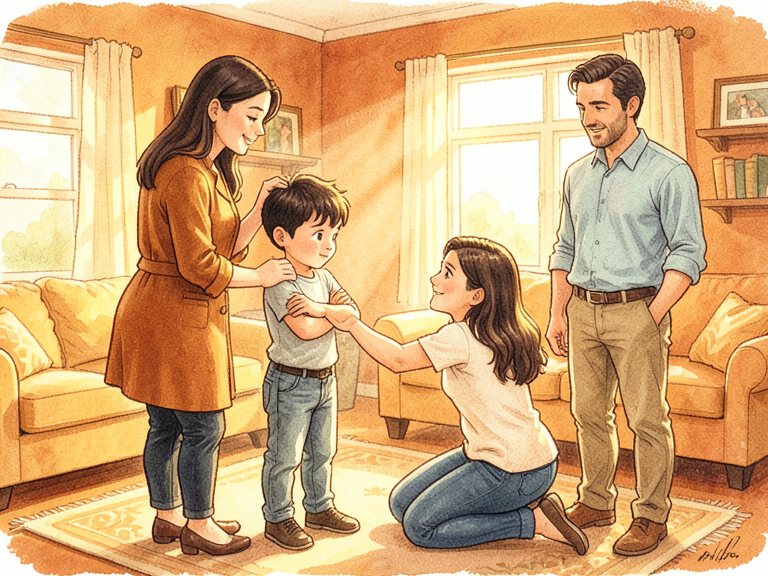
Children are often not allowed to grieve a move because the adults are framing it as good news. Say the true thing: 'You miss your old room. You miss your friends. That's real, and it's okay to be sad about it.' Naming a feeling does more to settle it than fixing it does.
The same bedsheet, the same posters on the new wall, the same cup. Continuity of small objects gives a young child something to hold onto while the larger world is unfamiliar.
That helps in the moment. Changing the pattern takes something else.
One focused month, timed around the disruption itself, on the behaviour a change produces in a child and what actually helps — from the packing to the first weeks in the new school.
Before changing anything, we build an honest reading of what you're seeing. Why behaviour is the first language of stress in children, why a settled child regresses under change, and how to tell ordinary adjustment apart from a problem that predates the move. Most parents leave this week less alarmed, because the behaviour finally has a name.
Choosing the small number of things you will hold completely constant while everything else shifts, and the language for naming the loss rather than rushing past it. We also look at the thing parents most often miss: how your own stress during a move transmits, and what to do about it, because a calm anchor is worth more than a reassuring speech.
The morning refusal, and how to hold a boundary without force. What a realistic settling-in looks like week by week, so you're not measuring against a fantasy. And how friendships actually form in a new place — what you can set up, and what you have to let happen on its own time.
Adjustment is rarely a straight line. This week is about the setbacks that look like failure but aren't, a realistic sense of how long the whole thing takes, and how to tell the difference between a child still adjusting and a child who needs more help than a move-support programme can give.
Small group — deliberately. Few enough that everyone is known, and no one is a spectator.
Message us to hear about dates, structure and fees for the next cohort.
Purnam is an AI-native parenting companion for modern Indian families. A structured programme, a smart companion that knows your family, and a small, honest community of parents — built to take you from surviving the day to thriving across the years.
Parenting that hasn't been handed down — for the generation that wants to parent differently than they were parented, but has no cultural template for it.
Purnam · our positioning
Purnam is built by a founding team with 18+ years across big tech, startups, and growth-stage technology companies — and, more to the point, by parents currently inside the early-childhood years themselves.
Parents to a toddler ourselves — building Purnam to help Indian families move from surviving to thriving.
Purnam's approach draws on modern developmental psychology — attachment, emotional regulation, behavioural coaching — held alongside Indian contemplative traditions as practical tools rather than belief.
We are advised by senior practitioners in human transformation and behavioural coaching. Where the evidence for something is strong, we say so. Where it is contested, we say that too.
Message us on WhatsApp about Through the Change — dates, structure, fees, and whether it fits your situation.
Or just ask your actual question. That's what the line is for. Someone from the Purnam team will get back to you.
Purnam offers parenting support and education. This is not paediatric, medical, or mental-health treatment, and it is not a substitute for care from a qualified professional. Every child and family is different; nothing here is a promise of any particular outcome.