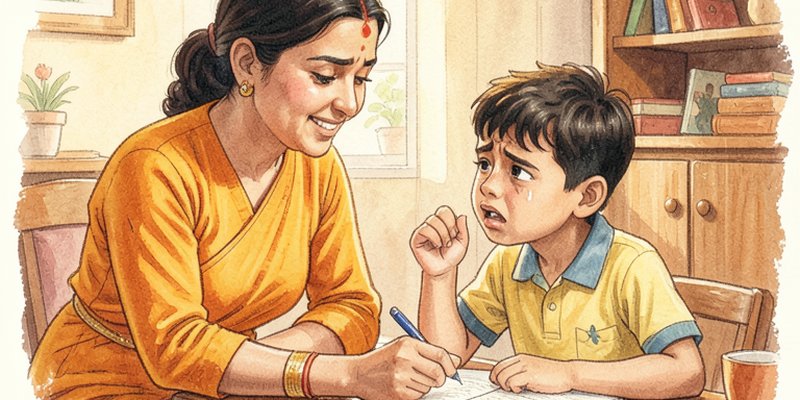
Monday
The class WhatsApp group fills with birthday photos, and your child wasn't invited.
Finding Their People ·3 months ·4 – 14 years
Watching your child be excluded is one of the sharpest feelings in parenting, and often you feel it more than they do. This is a programme about the part of it you can actually affect — and about telling the difference between a child who is struggling and a child who is simply content on their own.
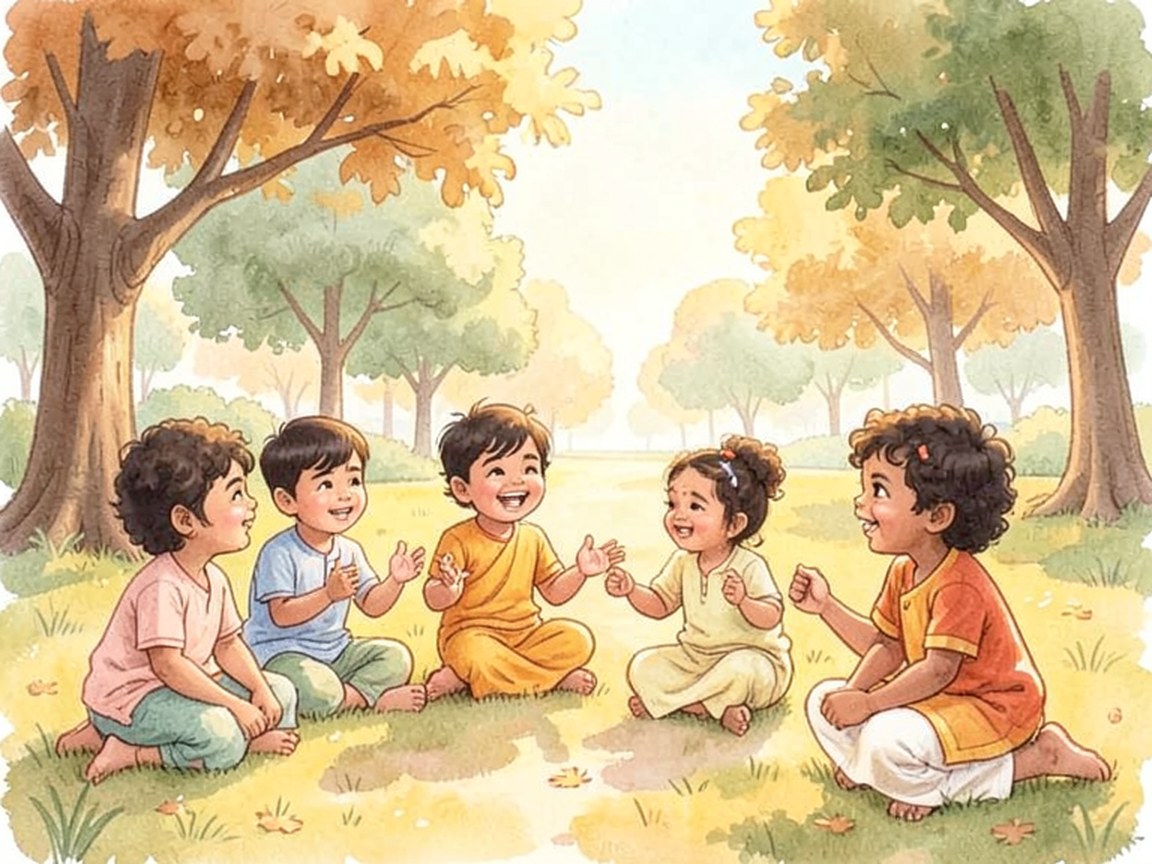
Social skill is learned through practice rather than instruction, so the most useful thing a parent can usually do is create repeated, low-stakes chances to be with other children rather than coach technique from the sidelines. It's also worth checking whether your child is genuinely unhappy — some children are content with one friend, or with none for a while.
Read this first
One line worth reading before you enrol. If your child's difficulty with other children is persistent and pervasive — present across every setting, from a very young age, and not shifting with opportunity — or if the exclusion has hardened into ongoing bullying, that is not a matter of arranging more playdates. A child psychologist or your paediatrician is the right first call, and a good one will tell you plainly whether there's anything to worry about. This programme is for the ordinary, painful, and very common territory in between.
One ordinary week in your house.
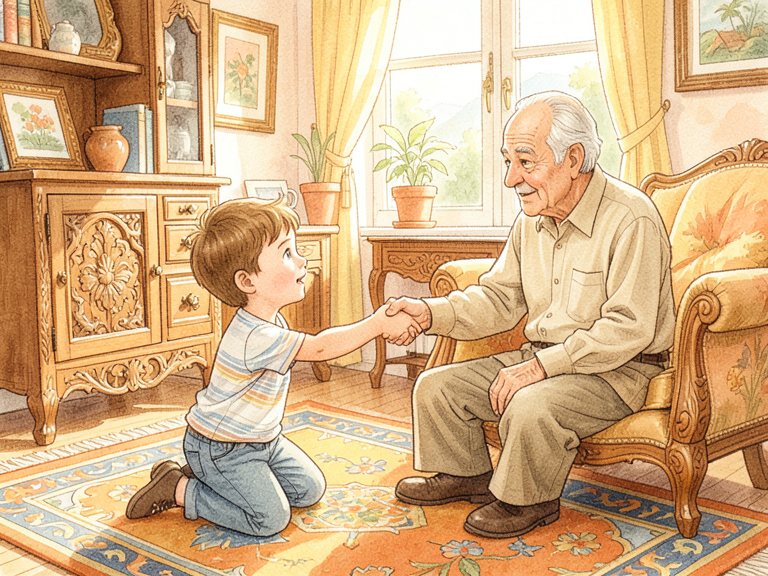
Monday
The class WhatsApp group fills with birthday photos, and your child wasn't invited.
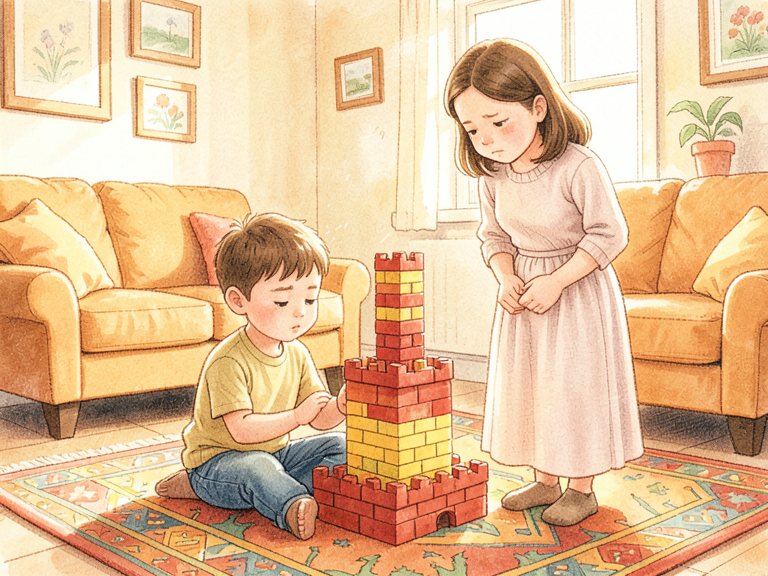
Tuesday
There's a friendship, but it's one-sided — your child does all the reaching, and waits.
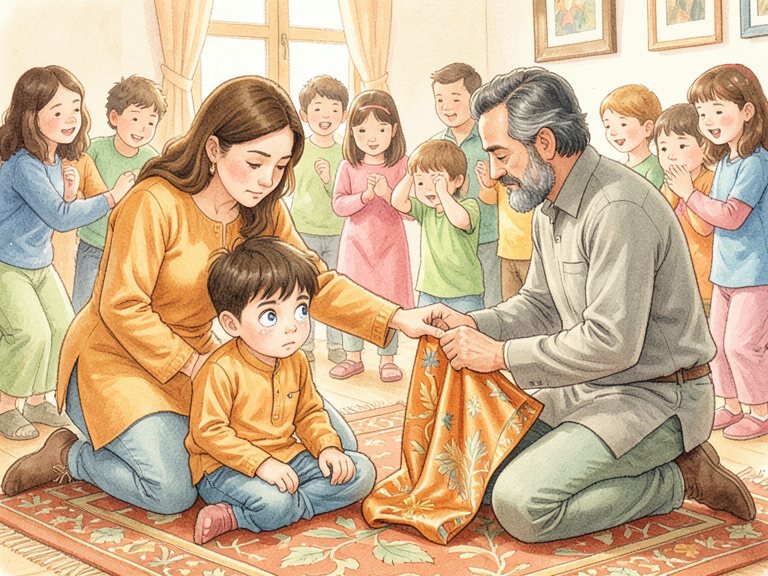
Wednesday
At pickup, your child is playing alone again, and you can't tell if they mind.
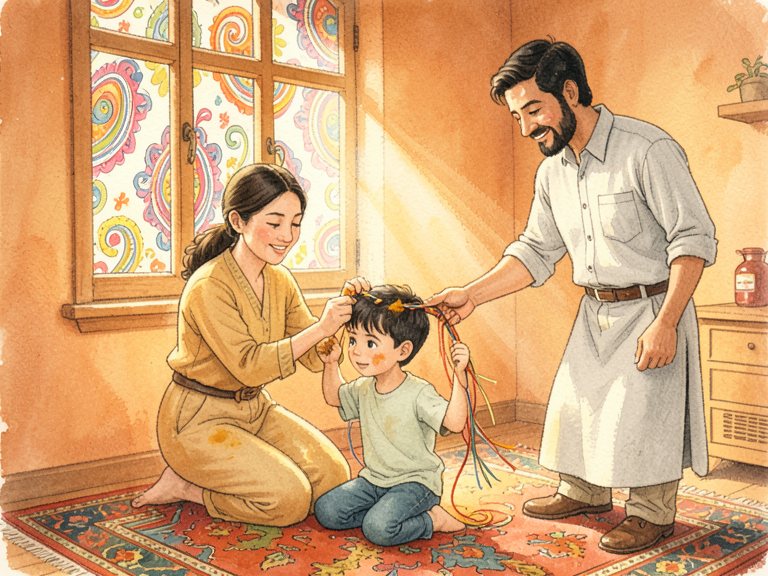
Thursday
A bright, warm child at home goes quiet and small in a class of forty.
Friday
You watch it happen and something in your own childhood rises up that you thought you'd left behind.
Swipe through the day
There is a specific helplessness in watching your child stand at the edge of a group. You can see the opening they're not taking, the game they're not asked into, the birthday they weren't called for. And you can do almost nothing about it in the moment, which is unbearable in a way that surprises most parents.
So it's worth being honest at the start about where your influence actually lies. You cannot make another child like yours. You cannot install social ease from outside, and you cannot coach it into being through instruction at the dinner table — "just go and say hello" has never once worked on a child who was afraid to. What you can do is shape the conditions. You can arrange the settings, choose their frequency, and then, hardest of all, step back and let something happen that you are not managing.
This programme is about that narrow, real band of influence, and about not exhausting yourself on the parts outside it.
Social skill is not knowledge. It is not a set of rules a child can be told and then apply. It is a physical, practised thing — reading a face, judging a moment, recovering from a small rejection — and like anything practised, it is learned by doing it repeatedly in conditions where the stakes are low enough to survive getting it wrong.
This is why coaching from the sideline does so little. A child who is told to be more confident learns that they are currently not confident enough, which is not information they can use. What they need instead is volume: many ordinary, un-momentous chances to be around one or two other children, often enough that the interaction stops being an event.
The most powerful move available to a parent is therefore also the least dramatic. It is the standing arrangement — the same child, the same time, week after week — that turns a stranger into a familiar face and a familiar face, eventually and on its own schedule, into a friend. One reliable repeated meetup will do more than a dozen large, bright, one-off parties, because a party asks a child to perform and a routine only asks them to show up.
Before you set out to solve your child's social life, it is worth asking whether there is a problem to solve. This sounds obvious and is constantly skipped.
A quiet child and a lonely child can be indistinguishable from the outside. Both may sit at the edge, speak little, and play alone. But one of them is content — recharging, observing, genuinely uninterested in the noise of a large group — and the other wants in and can't find the door. Treat the first like the second and you teach a perfectly happy child that there is something wrong with how they are.
The distinction lives in how your child feels, not in how much they socialise, and reading it takes attention rather than measurement. Ask what they like about their day. Notice whether solitude looks like ease or like ache. A child with one good friend and no wish for more is not behind; they have found what they needed at the size they needed it. Meanwhile, some of what a parent reads as their child's loneliness is in fact their own — a memory of a playground, an old exclusion, rising up and attaching itself to a child who may be fine. That is worth knowing about yourself, because it changes what you do next.
To be clear about scope: this will not turn a shy child into an outgoing one, and any programme that promised to would be lying — and would also be aiming at the wrong target. The goal is not a different child. It is a child who has room to become whoever they are, and a parent who can tell contentment from struggle.
Some of what makes friendship hard here is not about your child at all. It is about the shape of the day.
A class of forty gives a slow-to-warm child very little quiet water to test. Unstructured play — the natural laboratory of childhood friendship — has been steadily squeezed out by tuitions, classes, and the sense that an idle afternoon is a wasted one. Two children who might have become close never get an unsupervised hour to find out. And the social world of an apartment complex has its own weather: cliques among the parents that shape the children's, a downstairs park that is either everything or nothing depending on who is in it.
None of this is your fault, and most of it is not fully in your control. But naming it matters, because it moves the problem off your child's shoulders. If the afternoons are too full for anyone to just be with a friend, that is a scheduling question, and scheduling is one of the few things a parent can genuinely change. Sometimes the most useful social intervention is a cleared Saturday.
Most of what worries parents about their children's friendships is ordinary — painful, but ordinary, and it moves with time and opportunity. Some of it is not, and telling the two apart is part of the work.
The signals that something needs more than a programme: difficulty that shows up in every setting rather than one, that has been there from very early and doesn't shift when you change the conditions, or exclusion that has stopped being occasional and become targeted, repeated, and aimed. That last one has a name — bullying — and it does not respond to a better playdate strategy. It needs the school, it needs a clear account of what is happening, and where warranted it needs people whose job this is.
Knowing where that line sits is its own relief. It lets you throw your full weight at the ordinary problems, which usually yield, and it stops you from trying to fix, alone and over twelve weeks, something that was never going to yield to a parent working quietly at home. Either way, you come out knowing which kind of situation you're in — and that clarity, more than any single technique, is what lowers the fear.
Not a party, not a group. One other child, the same child, on a regular basis — a walk to the park, a standing Saturday hour. Friendship is built through repetition and low stakes, and a crowd offers neither.
Ask, plainly and without alarm, what they like about their day and who they like being near. Then listen for the answer rather than the one you're bracing for. A child with one good friend and no interest in more is not a problem to be solved.
That helps in the moment. Changing the pattern takes something else.
Three months on the one part of your child's social life you can actually shape — the opportunities — and on learning to read whether there's a problem to solve at all.
Before doing anything, we separate your child's real need from your worry about it. Temperament, age, and what a given child is genuinely reaching for. Most parents leave this phase having revised at least one assumption about whether there's anything to fix.
A quiet child and a lonely child can look identical from the outside and need opposite things. We work on how to read the difference in your own child, and on why 'push them to be more outgoing' is often the wrong instinct applied to the wrong problem.
The practical core. Building the repeated, low-stakes settings where social skill is actually learned — around large class sizes, packed tuition schedules, and the particular social world of an apartment complex. Less advice-giving, more arranging the conditions and stepping back.
Where ordinary being-left-out shades into something that needs a different response — sustained exclusion, one-sided dynamics, and the line at which it becomes bullying. We work on when to stay out of it, when to speak to a school, and when the right move is a qualified professional rather than a parenting programme.
Small group — deliberately. Few enough that everyone is known, and no one is a spectator.
Message us to hear about dates, structure and fees for the next cohort.
Purnam is an AI-native parenting companion for modern Indian families. A structured programme, a smart companion that knows your family, and a small, honest community of parents — built to take you from surviving the day to thriving across the years.
Parenting that hasn't been handed down — for the generation that wants to parent differently than they were parented, but has no cultural template for it.
Purnam · our positioning
Purnam is built by a founding team with 18+ years across big tech, startups, and growth-stage technology companies — and, more to the point, by parents currently inside the early-childhood years themselves.
Parents to a toddler ourselves — building Purnam to help Indian families move from surviving to thriving.
Purnam's approach draws on modern developmental psychology — attachment, emotional regulation, behavioural coaching — held alongside Indian contemplative traditions as practical tools rather than belief.
We are advised by senior practitioners in human transformation and behavioural coaching. Where the evidence for something is strong, we say so. Where it is contested, we say that too.
Message us on WhatsApp about Finding Their People — dates, structure, fees, and whether it fits your situation.
Or just ask your actual question. That's what the line is for. Someone from the Purnam team will get back to you.
Purnam offers parenting support and education. This is not paediatric, medical, or mental-health treatment, and it is not a substitute for care from a qualified professional. Every child and family is different; nothing here is a promise of any particular outcome.