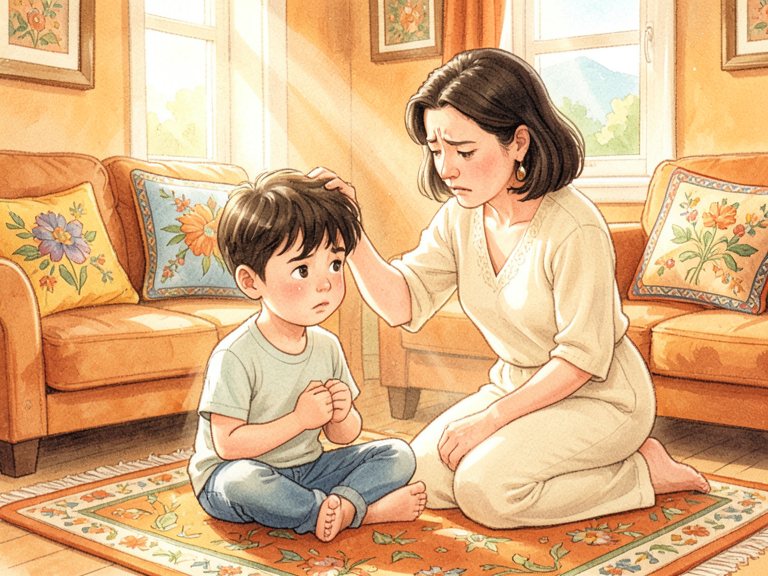
Week 1
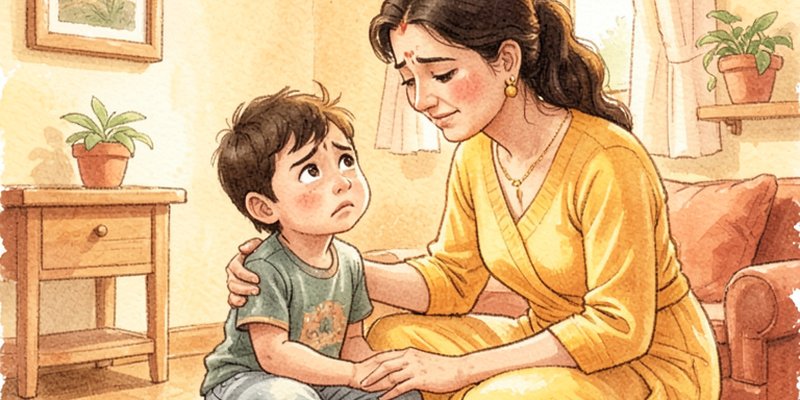
Your child suddenly doesn't want to go to school, and won't say why.
When It's Happening at School ·3 months ·5 – 14 years
Bullying rarely stops through the school alone, or through coaching your child alone. This is a programme on doing both, in the right order — safety first, then the skills your child gets to keep. It holds for the harder case too: the one where your child is the one causing harm.
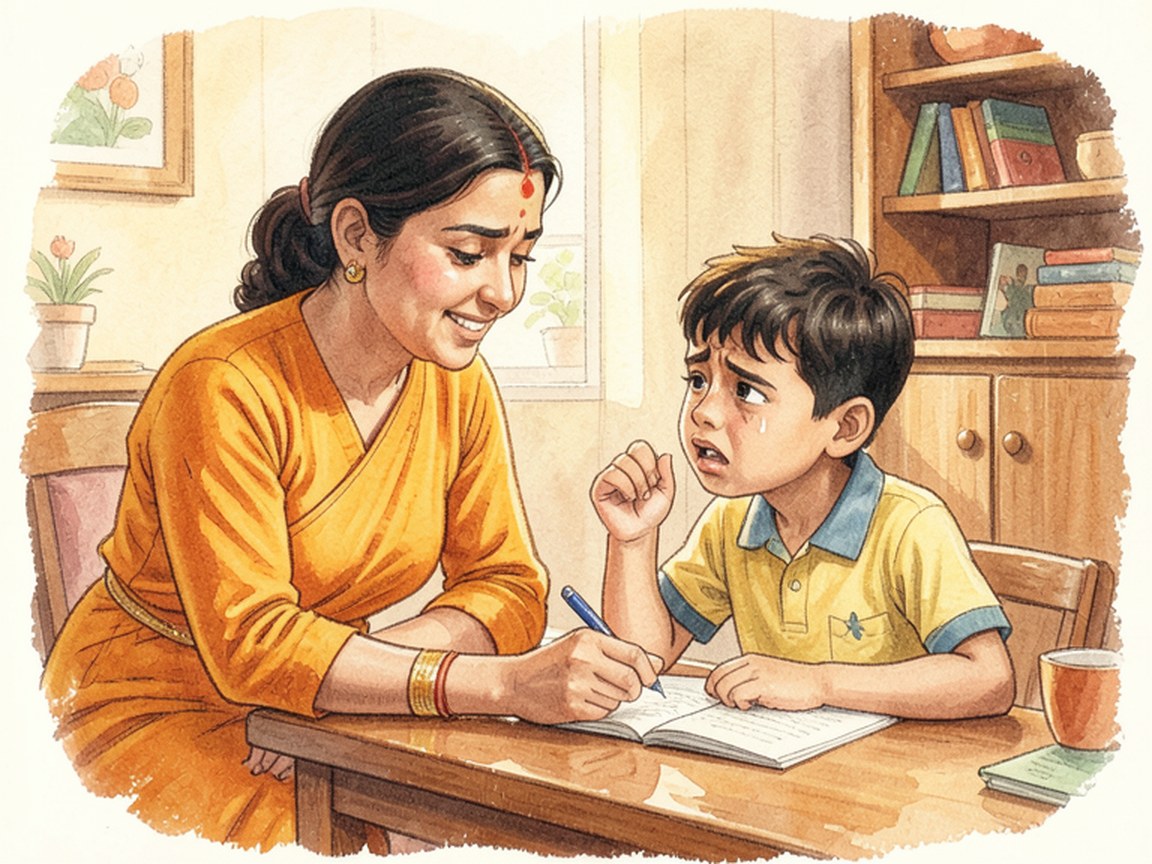
Most bullying stops through a combination of adult action and child capability — not one alone. Going only to the school can leave a child feeling powerless, while coaching only the child leaves them carrying an adult-sized problem. What works is usually both, in that order of urgency: safety first, then skills.
Read this first
Some situations are not a coaching problem, and this is the most important line on the page. If there is physical assault, a threat of violence, or anything involving self-harm, that is not something to work on over three months. It is an immediate matter for the school, and where warranted, the police. Act on it now, directly. A programme is for the long work of reading a situation and building your child's footing — not for a child who is in danger today.
One term, from the inside.
Week 1
Your child suddenly doesn't want to go to school, and won't say why.

Week 4
You discover it has been going on for months — and you had no idea.
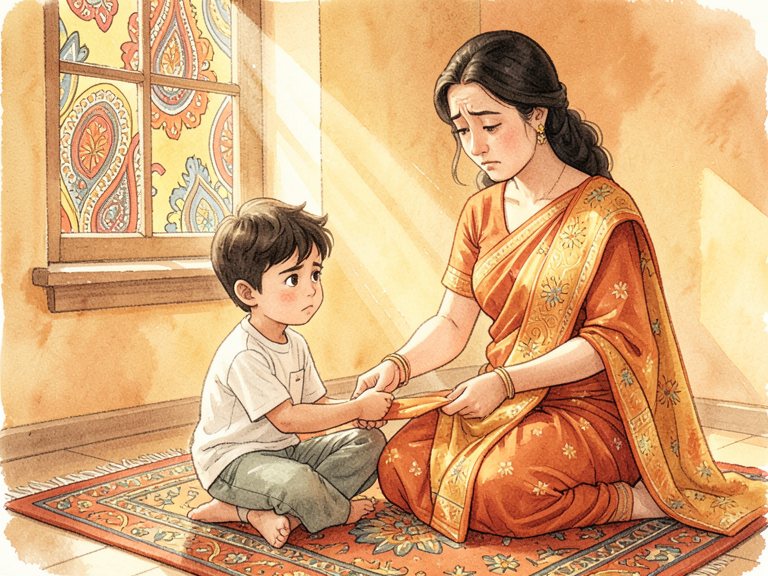
Mid-term
The school tells you it's 'normal friction between children' and offers nothing more.
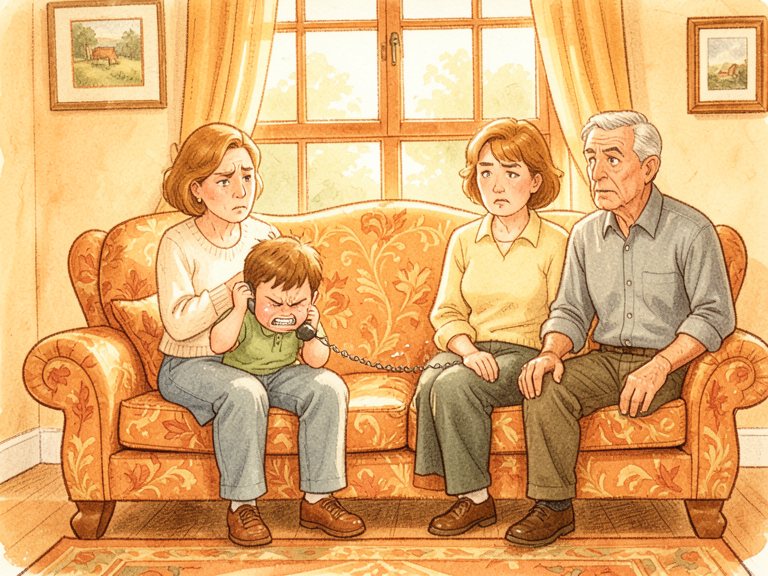
Week 9
The unbearable phone call: your child is the one doing it.
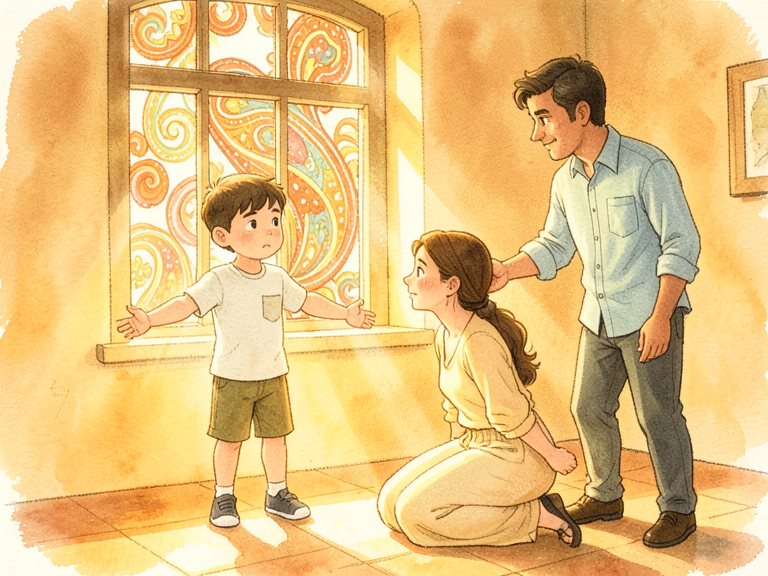
Exams
You don't know whether to teach them to hit back — the advice your own parents gave freely.
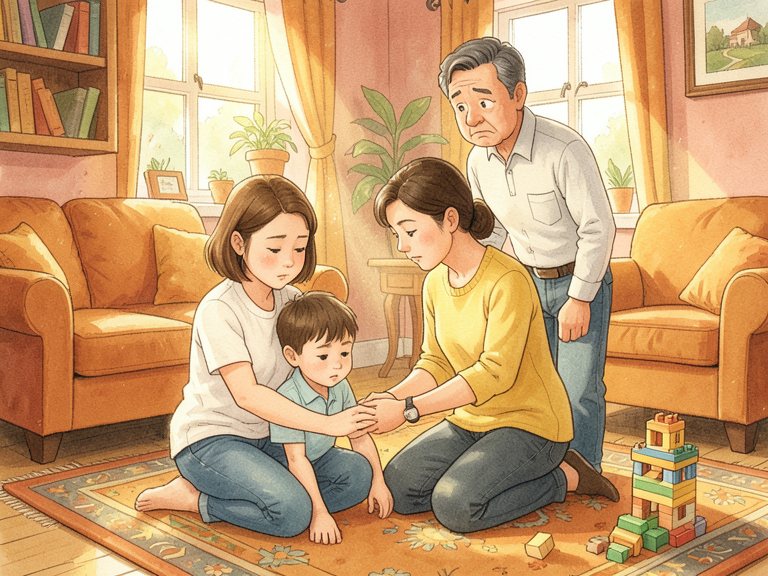
After
It's exclusion, not aggression — the kind of thing schools rarely treat as bullying at all.
Swipe through the day
When you learn your child is being hurt at school, there are two instincts, and most parents feel both at once. The first is to go straight to the school and demand it stop. The second is to sit your child down and teach them how to handle it.
Each is right, and each on its own tends to fail.
Go only to the school and you may get the immediate behaviour to pause — but your child learns that when something goes wrong, the answer is for an adult to descend from above and fix it. They come away safer, and also more powerless. The next time something happens, and there is always a next time, they have nothing of their own to draw on.
Coach only the child and you do the opposite harm. You hand a nine-year-old an adult-sized problem and ask them to solve it with a few phrases and some resolve. If there is a genuine power imbalance — and that is what separates bullying from an ordinary falling-out — no amount of clever language closes it. You have asked a child to fight a fight that needed an adult in it.
The approach that actually works uses both, in a deliberate order. Safety first: the adult action that stops harm now. Then skills: the slower building of your child's own footing, so that they are not left dependent on you being in the room. Getting the order right is most of the work.
This will not make your child bully-proof, and any programme that promised to would be lying. Childhood is social, and social life has friction in it. What changes is that you stop guessing — you know what you're looking at, you know what to do about it, and your child has more to draw on than they did.
A great deal of bad advice comes from treating these three as one.
Conflict is two children, roughly matched, who disagree, argue, and often repair. It is uncomfortable to watch and easy to over-read, but it is also how children learn to negotiate, tolerate frustration, and recover a friendship. A parent who charges in to resolve every conflict robs a child of the practice. Most of what worries us is this.
Bullying is different in kind, not degree. It is repeated, it is one-sided, and there is a power imbalance — in size, in numbers, in status — that means the targeted child cannot end it alone. That last part is the test. If your child could reasonably stop it themselves, it probably isn't bullying yet. When they can't, adult action is not optional.
Exclusion is the one schools most often miss, because nothing is technically happening. No one is hit; no one is called a name a teacher would overhear. A child is simply, systematically, left out — not invited, not picked, not spoken to. It can hurt as much as anything with a bruise, and because it is invisible and deniable, it is the hardest to raise. Naming it as a real form of harm, rather than dismissing it as your child being "too sensitive," is often the first useful thing a parent can do.
The reason to be precise about which one you are facing is simple: the response is different for each. Escalating a conflict damages your child's social learning. Coaching your way through genuine bullying leaves them exposed. The first module of the programme is entirely about reading this accurately, because everything downstream depends on it.
Most parents leave the school more frustrated than they arrived, and it is usually not because the school doesn't care. It is because they were handed something they couldn't act on.
"My child is being bullied" is a feeling. It is easy to meet with reassurance — "we'll keep an eye out," "children can be cruel, it usually passes." What moves a school is specificity: dates, names, what was said or done, who saw it, and a clear request. Not "please do something," but "I'd like to know what the plan is, and when we'll speak again to see if it's working."
This is why the writing-it-down habit matters so much, and why we start it early. Three dated, specific incidents and a concrete ask are an entirely different conversation from a worried parent with a general fear.
There is an Indian layer here that is worth saying plainly. The relationship between parents and schools in India often carries a deference that can make escalation feel almost transgressive — as though pushing marks you as a difficult parent. Some of that caution is wise; a school is a long relationship and you don't want to burn it on the first call. But some of it leaves children unprotected. We work on the middle path: firm, documented, persistent, and unfailingly civil — the parent a school cannot dismiss and cannot easily resent.
We also name the specific forms this takes in Indian schools that tend to get normalised: academic ranking used as a weapon, hierarchy and seniority as cover for cruelty, and the caste, colour, body, and language-based exclusion that is so often reframed as harmless teasing. Calling these what they are, to the right person, in the right way, is part of the work.
Almost no one writes about this, which is strange, because for every child being bullied there is at least one doing the bullying — and that child has parents too.
If you have had the phone call, you know the particular vertigo of it. The instinct is shame, and close behind it, the urge to come down hard so that no one can say you did nothing. Both are understandable. Both, on their own, tend to make things worse.
Here is the reframe the programme is built around: a child who hurts other children is almost always telling you something about their own experience. They may be copying what happens to them somewhere — an older sibling, a screen, a classroom, sometimes a home. They may be managing feelings they have no other outlet for. They may have discovered that power feels good when everything else feels out of control. None of this excuses the behaviour, and none of it means you skip the consequence. But it tells you where to aim.
The trap is shame. A child who feels they have become a bad person, in your eyes, does not stop — they hide. The behaviour goes underground, where you can no longer see it or shape it. What works instead is the harder combination: a clear, held line about what is not acceptable, sitting alongside genuine curiosity about what is driving it. Consequence and connection at once. It is difficult to hold both, and it is precisely the thing we practise.
If this is your situation, the most important thing to hear is that it is workable, and that you are not the failure you may feel like today. The children who cause harm are not a separate species from the children who are harmed. Often they are closer than anyone is comfortable admitting.
By the end you will not have a promise that nothing will ever go wrong, because no honest person can offer one about a child's social world. What you will have is the thing that has been missing: a way to think clearly about a situation that has probably had you swinging between fury and helplessness.
You will be able to tell bullying from conflict from exclusion, and you will know that each asks something different of you. You will have a documented, specific way of working with the school that is hard to wave away — and a sense of when to escalate and how far. You will have language and options to hand your child, so they are not left carrying this alone. And if your own child is the one causing harm, you will have a way through that neither ignores it nor buries it in shame.
Most of all, you will stop guessing. For a problem this frightening, that turns out to be a great deal.
Don't lead with 'Is someone bullying you?' — it invites a no. Try a sideways opening instead: who they sat with at lunch, who they'd pick for a team, who's kind and who isn't in their class. You're looking for the shape of their social world, not a confession.
The moment you suspect something, keep a dated note: what happened, who was there, what your child said, what the school said. Not to build a case in anger — to be specific later, because 'my child is being bullied' moves a school far less than three dated incidents do.
The instinct is to punish, and shame is the fastest thing to reach for. But a child who hurts others is usually telling you something about their own experience. Before the consequence — and there should be one — ask what was happening for them. What you learn changes what you do.
That helps in the moment. Changing the pattern takes something else.
Three months on one of the most urgent and least-served problems in Indian parenting — with a whole module on the case almost nobody will talk about: what to do when your child is the one doing the hurting.
Bullying, ordinary conflict, and exclusion are three different things, and the distinction decides everything that follows. We work on reading your child's situation accurately — repeated versus one-off, a power imbalance versus a fair fight, aggression versus the quieter cruelty of being left out. Most parents arrive certain of the label and leave with a truer one.
How to raise this so it lands as a problem to be solved rather than an accusation to be defended against. Documentation, specificity, and a clear escalation path — from class teacher to coordinator to head. We work directly on the school-authority dynamic in India, where parents so often feel they cannot push, and on what to do when the first answer is 'children will be children.'
The half that outlasts the incident. Language your child can use in the moment, ways to read who is safe, how to recruit a bystander, and how to rebuild social confidence that a season of this tends to erode. This is not about toughening them up — it's about handing them options they didn't have.
The case almost nothing covers, and the reason many parents come. What aggression usually signals about a child's own experience rather than their character. How to respond firmly without the shame that drives it underground — and how to hold a real consequence and real curiosity at the same time. If this is your situation, you are not alone in it, and it is workable.
Small group — deliberately. Few enough that everyone is known, and no one is a spectator.
Message us to hear about dates, structure and fees for the next cohort.
Purnam is an AI-native parenting companion for modern Indian families. A structured programme, a smart companion that knows your family, and a small, honest community of parents — built to take you from surviving the day to thriving across the years.
Parenting that hasn't been handed down — for the generation that wants to parent differently than they were parented, but has no cultural template for it.
Purnam · our positioning
Purnam is built by a founding team with 18+ years across big tech, startups, and growth-stage technology companies — and, more to the point, by parents currently inside the early-childhood years themselves.
Parents to a toddler ourselves — building Purnam to help Indian families move from surviving to thriving.
Purnam's approach draws on modern developmental psychology — attachment, emotional regulation, behavioural coaching — held alongside Indian contemplative traditions as practical tools rather than belief.
We are advised by senior practitioners in human transformation and behavioural coaching. Where the evidence for something is strong, we say so. Where it is contested, we say that too.
Message us on WhatsApp about When It's Happening at School — dates, structure, fees, and whether it fits your situation.
Or just ask your actual question. That's what the line is for. Someone from the Purnam team will get back to you.
Purnam offers parenting support and education. This is not paediatric, medical, or mental-health treatment, and it is not a substitute for care from a qualified professional. Every child and family is different; nothing here is a promise of any particular outcome.