Age 6
You know you should raise this, and every time you sit down to, you don't know where to begin.
Safe in Their Body ·3 months ·3 – 12 years
Most parents want to protect their child from abuse and are terrified of frightening them in the process. You can do the first without the second — and the tools that work are quieter and more ordinary than the topic sounds.
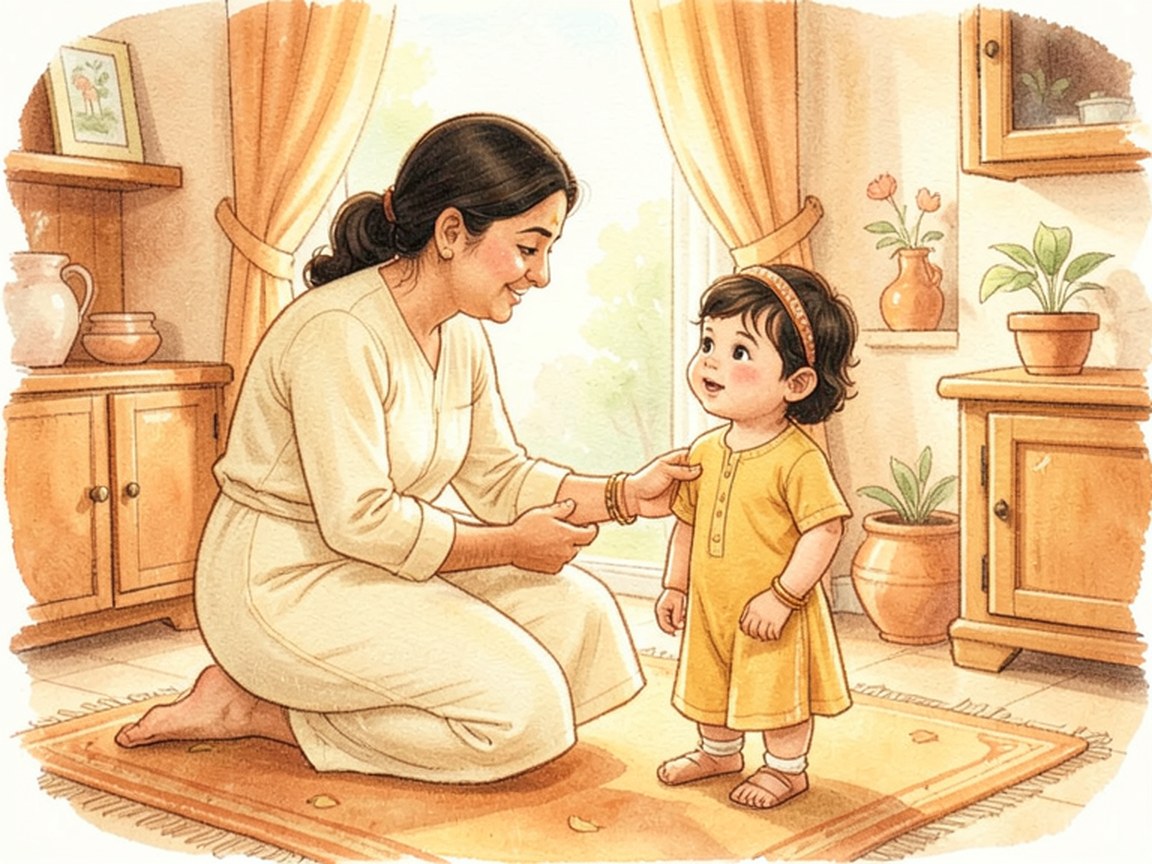
Body-safety education reduces risk primarily by removing secrecy. A child who knows the correct words, knows that no adult may ask them to keep a body secret, and has three adults they can tell, is meaningfully harder to target. It works best taught matter-of-factly, alongside road and fire safety, rather than as a frightening special topic.
Read this first
If your child has told you something, or you suspect a child has been harmed, please stop here. This is not a matter for a programme, and no course should stand between you and acting today. In India, call the childline helpline on 1098 or the police on 112. Abuse of a child is covered by the POCSO Act, and reporting it is your right and, in many cases, the law's expectation. Speak to your child gently, keep them safe, and reach child-protection services now. Everything below is for parents teaching prevention in ordinary times — not for a moment that has already arrived.
How this changes as they grow.
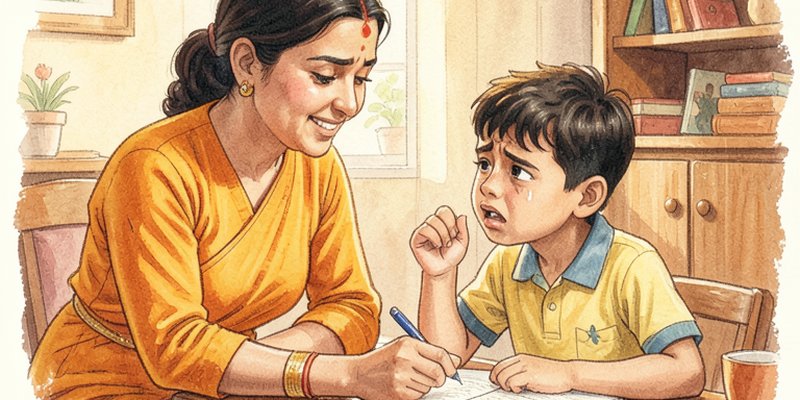
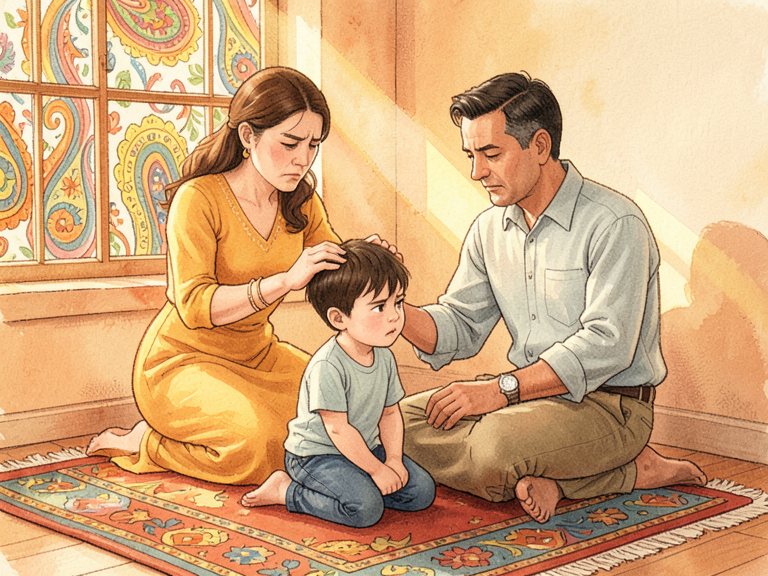
Age 6
You know you should raise this, and every time you sit down to, you don't know where to begin.
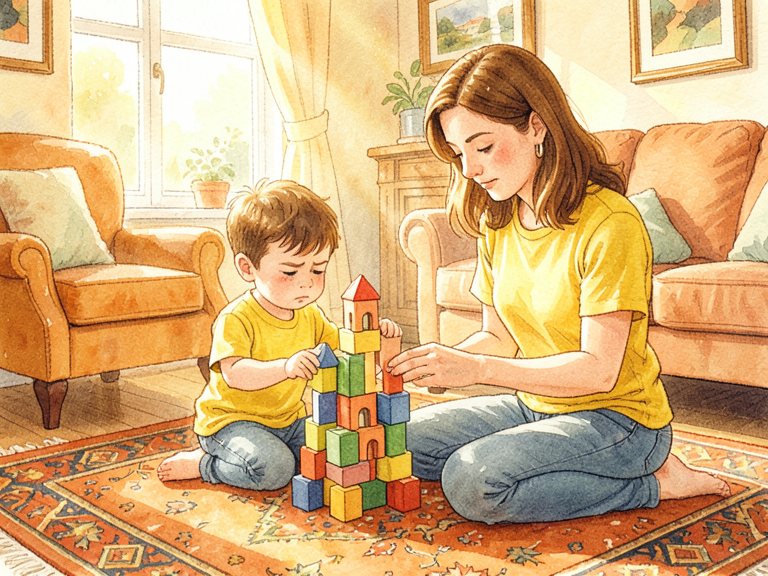
Age 9
You're afraid that saying anything at all will frighten a child who is currently untroubled.
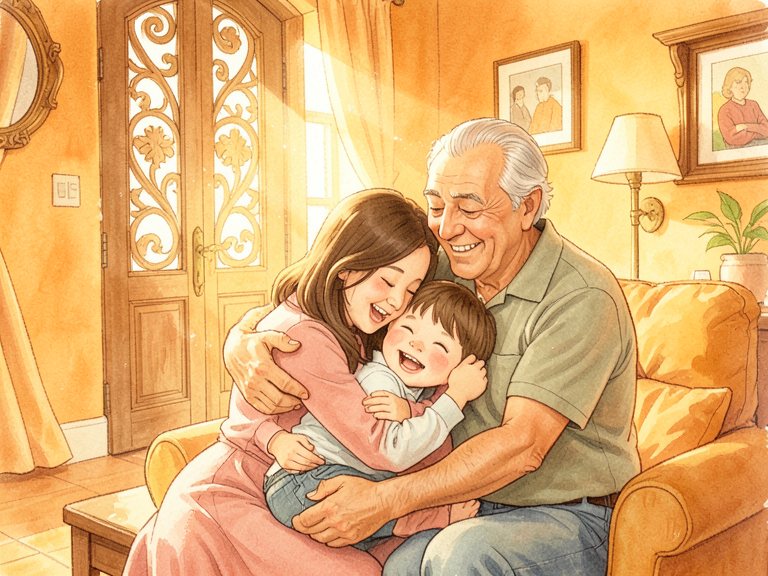
Age 12
Your child is warm and physically affectionate with everyone, and you don't know whether to be glad or worried.
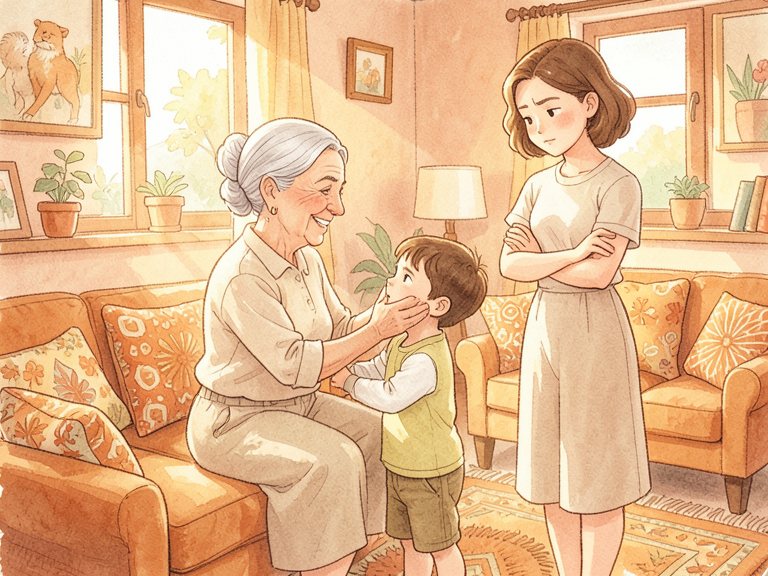
Age 14
A relative insists on hugs and kisses, and your child's 'no' is treated as rudeness to be corrected.
Age 16
You've read that most abuse involves someone the family knows and trusts, and you don't know what to do with that.
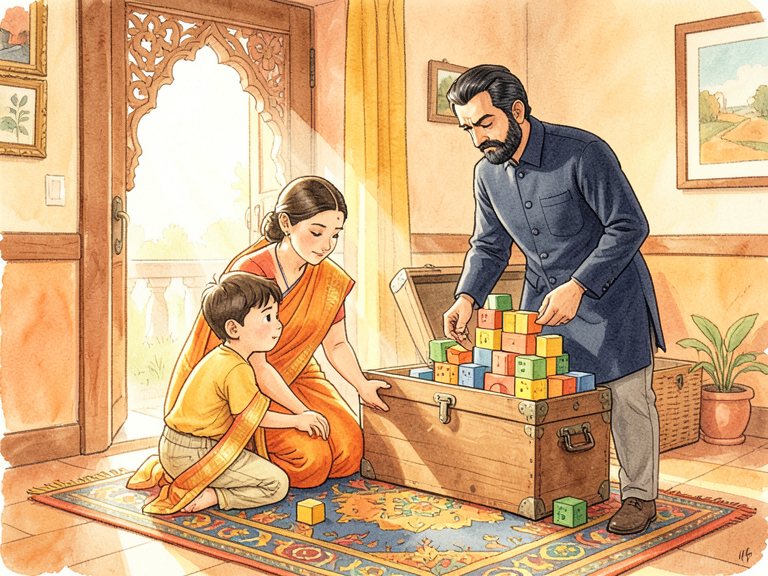
Now
Your child spends time with domestic help, a tuition teacher, a driver — and you've never had a way to think about it clearly.
Swipe through the day
Almost every parent arrives at this topic carrying the same two feelings at once: a strong wish to protect their child, and a real dread of frightening them. Those feelings seem to pull in opposite directions, and so many parents do nothing — not out of negligence, but out of a sense that any wrong word could rob a happy child of their ease in the world.
The reassuring thing is that protection and fear are not the same lever. The measures that actually make a child safer are quiet and structural. They work in the background, the way a seatbelt does, without a child having to feel afraid every time they get in the car.
What frightens children is rarely the facts themselves. It is the tone we use — the lowered voice, the sudden seriousness, the sense that we are handling something too terrible to name. Teach body safety in the same even register you use for crossing a busy road, and a child files it under ordinary competence rather than lurking danger. The goal is not a vigilant child. It is a child who knows a few plain things and doesn't think about them much at all.
Body-safety education protects mostly by removing secrecy, because secrecy is the thing abuse depends on. A handful of ordinary pieces of knowledge, taught early and repeated lightly, do most of the work.
The first is correct anatomical names. A child who can name their body parts as plainly as they name an elbow carries less shame around them — and shame is precisely what makes a child stay quiet. Correct words also mean that if something ever happens, the child can describe it exactly, to you or to anyone who needs to understand.
The second is the no-body-secrets rule: no adult, ever, may ask a child to keep a secret about their body. Surprises are fine — a birthday gift can be a surprise. But a secret about their body, kept from you, is a rule with no exceptions, and a child who holds that rule firmly is much harder to isolate.
The third is three trusted adults. Not one — three, so that if a child can't reach or can't face one, another remains. Naming them out loud, together, does something a lecture cannot: it tells the child, concretely, that telling is allowed and that someone will listen.
These three do not require a child to correctly judge a stranger's intentions in the moment, which is why they outperform the older "good touch, bad touch" framing. They work even when a situation is merely confusing — which, for a child, most situations are.
Here the honest version of this topic diverges from the imported one.
Two facts sit uncomfortably together in most Indian households. The first is that the overwhelming majority of harm to children comes not from strangers but from someone the family knows and, usually, trusts — a relative, a neighbour, a tutor, someone who helps in the house. The second is that our culture places a high value on children being affectionate and obedient with elders, and treats a child's refusal of a hug or a kiss as rudeness to be corrected.
Put those together and you can see the difficulty. A child taught that their body belongs to the adults around them — that a "no" will be overruled if an uncle wants a hug — has been taught the exact opposite of what keeps them safe. Body autonomy is not disrespect. A child who knows their "no" is honoured at home has a much steadier "no" to draw on in a room where it matters.
This will not be comfortable. Letting your child decline a relative's embrace can cost you a raised eyebrow, a comment, sometimes a small argument — and part of protecting a child is being willing to absorb that friction on their behalf. It also asks something specific about the adults who have regular, unsupervised access to your child: domestic help, tuition teachers, drivers, extended family. Not suspicion of everyone, which is exhausting and unfair, but a clear, unpanicked habit of thinking about access and supervision. This programme will not make your family gatherings effortless, and any programme that promised to remove all risk from a child's life would be lying. What it offers is a calm, practised way of holding boundaries that most households have never had words for.
The single most important thing a parent can prepare is their response to a disclosure — because it may come suddenly, in ordinary words, at an ordinary moment, and the first few minutes shape everything that follows.
The response rests on three things. Believe them; children very rarely invent this. Stay calm, even as your own alarm rises, because a child reads your face and will stop talking if they think they have upset or frightened you. And do not interrogate — gentle listening, not a cross-examination, because repeated questioning can distress a child and can complicate the account later. Your job in that moment is to be safe to talk to, not to establish the facts yourself.
After that, you act — and you do not act alone. This is where a plain working knowledge of the system matters. Abuse of a child in India is covered by the POCSO Act; childline is reachable on 1098 and the police on 112; child-protection services exist to help you carry what no parent should carry by themselves. Knowing this before you ever need it means that if the day comes, you are not learning the pathway through panic. The notice at the top of this page says it plainly: if that day has already arrived, you should not be reading a course description — you should be making a call.
You will not walk away frightened, and neither will your child. What changes is quieter than that. The correct words become ordinary in your home. The no-secrets rule and the three trusted adults are simply things your child knows, the way they know their address. Your child's "no" to unwanted affection is honoured, and you have the language to hold that line with relatives without a scene each time.
And underneath it, you carry a preparedness you hope never to use: a calm, rehearsed way to respond, and a clear map of where to turn. That is the real shape of protection — not a vigilant, anxious child, but an ordinary, confident one, surrounded by adults who have quietly done the thinking so the child doesn't have to.
Not the whole lesson — one word, said as plainly as 'elbow' or 'knee', in the bath or while dressing. Correct names are a genuine protective factor: they remove the shame that secrecy relies on, and they let a child describe exactly what happened if they ever need to.
The next time your child doesn't want to hug an uncle or aunt, let a wave or a namaste stand in. A child who learns that adults must be obeyed with their body, even affectionately, learns exactly the lesson you don't want them to carry into a room with someone dangerous.
Sit with your child and pick three trusted adults together — you, and two others they could go to. Say it out loud: if anything ever confuses or scares them, any of these three will listen. The list itself is protective.
That helps in the moment. Changing the pattern takes something else.
Three months on the small, calm conversations that make a child harder to harm — the words, the rules, and what to do if your child ever tells you something.
We start with the small number of things that genuinely reduce risk: correct anatomical names, the no-body-secrets rule, and three trusted adults a child can always tell. Taught in plain, unfrightening language — the same register you'd use for crossing a road — and built into ordinary moments rather than staged as a solemn talk.
The right to refuse affection, including from relatives — and the very real social cost of doing so in an Indian household. We work on the specific language for the moment an uncle wants a hug and your child says no, and on holding that boundary without turning every family gathering into a battle.
The uncomfortable fact that most harm to children comes from someone the family knows and trusts — and what that means practically for domestic help, tuition, drivers and extended family. Not suspicion of everyone, but a clear-eyed way to think about access, supervision and the situations worth attending to.
The response that matters most: believe them, stay calm, don't interrogate. We rehearse what to say and what not to say in the first few minutes of a disclosure, and we walk plainly through the POCSO framework and the child-protection pathway — so that if the day ever comes, you are not learning it for the first time.
Small group — deliberately. Few enough that everyone is known, and no one is a spectator.
Message us to hear about dates, structure and fees for the next cohort.
Purnam is an AI-native parenting companion for modern Indian families. A structured programme, a smart companion that knows your family, and a small, honest community of parents — built to take you from surviving the day to thriving across the years.
Parenting that hasn't been handed down — for the generation that wants to parent differently than they were parented, but has no cultural template for it.
Purnam · our positioning
Purnam is built by a founding team with 18+ years across big tech, startups, and growth-stage technology companies — and, more to the point, by parents currently inside the early-childhood years themselves.
Parents to a toddler ourselves — building Purnam to help Indian families move from surviving to thriving.
Purnam's approach draws on modern developmental psychology — attachment, emotional regulation, behavioural coaching — held alongside Indian contemplative traditions as practical tools rather than belief.
We are advised by senior practitioners in human transformation and behavioural coaching. Where the evidence for something is strong, we say so. Where it is contested, we say that too.
Message us on WhatsApp about Safe in Their Body — dates, structure, fees, and whether it fits your situation.
Or just ask your actual question. That's what the line is for. Someone from the Purnam team will get back to you.
Purnam offers parenting support and education. This is not paediatric, medical, or mental-health treatment, and it is not a substitute for care from a qualified professional. Every child and family is different; nothing here is a promise of any particular outcome.