Age 6
You know it needs to happen and you have genuinely no idea where to start.
The Conversations That Matter ·3 months ·8 – 14 years
Most parents dread a single big conversation they were never given a model for. The households where this goes well never have that one talk at all — they have dozens of small ones, started early, in ordinary language.
These conversations work far better as many small ones than as a single talk, and they should begin before the changes do — a child who is informed in advance meets puberty as something expected rather than alarming. Using accurate anatomical language from early on makes every later conversation, including the harder ones, considerably easier to have.
Read this first
One thing this programme is not for. If you are worried about the timing of your child's development — signs of puberty arriving unusually early, or not arriving when you'd expect — that is a medical question, not a conversational one. Please raise it with your paediatrician, who can actually examine and reassure. This programme is about how to talk, not about whether the timing is typical.
How this changes as they grow.
Age 6
You know it needs to happen and you have genuinely no idea where to start.
Age 9
Your child already knows things — from a phone, a friend, the internet — and you don't know how much or how accurate.
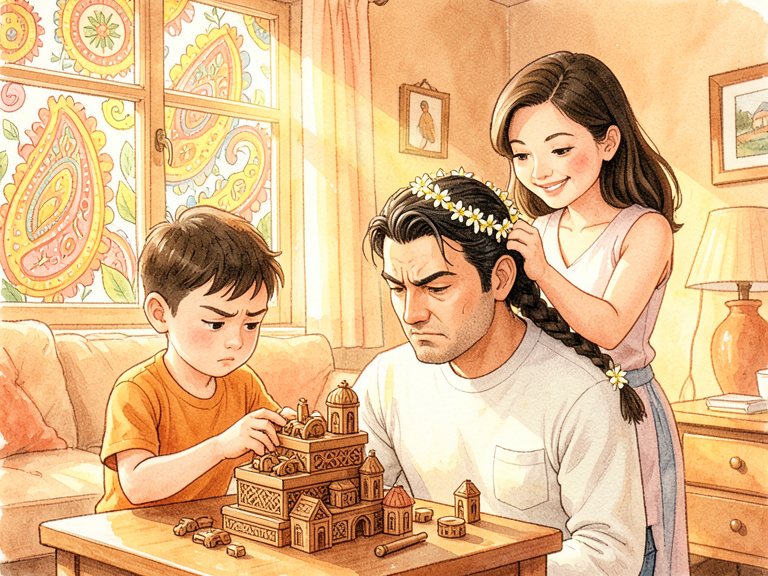
Age 12
The changes have started early, and you feel caught before you were ready.
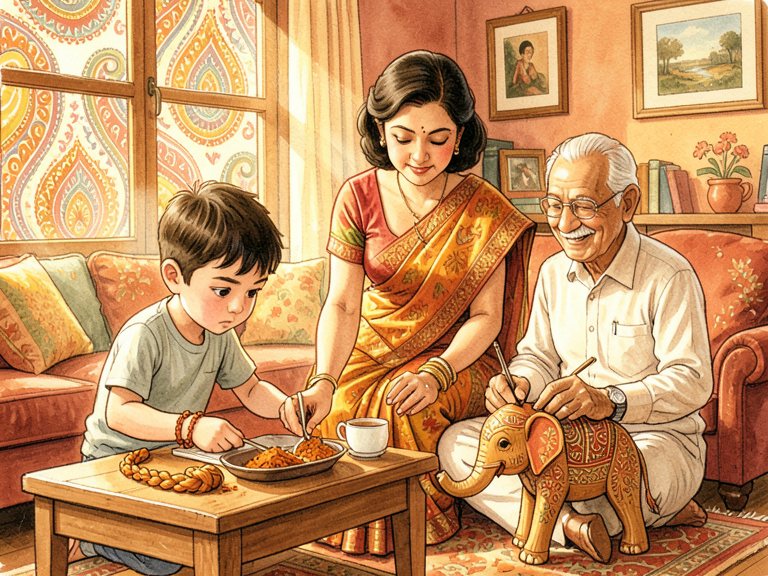
Age 14
Your own parents said nothing, so you have no memory of how this is supposed to go.
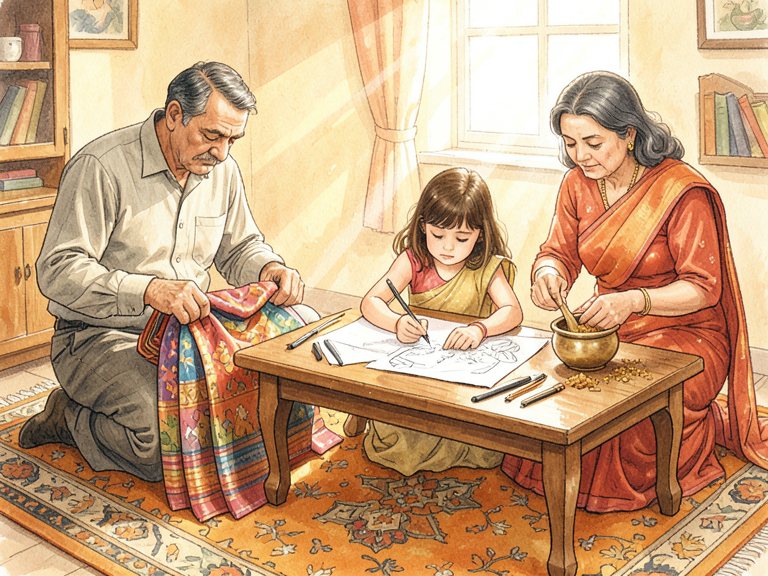
Age 16
You're a father with a daughter, or a mother with a son, and the discomfort of the other gender sits on top of everything else.
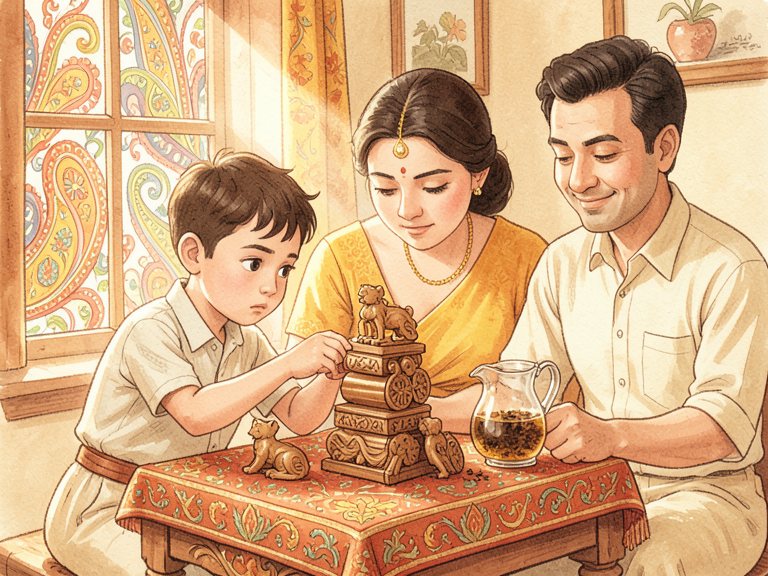
Now
You said one thing once, it landed badly, and now the subject feels closed.
Swipe through the day
Most parents picture puberty as a single conversation — a door that closes, a deep breath, a script delivered once and never again. It is almost always dreaded, frequently postponed, and when it finally happens it tends to be rushed, overdue, and too much at once for the child to hold.
The households where this goes well rarely have that conversation at all. They have dozens of small ones, spread over years, folded into ordinary life. A sentence in the car. A word named correctly at bath time. A calm answer to a question that came out of nowhere. None of them carries the weight of The Talk, because the weight has been spread thin enough to carry.
This matters because information delivered in advance changes the entire experience. A child who has been told, casually and early, what is going to happen to their body meets those changes as something expected. A child told nothing meets the same changes as something alarming, and often something shameful — because the silence itself taught them the subject was unspeakable.
The single most useful thing you can do costs nothing and requires no special conversation: use correct names for body parts, plainly, from when your child is small.
This sounds trivial. It is not. A child who has always heard accurate words used without embarrassment learns something underneath the words — that these parts of the body are nameable, that you are not frightened of the subject, and that this is a topic on which you can be asked things. Every later, harder conversation rests on that foundation. A parent who has never once said a real word for a body part cannot suddenly, at twelve, become the calm source of information about it.
The flinch is what a child reads, not the vocabulary. This is why so much of the early work in this programme is on the parent rather than the child — because your own comfort, or the appearance of it, is the actual curriculum your child absorbs.
There is a specific reason Indian parents find this harder than almost any other parenting task: most of them received nothing equivalent themselves.
If your own parents said nothing — and for a great many of us they said nothing at all — then you have no memory of how this is supposed to go. There is no scene to draw on, no phrasing you inherited, no sense of the right register. You are improvising a conversation you were never shown, which is a very different task from repeating one you experienced.
On top of this sits the near-total absence of school sex education across much of India. In many schools the chapter is skipped, rushed, or taught as pure biology with the human parts left out. So the syllabus you might hope would carry some of this weight simply doesn't arrive. That leaves two teachers standing: you, and the internet. Only one of them can be asked whether what it said is true.
Menstruation deserves its own honesty, because in many Indian households it is wrapped in restriction — around the temple, around the kitchen, around what may be touched and entered during those days.
You do not have to resolve every one of those family beliefs to do the essential thing, which is to make sure your child hears the biology plainly and first, from you, framed as normal. A daughter told what is coming, before it comes, and told it calmly, experiences her first period very differently from one who is handed a taboo before she is handed an explanation. And this is not only a mother's task — a father who can say the word "period" without discomfort gives his daughter something quietly valuable, and gives a son information he will need to be a decent person.
You can tell your child both things: here is what menstruation is, and here is how our family and relatives treat it. Separating the fact from the custom lets your child hold both without absorbing shame as though it were biology.
Your child will encounter explicit material. Not because your rules failed, but because that is the environment every child now grows up inside. The only real question is whether, when it happens, you are a reference point they can return to or a reaction they learned to route around.
This programme will not make puberty smooth, and it will not save you from every awkward moment — and any programme that promised to would be lying. Awkwardness is not the failure state here; silence is. What the work aims at is narrower and more durable: that the subject stays open, that your discomfort never quite closes the door, and that the next question — the harder one, the one you're dreading — comes to you rather than to a search bar.
That is the whole of it. Not one perfect talk, delivered once. A relationship in which the conversation can keep happening, because it started early, stayed ordinary, and was never allowed to become unspeakable.
Pick a single accurate anatomical word and use it plainly this week, the way you'd name an elbow. The flinch is what a child reads, not the word. Naming a body part matter-of-factly is the whole foundation, and it costs nothing to start.
You will not feel ready. The parents who wait for readiness are the parents who end up having one rushed, overdue talk. Say one true, small thing — in the car, at bedtime, over a chore — and let it be brief. Small and early beats complete and late.
That helps in the moment. Changing the pattern takes something else.
Three months on the conversations most Indian parents dread and most received nothing equivalent to themselves — built around small, early, ordinary talk rather than one overwhelming event.
Why the single big talk is the wrong shape, and what replaces it. We build your comfort with ordinary, accurate language and find the everyday openings — a scene on screen, a question, a passing remark — where a sentence or two does more than a scheduled lecture ever could. Most of the work here is on you, not the script.
The actual content: what changes, in what rough order, and how to describe it calmly and correctly. Periods handled directly — including for fathers, and including the family restrictions around temple and kitchen that a child will encounter and ask about. The aim is that your child hears the facts from you first, framed as normal, before anyone else frames them as shameful.
The moodiness, the volatility, the sudden need for privacy — what belongs to puberty and how to stay close through it without taking it personally. And the specific discomfort of talking to a child of the other gender: why it feels hard, and how to do it anyway rather than outsourcing it and hoping.
Children encounter explicit material regardless of your rules — the question is only whether you're a reference point when they do. We work on staying reachable rather than reactive, on the questions you're dreading, and on keeping the door open so that the next question comes to you rather than to a search bar.
Small group — deliberately. Few enough that everyone is known, and no one is a spectator.
Message us to hear about dates, structure and fees for the next cohort.
Purnam is an AI-native parenting companion for modern Indian families. A structured programme, a smart companion that knows your family, and a small, honest community of parents — built to take you from surviving the day to thriving across the years.
Parenting that hasn't been handed down — for the generation that wants to parent differently than they were parented, but has no cultural template for it.
Purnam · our positioning
Purnam is built by a founding team with 18+ years across big tech, startups, and growth-stage technology companies — and, more to the point, by parents currently inside the early-childhood years themselves.
Parents to a toddler ourselves — building Purnam to help Indian families move from surviving to thriving.
Purnam's approach draws on modern developmental psychology — attachment, emotional regulation, behavioural coaching — held alongside Indian contemplative traditions as practical tools rather than belief.
We are advised by senior practitioners in human transformation and behavioural coaching. Where the evidence for something is strong, we say so. Where it is contested, we say that too.
Message us on WhatsApp about The Conversations That Matter — dates, structure, fees, and whether it fits your situation.
Or just ask your actual question. That's what the line is for. Someone from the Purnam team will get back to you.
Purnam offers parenting support and education. This is not paediatric, medical, or mental-health treatment, and it is not a substitute for care from a qualified professional. Every child and family is different; nothing here is a promise of any particular outcome.