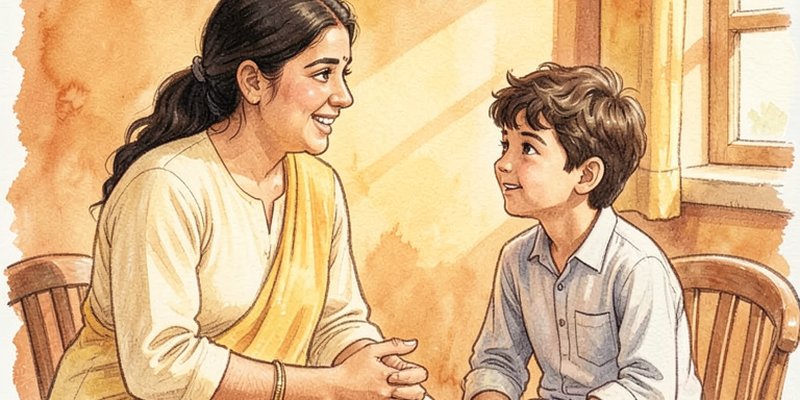
Age 6
Family insists it's just a phase, that you were the same, that you should wait — and you half want to believe them.
Phase, or More? ·6 months ·2 – 10 years
You've noticed something. Family says it's a phase, the internet says everything and nothing, and one doctor was dismissive. This is not an assessment, and it will never pretend to be one. It is a way to notice what's worth raising, describe it clearly, and stop deferring the conversation you've been putting off.
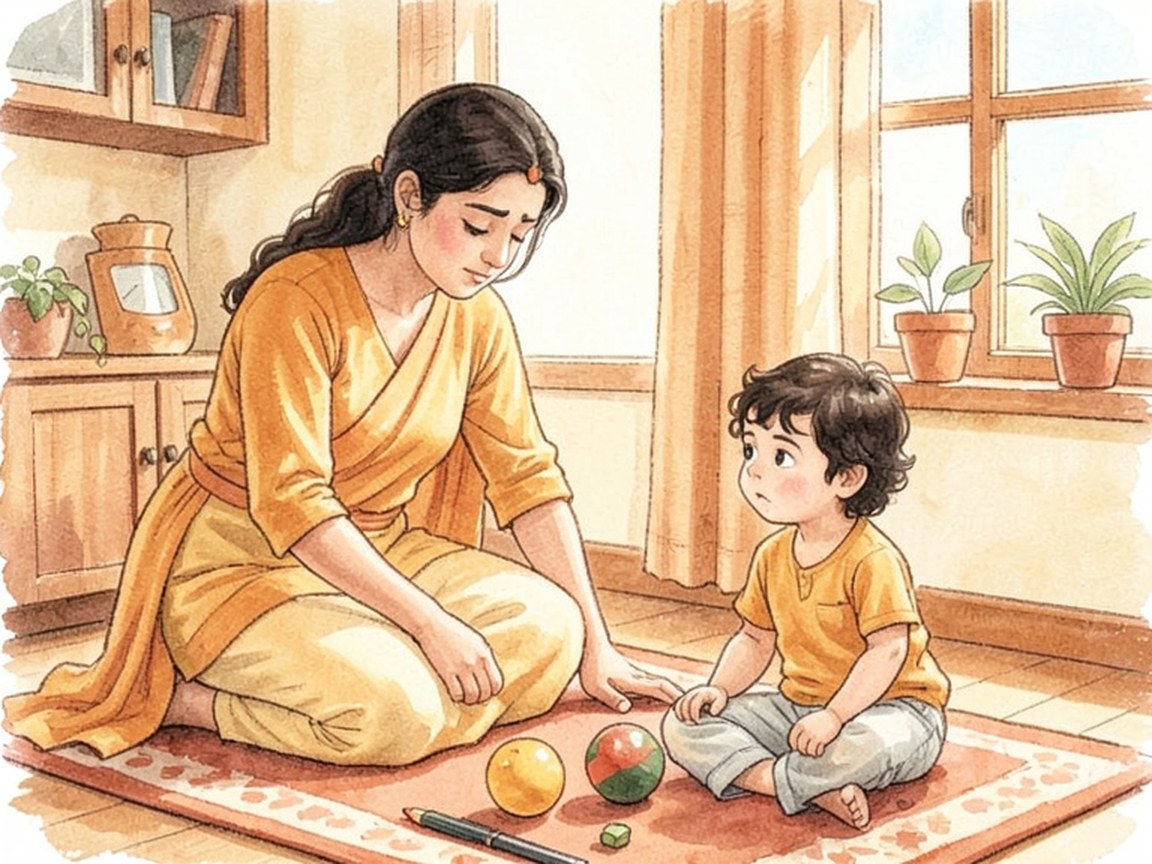
No article or programme can tell you whether your child needs an assessment — that requires a qualified professional who has actually observed your child. What this can do is help you notice what is worth raising, describe it accurately enough that a professional can act on it, and stop waiting when waiting is the thing costing you most.
Read this first
Read this first. This is not an assessment, a screening, or a diagnosis, and it cannot become one. Only a qualified professional who has observed your child — a developmental paediatrician, a child psychologist, or a specialist your paediatrician refers you to — can tell you whether your child needs support and of what kind. If your instinct is that something is wrong, the right next step is a professional, not a programme. Please book that conversation. Everything here exists to move you toward it sooner and better prepared — never to stand in its place.
How this changes as they grow.
Age 6
Family insists it's just a phase, that you were the same, that you should wait — and you half want to believe them.
Age 9
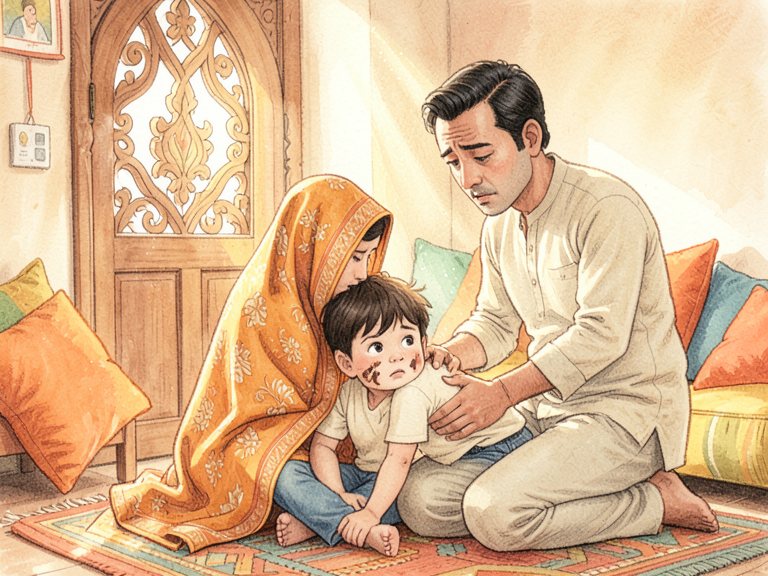
You've read ten articles at 2am and each one describes your child and also describes nothing.
Age 12
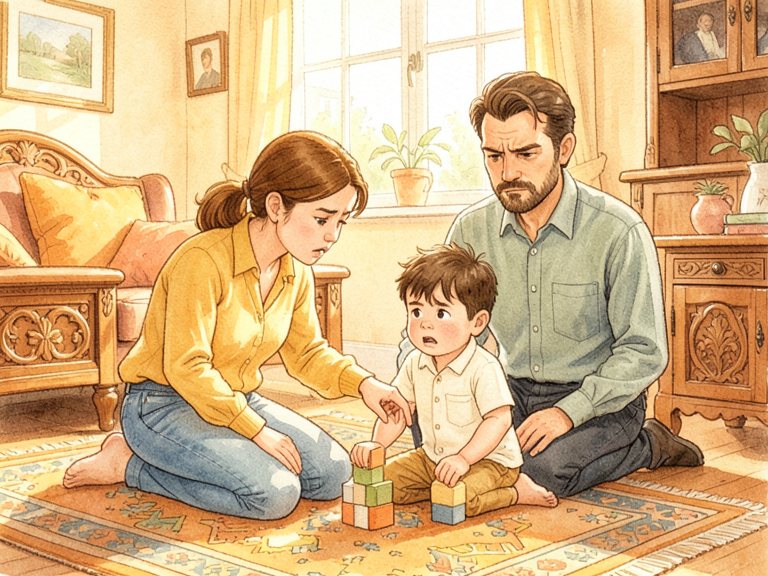
A paediatrician glanced up, said 'he's fine, give it time,' and you left unsure whether you'd been reassured or dismissed.
Age 14
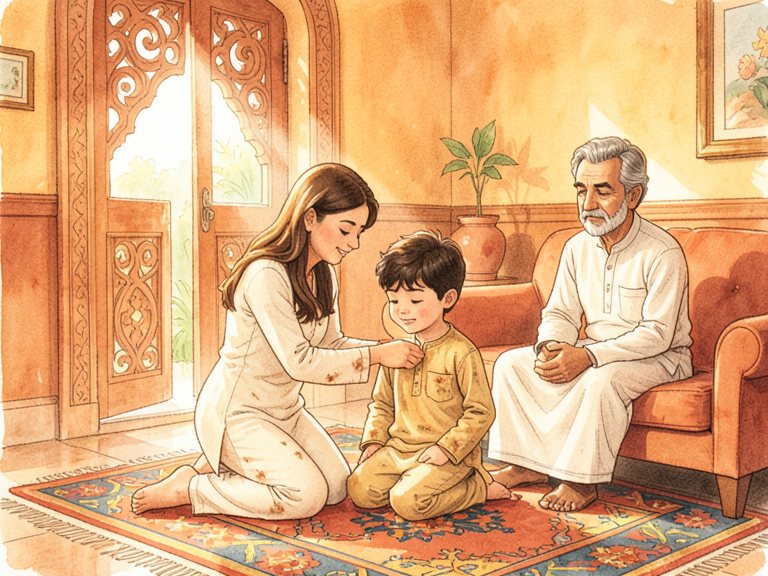
You swing between over-reacting and under-reacting, and can't tell which one you're doing right now.
Now
Underneath all of it sits the fear of a label — and the quieter fear of what waiting might cost.
Swipe through the day
There is a particular kind of worry that arrives quietly and then won't leave. You've noticed something about your child — the way they play, or don't; a word that hasn't come; a reaction that seems bigger or smaller than the moment called for. During the day you set it aside. At night it comes back, and you find yourself on your phone, reading, comparing, half-reassured and half-terrified by turns.
The reason it's so hard to settle is that you are being asked to make a judgement you are not equipped to make, using information designed to unsettle you. An article can describe a hundred children; it cannot see yours. A relative can tell you that you were exactly the same; they are remembering across thirty years and a great deal of affection. A search engine will return both the most benign and the most frightening explanation for the same observation, side by side, with no way to tell which applies to you.
So let us say the honest thing at the start, clearly: nothing here can tell you whether your child needs an assessment. That answer requires a qualified professional who has actually watched your child, and it cannot be delivered any other way. What this can do — the entire and only thing it sets out to do — is help you notice what's worth raising, describe it well enough that a professional can act on it, and stop deferring the conversation you've been circling for weeks.
Most childhood variation is exactly that — variation. Children arrive at things on wildly different timelines and in wildly different orders, and the vast majority of the things parents worry about at 2am turn out to be ordinary. So the useful question is not "is this normal," which has no clean answer, but "is this worth a professional's eye."
Three things help you tell. The first is persistence: has this lasted, or was it a fortnight around a disruption that has since passed? The second is pervasiveness: does it show up in more than one place — home and school, with you and with others — or only in a single setting that might explain it? The third is functional impact: is it getting in the way of your child's day, their learning, their relationships, their ability to do the things a child of their age wants to do?
A behaviour that persists, appears across settings, and affects daily life is worth carrying to someone qualified. One that is recent, confined to one place, and not really costing your child anything is usually worth watching a while longer. This is not a diagnostic test — it is a way to sort a genuine worry from a passing one, so that when your family says "just wait," you have something firmer than a feeling to weigh their reassurance against.
Here is something that surprises parents. When you finally sit in front of a professional, the quality of what you bring shapes the quality of what you get back. A professional gets a snapshot — fifteen or forty minutes, in an unfamiliar room, with a child who may behave nothing like they do at home. You have the whole film: months of it, across every setting.
The problem is that most of us bring our conclusions instead of our observations. "I think he's anxious." "She's not social." "Something's off." These are interpretations, and they quietly steer the professional toward or away from things before they've had a chance to look. What helps far more is the raw material: what happened, when, where, and who else was there. "Won't speak to any adult outside our immediate family, including grandparents she sees weekly; talks normally at home; her teacher says she hasn't spoken a word in class this term." That, a professional can work with.
This is why so much of the work is simply learning to see and record accurately — dated notes, concrete descriptions, the difference between what you observed and what you concluded from it. It is unglamorous and slow, and it is the thing that turns a rushed, inconclusive appointment into one that actually moves your child forward.
Two fears usually sit underneath the deferring. One is the fear of the label — that a name, once given, will follow your child and define them. The other, quieter one, is the fear of what the waiting might be costing.
On the label: a diagnosis is a description, not a sentence. It names how your child experiences the world so that the right support can reach them — at school, at home, from people who will now understand rather than misread. A great many parents who dreaded the word find that having it brought relief and, more usefully, help. None of this means you must pursue a formal diagnosis; whether and when to assess are decisions for you and a professional together. But the label is far less often the enemy than the fear of it suggests.
On the waiting: this is where India's realities press hardest. Assessment waitlists are long, specialists outside the big cities are scarce, and stigma and family pressure both pull toward "give it time." All of that is real, and none of it is a reason to defer the first step — because the waitlist only starts moving once you're on it, and the months spent deferring are months that count. To be plain about scope: this will not tell you whether your child is fine, and any programme that promised to would be lying to you. What it will do is get you in front of the person who can, sooner and far better prepared than you'd have managed alone.
Not conclusions, not worries. Observations. What happened, when, where, and who else was there. 'Won't join other children at three separate birthday parties, plays alone at school per his teacher, fine one-on-one at home.' A professional can act on that. 'I'm worried he's not social' gives them nothing to work with.
Not the assessment — just the first conversation, with your paediatrician or a developmental professional. The waitlists are long precisely because everyone waits. Getting on the list is not a verdict on your child; it is the one action that doesn't cost you anything to undo.
That helps in the moment. Changing the pattern takes something else.
Six months alongside a founder who has sat where you're sitting — not to diagnose anything, but to help you see clearly, describe accurately, and move toward the qualified assessment only a professional can give.
Three things separate an ordinary variation from something worth a professional's eye: persistence over time, pervasiveness across settings, and functional impact on the child's day. We work through your specific observations against these — not to reach a verdict, which isn't ours to reach, but so you can tell the difference between a worry and a signal worth carrying to someone qualified.
The single most useful thing you can bring to an assessment is a clear, concrete, dated record — because a professional gets a snapshot, and you have the whole film. We build the language: how to describe a behaviour without interpreting it, how to note where and when it shows up, how to capture what's changed. This is slow work, and it is the work that makes a fifteen-minute appointment actually count.
Who to go to first, and why the order matters. What an assessment actually involves, described plainly, so it stops being the frightening unknown it currently is. How to sit on a long waitlist without losing months. How to read a professional who was dismissive, and when a second opinion is warranted rather than anxious. The India-specific realities — waitlists, cost, the shortage of specialists outside the metros — addressed as obstacles to route around, not to pretend away.
Assessment takes time you may not want to give it, so we cover what a parent can helpfully do in the meantime without either over-treating a phase or ignoring a need. And the fear underneath all of it, addressed honestly: what a diagnosis is and isn't, why it is a description rather than a sentence, and why for many families early clarity turns out to be a relief rather than the thing they feared.
Small group — deliberately. Few enough that everyone is known, and no one is a spectator.
Message us to hear about dates, structure and fees for the next cohort.
Purnam is an AI-native parenting companion for modern Indian families. A structured programme, a smart companion that knows your family, and a small, honest community of parents — built to take you from surviving the day to thriving across the years.
Parenting that hasn't been handed down — for the generation that wants to parent differently than they were parented, but has no cultural template for it.
Purnam · our positioning
Purnam is built by a founding team with 18+ years across big tech, startups, and growth-stage technology companies — and, more to the point, by parents currently inside the early-childhood years themselves.
Parents to a toddler ourselves — building Purnam to help Indian families move from surviving to thriving.
Purnam's approach draws on modern developmental psychology — attachment, emotional regulation, behavioural coaching — held alongside Indian contemplative traditions as practical tools rather than belief.
We are advised by senior practitioners in human transformation and behavioural coaching. Where the evidence for something is strong, we say so. Where it is contested, we say that too.
Message us on WhatsApp about Phase, or More? — dates, structure, fees, and whether it fits your situation.
Or just ask your actual question. That's what the line is for. Someone from the Purnam team will get back to you.
Purnam offers parenting support and education. This is not paediatric, medical, or mental-health treatment, and it is not a substitute for care from a qualified professional. Every child and family is different; nothing here is a promise of any particular outcome.