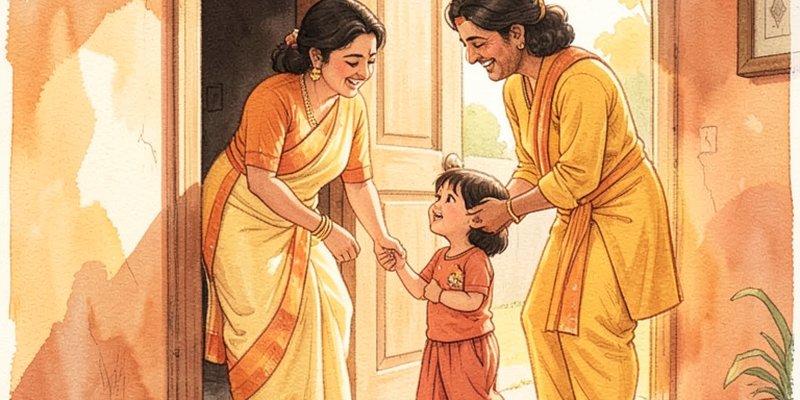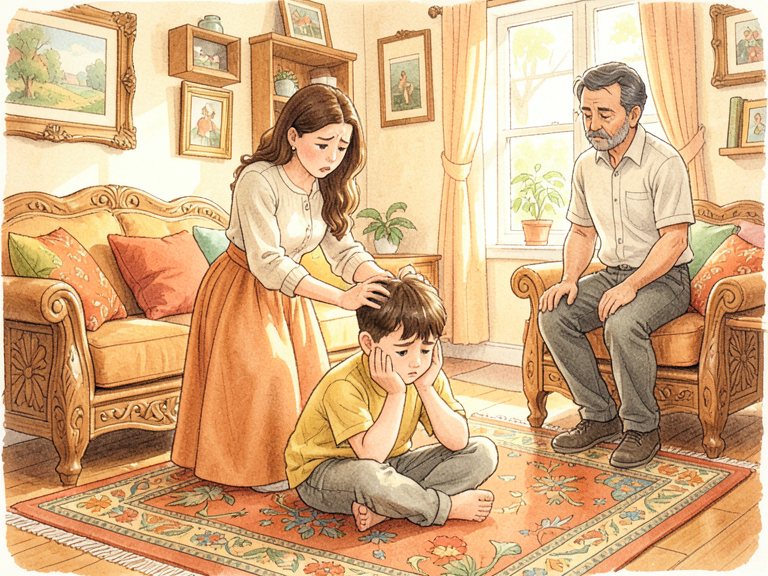
Monday
A stomach ache or headache every school morning, with nothing a doctor can find, that lifts the moment staying home is agreed.
When School Feels Impossible ·3 months ·5 – 14 years
Morning stomach aches that vanish by lunchtime. Fine on weekends. Escalating distress at the gate. School refusal is almost never about laziness or defiance — it's a symptom, and the work is finding what it points to while attendance is still intact enough to protect.
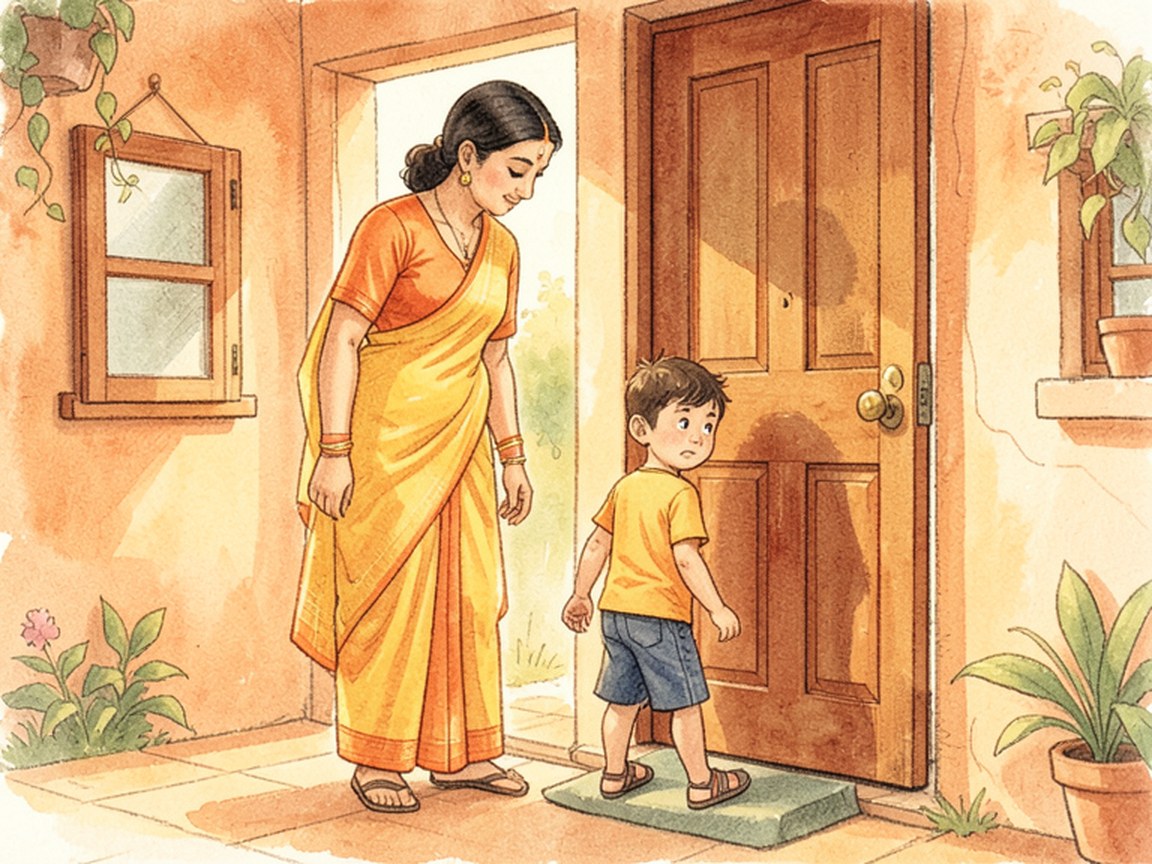
School refusal is a symptom, not a behaviour problem — it usually points to anxiety, a social difficulty, or something happening at school the child can't yet put into words. The longer the absence continues, the harder return becomes, so the priority is finding the cause while keeping attendance as continuous as possible.
Read this first
Please read this before anything else. If the refusal has lasted more than two weeks, or comes alongside low mood, withdrawal, loss of interest, sleep or appetite changes, or anything your child has said that worries you — this needs a child psychologist, not a parenting programme, and it needs one now. School refusal can sit on top of depression or an anxiety disorder, and those are treatable, but only by someone qualified to assess them. Asking for that help is not an overreaction and it is not a failure. If your child has said anything about not wanting to be here, treat it as urgent: talk to your child, reach a mental-health professional today, or call a helpline such as Tele-MANAS at 14416 or iCall at 9152987821.
One ordinary week in your house.
Monday
A stomach ache or headache every school morning, with nothing a doctor can find, that lifts the moment staying home is agreed.
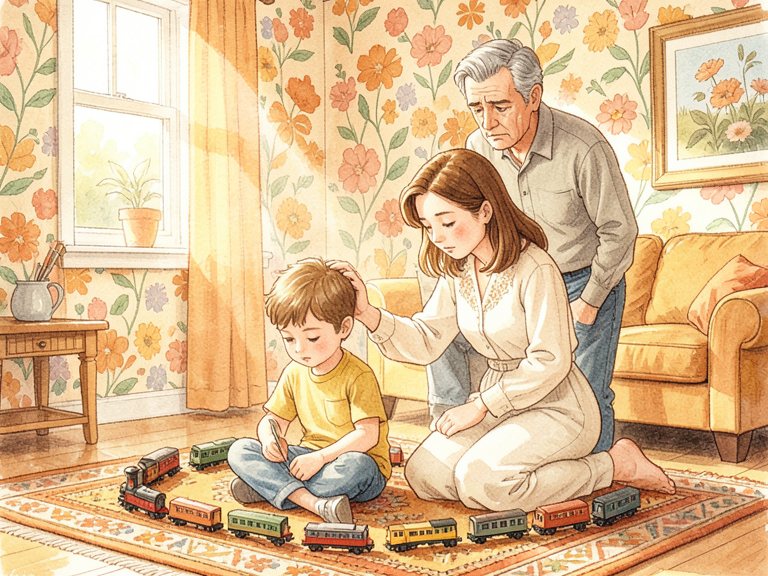
Tuesday
Perfectly fine on Saturday and Sunday, then the dread rebuilding on Sunday evening.
Wednesday
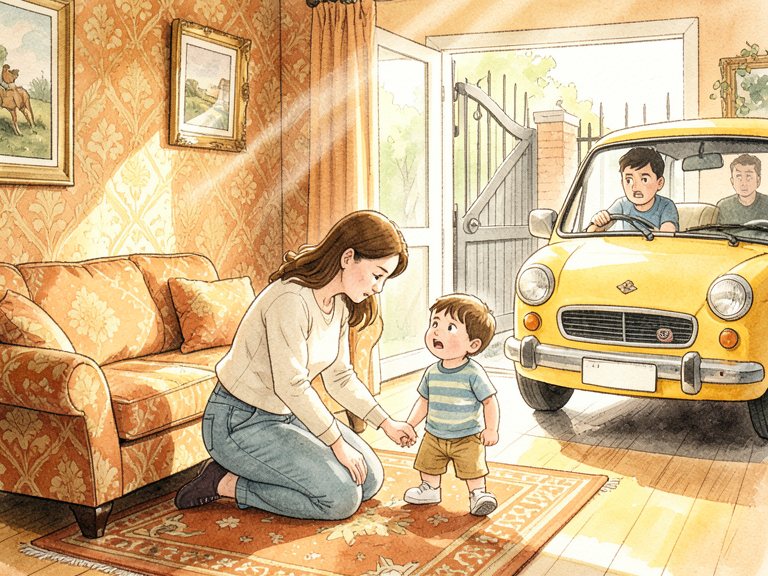
Calm at home, then escalating panic in the car, then a child who cannot be walked through the gate.
Thursday
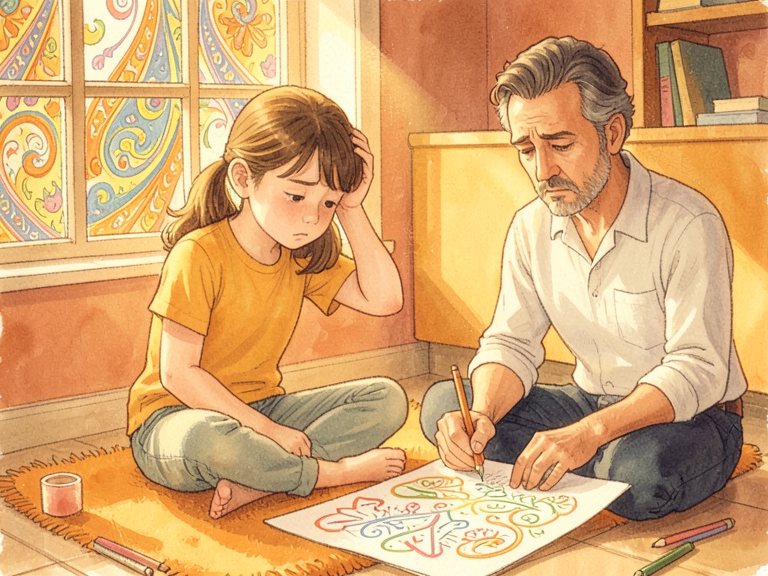
A school that responds with strictness — attendance warnings, no flexibility — exactly when your child needs the opposite.

Friday
You genuinely don't know whether to force the issue or to permit the absence, and both feel wrong.

Saturday
A week off 'to settle' that somehow became three, and now going back feels harder than ever.
Swipe through the day
The instinct, when a child won't go to school, is to treat it as a behaviour to be corrected — a matter of will, laziness, or defiance to be met with firmness. Almost always, that instinct points in the wrong direction.
School refusal is a symptom. It sits on top of something else: an anxiety the child can't yet name, a social difficulty, an undiagnosed learning gap that makes the day quietly humiliating, a fear tied to one teacher or one subject or one part of the building, or something happening between children that a parent never sees. The refusal is what surfaces. The cause is underneath, and it is usually more specific than the broad "I don't want to go" that a child offers because it's the only phrase they have.
This is why firmness so often backfires. You can win the morning by force and still lose the week, because you've addressed the behaviour and left the cause untouched — and a frightened child who is also being disbelieved has more to manage than before, not less. The work is not to defeat the refusal. It is to find what it's pointing to.
One of the most confusing features of school refusal is how physical it is. The stomach ache is real. The headache is real. The nausea at the gate is real. And a doctor finds nothing, because there is nothing to find — the symptom is anxiety expressed through the body, which is exactly how anxiety works in children who don't yet have the words for what they feel.
This is where many households take a wrong turn. When the ache appears every school morning and vanishes by lunch, it's tempting to conclude the child is faking, and to respond accordingly — you're fine, stop pretending, get in the car. The trouble is that the ache isn't a performance; it's a signal. Telling a child that a real feeling is a lie tends to escalate it, and it teaches them that the one adult they'd turn to isn't going to believe them.
The more useful posture is harder to hold: to take the feeling completely seriously and still keep moving toward school. Yes, your stomach hurts. I believe you. We're going to go anyway, and I'll help. That combination — acknowledgement without surrender — is the thing this programme keeps returning to, because it is the opposite of most parents' first instinct in both directions.
There is an unkind arithmetic to school refusal, and it's worth stating plainly. Avoidance works. Staying home removes the anxiety instantly, which is exactly what makes it so dangerous — every avoided morning teaches the child, at a level below reasoning, that avoidance is what brings relief. The fear doesn't shrink in the safety of home. It grows, because it never gets contradicted by the experience of coping.
This is why a week off "to settle" so often becomes three, and why going back after a long gap feels harder than it did at the start. The longer the absence runs, the more the gate becomes a wall. Time is not neutral here; it works against you.
Which is the whole argument for partial attendance over none. A half day, a single period, the walk to the gate, one morning a week that holds — any thread that stays unbroken is far easier to build back from than a clean break. This is not about toughness. It's about not letting the avoidance win the argument it's quietly making every morning.
To be honest about scope: this programme will not make a frightened child suddenly love school, and any programme that promised to would be lying. What it can do is help you find what's underneath, build a return that's gradual enough to survive, and get the school working with you rather than against you — while being very clear about the point at which this stops being a parenting problem and becomes a clinical one.
Once you have a working idea of the cause, the response is a graded return — a plan built so each step is small enough to be survivable and the whole thing keeps moving forward. What "small enough" means is specific to your child: for one it's a full day with a friend to walk in with, for another it's ninety minutes and a named safe adult they can go to. The plan matters less than the fact that it is calibrated, decided in advance, and steady. The hardest part is usually not designing it but holding it on a bad morning — knowing what you'll do when your child begs to stay home, so that the decision isn't made fresh, in tears, at 7:40 every day.
None of it holds without the school. And in an Indian context, that conversation takes real preparation. Many schools treat attendance as a discipline matter, meet distress with strictness, and have little institutional room to flex — and the academic pressure and the stigma around help-seeking mean families often delay the conversation until the problem is entrenched. The way through is framing: a specific, temporary flexibility, asked of the right person, presented as the thing that protects attendance rather than an exception that undermines it. A late start for two weeks. A reduced load while a child rebuilds. A place to go when the panic rises. Getting that conversation to produce action instead of a warning is a skill, and it's one we build together before you walk into the room.
The most important thing on this page is also the simplest. There is a version of school refusal that a prepared, calm parent can work through — recent, anxiety-driven, still holding some attendance, no other worrying signs. And there is a version that needs a child psychologist, not a programme: refusal that has run more than a couple of weeks, refusal alongside low mood or withdrawal or changes in sleep and appetite, anything a child says that frightens you.
Those two are not always easy to tell apart from inside the fear, which is why part of this work is learning to read the signal honestly — and why, if you are already on the wrong side of that line, the right move is not to enrol here but to see someone qualified now. School refusal can sit on top of depression or an anxiety disorder, and those are treatable. Asking for that help early is not an overreaction. It is the most protective thing a parent can do.
"I don't want to go" is the headline, not the story. Get curious about the particular thing — a subject, a teacher, a bus, a break time, a bathroom, one child. The refusal is broad; the cause is usually narrow and specific, and naming it is most of the work.
If a full day feels impossible, a half day, a single period, or even the walk to the gate keeps the thread from breaking. Continuous partial attendance is far easier to build back from than a clean absence, because avoidance is what makes the fear grow.
The stomach ache is real even when there's no illness — anxiety is felt in the body. Treating it as a lie ('you're fine, stop pretending') tends to escalate it. Acknowledging the feeling while still moving toward school is the harder, more useful posture.
That helps in the moment. Changing the pattern takes something else.
Three months on one of the most frightening things a school-age child can do — refuse to go — and on the narrow, urgent window in which a parent can still act before an absence hardens into a pattern.
Refusal is the visible edge of something else — separation anxiety, a social difficulty, bullying, an undiagnosed learning gap, or a specific fear the child can't yet articulate. We work through the pattern in detail: when it started, what it tracks with, what changed, what the body is doing and when. The aim of these weeks is to move from 'my child won't go to school' to a specific, testable idea of why.
Avoidance is what compounds the problem, so the return has to be gradual enough to be survivable and steady enough to keep moving. We build a graded plan matched to your child — how much, how often, what the steps are, what a hard morning looks like and how you'll respond to it without either forcing or folding. The plan is yours to run; these weeks are about making it realistic.
A return plan only holds if the school is part of it. We prepare the conversation that produces action rather than an attendance warning: what to ask for, who to ask, how to frame flexibility as the thing that protects attendance rather than undermines it. In an Indian context — low institutional flexibility, high academic pressure — this conversation takes preparation, and we do it together.
The final weeks are about making the return durable — handling setbacks without treating them as failure, and knowing the difference between a wobble and a warning. We also draw the line clearly: when refusal, low mood, or withdrawal means this has moved beyond what a parenting programme should hold, and when the right next step is a child psychologist.
Small group — deliberately. Few enough that everyone is known, and no one is a spectator.
Message us to hear about dates, structure and fees for the next cohort.
Purnam is an AI-native parenting companion for modern Indian families. A structured programme, a smart companion that knows your family, and a small, honest community of parents — built to take you from surviving the day to thriving across the years.
Parenting that hasn't been handed down — for the generation that wants to parent differently than they were parented, but has no cultural template for it.
Purnam · our positioning
Purnam is built by a founding team with 18+ years across big tech, startups, and growth-stage technology companies — and, more to the point, by parents currently inside the early-childhood years themselves.
Parents to a toddler ourselves — building Purnam to help Indian families move from surviving to thriving.
Purnam's approach draws on modern developmental psychology — attachment, emotional regulation, behavioural coaching — held alongside Indian contemplative traditions as practical tools rather than belief.
We are advised by senior practitioners in human transformation and behavioural coaching. Where the evidence for something is strong, we say so. Where it is contested, we say that too.
Message us on WhatsApp about When School Feels Impossible — dates, structure, fees, and whether it fits your situation.
Or just ask your actual question. That's what the line is for. Someone from the Purnam team will get back to you.
Purnam offers parenting support and education. This is not paediatric, medical, or mental-health treatment, and it is not a substitute for care from a qualified professional. Every child and family is different; nothing here is a promise of any particular outcome.