07:10
The endless 'what if' questions that no amount of reassurance ever seems to settle.
The Worried Child ·3 months ·4 – 14 years
If your child worries about things you find small, and no amount of soothing seems to satisfy them, you are not doing it wrong — you have simply reached the limit of what reassurance can do. This is a programme on supporting a worried child without accidentally feeding the worry.
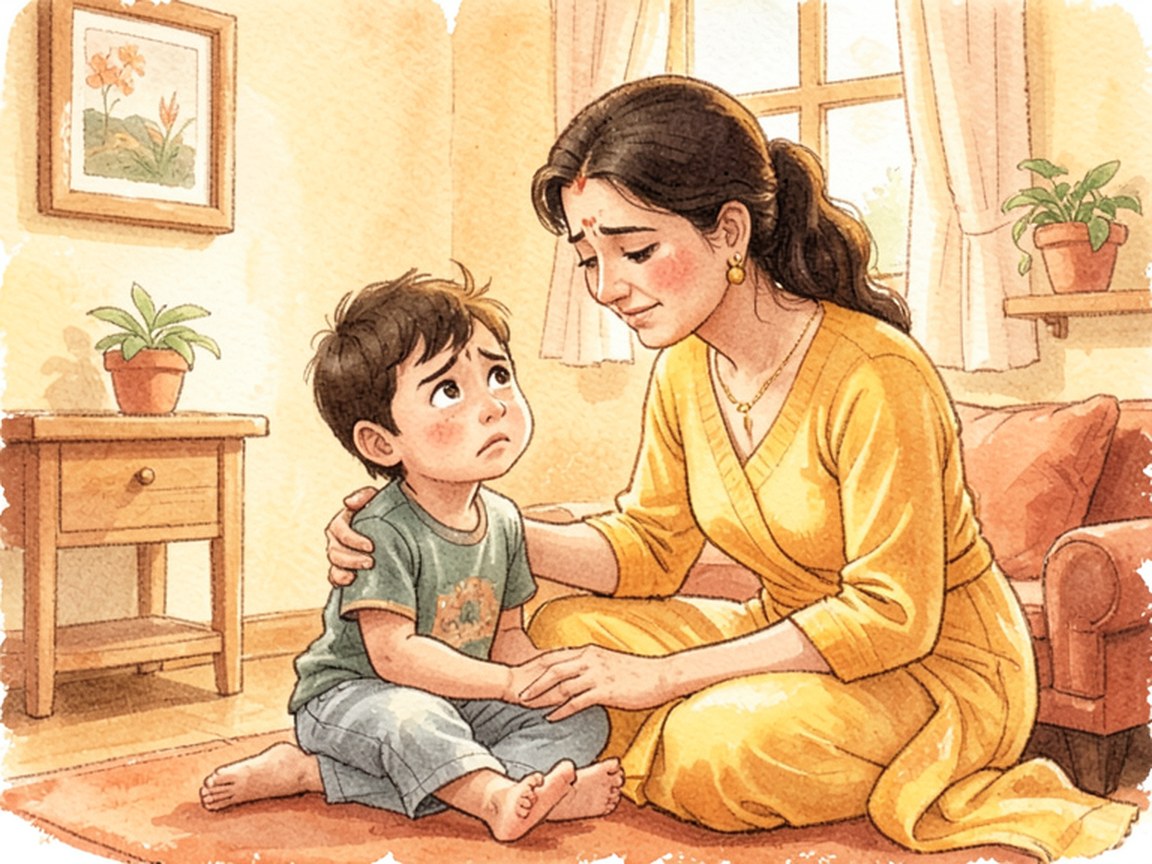
Anxiety in children usually grows through avoidance: the more a child is protected from the thing they fear, the larger the fear becomes. Support that helps looks less like reassurance and more like accompanied approach — staying alongside your child while they do the hard thing in small, survivable steps, rather than shielding them from it.
Read this first
First, an important line. This programme is for everyday worry — school, social situations, separation, performance. It is not treatment. If your child is having panic attacks, talking about or acting on self-harm, refusing to leave the house, or if the worry has significantly narrowed their life — the friends they see, the places they go, the things they can do — that deserves a qualified child psychologist or psychiatrist, not a parenting programme. Seeking that help is not an overreaction, and it is not a failure. It is the right and caring thing to do, and it often works. Please don't wait.
Six moments from a single ordinary day.
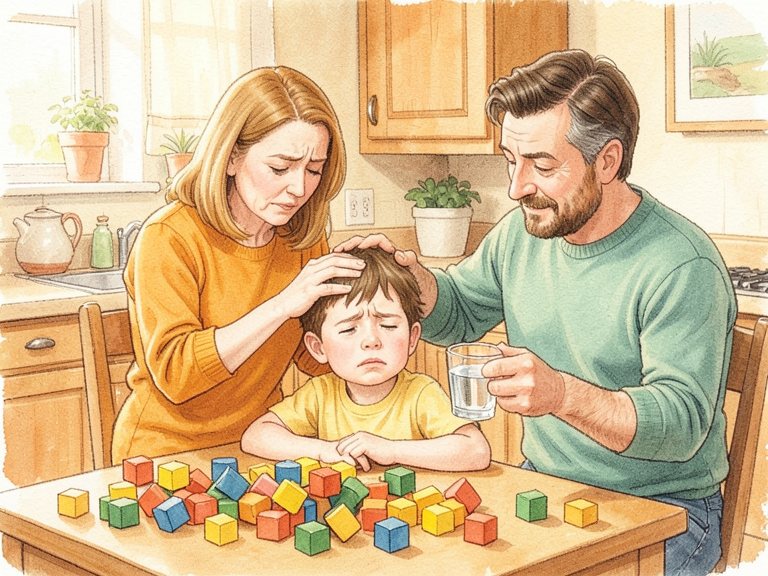
07:10
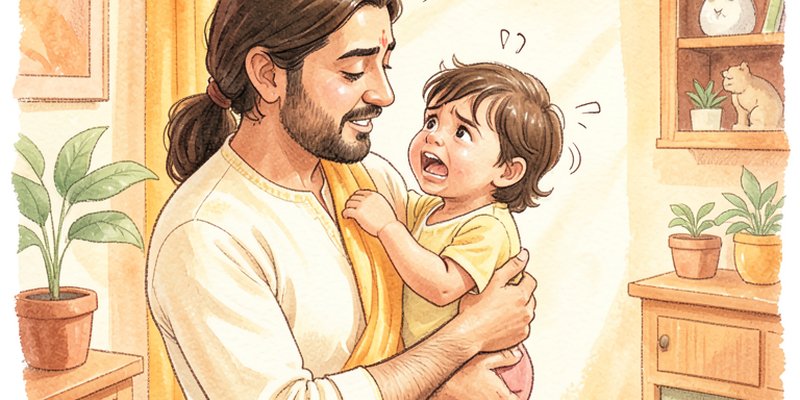
The endless 'what if' questions that no amount of reassurance ever seems to settle.
07:40
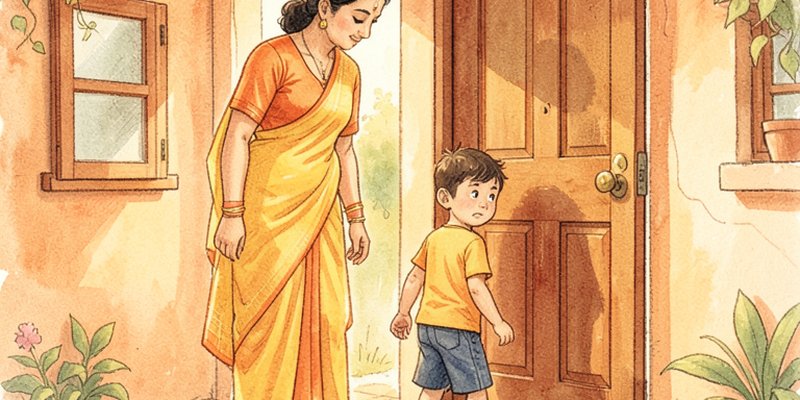
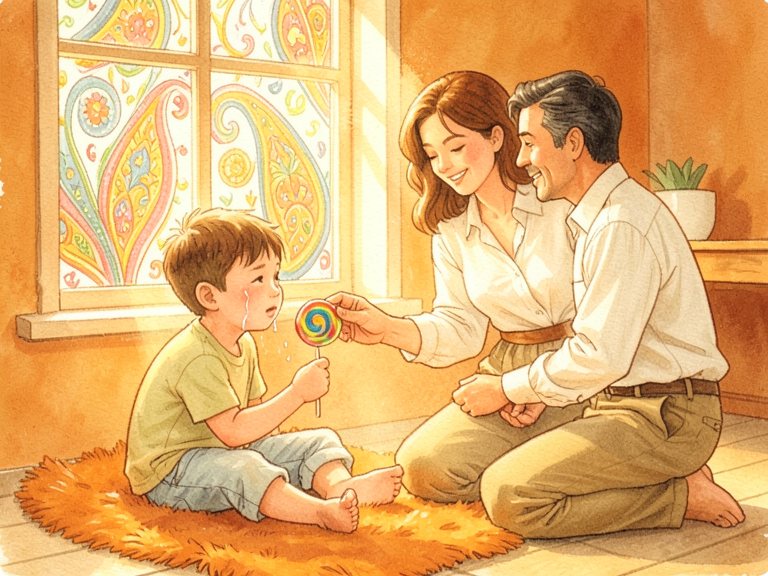
Stomach aches on school mornings that a doctor can find nothing wrong with.
16:30
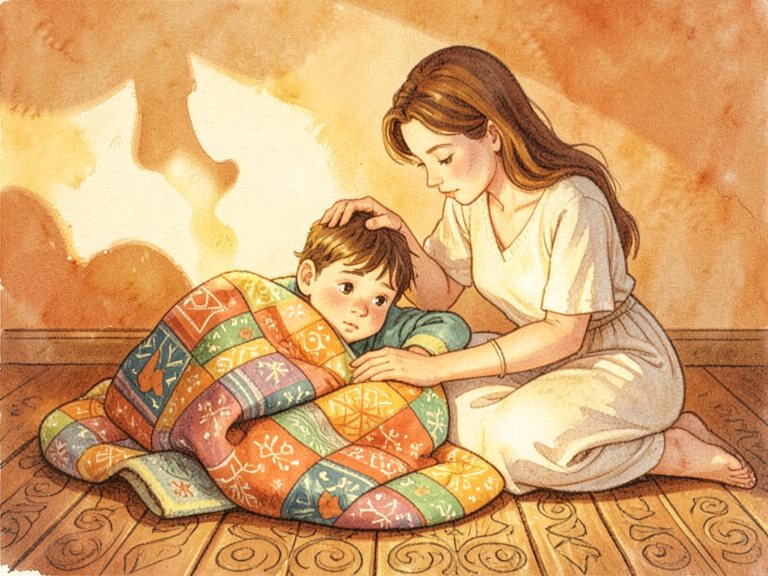
Refusing the birthday party, then crying afterwards about having missed it.
20:15
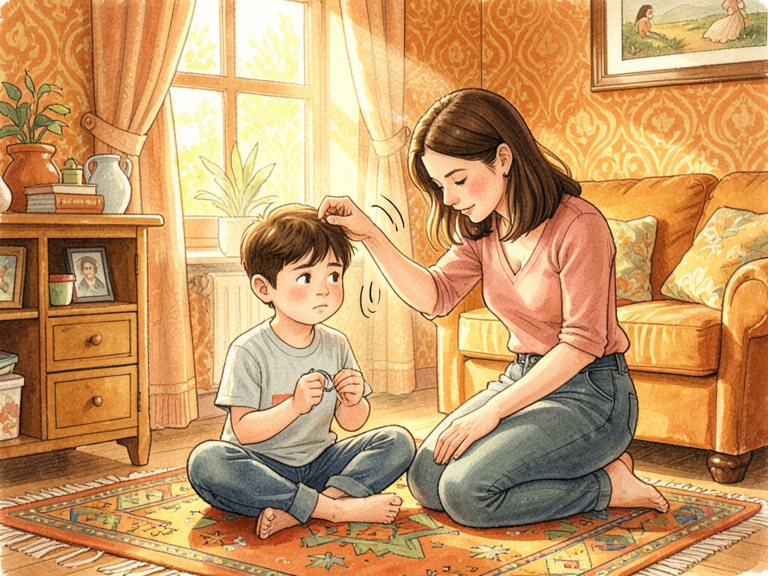
Needing you in the room to fall asleep — at an age when they didn't before.
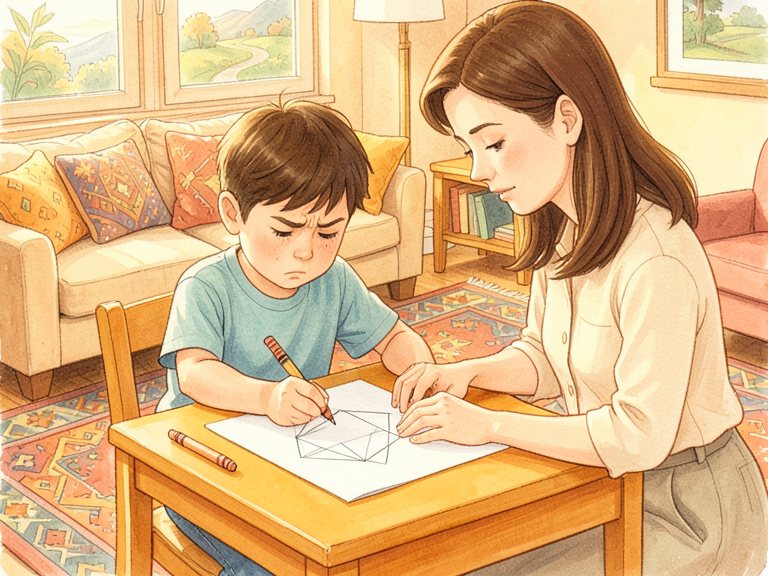
18:30
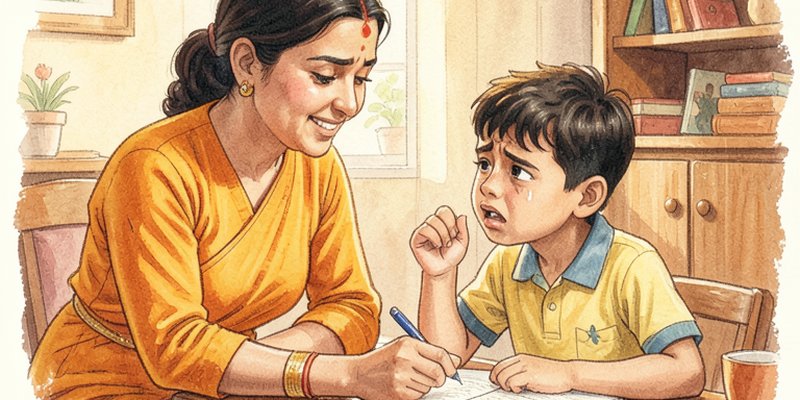
Terror of small mistakes, and a perfectionism that makes ordinary homework a two-hour ordeal.
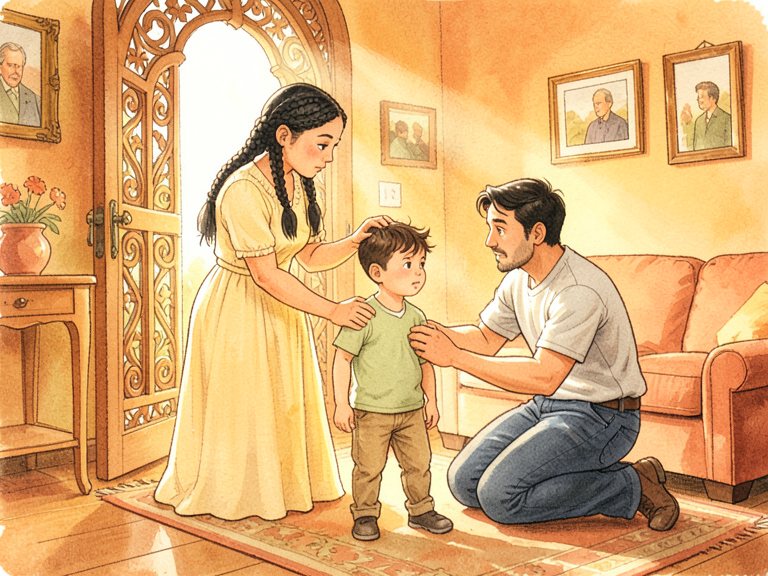
21:30
Your own worry rising to meet theirs, until the whole house is holding its breath.
Swipe through the day
Most parents arrive at this exhausted by their own kindness.
You have answered the question. You have answered it again, patiently, in a slightly different way. You have explained that the door is locked, that the test is not until Friday, that nobody at the party will laugh. And for about ninety seconds it works — your child's shoulders drop, the tension leaves the room — and then the question comes back, worded almost identically, as though the last hour never happened.
This is the moment that brings people here, and it is worth understanding clearly, because it is not a sign that you are reassuring badly. It is a sign that reassurance itself has reached its limit.
Here is the mechanism. When a child feels anxious and you soothe the feeling away, two things happen. The immediate feeling eases — which is why you keep doing it, and why it feels like love. But underneath, a quieter lesson is being learned: that feeling was dangerous, and it needed you to make it stop. The fear is confirmed rather than shrunk. So the child comes back for another dose, and the worry, fed by the very thing meant to calm it, grows a little larger and a little more frequent.
This will not end your child's worrying, and any programme that promised to make an anxious child stop worrying would be lying to you. Worry is part of being a person, and especially part of being a thoughtful child in a demanding country. What can change is the pattern around the worry — whether it is fed or metabolised — and that pattern lives largely in how the adults respond.
The single most useful idea in this whole territory is that anxiety grows through avoidance.
Picture the loop. Something frightens your child — the school gate, the dark bedroom, the possibility of a wrong answer. They avoid it: they stay home, they call you back in, they don't raise their hand. Avoiding it brings instant relief, a wash of calm. And the brain, which learns from what works, files that relief away as proof: avoiding kept me safe. The next time the fear appears it is a little stronger, because it has never once been tested against reality.
Every time a child avoids a feared thing, the fear gets a small deposit. Over months, those deposits compound into a fear far larger than the thing that started it. The child who once felt nervous about one presentation becomes the child who cannot speak in class at all — not because the danger grew, but because it was never allowed to shrink.
Reassurance, comfort, and rescue all sit inside this loop rather than outside it. They are sophisticated forms of avoidance — they help the child get through the moment without ever facing it. That is why the way out runs in the opposite direction: not away from the feared thing, but slowly, with support, toward it.
There is a gentler word for the ways a family bends itself around a child's worry, and it is accommodation.
It is almost never a decision. It accumulates. You start leaving the bedroom door open, then sitting on the edge of the bed, then lying down until they sleep. You stop taking the lift because the lift is frightening, so now the family takes the stairs. You answer the same reassurance-seeking question for the fourth time because the fourth time is easier than the argument. You quietly decline the invitations you know will be refused, to spare everyone the scene.
None of these are wrong in isolation, and every one of them comes from love. But together they teach a child, wordlessly, that the world really is as dangerous as it feels — because look how carefully everyone is avoiding it on their behalf. Accommodation is the family-sized version of the avoidance cycle. It is also, quietly, one of the most exhausting things a household can carry, because the accommodations only ever grow.
A large part of this work is simply making the accommodations visible, because most families cannot name theirs until someone asks. Once you can see them, you can choose — deliberately, gently, one at a time — which to hold a little less tightly.
Between soothing the fear and dismissing it lies a narrower path, and most of the practical work is learning to walk it.
Dismissing sounds like there's nothing to worry about — and it fails because to your child there is very obviously something to worry about, so the message they actually receive is you don't understand. Soothing sounds like don't worry, I'll fix it — and it fails for the reasons above. The middle path does something different: it accepts the feeling as completely real while declining to treat the danger as real. That feels really scary. I believe you. And I think you can do a small piece of it, with me right here.
From there, the ladder. You take one specific fear and break it into steps so small that each is uncomfortable but survivable — a rung the child can actually stand on. For a child frightened of sleeping alone, the ladder might begin with you in a chair by the door rather than on the bed, then the chair in the hallway, then a goodnight and a check-back in five minutes. Each rung is repeated until it stops being frightening — until the brain collects the opposite of a deposit: I did the scary thing and I was fine. Only then do you climb.
This is accompanied approach, and the word accompanied is the whole point. You are not pushing your child up the ladder, and you are not climbing it for them. You are standing beside it while they climb, one survivable rung at a time.
None of this happens in a vacuum, and in an Indian household the vacuum is filled with a very particular kind of pressure.
Academic anxiety arrives early here — earlier than most imported parenting advice assumes. A seven-year-old can already carry a knot about marks, ranks, and a parent's disappointed face, because the signals are everywhere: the comparison with the cousin, the neighbour's child who topped, the admission cycle spoken about at dinner as though the whole future hinged on it. For an anxious child, this is not background noise. It is fuel.
Comparison culture deserves naming directly, because it is one of the most reliable engines of childhood worry in India, and it operates through people who love the child — the relative who means well, the parent who only wants them to do well. A child who is anxious about mistakes does not need the reminder that someone else made none.
And then there is the stigma — the belief, still widespread, that a worried child is a weak child, or a badly raised one, and that seeking help is an admission of failure. That stigma is expensive. It is the reason families wait years, quietly accommodating, before they reach for support that would have helped much sooner. Part of what this programme tries to do is make the earlier, ordinary conversation normal — so that the worry is met while it is still everyday, long before anyone has to wonder whether it has become something more.
That line — between everyday worry and something that needs a clinician — matters enough that it sits at the very top of this page rather than the bottom. If your child is on the wrong side of it, the most caring thing anyone can offer you is not a programme. It is the name of someone qualified to help.
There is a middle path between 'there's nothing to worry about' and agreeing that the fear is real. It sounds like: 'That feels really scary to you — and I'm right here.' You are naming the feeling as true without confirming that the danger is.
If the fear is a sleepover, tonight is not the sleepover. Tonight might be falling asleep with the door open instead of you in the room. Pick the smallest step that is uncomfortable but survivable, and only that one.
Families quietly reorganise themselves around a child's worry — answering the same question ten times, avoiding the lift, never leaving the room. Pick one such accommodation and, this week, hold it a little less tightly.
That helps in the moment. Changing the pattern takes something else.
Three months on the worry that follows your child from the school gate to the bedroom door — and on the small, unglamorous shifts in how you respond that change how it grows.
Before changing anything, we look plainly at the avoidance cycle — why reassurance brings relief in the moment and quietly enlarges the fear over time. You'll learn to spot the loop as it happens in your own home, and to see the difference between a worry that is passing through and one that is settling in.
The two default responses — soothing it away and waving it away — both tend to backfire. We work on the specific language of the middle path, including in Hindi: how to stay warm and steady when your child is spiralling, and why 'there's nothing to worry about' almost never lands the way you hope.
We take one specific fear — the school gate, the dark, the mistake, the social invitation — and break it into a ladder of small, tolerable, repeatable steps. This is the heart of accompanied approach: staying beside your child while they climb, rather than carrying them past.
Worry travels between people in a household, and often the honest work is as much about the parent as the child. We name parental anxiety transmission without blame, look at the accommodations the whole family has made without noticing, and set up a way of responding that can hold once the programme ends.
Small group — deliberately. Few enough that everyone is known, and no one is a spectator.
Message us to hear about dates, structure and fees for the next cohort.
Purnam is an AI-native parenting companion for modern Indian families. A structured programme, a smart companion that knows your family, and a small, honest community of parents — built to take you from surviving the day to thriving across the years.
Parenting that hasn't been handed down — for the generation that wants to parent differently than they were parented, but has no cultural template for it.
Purnam · our positioning
Purnam is built by a founding team with 18+ years across big tech, startups, and growth-stage technology companies — and, more to the point, by parents currently inside the early-childhood years themselves.
Parents to a toddler ourselves — building Purnam to help Indian families move from surviving to thriving.
Purnam's approach draws on modern developmental psychology — attachment, emotional regulation, behavioural coaching — held alongside Indian contemplative traditions as practical tools rather than belief.
We are advised by senior practitioners in human transformation and behavioural coaching. Where the evidence for something is strong, we say so. Where it is contested, we say that too.
Message us on WhatsApp about The Worried Child — dates, structure, fees, and whether it fits your situation.
Or just ask your actual question. That's what the line is for. Someone from the Purnam team will get back to you.
Purnam offers parenting support and education. This is not paediatric, medical, or mental-health treatment, and it is not a substitute for care from a qualified professional. Every child and family is different; nothing here is a promise of any particular outcome.