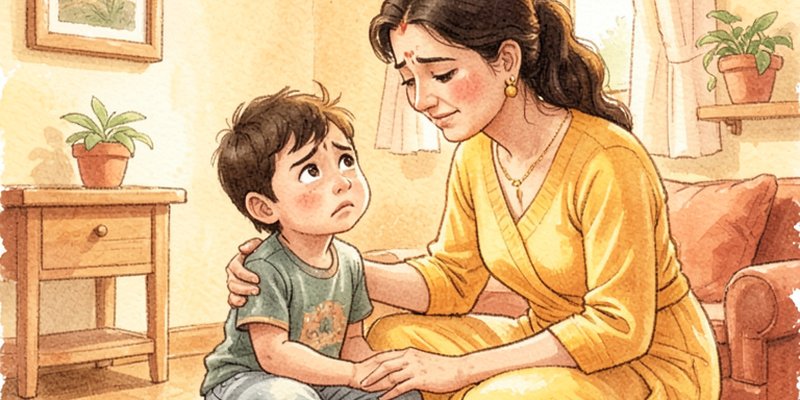
Week 1
Every conversation has quietly become about studies — the marks, the syllabus, the time left.
Through the Exam Years ·12 months ·14 – 18 years
The board and entrance years are the most acute stress window in Indian parenting, and much of the pressure a teenager feels is transmitted, not external. This is a year-long programme on how to support them through it without turning the home into a second coaching centre.
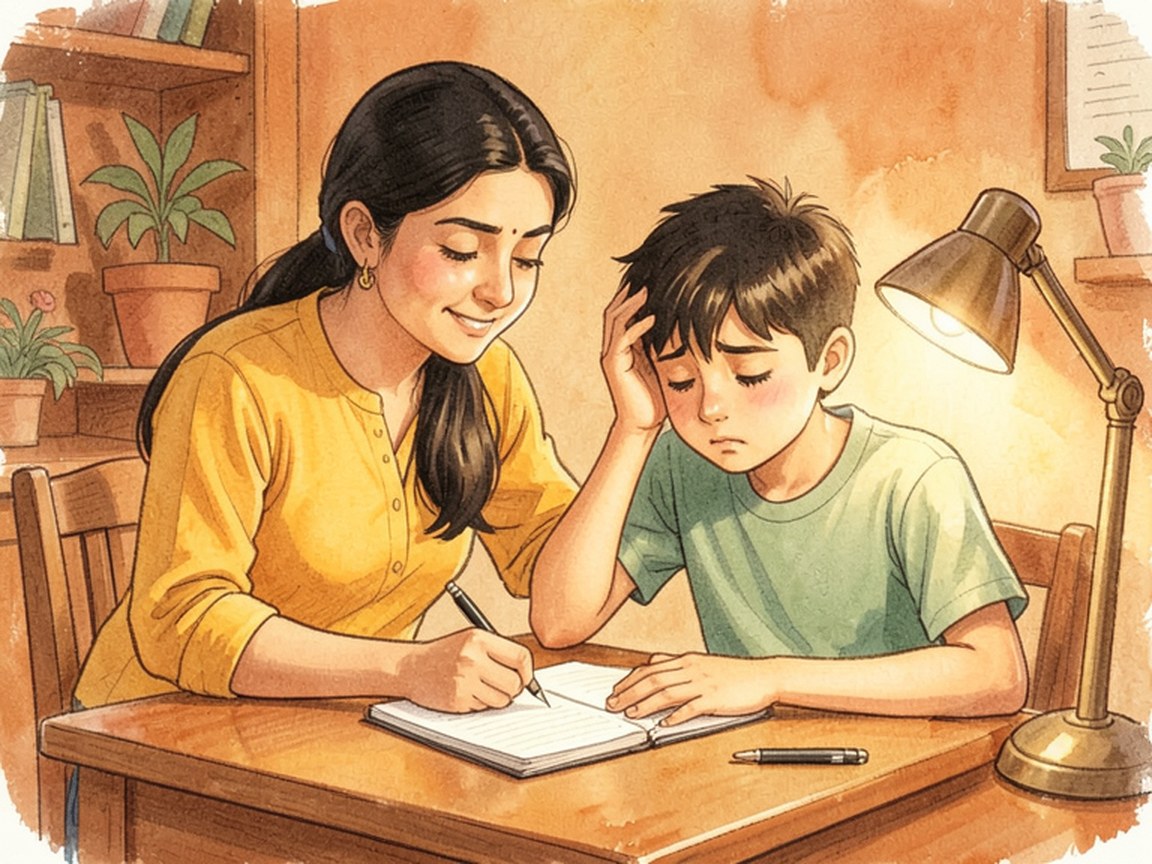
Parental anxiety during the exam years is a large part of what a student experiences as pressure, and it tends to lower performance rather than lift it. The most useful thing most parents can do is become the one low-pressure environment in a child's day — the place where the exam is not the only thing anyone talks about.
Read this first
Please read this first. If your child has spoken about not wanting to continue, seems to be withdrawing, or shows any hopelessness about themselves or their future, that is not something to work on over a programme — it needs qualified professional support now. No exam, no rank, and no result is worth a young life, and every year in India too many families learn this the hardest way. If you are worried, act today: talk to your child, reach a mental-health professional, or call a helpline such as Tele-MANAS at 14416 or iCall at 9152987821. This comes before anything else on this page.
One term, from the inside.
Week 1
Every conversation has quietly become about studies — the marks, the syllabus, the time left.

Week 4
You keep comparing them, out loud or in your head, to a cousin or a neighbour's child.
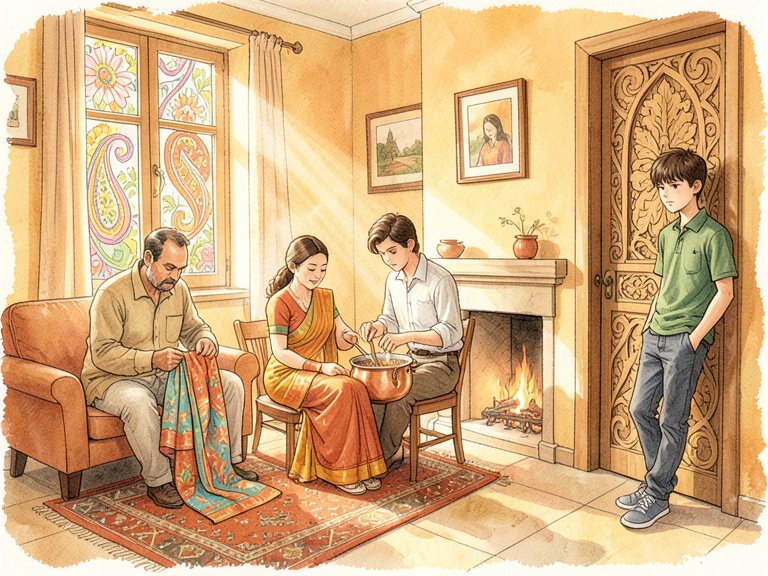
Mid-term
They've stopped talking to you, and you can feel the door closing but not why.
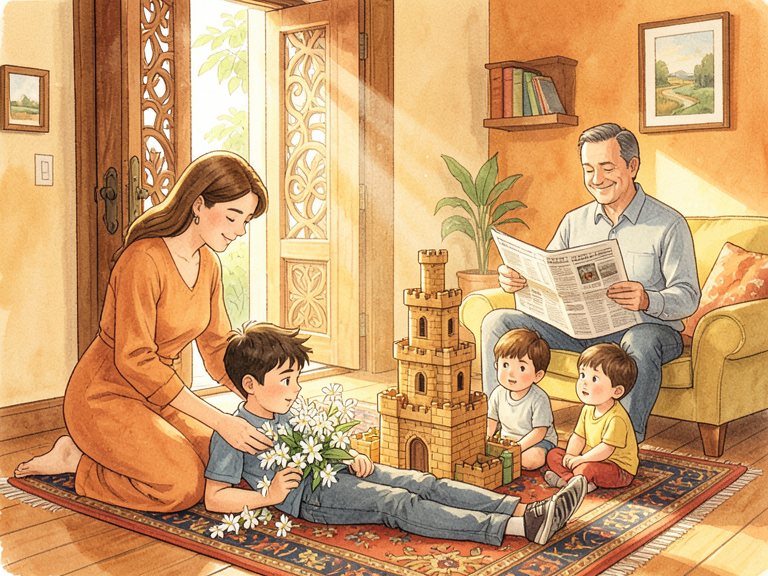
Week 9
They come home from coaching already emptied out, and there is nothing left for the evening.

Exams
Your own fear about their future has started leaking into the house, and you can hear it in your voice.
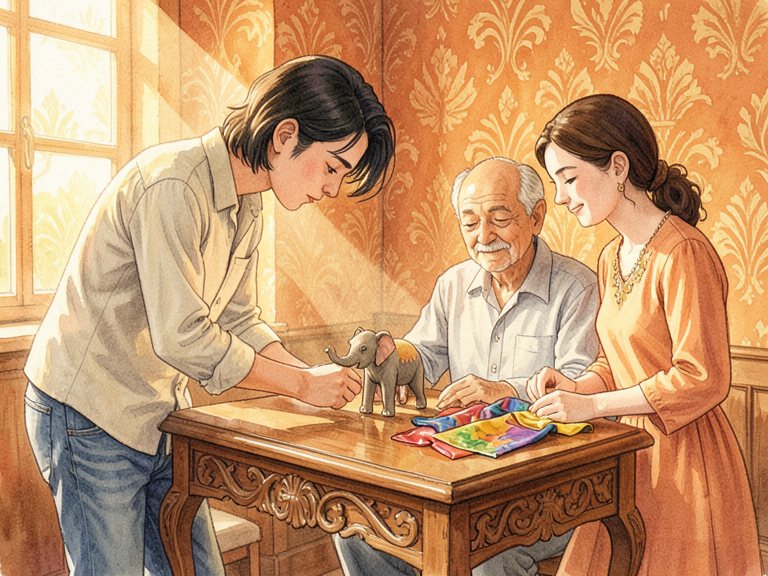
After
You want to help, and everything you try seems to add weight rather than lift it.
Swipe through the day
There is a version of the exam years that most Indian families would recognise. The syllabus becomes the weather of the home. Dinner conversations turn into progress reviews. A parent walks past a child's room and the first question, every time, is about how much has been covered. None of it is unkind. All of it is fear.
The hard thing to sit with is that a great deal of what a student experiences as pressure is transmitted rather than external. The coaching institute supplies its own. The peer group supplies its own. But the pressure that does the most quiet damage is often the ambient anxiety of the people a child lives with — the fear a parent carries about the future, which a teenager reads long before it is ever put into words.
This is not a comfortable thing to be told, and it is also the most useful, because it is the part you can actually change. You cannot lower the cut-offs or shorten the syllabus. You can change the emotional temperature of one house.
A student in a serious exam year is already spending most of their waking hours inside systems built to apply pressure. School, coaching, mock tests, ranks — the entire apparatus exists to push. By the time a child gets home, they have usually had enough pushing for one day.
The most valuable thing a home can be, in that context, is the one place the pressure lets up. Not a place where the exam is ignored — that isn't possible or honest — but a place where it is not the only subject anyone is capable of discussing. Where a child is still asked about things that have nothing to do with marks. Where a bad mock test is met with something other than a lecture.
This is what we mean by becoming the low-pressure space. It runs against a strong instinct, which says that with so much at stake, home should be where the effort is reinforced hardest. But a child who has nowhere to recover does not perform better. They run down. Making the home a recovery space is not going soft on the exam. It is the most practical thing you can do about it.
It is worth being plain about something the exam culture tends to forget. A tired brain does not retain information or perform under time pressure. A child running on five hours of sleep and skipped meals, month after month, is not working at a hundred percent that happens to be exhausted — they are working at sixty percent and calling it dedication.
Basic functioning is a performance factor. Sleep, one proper meal, some movement, a little time that isn't accounted for — these are not indulgences to be traded away for extra study hours. They are the conditions under which study hours are worth anything at all. One of the more useful shifts a parent can make is to start protecting these things as fiercely as they protect the timetable, because a rested child studying four focused hours will generally outperform an exhausted one grinding through eight.
This will not, on its own, produce a particular rank, and any programme that promised to control an exam result would be lying to you. What it does is remove the self-inflicted losses — the marks quietly given away to fatigue, anxiety, and burnout — that are entirely within a family's power to prevent.
Underneath most exam-year pressure is a parent's fear, and it is usually a real and reasonable one — about a child's future, about their options, sometimes about how the result will be read by everyone else. That fear is not the problem. The problem is what happens when it gets attached to the child and starts arriving, unspoken, in every conversation.
A large part of this work is learning to hold your fear as yours. To name it to yourself, look at it honestly, and keep it from standing in for your read of what your child is actually capable of. When those two things fuse — your fear and their capability — a child stops hearing "I believe in you" and starts hearing "I am afraid you will fail," no matter which words you use.
Separating them is not about pretending you feel calm. Children can tell. It is about doing enough of your own processing, elsewhere, that you can be genuinely present with them rather than transmitting a fear you haven't dealt with. This is quiet, unglamorous work, and it changes the temperature of a house more than almost anything else.
The deepest hazard of the exam years is not a low score. It is a child coming to believe that a single number is the measure of who they are. The entire structure around them — ranks, cut-offs, the reputational weight families attach to results — pushes hard toward that belief. And it is a dangerous one, because a self pinned to a single exam has nowhere to stand if the exam goes badly.
The counterweight has to come from home, and it has to be in place before results, not improvised after them. A child needs to enter the exam already knowing, from the way they are treated every day, that your regard for them does not move with a mark. That there is a life and a person here that a board result does not define. Held sincerely by the adults around them, this belief is what lets a young person survive a disappointment without it becoming a catastrophe.
And the long view is genuinely on your side here. The range of paths after any given result is far wider than the exam ecosystem admits. Results can be retaken, routes rerouted, futures built from starting points that looked, at seventeen, like the end of the road. The exam is a large door, but it is one of many, and the most steadying thing a parent can carry into these years is a quiet, honest confidence that their child's worth was never up for examination in the first place.
Once a day, have an exchange with your child that has nothing to do with studies, marks, or the future — a match, a show, something that happened, anything at all. It signals that they are more to you than an exam, which is a thing they need to hear more than you think.
Write down what you are actually afraid of. Not the exam — the thing underneath it. Whether it's their future, your standing, or a fear you can't quite place. Naming it privately keeps it from arriving, unspoken, in every conversation you have with them.
A tired brain does not retain or perform. This week, treat sleep and one proper meal as non-negotiable before you treat any extra hour of study as valuable. Basic functioning is a performance factor, not a luxury to be sacrificed.
That helps in the moment. Changing the pattern takes something else.
Twelve months alongside you through a full exam cycle — the run-up, the exams themselves, and the weeks after results, which are often harder than parents expect.
We begin with an honest look at how pressure moves through a house — how much of it is transmitted rather than external, and how a child reads a parent's fear long before it is spoken. We map the flashpoints in your own home: the conversations that reliably tighten, the comparisons that slip out, the moments the exam swallows everything else. Most parents find they are contributing more than they realised, which is uncomfortable and also the most workable news there is.
The core of the year. How to make the home the place a child recovers rather than a second coaching centre — where the exam is present but not total. We work on the daily non-academic conversation, on sleep and basic functioning as genuine performance factors, and on the specific language that supports without adding weight. This is where you separate your own fear from their capability, so that one stops standing in for the other.
The exams themselves, and the weeks immediately around them. How to hold steady when the pressure in the ecosystem peaks — coaching intensity, mock results, the reflexive comparison from relatives. What to say and what to leave unsaid on a bad day. How to keep a channel open with a child who has gone quiet, without prying it open. And how to watch, calmly, for the signs that a child is struggling in a way that needs more than a parent.
Results, and the identity risk of pinning a whole self to a single number. We work on separating the outcome from the child in your own mind first, because they will read whichever version you actually hold. What to say when the results are good, when they are disappointing, and what the real range of paths after any given result actually looks like — which is far wider than the exam culture admits.
Small group — deliberately. Few enough that everyone is known, and no one is a spectator.
Message us to hear about dates, structure and fees for the next cohort.
Purnam is an AI-native parenting companion for modern Indian families. A structured programme, a smart companion that knows your family, and a small, honest community of parents — built to take you from surviving the day to thriving across the years.
Parenting that hasn't been handed down — for the generation that wants to parent differently than they were parented, but has no cultural template for it.
Purnam · our positioning
Purnam is built by a founding team with 18+ years across big tech, startups, and growth-stage technology companies — and, more to the point, by parents currently inside the early-childhood years themselves.
Parents to a toddler ourselves — building Purnam to help Indian families move from surviving to thriving.
Purnam's approach draws on modern developmental psychology — attachment, emotional regulation, behavioural coaching — held alongside Indian contemplative traditions as practical tools rather than belief.
We are advised by senior practitioners in human transformation and behavioural coaching. Where the evidence for something is strong, we say so. Where it is contested, we say that too.
Message us on WhatsApp about Through the Exam Years — dates, structure, fees, and whether it fits your situation.
Or just ask your actual question. That's what the line is for. Someone from the Purnam team will get back to you.
Purnam offers parenting support and education. This is not paediatric, medical, or mental-health treatment, and it is not a substitute for care from a qualified professional. Every child and family is different; nothing here is a promise of any particular outcome.