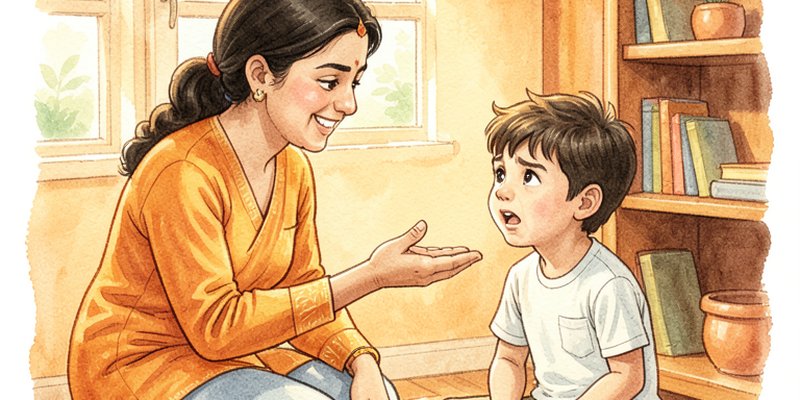
Age 6
One-word answers to everything — 'fine', 'nothing', 'school' — until you stop asking.
Still Their Parent ·12 months ·11 – 18 years
Withdrawal usually looks like rejection from the inside, and feels like losing a child who still lives in your house. This is a calm programme on staying connected to an adolescent who is separating — which is what adolescents are supposed to do.
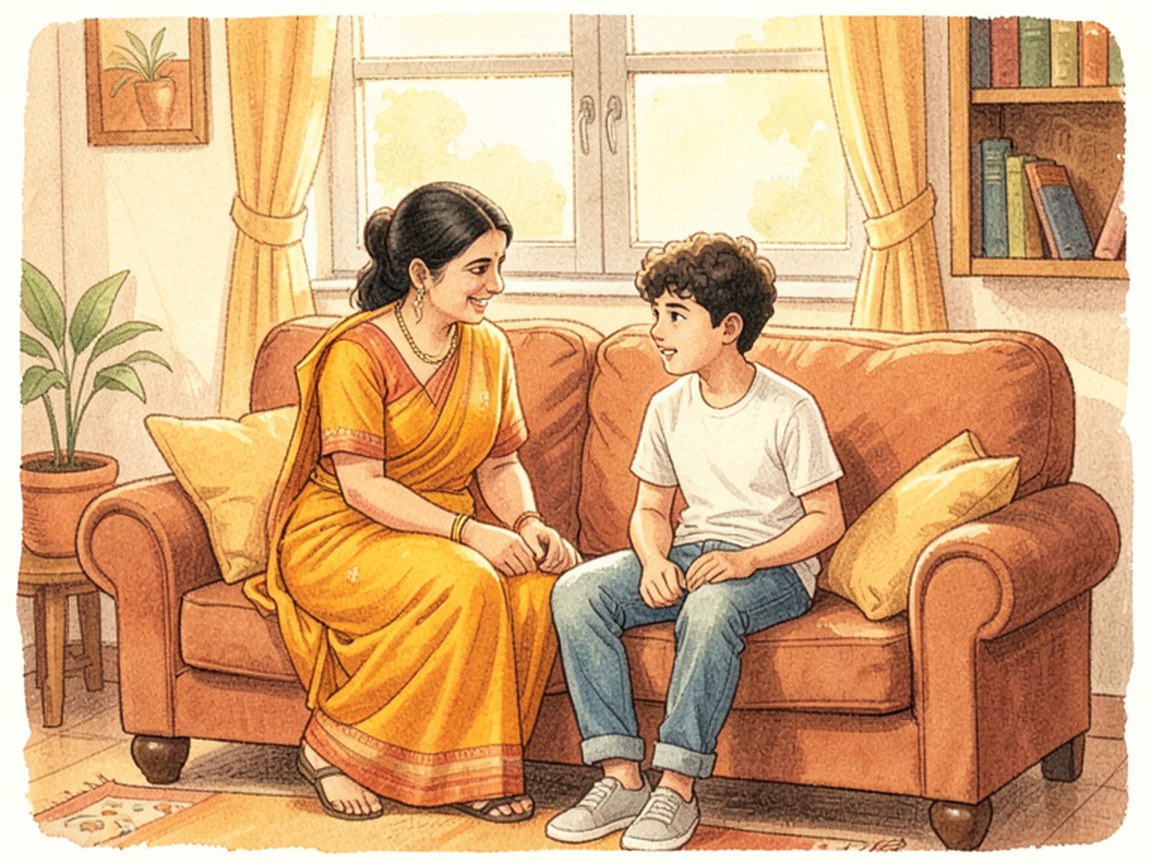
Teenage withdrawal is usually developmental rather than personal — separating from parents is the work of adolescence, and from the inside it looks like rejection. Connection tends to return not through more questions, but through lowering the stakes of contact: shared activity, availability without interrogation, and a visible reduction in what gets policed.
Read this first
Read this first, before anything else on the page. There is ordinary teenage withdrawal, and there is something that needs a professional. If you are seeing signs of depression, self-harm, substance use, an eating problem, or anything that makes you fear for your child's safety, that is not a relationship you work on slowly over a year — it needs a qualified mental-health professional now. Speaking to a counsellor, your paediatrician, or a psychologist is not an overreaction and not a failure. It is exactly the right first move, and this programme can wait until your child is safe.
How this changes as they grow.
Age 6
One-word answers to everything — 'fine', 'nothing', 'school' — until you stop asking.
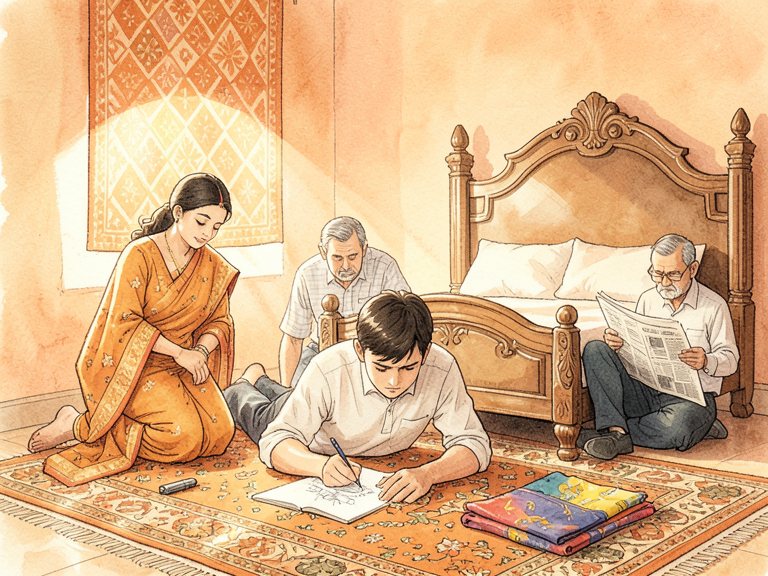
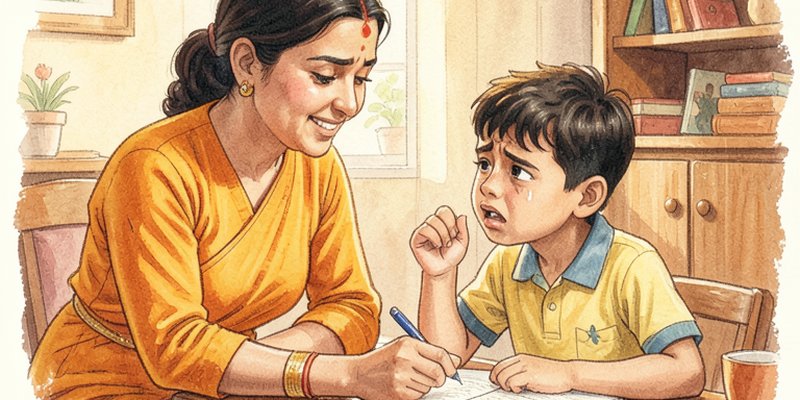
Age 9
The bedroom door that is always closed now, and the quiet on the other side of it.
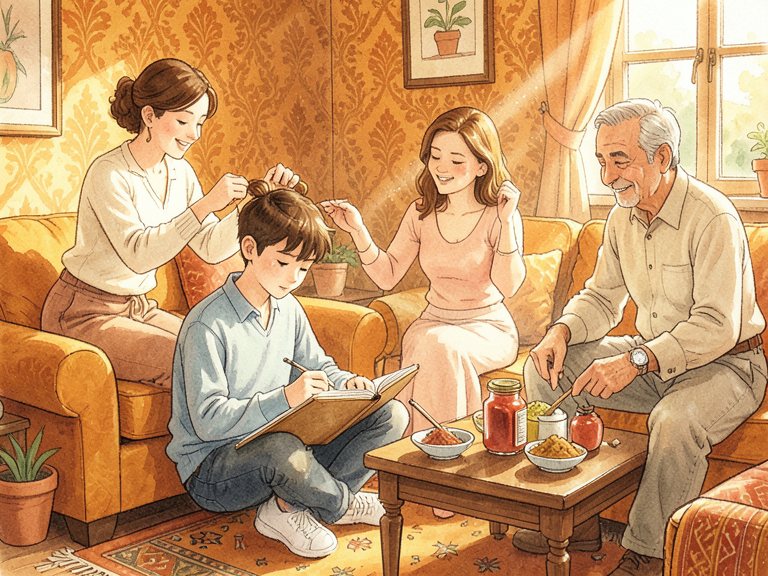
Age 12
You find out about their life from someone else — a cousin, a teacher, a WhatsApp group.
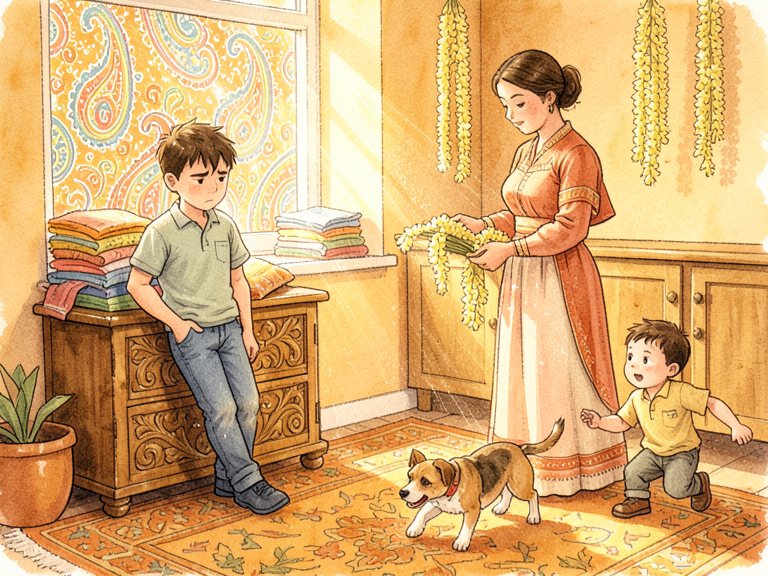
Age 14
Every conversation turns into an argument within two minutes, over nothing you can name.
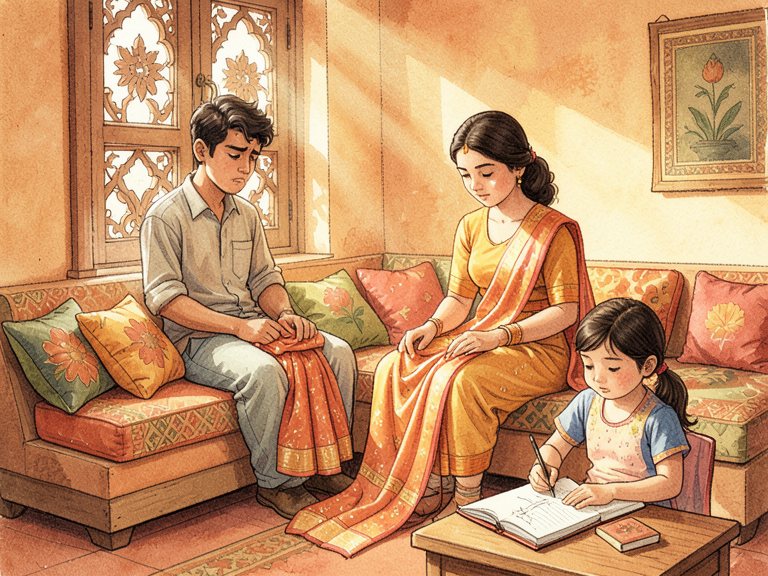
Age 16
They lie about small things they didn't need to lie about, and you can't work out why.
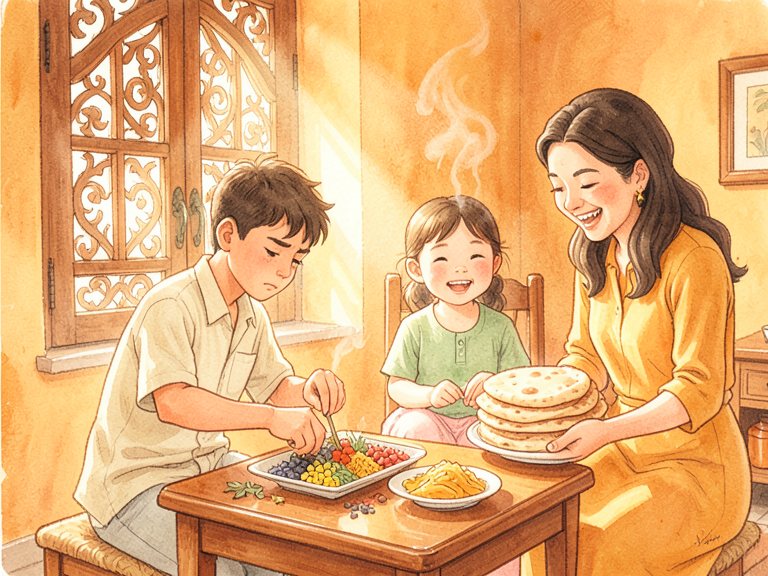
Now
You feel like you've lost a child who is still living in your house, sitting at your table.
Swipe through the day
There is a particular grief that has no name. Your child is alive, well, and asleep down the corridor — and you have not had a real conversation with them in months. They answer in single words. The door stays shut. You learn about their life in fragments, from a cousin or a teacher or the corner of a screen you weren't meant to see. You are not estranged. You are just, somehow, no longer close to a person you used to know completely.
Almost every parent of a teenager arrives here at some point, and almost every one of them takes it personally. It is very hard not to. The withdrawal is aimed at you specifically — the same child who once told you everything now tells you nothing — and it arrives without explanation. From the inside, it feels exactly like rejection.
The first and most useful thing to understand is that it usually isn't.
Adolescence has a task, and the task is separation. A teenager is in the process of becoming a person who can function without you — which is, in the end, the entire point of raising a child. That work is not gentle and it is not gradual. It involves pushing away the people they are most attached to, precisely because they are most attached to them. You are being pulled from not because you failed but because you succeeded: they are secure enough to leave.
This is why taking it personally is so costly. When a parent reads developmental withdrawal as rejection, they respond to the rejection — with hurt, with pursuit, with more questions, with attempts to close the gap. And every one of those responses raises the stakes of contact, which is exactly what makes a teenager retreat further. The parent's pain becomes one more thing the teenager has to manage, and managing it is easiest from behind a closed door.
None of this means the distance is comfortable or that you simply endure it. It means the way back is counter-intuitive. You do not close the gap by reaching across it harder. You close it by making contact cost less.
Watch what happens when a parent gets worried about a quiet teenager. The questions increase. How was school. Who were you with. What did you do. Why didn't you tell me. Each one is an act of love, and each one lands as pressure.
Direct questions put a teenager on the spot, and a teenager on the spot gives you the shortest answer that ends the exchange. 'Fine.' 'Nothing.' 'School.' The more you ask, the more practised they become at deflection, until the questioning itself becomes the wall between you. You are trying to open a door and the asking is what keeps closing it.
What works instead is quieter and slower. Observation rather than interrogation — noticing out loud, without requiring a response. Availability rather than pursuit — being reliably present and reliably undemanding, so that when they do have something to say, you are the low-cost place to say it. Teenagers talk when talking is cheap: in the car, in the kitchen, late at night, sideways, while doing something else. Almost never across a table when summoned.
This will not turn a house around in a week, and any programme that promised it would be lying. A pattern built over years unwinds slowly, and it unwinds because the parent changed what they were doing, not because the teenager was persuaded to.
A great deal of the conflict in a home with a teenager is optional. It is generated by the parent policing things that do not, on reflection, matter — the room, the hair, the clothes, the music, the tone — and every one of those small skirmishes spends down a store of goodwill that the important battles will need.
The distinction worth making, again and again, is between safety and preference. Safety is where you hold firm without apology: how they travel, who they are actually with, substances, the genuine risks. Preference is nearly everything else — the things that offend your taste or your sense of how things should be done, but harm no one. The teenager who feels policed on preference stops distinguishing your rules from your opinions, and starts hiding both.
There is a finding here that most parents resist and it holds anyway: teenagers disclose more to parents who police less. Not because low-supervision homes are safer, but because a teenager who is not braced for judgment is a teenager who tells you things. The parent who releases the small controls buys, in exchange, the information that actually keeps a child safe.
Almost none of this is straightforward in an Indian home, and it is dishonest to pretend otherwise.
Most Indian parents of teenagers were raised inside an obedience-and-respect model — a relationship with their own parents that was never negotiated, only followed. They have no lived template for a relationship with a child that involves give-and-take, disagreement, or a teenager who is allowed to be a separate person with different views. So when adolescence brings exactly that, it can feel not like development but like disrespect, like a failure of upbringing. Working on this means, quite often, building a kind of relationship the parent never themselves experienced.
Layered on top is the exam machinery. From class 9, academic pressure becomes the dominant stressor in most homes, and it has a way of colonising the entire relationship — until every conversation is about marks, coaching, and the future, and the teenager comes to experience their parent as one more source of pressure rather than any relief from it. Around this sits the extended family, with its comparisons and its surveillance and its opinions carried on the family WhatsApp group. And running underneath, the sharp reality of gender: the rules for a son and a daughter around phones, dating, going out, and coming home are rarely the same, and teenagers register that asymmetry with great precision.
This programme does not hand you a Western script that assumes an independence your family structure does not grant. It works with the home you actually have — the joint family, the board exams, the son and the daughter held to different standards — and with the harder, quieter task underneath all of it: staying someone your teenager can come to, in a culture that mostly taught you to be someone they obey.
Parents who do this work do not report a transformed, chatty child. They report something smaller and steadier. The house gets quieter in a good way — fewer arguments that start over nothing. A channel reopens, often not the one they expected: a shared drive, a shared show, a task done side by side, where the talking happens without anyone deciding to talk. The teenager begins, in small increments, to volunteer things again, because volunteering has stopped being expensive.
And the parent stops bracing. That is often the deepest change — the shift from managing a problem to being in a relationship again, even a distant one, with a person who is, still and always, their child.
None of it makes adolescence smooth, and none of it should. But you do not have to lose the relationship to it. That is the whole of what this programme is for.
Instead of 'how was school', try 'you looked tired when you came in'. A question asks them to open a door; an observation just leaves it open. This one swap, used a few times, changes the temperature of a house.
Drive them somewhere, cook something, watch the thing they like without commentary. No questions, no lesson. Teenagers say more sideways, while doing something, than they ever say face to face.
Pick something you nag about that isn't actually about safety — the room, the haircut, the playlist — and visibly let it go. Releasing one small battle buys back more goodwill than winning it ever would.
That helps in the moment. Changing the pattern takes something else.
A twelve-month programme on staying in relationship with a teenager who is pulling away — long enough to work with the seasons of an actual adolescent year, from an ordinary term to the pressure of exam months.
Before changing anything, we look clearly at what is happening. Separating from parents is the developmental job of adolescence — it is meant to happen, and it looks like rejection precisely because it is working. We map where your particular relationship is, what is ordinary distance and what is genuine rupture, and why taking the pulling-away personally is the one response that reliably makes it worse.
The instinct when a teenager goes quiet is to ask more. It almost always closes them down further. We work on the interrogation trap directly — why direct questions reliably produce one-word answers, and how availability without demand does what questions cannot. This is slow, deliberate work, because a pattern of years does not turn around in a fortnight.
Not every hill is worth dying on, and teenagers disclose more to parents who police less. We separate the genuine safety questions — where you hold firm — from the preferences you can release. And we build the channel that works when conversation doesn't: shared activity as the reliable route back in, so that connection has somewhere to live even when talking has gone cold.
From class 9 onward, academic pressure becomes the dominant stressor in most Indian homes, and the easiest thing in the world to let it eat the relationship whole. We work on holding both — staying a parent your teenager can come to, through the months when every conversation wants to be about marks. And we look at repair: how to rebuild after years of a particular dynamic, without pretending it didn't happen.
Small group — deliberately. Few enough that everyone is known, and no one is a spectator.
Message us to hear about dates, structure and fees for the next cohort.
Purnam is an AI-native parenting companion for modern Indian families. A structured programme, a smart companion that knows your family, and a small, honest community of parents — built to take you from surviving the day to thriving across the years.
Parenting that hasn't been handed down — for the generation that wants to parent differently than they were parented, but has no cultural template for it.
Purnam · our positioning
Purnam is built by a founding team with 18+ years across big tech, startups, and growth-stage technology companies — and, more to the point, by parents currently inside the early-childhood years themselves.
Parents to a toddler ourselves — building Purnam to help Indian families move from surviving to thriving.
Purnam's approach draws on modern developmental psychology — attachment, emotional regulation, behavioural coaching — held alongside Indian contemplative traditions as practical tools rather than belief.
We are advised by senior practitioners in human transformation and behavioural coaching. Where the evidence for something is strong, we say so. Where it is contested, we say that too.
Message us on WhatsApp about Still Their Parent — dates, structure, fees, and whether it fits your situation.
Or just ask your actual question. That's what the line is for. Someone from the Purnam team will get back to you.
Purnam offers parenting support and education. This is not paediatric, medical, or mental-health treatment, and it is not a substitute for care from a qualified professional. Every child and family is different; nothing here is a promise of any particular outcome.