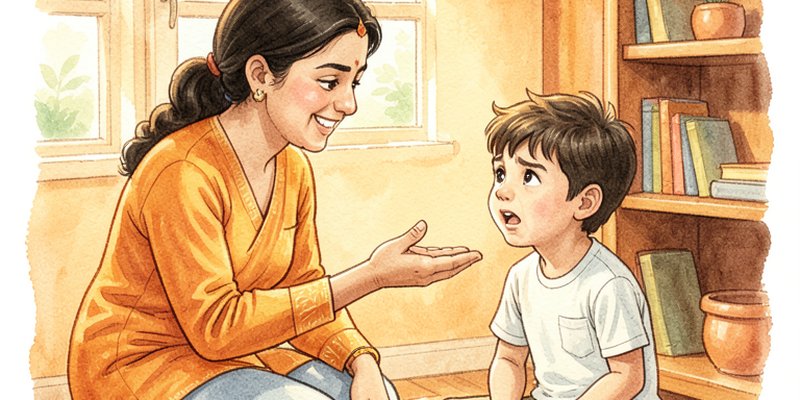
Monday
They lie about something so trivial you can't understand why they bothered.
Why Children Lie ·3 months ·4 – 12 years
The moment your child looks you in the eye and denies something you watched them do, it is hard not to read it as a flaw. It is almost always something simpler: a child trying to avoid a reaction they expect. This is a programme on responding so that the truth stays possible.
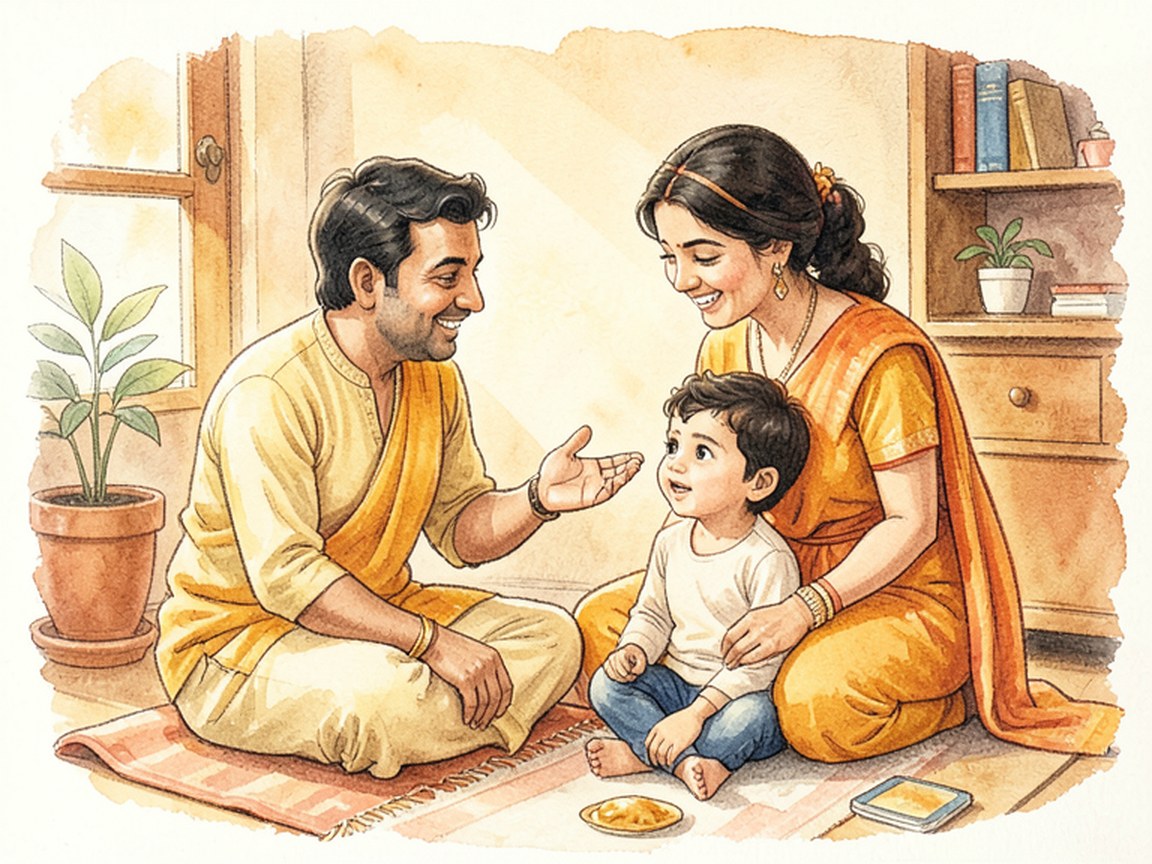
Most childhood lying is fear-driven rather than character-driven — children lie to avoid a reaction they expect. Honesty increases fastest when telling the truth reliably produces a smaller consequence than being caught. The parental move that helps most is making an honest admission cost less than a discovered lie, and giving up the questions you already know the answer to.
Read this first
When it isn't only lying. If the lying comes alongside stealing, real aggression, or a child pulling away and going quiet, it is usually pointing at something underneath rather than at honesty itself — and that deserves a proper assessment from a child psychologist, not a parenting programme. Please treat that combination as a reason to seek a qualified professional, and don't wait for a course to run its course.
One ordinary week in your house.
Monday
They lie about something so trivial you can't understand why they bothered.
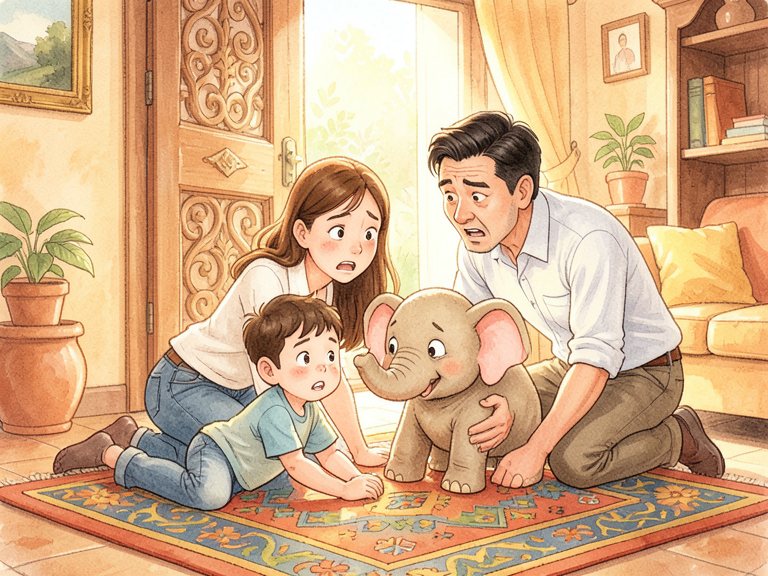
Tuesday
You watched it happen, and they deny it to your face with complete conviction.
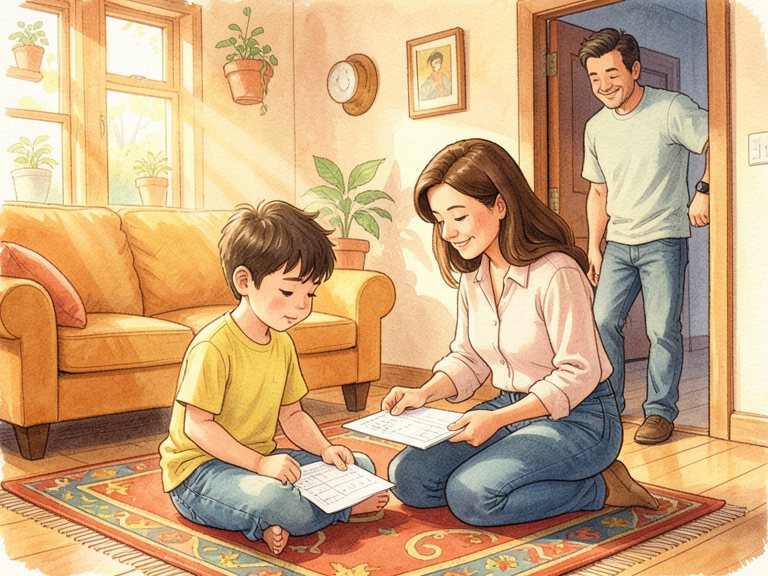
Wednesday
The homework was done, the test went fine, nothing happened at school — and none of it is true.
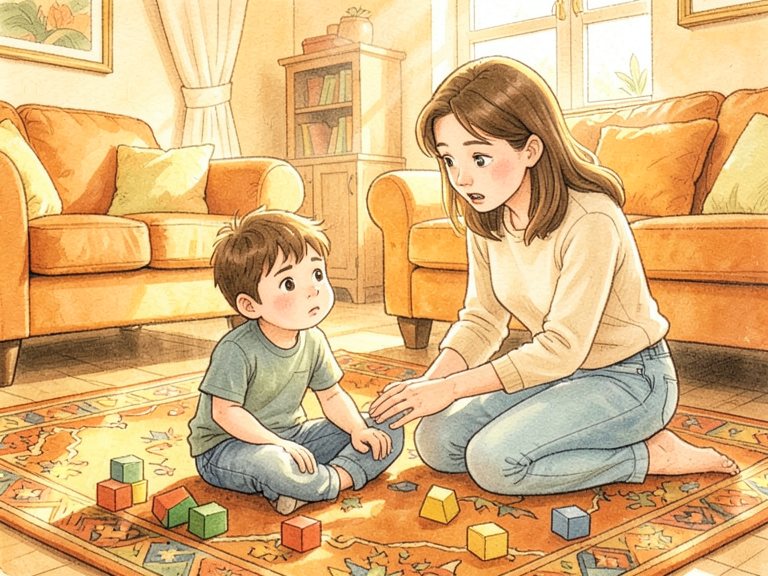
Thursday
You catch yourself asking a question you already know the answer to, just to see if they'll lie.
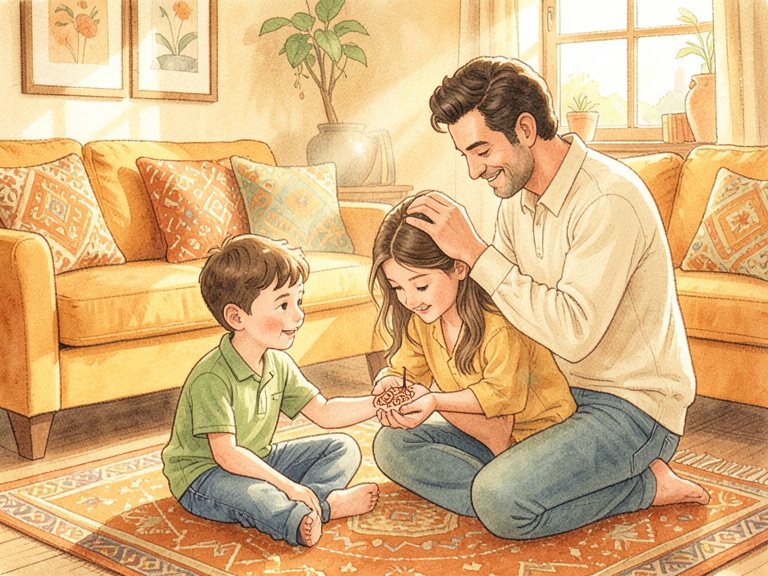
Friday
A small pattern is hardening, and you're starting to wonder what it means about who they are.
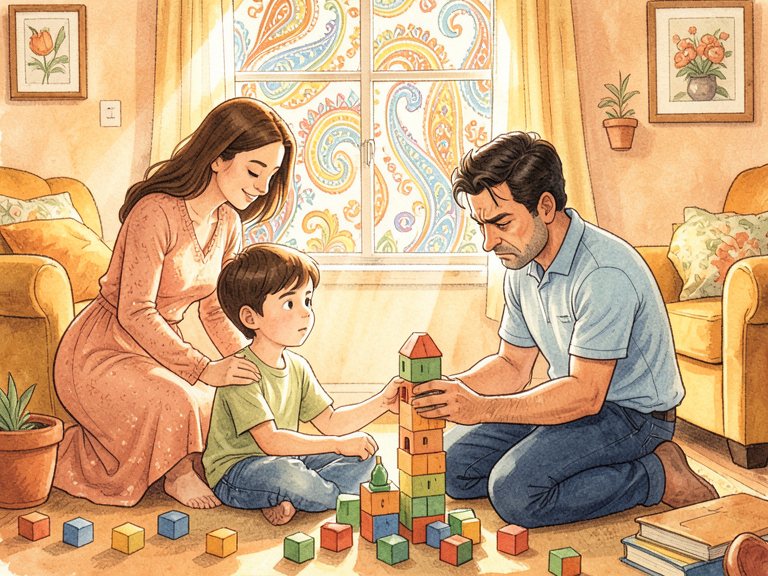
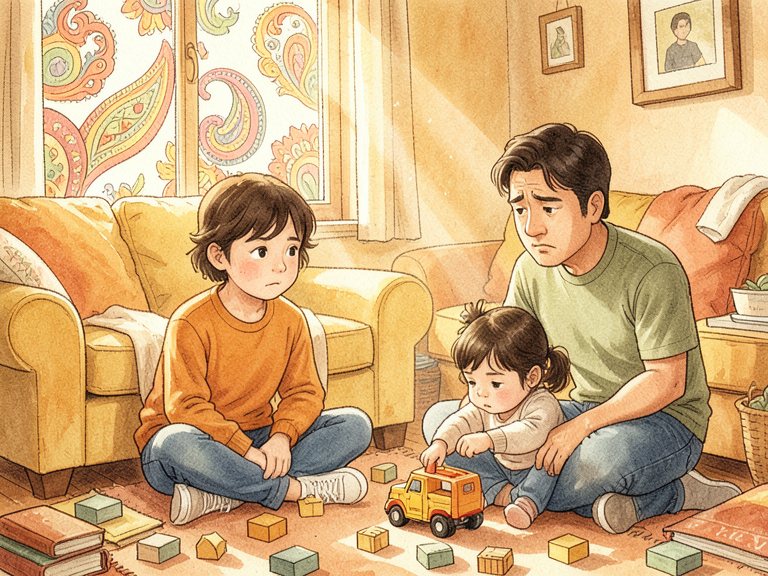
Saturday
You react hard to the lie, and the next lie is simply better hidden.
Swipe through the day
Few things unsettle a parent more than a child who lies well. The small denials are one thing; it is the confident, unblinking ones — delivered while you are holding the evidence — that send a chill through you. In that moment it is almost impossible not to leap to the largest possible conclusion: that this is about character, that something is wrong, that you are watching the early shape of the adult they will become.
Almost always, you are not. Lying is one of the most reliably misread behaviours in childhood, because the thing it looks like — dishonesty of character — is rarely what is driving it. What is driving it, in the overwhelming majority of cases, is fear. A child lies to avoid a reaction they expect: your disappointment, your anger, the loss of something, the particular face you make. The lie is not an attack on the truth. It is a small, badly-chosen shield.
Seeing this clearly changes what you do next. If lying were a character flaw, the response would be to correct the character — more discipline, more severity, more moral weight. But if lying is fear-driven, that response does the opposite of what you want. It raises the fear, and the fear was the cause.
There are, broadly, two very different things that both go by the name of lying, and telling them apart is the first real task.
The first is developmental. Around the age when children work out that other people hold a different picture of the world than they do, they begin to test what happens when they try to alter that picture. This is, oddly, a sign of a growing mind — it requires understanding that your knowledge and theirs are not the same. Nearly every child does this. It arrives roughly on schedule, it is clumsy at first, and for most children it settles as they mature, particularly if the adults around them don't turn it into a war.
The second is a pattern. This is lying that has stopped being an occasional experiment and become a habit — a reliable, reached-for tool. Patterned lying is almost always built on top of a fear that has had time to harden: a child who has learned, through experience, that honesty in this house reliably goes badly. The two need different responses, and treating a passing developmental phase as a hardened pattern is one of the faster ways to create the pattern you were afraid of.
This will not turn your child into someone who never lies, and any programme that promised to would be lying to you. Honesty is not a switch. What you are actually building is a household where the truth is the easier, safer, cheaper thing to say — and where lying, therefore, has less to do.
There is a specific parental move that feels like the obvious response to a lie and reliably makes it worse. It is the interrogation: the closing sequence of questions, tightening around the child, designed to corner them into a confession.
The problem is what it teaches. Interrogation frames honesty as a defeat — something extracted from the child against their will, at the end of a losing battle. A child who confesses under interrogation has not learned that telling the truth is good. They have learned that they are not yet good enough at lying. The lesson lands on their technique, not their honesty.
Worse is the version of this where you already know the answer. The question you ask only to test whether they'll lie — did you brush your teeth, when the brush is bone dry — is a trap, and children feel the trap even when they can't name it. Every trap you set teaches the same quiet lesson: that in this house, honesty and dishonesty lead to roughly the same unpleasant place, so the choice between them is merely tactical. Give up the questions you already know the answer to. When you know, say what you know. Reserve your genuine questions for the things you genuinely don't.
If fear is the cause, then the work is to make honesty survivable — to change the arithmetic your child is running, mostly below the level of words, every time they decide whether to tell you something.
That arithmetic is simple. On one side sits the cost of the honest version; on the other, the cost of the lie, discounted by the chance of not being caught. Most households, without meaning to, load the honest side. The child who admits to the broken cup gets the full weight of your reaction plus a lesson about the cup; the child who denies it at least buys a chance of escape. Rationally — and children are rational about this — lying is the better bet.
You change the bet by making the honest version reliably cheaper. Not without consequence, but visibly, dependably lighter, with the difference named out loud so the child can see the deal: the truth costs less, every time, without exception. And you deal with the lie and the thing it concealed as two separate events, because collapsing them into one explosion teaches only that discovery is catastrophic — which is precisely the fear that produces the next lie. Over time, a child who finds that honesty consistently goes better than concealment starts, unevenly and with relapses, to choose it. Not because they have become virtuous, but because you have finally made it the sensible move.
Most lying is ordinary, and most of it responds to a calmer, steadier household. But not all of it, and part of being useful here is being honest about the edge.
When lying travels in company — alongside stealing, real aggression, or a child who is pulling away and going quiet — it is usually no longer about honesty at all. It has become a signal, pointing at something underneath: distress, a situation you can't yet see, something that needs a trained eye. That combination is a reason to seek a proper assessment from a child psychologist, and to seek it sooner rather than later. A parenting programme is the right tool for the ordinary case and the wrong one for this, and knowing the difference is part of what you should get from us — including the part where we tell you this isn't ours to hold.
The question you already know the answer to — 'Did you finish your milk?' when you can see the full glass — teaches your child that honesty and dishonesty lead to the same place. If you know, say what you know. Save your questions for the things you genuinely don't.
The next time your child owns up to something before you've caught them, let the admission visibly change the outcome. Not no consequence — a smaller one, named out loud as the reward for the truth. Children do this arithmetic faster than we think.
When both have happened — the broken cup and the denial — deal with them as two events, not one. Collapsing them into a single explosion teaches only that getting caught is catastrophic, which is the exact lesson that produces the next lie.
That helps in the moment. Changing the pattern takes something else.
Three months on one of the most alarming things a parent encounters — and one of the most misread. Not on catching lies, but on building a household where the truth is the easier thing to say.
Before changing how you respond, we build a clear picture of what the lying actually is. The difference between developmental lying — which nearly every child does, on schedule — and a pattern that has set in. Fear as the primary driver, and how to read what a particular lie is protecting your child from.
The heart of the work. Why interrogation reliably increases lying rather than reducing it. The trap of asking questions you already know the answer to. And the specific, practical shift: making an honest admission survivable, so that telling the truth is not the more dangerous option.
When lying has become a habit rather than a moment, the fix is different. We work on unwinding the fear that built it, rebuilding the child's expectation of what honesty leads to, and holding your nerve through the stretch where the truth is still frightening for them and frustrating for you.
Making the new pattern durable once the first relief has passed. How to handle a serious lie without undoing months of work. And an honest look at when lying travels with other things — stealing, aggression, withdrawal — and stops being something to parent through alone.
Small group — deliberately. Few enough that everyone is known, and no one is a spectator.
Message us to hear about dates, structure and fees for the next cohort.
Purnam is an AI-native parenting companion for modern Indian families. A structured programme, a smart companion that knows your family, and a small, honest community of parents — built to take you from surviving the day to thriving across the years.
Parenting that hasn't been handed down — for the generation that wants to parent differently than they were parented, but has no cultural template for it.
Purnam · our positioning
Purnam is built by a founding team with 18+ years across big tech, startups, and growth-stage technology companies — and, more to the point, by parents currently inside the early-childhood years themselves.
Parents to a toddler ourselves — building Purnam to help Indian families move from surviving to thriving.
Purnam's approach draws on modern developmental psychology — attachment, emotional regulation, behavioural coaching — held alongside Indian contemplative traditions as practical tools rather than belief.
We are advised by senior practitioners in human transformation and behavioural coaching. Where the evidence for something is strong, we say so. Where it is contested, we say that too.
Message us on WhatsApp about Why Children Lie — dates, structure, fees, and whether it fits your situation.
Or just ask your actual question. That's what the line is for. Someone from the Purnam team will get back to you.
Purnam offers parenting support and education. This is not paediatric, medical, or mental-health treatment, and it is not a substitute for care from a qualified professional. Every child and family is different; nothing here is a promise of any particular outcome.