Monday
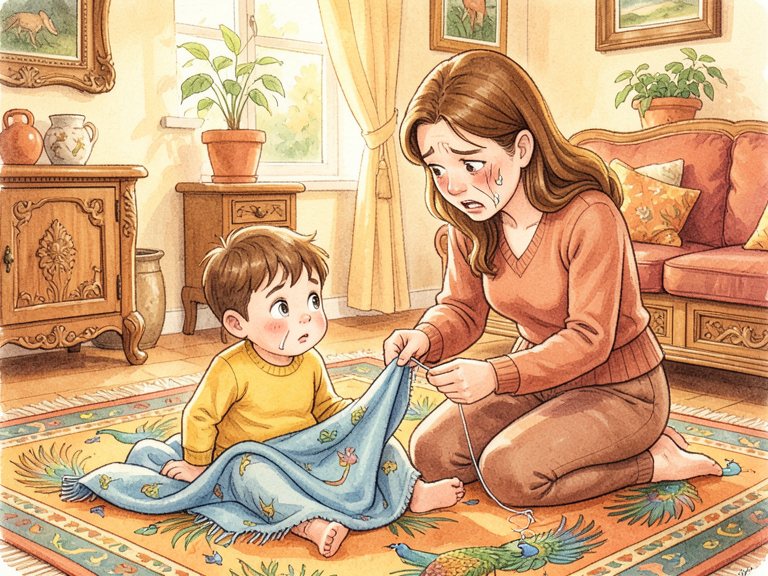
"You're the worst mother" — said in the heat of it, and it lands harder than you let on.
Respect, Both Ways ·3 months ·5 – 12 years
When your child talks back, there is a position they want taken seriously wrapped inside a delivery that lands as disrespect. This is a focused programme on answering the first without rewarding the second — and on teaching a child to disagree in a way you can actually live with.
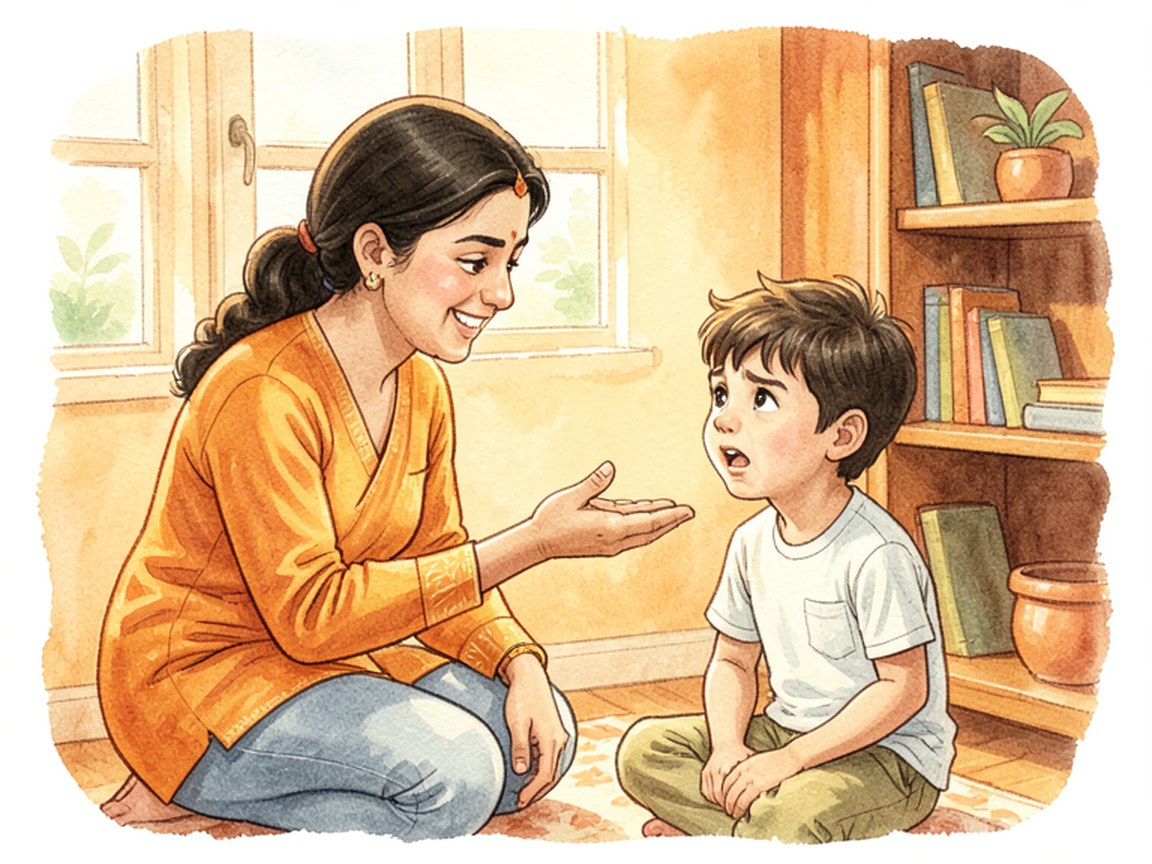
Back-talk is usually a child testing whether they're allowed to have a position, delivered without the skill to do it politely. The goal isn't silence — it's teaching disagreement that stays respectful, which is a more useful adult skill than compliance. That means answering the message while addressing the delivery, rather than treating both as the same offence.
One ordinary week in your house.
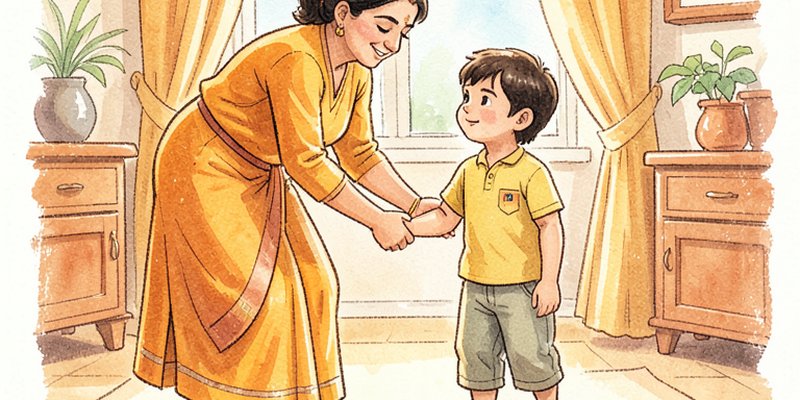
Monday
"You're the worst mother" — said in the heat of it, and it lands harder than you let on.
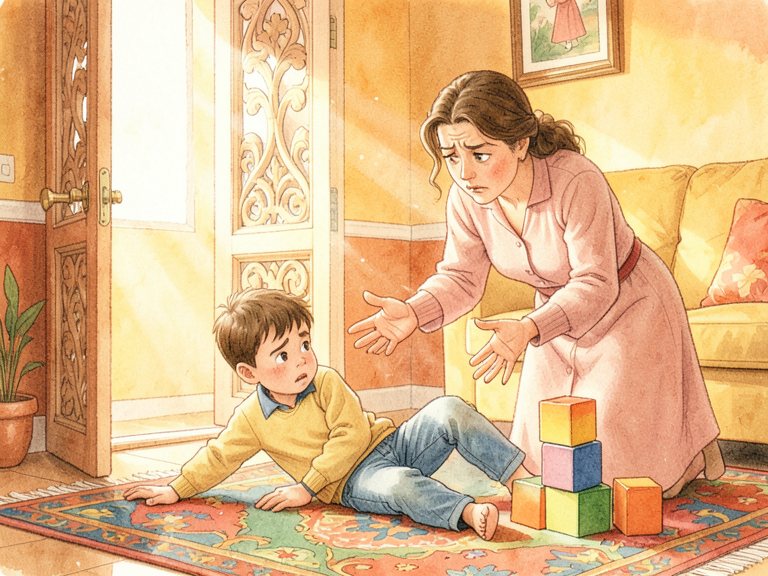
Tuesday
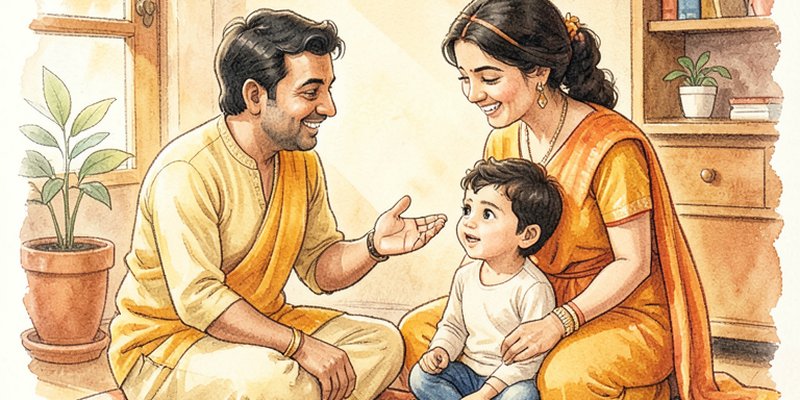
The eye-roll, the sigh, the tone that turns a simple instruction into a standoff.
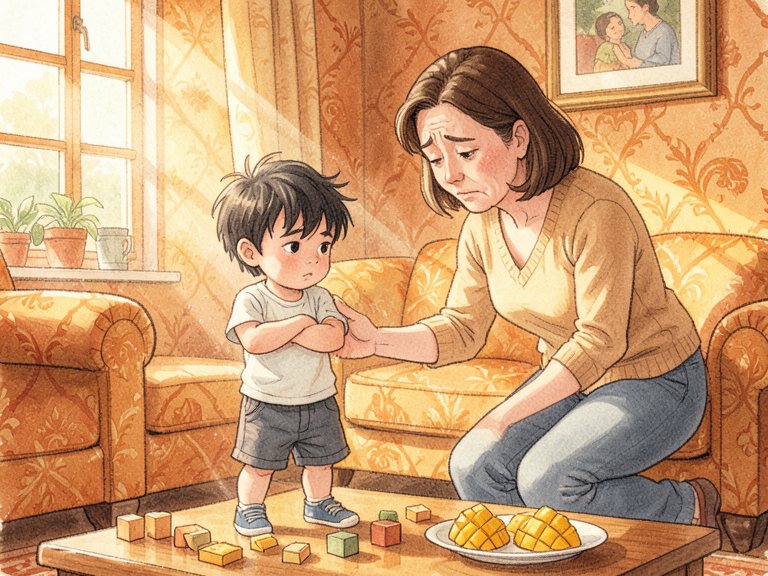
Wednesday
Every request becomes a negotiation, and you're tired of arguing before breakfast.
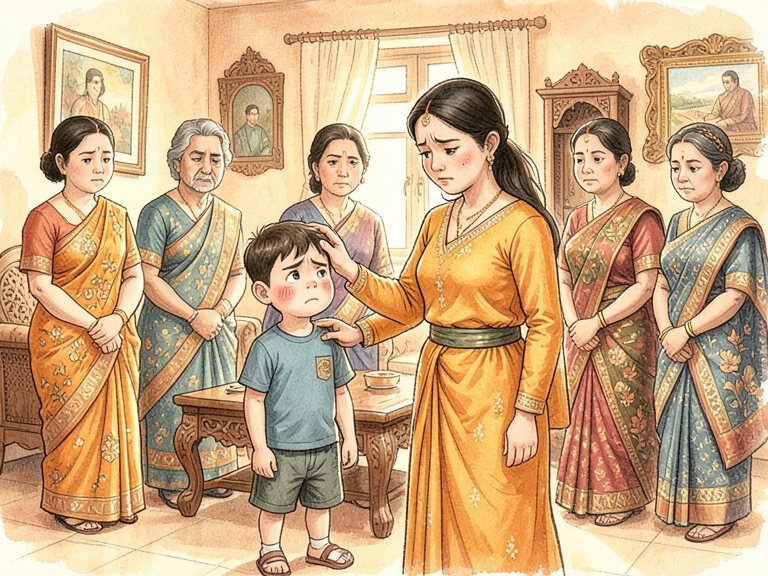
Thursday
Being answered back in front of relatives, and feeling the whole room judge your parenting.
Friday
You hear your own parents' voice come out of your mouth — and you don't like how it sounds.

Saturday
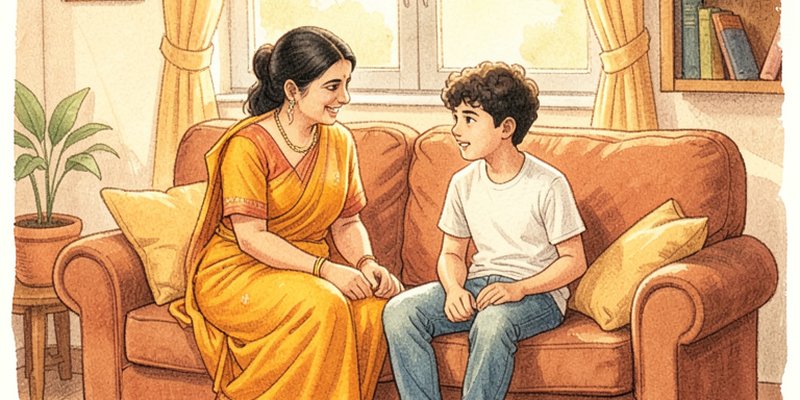
You can't tell where the line is anymore between a child having an opinion and a child being rude.
Swipe through the day
When a child talks back, most of us hear one thing: disrespect. It arrives as a single offence — the tone, the words, the sheer nerve of it — and the instinct is to shut the whole thing down at once.
But there are almost always two things inside a piece of back-talk, and they are worth pulling apart. There is a message: I don't agree, I don't want to, this isn't fair, you're not listening. And there is a delivery: the eye-roll, the raised voice, the "you're the worst mother in the world." The message is usually legitimate, even when it's wrong on the facts — the child genuinely has a position and wants it taken seriously. The delivery is the part that has no skill behind it yet.
When we treat the two as the same thing and reject both together, the child doesn't learn to deliver better. They learn that having a position at all was the mistake. That lesson lands, and it doesn't produce a polite child. It produces one who either goes quiet and stops telling you things, or gets louder because the only way to be heard is to escalate.
The response most of us reach for first is the one we were raised on: don't answer back. Said sharply enough, it works — in the moment. The room goes quiet. The instruction gets followed.
The trouble is what it buys. Demanding silence produces compliance without cooperation. The child does the thing, but nothing has been resolved and nothing has been learned, so the same fight arrives tomorrow in the same shape. Worse, a child who learns that disagreement is forbidden doesn't stop disagreeing — they stop disagreeing out loud. The opinions go underground, and the relationship loses the one thing that keeps it honest as the child gets older: the child's willingness to tell you what they actually think.
Compliance is easy to demand and surprisingly useless later. Nobody hires an adult for their ability to fall silent when contradicted. The skill that matters — disagreeing without being cruel, holding a position while staying in the relationship — is one children only build if they're allowed to practise it somewhere. Home is the safest place to practise it. This programme takes that seriously rather than treating every push-back as a threat to be neutralised.
Here is the mechanical part that changes the most.
When a child escalates and you escalate back, you have not corrected the back-talk. You have modelled it. The child now has proof that raising your voice and getting personal is what grown-ups do when they're angry — because they just watched the most important adult in their life do exactly that.
The alternative is not to go soft. It is to hold the standard without joining the fight. That usually means naming the two things separately — "you can be angry, you can't speak to me like that" — and, crucially, not trying to teach anything while the child is still flooded. A child mid-outburst can't take in a lesson, and a stung parent rarely delivers a good one. The real conversation happens later, when both nervous systems have come down. The delay isn't you losing; it's you choosing the only moment the conversation can actually work.
None of this makes the sting go away in the moment. Being told you're a terrible parent by a person you'd take a bullet for is genuinely hard, and this programme won't pretend the words don't land. It will give you somewhere to put them so they don't run the show.
There's a reason back-talk triggers so many of us so hard, and it's worth saying plainly. Most Indian parents were raised inside a model where respect and silence were close to the same thing. You didn't answer elders back. A raised voice from a child to a parent was close to unthinkable, and the absence of it was read as respect.
That model has real strengths, and this programme isn't here to sneer at it. But it also has a blind spot: it can't easily tell the difference between a child who is being contemptuous and a child who simply disagrees. Both get filed as disrespect. And so a generation of us grew up unable to voice disagreement to authority at all — which is its own kind of cost, one we tend to notice only later.
The family audience makes this sharper still. A child answering back in front of relatives isn't just a parenting moment; it feels like a public verdict on you, delivered in a room full of people whose opinion you can't fully ignore. We work on that specific pressure directly — what to do in the room, and what to save for afterwards — because the strategy that works in private often isn't the one that survives an audience, and both are worth having ready.
To be clear about scope: this will not make your child stop having strong feelings, and any programme that promised to would be lying. Children of this age are supposed to be working out where they end and you begin, and some friction is the sound of that work getting done.
What the three months give you is a different set of tools for the friction. A way to hear the message without rewarding the delivery. A response you can hold when you're tired and the words are unfair. Language for teaching your child how to disagree in a form you can live with — and a clearer sense of where your own line sits, so you're not redrawing it in the heat of every argument.
If the rudeness ever sits alongside something that worries you more — a sudden withdrawal, a real change in how your child is coping, a feeling that this is bigger than a phase — that deserves a qualified professional's attention rather than a parenting programme, and it's worth acting on rather than waiting out. For the ordinary, maddening, developmentally-normal back-talk of a child figuring out that they have a mind of their own, this is built to help.
Separate the two out loud: "You're allowed to be angry that we're leaving. You're not allowed to speak to me like that." The message gets heard; the tone gets named. Most parents collapse these into one refusal, and the child learns their position itself was the problem.
A child mid-outburst cannot take in a lesson, and a parent mid-sting rarely gives a good one. Name that you'll talk once you're both calmer, then actually come back to it. The delay is not weakness — it's the only time the conversation can land.
The next time you disagree with your child, do it in the exact register you're asking them to use. Children copy the disagreement they see far more reliably than the one they're lectured about.
That helps in the moment. Changing the pattern takes something else.
Three months on the moments that collide most directly with the respect model most of us were raised inside — and on building a response you can hold even when the words sting.
Before changing your response, we read what's underneath it. Most back-talk at this age is a bid for a position — a child working out whether disagreement is permitted at all — dressed in a delivery they haven't learned to manage. We separate the message from the tone, and look honestly at which moments trigger you most, and why.
The core skill: answering back-talk in a way that doesn't hand the child a bigger reaction than the moment deserves. Why matching their tone reliably fuels escalation, why demanding instant silence produces compliance without cooperation, and what to say instead — including in the moment a relative is watching.
This is the part that turns a problem into a skill. How to give your child language for pushing back that you can actually accept — a way to say no, to argue a point, to be upset with you, that stays inside the bounds of respect. Compliance is easy to demand and useless later; this is the harder, more useful thing.
Making the new response a habit that survives a bad day and a full room. The specific pressure of the Indian family audience — the cost of a child answering back in front of elders — addressed directly. And how to tell an ordinary, passing phase from a pattern that's asking for a different kind of attention.
Small group — deliberately. Few enough that everyone is known, and no one is a spectator.
Message us to hear about dates, structure and fees for the next cohort.
Purnam is an AI-native parenting companion for modern Indian families. A structured programme, a smart companion that knows your family, and a small, honest community of parents — built to take you from surviving the day to thriving across the years.
Parenting that hasn't been handed down — for the generation that wants to parent differently than they were parented, but has no cultural template for it.
Purnam · our positioning
Purnam is built by a founding team with 18+ years across big tech, startups, and growth-stage technology companies — and, more to the point, by parents currently inside the early-childhood years themselves.
Parents to a toddler ourselves — building Purnam to help Indian families move from surviving to thriving.
Purnam's approach draws on modern developmental psychology — attachment, emotional regulation, behavioural coaching — held alongside Indian contemplative traditions as practical tools rather than belief.
We are advised by senior practitioners in human transformation and behavioural coaching. Where the evidence for something is strong, we say so. Where it is contested, we say that too.
Message us on WhatsApp about Respect, Both Ways — dates, structure, fees, and whether it fits your situation.
Or just ask your actual question. That's what the line is for. Someone from the Purnam team will get back to you.
Purnam offers parenting support and education. This is not paediatric, medical, or mental-health treatment, and it is not a substitute for care from a qualified professional. Every child and family is different; nothing here is a promise of any particular outcome.