07:10
Beautiful setups on Instagram that look impossible the moment you look at your own apartment.
Montessori at Home ·3 months ·18 months – 6 years
The method is the environment and the adult, not the wooden toys. This is a structured programme for bringing real Montessori into an actual Indian home — a two-bedroom flat, a joint family, a didi who instinctively does everything — rather than the version that only works in a photograph.
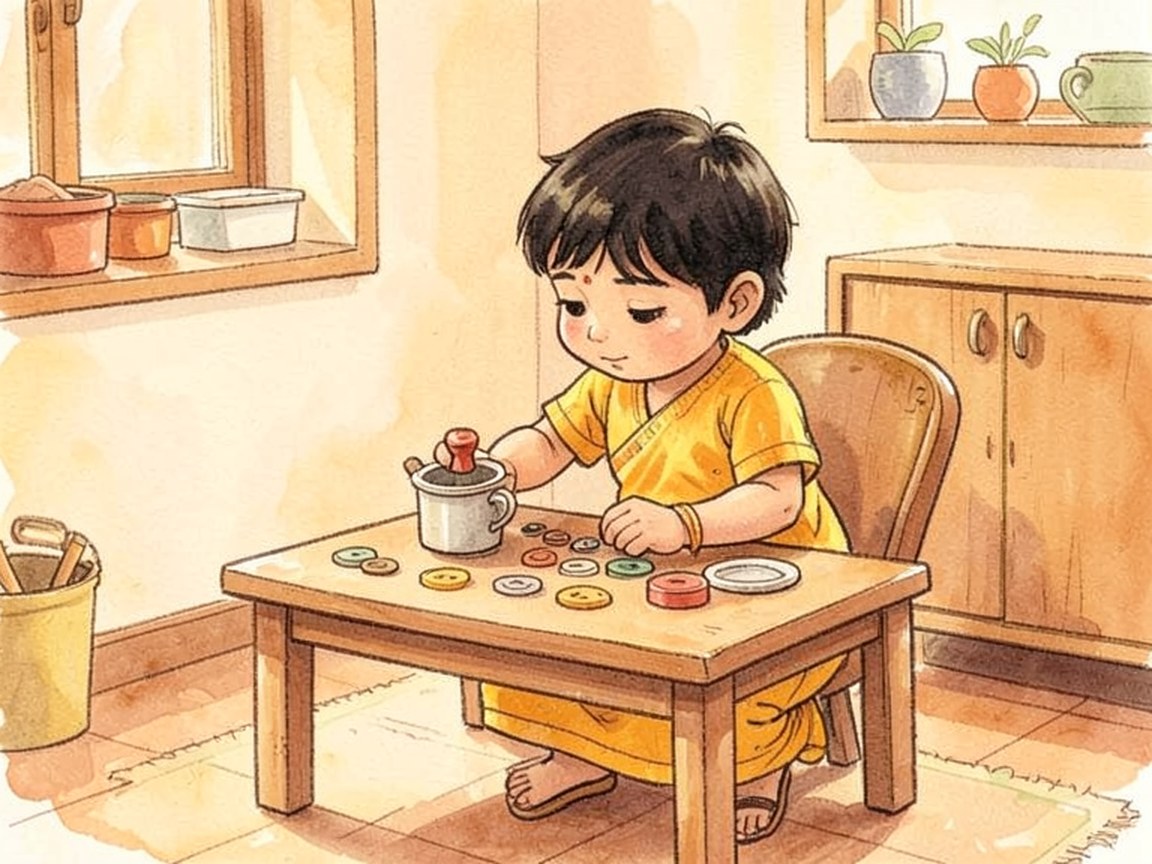
Montessori at home is mostly about the environment and the adult, not the materials. A child who can reach their own cup, dress themselves, and help with real household work is getting the method, whether or not there is a single wooden toy in the house. Most of what is sold as Montessori is furniture; the part that matters is what the adult chooses not to do.
Read this first
One thing this programme is not. Montessori is about how a home is set up, not about assessing development. If your child isn't reaching for independence in ways that worry you — not just slower than a cousin, but something that sits differently with you — that is a conversation for your paediatrician or a developmental specialist, not something to work on through a home-setup programme. Trust that instinct and get it looked at directly.
Six moments from a single ordinary day.
07:10
Beautiful setups on Instagram that look impossible the moment you look at your own apartment.
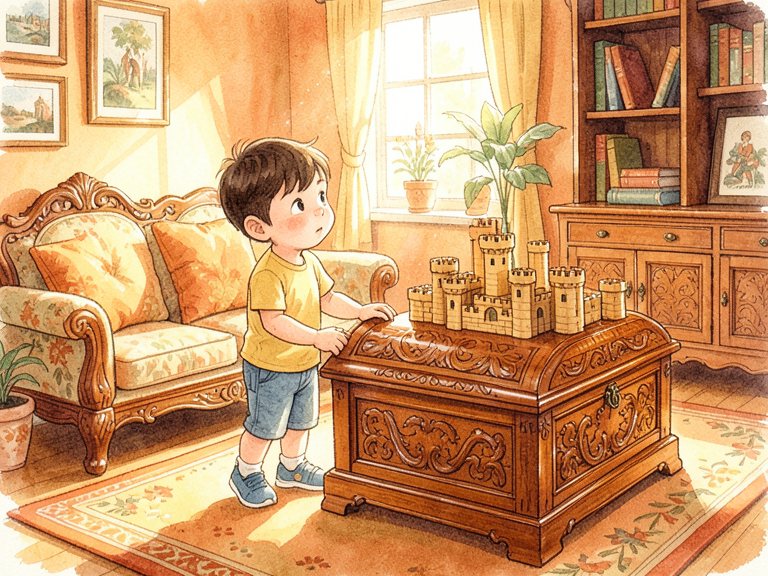
09:30
Expensive wooden materials, bought carefully, that your child glances at once and ignores.
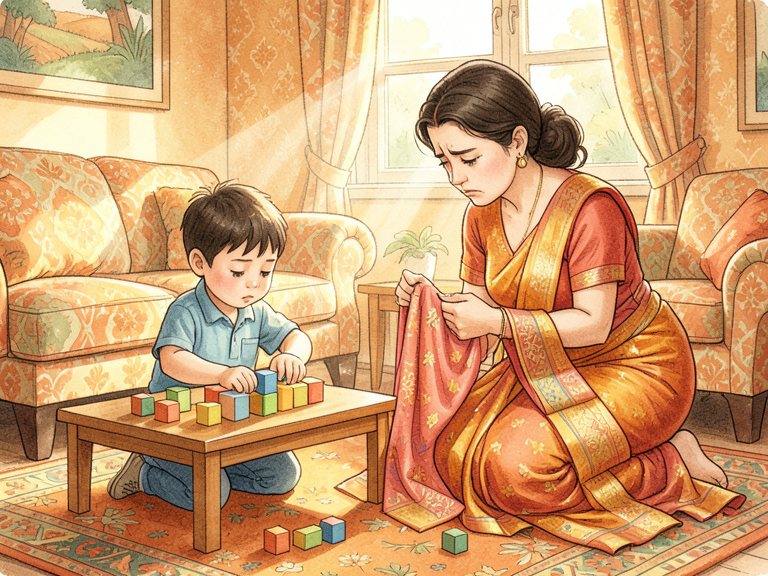
13:00
You want independence, and yet you keep doing everything yourself because it is faster.
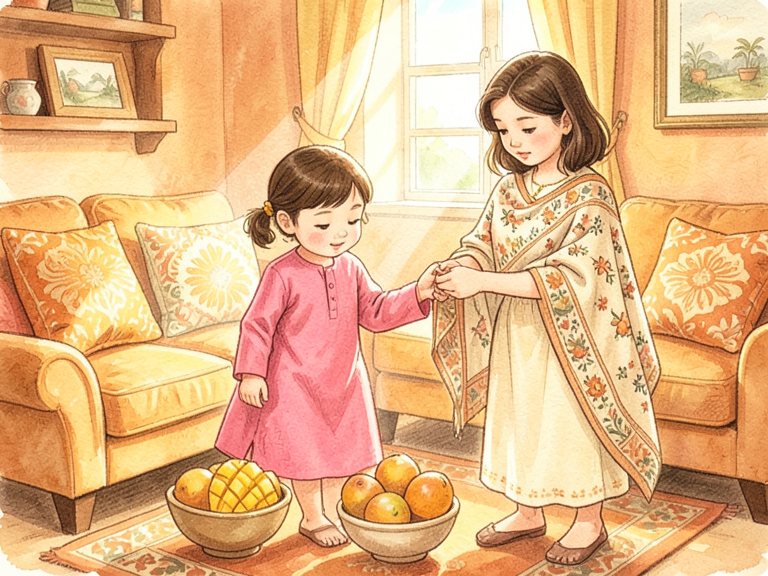
16:45
The didi's instinct is to feed, dress and carry — and undo the independence you're building — because that is what caring looks like to her.
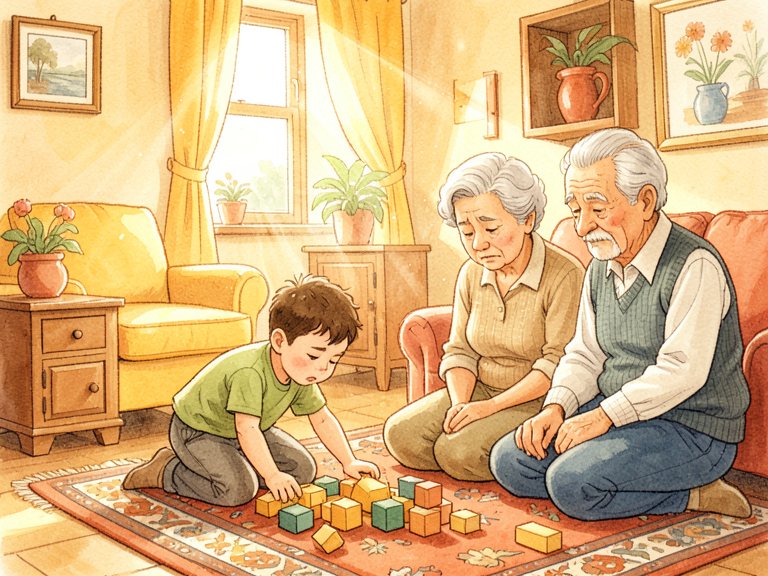
18:30
Grandparents watch your child struggle with a task and read your restraint as neglect.
20:15
You believe in the idea but genuinely don't know where to begin in your own home.
Swipe through the day
Open any Montessori feed and you'll see the same thing: pale wood, woven baskets, a low bed with muslin, a child in linen arranging objects on a tray. It is beautiful, and it is largely beside the point.
Maria Montessori worked in a poor district of Rome with children who had nothing. The method came out of scarcity and observation, not out of a design catalogue. What she noticed was simple and radical: given a bit of freedom, real work, and an adult willing to stand back, small children will teach themselves an astonishing amount. None of that requires a single item you have to buy.
The aesthetic that now surrounds Montessori is a marketing layer. It sells well because it photographs well, and because it lets a company sell you objects. But the method underneath is almost embarrassingly cheap. It is about how a room is arranged so a child can act without help, and about an adult who has learned when to do nothing. A child who can reach their own cup, dress themselves, and take part in real household work is getting the method, wooden toys or not.
This matters especially in India, where the version being sold — the villa, the imported shelf, the ten-thousand-rupee sensory kit — quietly tells you that you need money and space to give your child this. You don't. You need a different way of seeing your own home.
There are really only three things holding the method up.
The first is the prepared environment: a home arranged so the child can do things for themselves. Cups they can reach, clothes they can manage, a stool at the sink, a low shelf with a few well-chosen things rather than a toy-box avalanche. This is the part everyone photographs, and the easiest to get right.
The second is freedom within limits: the child chooses what to work on and for how long, inside a small number of clear, unbudging boundaries. Not a chaos of no limits, and not a timetable — a bounded space in which choice is real.
The third is the adult's restraint, and it is the one that undoes most parents. Montessori asks you to do less: to let a child spend four clumsy minutes putting on a shoe you could fit in four seconds, to watch water spill and not leap in, to answer a struggle with patience rather than rescue. Everything in you — and everything in an Indian household, where doing things for a child is the very shape of love — pushes the other way.
The materials are the cheap part. The restraint is the expensive part, and it costs no money at all. Almost all of the real work of this programme lives here.
If you take one idea from Montessori, take this: real work beats toys.
Young children are drawn to the actual business of the household — the pouring, sorting, wiping, carrying, folding — far more than to objects made to entertain them. This is what Montessori called practical life, and it is the engine of the whole method. It builds coordination, concentration, sequence and independence, all at once, and it costs nothing because you are already doing it.
Here the Indian home has an advantage the imported catalogues can't match. You do not need a wooden threading kit. You have dals to sort by colour, coriander to tear, atta to knead a small ball of, a lota to pour from, curd to spoon, napkins to fold, a tulsi to water. You have steel and brass at exactly a child's scale. The activities Montessori parents abroad reconstruct from purchased sets are already sitting in your kitchen in their original form.
The skill the programme builds is matching the work to the child — what an 18-month-old can carry, what a four-year-old can chop with a safe knife — and setting it up so they can do it without you hovering. Follow the child, don't impose a curriculum: watch what they reach for, and give them more of that.
To be clear about scope: this will not make a reluctant child suddenly love tidying up, and any programme that promised a transformed, endlessly self-directed child would be lying to you. What it gives you is a method and the judgement to run it — the rest is the slow, ordinary work of daily life.
Everything above is standard Montessori. What makes it hard in an Indian home is everything around it, and that is where this programme spends its real time.
There is the small flat, where a prepared environment has to be built into shared rooms and limited floor space rather than a dedicated playroom. There is domestic help, whose deepest instinct is to feed, dress and carry — the opposite of what you are trying to build — and who cannot simply be instructed out of it, because to her that instinct is care. Bringing the didi into the method rather than working around her is a piece of work in itself, and it connects directly to how you work with the whole village of adults raising your child.
There is the joint family, where a grandparent watching a child struggle with a task sees not a lesson but neglect, and says so. Holding your ground there takes warmth, not just conviction. And there is the early-academics pressure — the worksheets, the writing at three, the comparison with the cousin who already reads — pulling in exactly the opposite direction from a method built on the child's own pace.
None of this appears in the beautiful feeds, because the beautiful feeds come from homes that don't have it. It is the whole reason a generic Montessori course doesn't survive contact with an Indian house. This programme is built around it rather than despite it.
By the end you won't have a photogenic home, and that is the point.
You'll have a few real changes — a shelf lowered, a task handed over, a corner of the kitchen that is genuinely your child's — and, more importantly, the habit of seeing your home through your child's reach rather than your own. You'll have a set of practical-life activities drawn from your own food and routines, not someone else's catalogue. You'll have a way to talk to your didi and your parents that brings them alongside instead of leaving you to defend yourself.
And you'll have the one thing the wooden toys can never give you: the judgement to know when to set something up, and when to step back and let your child struggle their way to doing it themselves.
Pick a single thing your child uses daily — a cup, a water jug, a shelf of clothes — and move it to where they can reach it without you. One change, done today, teaches you more about the method than a week of reading.
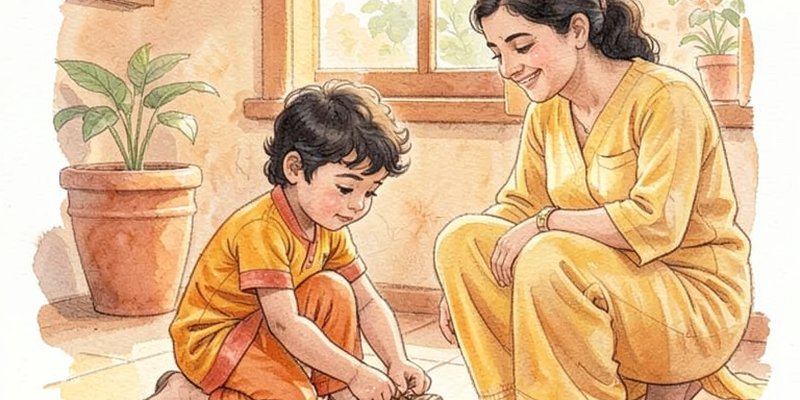
Choose something small you do out of habit — carrying their plate, putting on their shoes — and let them do it, slowly and imperfectly, this week. The discomfort you feel watching is the actual work of Montessori.
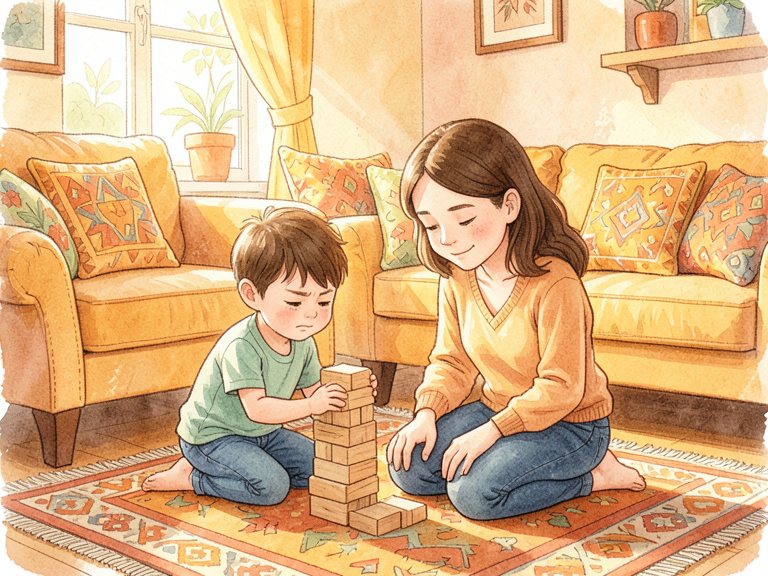
Sit where your child is playing and do nothing for ten minutes. No suggesting, no correcting, no tidying. You are learning to observe rather than direct — which is the skill everything else rests on.
That helps in the moment. Changing the pattern takes something else.
Three months on the version of Montessori that survives an Indian home — the principles behind the beautiful pictures, and how to run them in a real flat with real help and a real family.
The three pillars that actually make it Montessori — a prepared environment, freedom within clear limits, and the adult's restraint — and why that last one is the hardest and matters most. We separate the method from the aesthetic, so you stop shopping and start observing. You'll learn the habit the whole approach depends on: following your child rather than imposing a curriculum on them.
Not the villa in the photograph — your flat. What a prepared environment means in a two-bedroom apartment with limited floor space and shared rooms. Which few changes give the most independence, what you can safely ignore, and how to do this without buying a single imported thing. Small, specific, reversible changes you make room by room.
The core of Montessori is real work, not purchased activities — and an Indian kitchen is full of it. Sorting dals, tearing coriander, rolling small rotis, pouring from a lota, folding napkins, watering the tulsi. We build a set of practical-life activities from the food, utensils and routines already in your home, matched to what your child is ready for.
Independence collapses the moment one adult quietly does everything again. This is the India layer: how to bring your didi into the method rather than working around her, how to talk to grandparents for whom self-reliance can look like neglect, and how to hold your ground on all this against the early-academics pressure coming from family and school.
Small group — deliberately. Few enough that everyone is known, and no one is a spectator.
Message us to hear about dates, structure and fees for the next cohort.
Purnam is an AI-native parenting companion for modern Indian families. A structured programme, a smart companion that knows your family, and a small, honest community of parents — built to take you from surviving the day to thriving across the years.
Parenting that hasn't been handed down — for the generation that wants to parent differently than they were parented, but has no cultural template for it.
Purnam · our positioning
Purnam is built by a founding team with 18+ years across big tech, startups, and growth-stage technology companies — and, more to the point, by parents currently inside the early-childhood years themselves.
Parents to a toddler ourselves — building Purnam to help Indian families move from surviving to thriving.
Purnam's approach draws on modern developmental psychology — attachment, emotional regulation, behavioural coaching — held alongside Indian contemplative traditions as practical tools rather than belief.
We are advised by senior practitioners in human transformation and behavioural coaching. Where the evidence for something is strong, we say so. Where it is contested, we say that too.
Message us on WhatsApp about Montessori at Home — dates, structure, fees, and whether it fits your situation.
Or just ask your actual question. That's what the line is for. Someone from the Purnam team will get back to you.
Purnam offers parenting support and education. This is not paediatric, medical, or mental-health treatment, and it is not a substitute for care from a qualified professional. Every child and family is different; nothing here is a promise of any particular outcome.