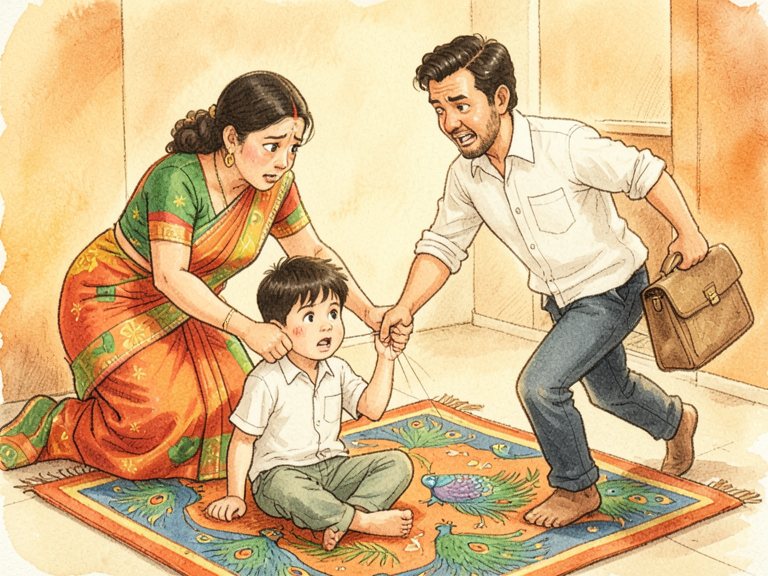
07:10
You do it yourself because you're already late, and then it's a habit — for both of you.
Able on Their Own ·3 months ·3 – 12 years
The main obstacle to a self-reliant child is usually an adult who does it for them because it's quicker. This is a focused programme on handing over real tasks — one at a time, permanently — and on the Indian household where help and grandparents quietly undo it.
Children become capable by doing things badly and slowly first, which means the main obstacle is usually an adult who does it for them because it's quicker. The way to build self-reliance is to hand over one task at a time, permanently — and, in most Indian homes, to brief the caregiver and grandparents on what to stop doing.
Read this first
One thing worth naming. If your child seems genuinely unable to manage self-care tasks that peers manage easily — not unwilling, but unable in a way that feels developmental — that's worth raising with your paediatrician or an occupational therapist rather than treating as a motivation problem. This programme is about capable children who are simply never asked to be capable, which is a different thing.
Six moments from a single ordinary day.
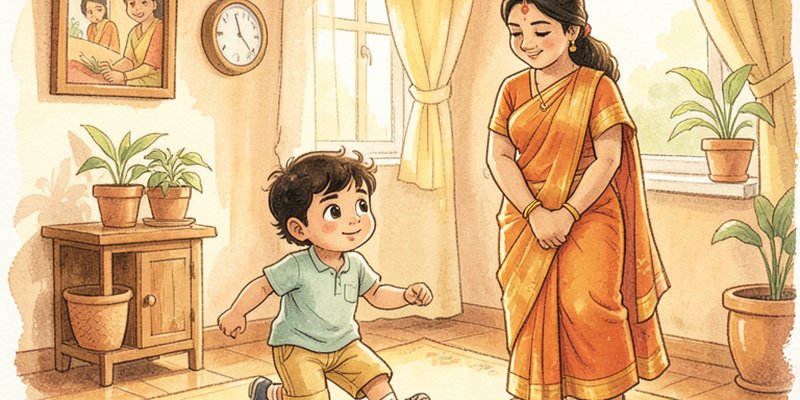
07:10
You do it yourself because you're already late, and then it's a habit — for both of you.
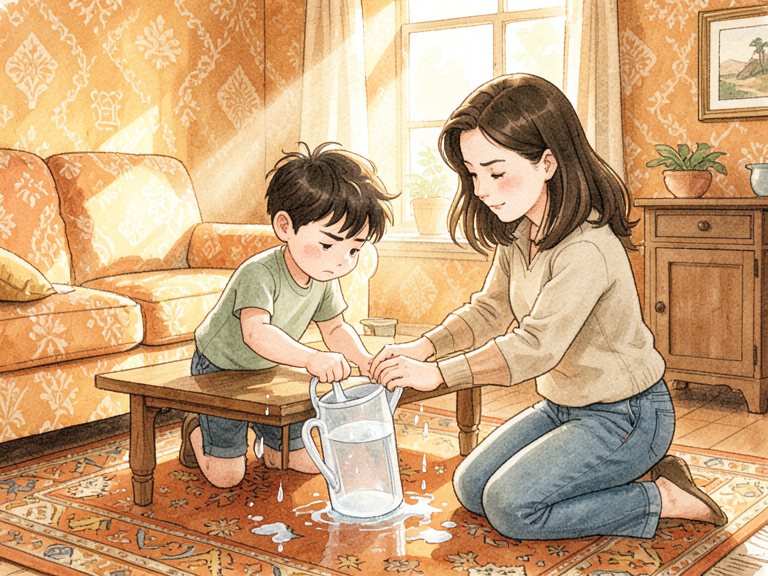
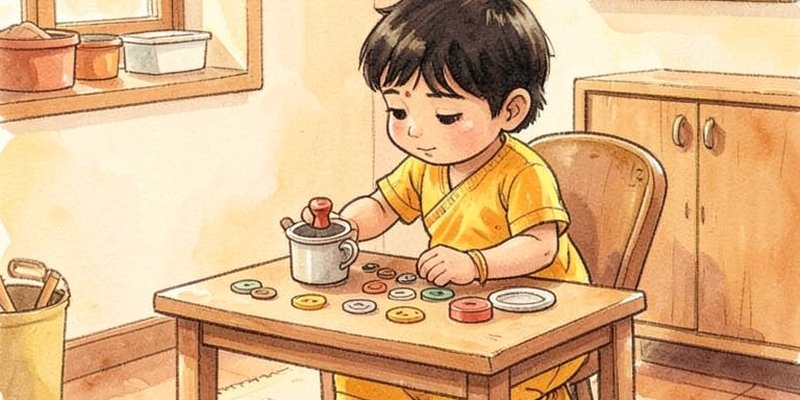
09:30
Your ten-year-old can't pour a glass of water or pack their own bag, and you're not sure when that happened.
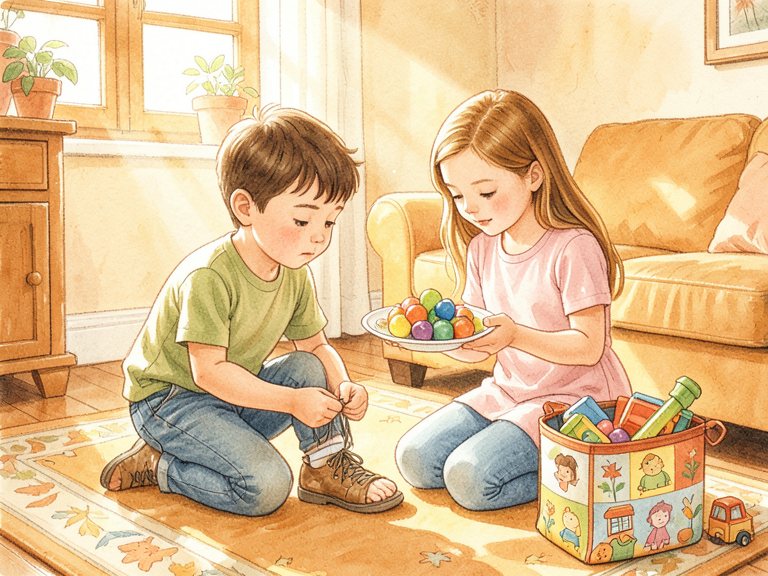
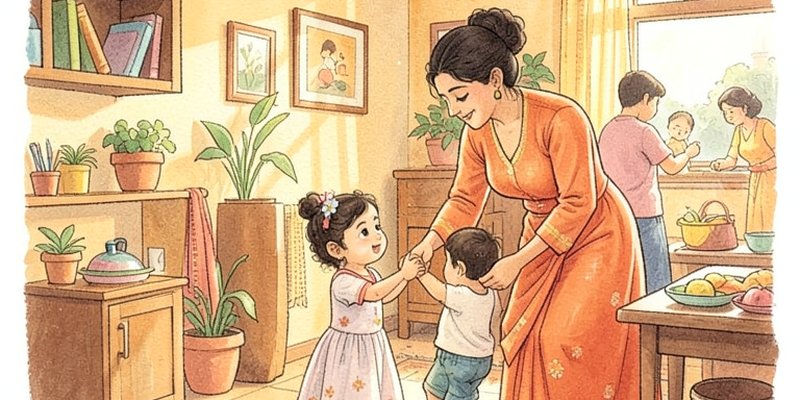
13:00
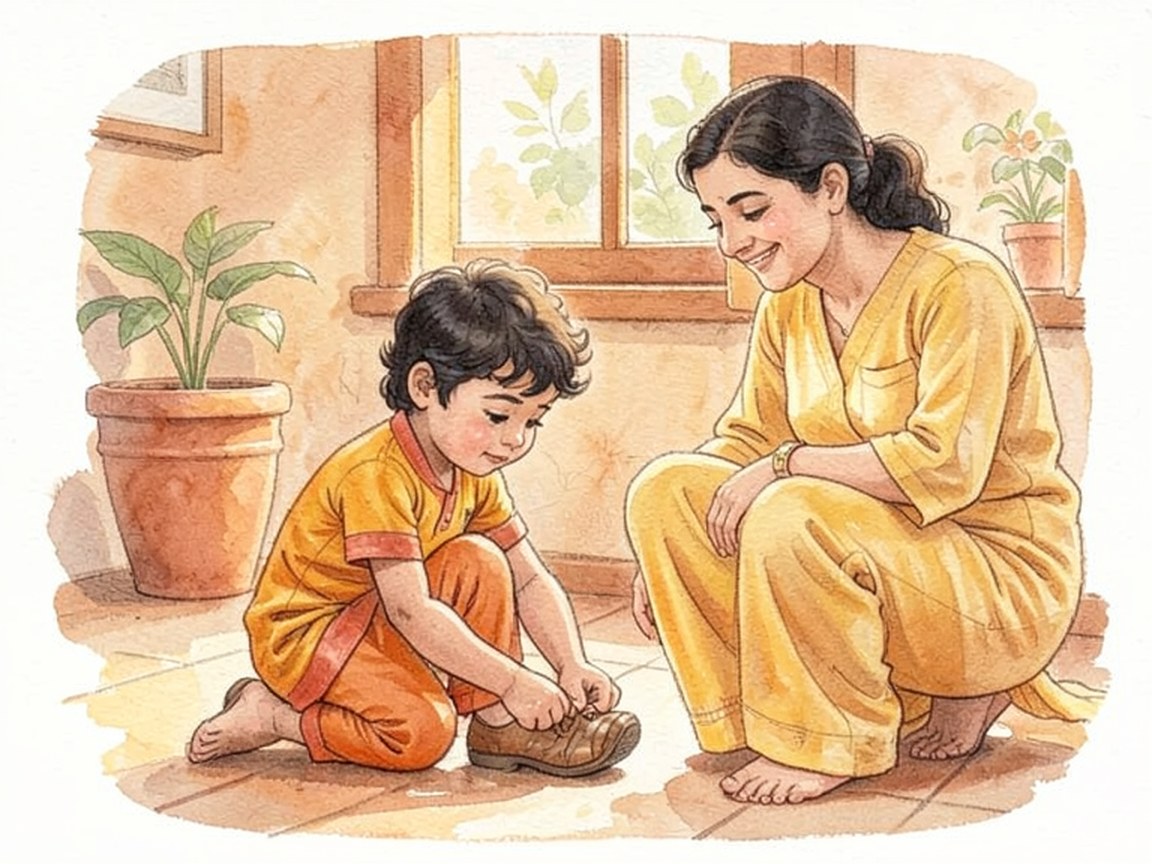
The didi ties the shoelaces, carries the plate, packs the bag — because that's what she thinks the job is.
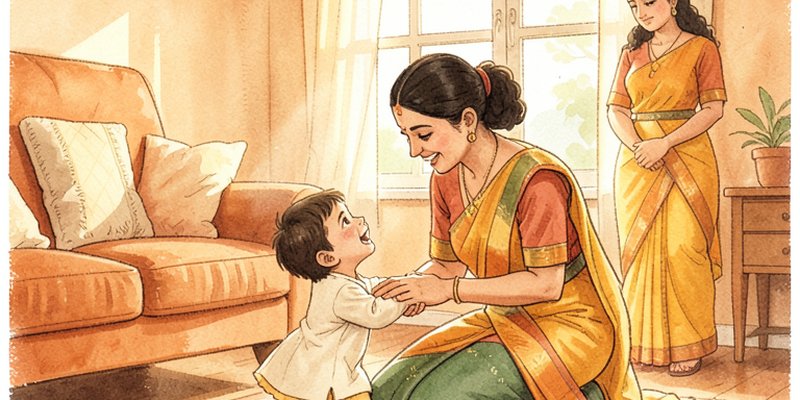
16:45
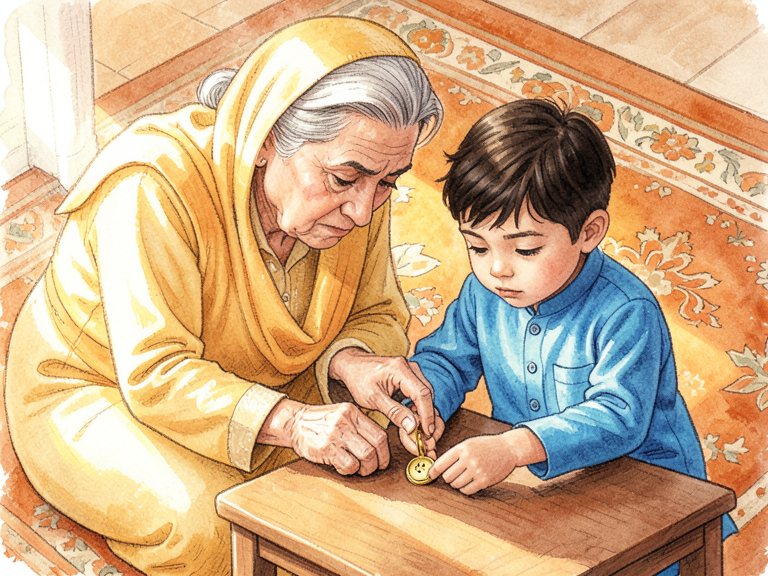
A grandparent watches your child struggle with a button and steps in within three seconds.
18:30
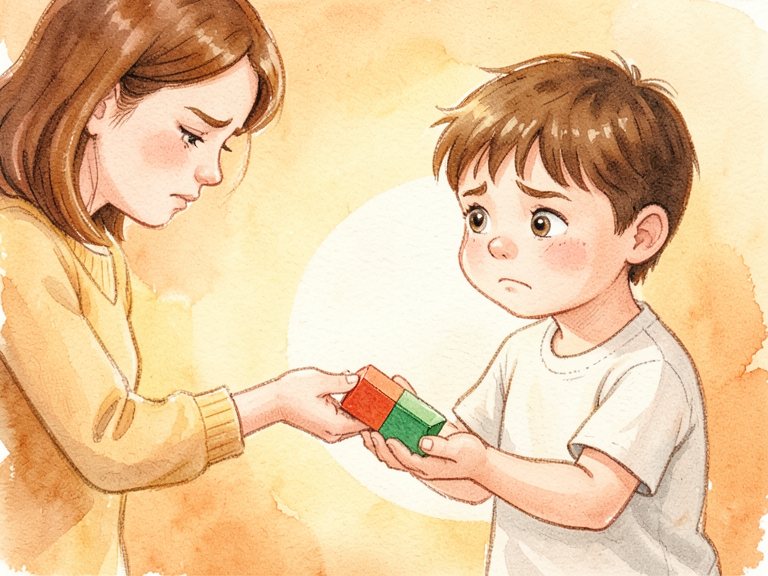
You hand something over, it's done badly, and you quietly redo it — so nothing actually changes.
20:15
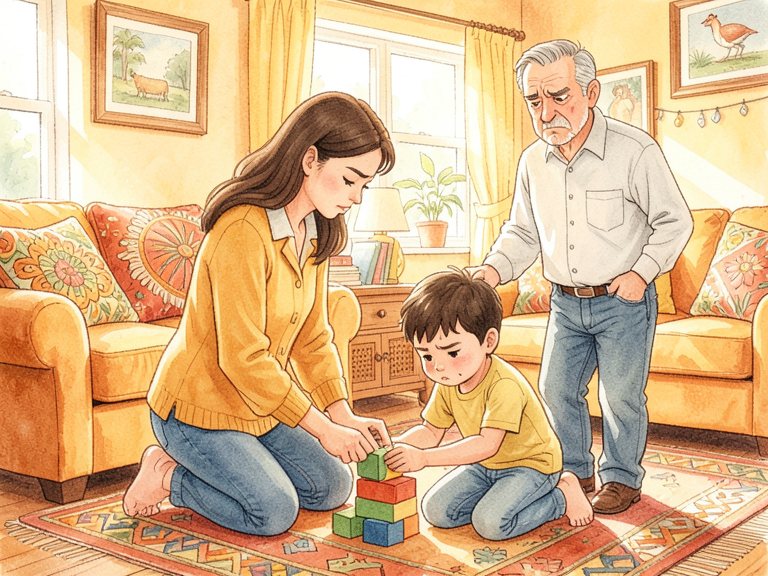
A relative objects that the child shouldn't have to do housework, as though capability were a punishment.
Swipe through the day
There is an uncomfortable truth under most worries about a dependent child: the child is rarely the reason they can't do things. The adults are.
A child becomes able to pour water by pouring it — spilling it, mopping it, pouring it again slightly better. There is no other route. Competence is built by repetition of a thing done imperfectly, which means every time an adult steps in to do it faster, cleaner, or with less mess, a rep is quietly removed from the child's account.
This is genuinely good news, because it means the lever is in your hands rather than in your child's temperament. You do not have to wait for them to become more responsible. You have to hand something over, and then — this is the hard part — not take it back.
Almost every parent knows they should let the child do more. The reason they don't is not ignorance. It's mornings.
On a real morning, with a bus to catch and a meeting at nine, doing it yourself is faster. It is faster to pack the bag, tie the shoes, and pour the milk. Every individual instance of doing-it-yourself is the rational choice. The problem is that the rational choice, made every day for six years, produces a ten-year-old who cannot do any of it.
This is what we mean by the speed trap: a series of sensible small decisions that add up to an outcome nobody wanted. The way out isn't to abandon efficiency. It's to notice, in the moment, that "faster today" and "slower for years" are the same act — and to choose, on some mornings, to lose four minutes so the capability can build.
To be honest about scope: this programme will not turn a resistant child into a cheerfully self-reliant one overnight, and any programme that promised to would be lying. What it does is make the handover real, and give you the resolve to hold it through the slow, messy middle where most parents quietly give up.
The unit of independence is a single task, handed over permanently.
Not a chore chart with fourteen boxes. Not a system. One task — carrying the plate, filling the bottle, packing the bag — that stops being yours and becomes theirs, on good days and bad days alike. The permanence is what does the work. A task that's the child's job on calm days and yours on rushed days never becomes theirs at all; it just teaches them that struggling long enough summons an adult.
Doing this well means tolerating a phase where the task is done slowly and badly. The bag is packed, but a book is missing. The water is poured, but some is on the counter. If you redo it, visibly or invisibly, you've taken the task back and taught the child that their version doesn't count. The discomfort of leaving imperfect work alone is, in a real sense, the price of the capability.
Here is where a generic article stops being useful and an Indian household starts.
In many homes, the single biggest obstacle to a child's independence is not the parent at all — it's the domestic help, who ties the shoes, carries the plate, packs the bag, and clears up behind the child as a matter of course. This isn't sabotage. It's what she understands the job to be. Doing everything for the child is how care has been defined for her, and no amount of hoping will change it. What changes it is a specific brief: not "let him be more independent," which is too vague to act on, but "he carries his own plate to the sink now — please let him, even when it's slow." We work on that language directly, including in Hindi, and on the fact that you are asking her to do less of something she thinks she's paid to do.
Then there are the grandparents, and this is more delicate. To many grandparents, watching a child struggle with a button is not character-building — it's neglect. Stepping in is love. Asking them to hold back can land as an accusation. The reframe that tends to work is to move the conversation off "letting the child struggle" and onto "the child is proud when they manage it themselves" — which is true, and which most grandparents recognise once it's named.
And there is the relative who objects on principle: that a child from this kind of home shouldn't have to do housework, that it's beneath them, that this is what help is for. This one carries a class dynamic worth naming plainly. It helps to separate the task from its social meaning — a child carrying their own plate is building capability, not being deprived of comfort — and to hold that quietly rather than argue it. This is closely related to the work on our nanny and caregiver programme, and the two pair well.
Parents who get this right describe a similar drift over a few months.
The mornings get slower for a fortnight and then faster than they ever were, because the child is doing their own part. The child stands a little differently — there is a real, visible pride in a six-year-old who packs their own bag, and it doesn't come from praise. The friction with help and grandparents settles, because the ask was specific and warm rather than vague and defensive. And the parent stops being the household's single point of failure for every small task.
None of this requires a more capable child than the one you have. In almost every case, it requires the adults around that child to do a little less, on purpose, for long enough that the child gets to find out what they can do.
Not a chore chart. Pick one thing your child is old enough to do — carrying their own plate to the sink, filling their own water bottle — and hand it over for good. The rule is that you don't take it back, even on a bad morning.
Most help does everything because doing everything is what they believe the job is. Name one or two things you want your child to do themselves, and ask her, warmly and specifically, to let the child do them — even slowly, even badly.
The next time your child is wrestling with a zip or a shoelace, count to thirty before you step in. Much of independence is built in the gap between struggle and rescue that adults usually close too fast.
That helps in the moment. Changing the pattern takes something else.
Three months on the small, unglamorous work of handing tasks over and not taking them back — and on the domestic help and relatives who make that harder than it should be.
Before handing anything over, we build an honest, age-anchored picture of what your child is genuinely capable of right now — which is almost always more than the household currently lets them do. We separate what they can't do from what they're simply never allowed to attempt.
The core move: transferring a task and not taking it back. We work on why 'it's faster if I do it' is the single biggest obstacle, what a good handover looks like, and how to sit with the discomfort of watching something be done slowly and imperfectly for a while.
The India-specific part, and often the hardest. Domestic help who does everything for the child, and grandparents who see self-reliance as neglect. We work on the specific language for briefing a caregiver, and on the delicate conversation with an elder who steps in from love.
Independence collapses when handed-over tasks quietly return to the adult. We build the routine that keeps them handed over, add the next few tasks at the right pace, and address the relatives who read household work as inappropriate for a child.
Small group — deliberately. Few enough that everyone is known, and no one is a spectator.
Message us to hear about dates, structure and fees for the next cohort.
Purnam is an AI-native parenting companion for modern Indian families. A structured programme, a smart companion that knows your family, and a small, honest community of parents — built to take you from surviving the day to thriving across the years.
Parenting that hasn't been handed down — for the generation that wants to parent differently than they were parented, but has no cultural template for it.
Purnam · our positioning
Purnam is built by a founding team with 18+ years across big tech, startups, and growth-stage technology companies — and, more to the point, by parents currently inside the early-childhood years themselves.
Parents to a toddler ourselves — building Purnam to help Indian families move from surviving to thriving.
Purnam's approach draws on modern developmental psychology — attachment, emotional regulation, behavioural coaching — held alongside Indian contemplative traditions as practical tools rather than belief.
We are advised by senior practitioners in human transformation and behavioural coaching. Where the evidence for something is strong, we say so. Where it is contested, we say that too.
Message us on WhatsApp about Able on Their Own — dates, structure, fees, and whether it fits your situation.
Or just ask your actual question. That's what the line is for. Someone from the Purnam team will get back to you.
Purnam offers parenting support and education. This is not paediatric, medical, or mental-health treatment, and it is not a substitute for care from a qualified professional. Every child and family is different; nothing here is a promise of any particular outcome.