
06:45
Shouting by 7:30, every single day, before anyone has really woken up.
Mornings Without the War ·1 month ·3 – 12 years
If you're shouting by 7:30 and guilty by the drop-off, the fault is rarely your child's willpower or yours. Most of a hard morning is decided the night before — and by a sequence your child can follow without being told.
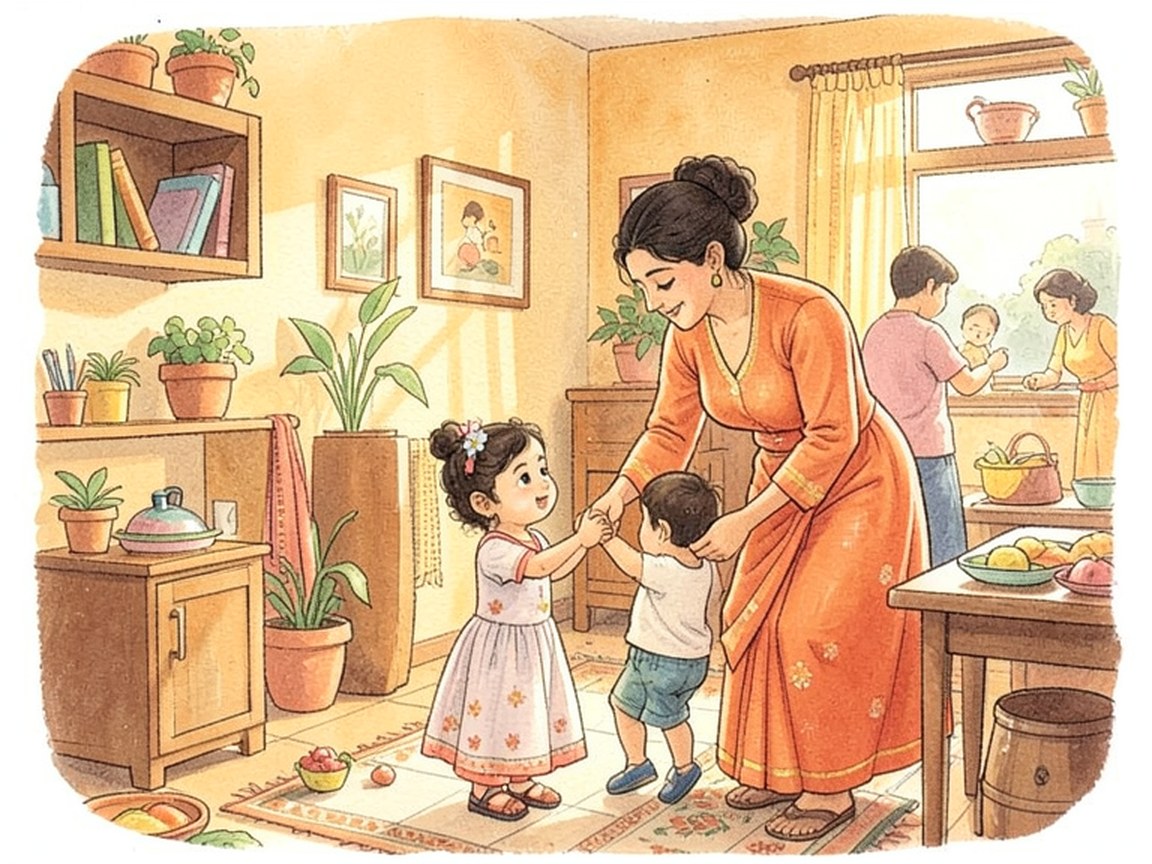
Morning chaos is usually a design problem rather than a discipline problem. Most of it is solved the night before, and by moving from verbal instruction to a visual sequence the child can follow without being told. Once the design changes, the shouting has far less to push against — because the morning is no longer running on your voice alone.
Read this first
One thing that isn't a routine problem. If your child's morning slowness has appeared suddenly, or comes with real distress, dread about school, or tears that don't fit the situation, that is worth paying attention to rather than designing around. Something at school or elsewhere may be the actual reason. Talk to your child, and where it seems warranted, to a paediatrician or counsellor — a better morning routine won't answer that question.
Six moments from a single ordinary day.
06:45
Shouting by 7:30, every single day, before anyone has really woken up.
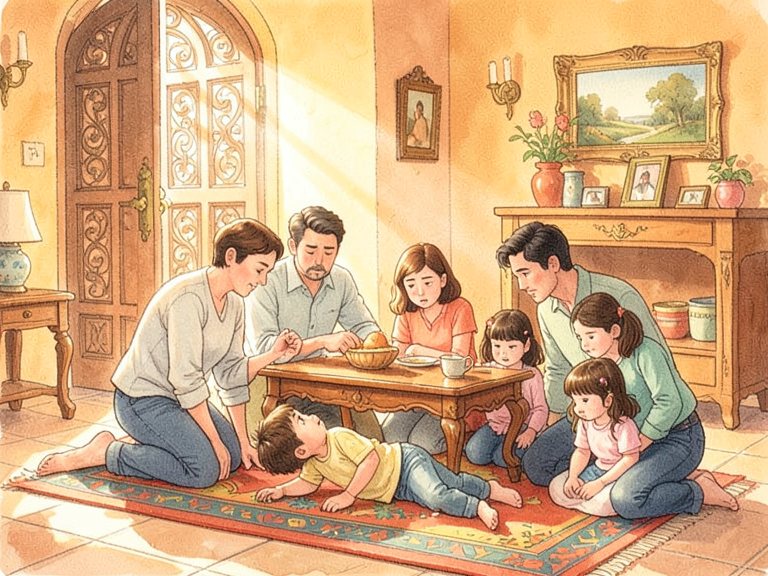
07:00
The same four things missing at the door — the water bottle, one shoe, the diary, the homework.

07:15
Getting dressed somehow takes forty minutes for a task that takes four.

07:30
You reach the school gate, the child gets out, and the guilt about how the day started sits with you the whole drive back.

07:45
Multiple adults are also leaving the house, so the morning is a collision, not a routine.

08:00
You've explained the sequence a hundred times, and you're still narrating every step out loud.
Swipe through the day
There is a particular kind of tiredness that arrives before 8 a.m. You have already raised your voice, chased a half-dressed child around a room, found one shoe and not the other, and packed a bag while answering the question of where the water bottle went. By the time you reach the school gate you are spent, and a small, familiar guilt settles in for the drive home: it didn't have to start like this.
Most parents experience this as a problem of will. The child won't hurry. You can't stay calm. Somebody isn't trying hard enough. But willpower is the wrong lens, because the morning is the worst possible time to rely on it. Everyone in the house is under-slept, under-caffeinated, and working against a hard deadline. Asking a seven-year-old to summon focus and cooperation in exactly those conditions is asking for the thing that is least available.
The households where mornings are calm are not the ones with more disciplined children or more patient parents. They are the ones where the morning has been quietly designed so that it does not depend on either.
Here is the shift that changes everything: almost all of the leverage in a morning sits in the evening.
A morning has no slack. There is a fixed, immovable deadline, and every task competes for the same few minutes. The night before has the opposite quality — it is loose, low-stakes, and nobody is about to miss a bus. Any decision you can move from the tight window to the loose one is a decision that can no longer blow up.
So the uniform gets laid out before bed, not located at 7:15. The bag is packed and standing by the door the night before, not assembled in a scramble. The water bottle is filled. The homework is already inside the folder. None of this is difficult on its own. What makes it powerful is when it happens — the same task that causes a crisis in the morning is trivial the evening before.
This is why we start there. Before working on anything the child does, we move as much of the morning as possible out of the morning.
The second big cost in most mornings is your own voice.
Listen to a hard morning and you will hear a parent narrating every step out loud: brush your teeth, now get dressed, why aren't you dressed, put your shoes on, where's your bag, we're going to be late. The child isn't running the routine — you are, one instruction at a time, and the moment you stop talking, the morning stops moving.
The alternative is to give the sequence to the child in a form they can follow without you. For most children that means making it visual: a short, ordered set of pictures or photos showing the five or six steps of the morning, placed where they can see it. Now the question "what do I do next?" has an answer that isn't your voice. The child looks, sees, and moves. You are still there, but you are no longer the engine.
This transfer is the point at which mornings stop feeling like a battle. A child following a sequence they can see is doing something quite different from a child being pushed through a list they can't. It also does something for you: it lets you step out of the role of the person who makes the morning happen by force of nagging.
To be clear about scope: this will not turn a slow-moving child into a brisk one, and any programme that promised to would be lying. Temperament is real, and some children simply move at their own pace. What a good design does is stop the pace from becoming a fight — it builds in the margin the slower child needs, so their slowness costs you a calmer few minutes instead of a shouting match.
Most morning-routine advice quietly assumes one adult, one child, and a leisurely start. The real Indian weekday morning looks nothing like that.
School hours are early, so the deadline is genuinely tight. Commutes are long, which means the margin for error is thin at both ends. And crucially, the child is not the only one getting ready — one or both parents are also dressing, eating, and rushing to leave, often through the same bathroom and the same ten minutes. The morning is a collision of several people's routines, not one child's.
That changes the work. It is not enough to design the child's morning in isolation; the household's morning has to be sequenced so the pieces don't all land on top of each other. Who wakes first. Whose turn is the bathroom. Which adult is anchored to the child's routine on which days. These are unglamorous logistics, but they are exactly where a family morning succeeds or fails, and they are specific to your house rather than to a generic template.
Families who get this right describe a similar change, and it is quieter than they expected.
The shouting drops, not because anyone resolved to be calmer, but because the reasons to shout have been removed one by one. The forty-minute dressing standoff shrinks, because the clothes are out and the sequence is visible. The scramble for the four missing things is gone, because those things were sorted the night before. The deadline still stands, but it is doing its job in the background instead of being enforced by your voice at rising volume.
And the drive back changes too. The guilt that used to ride along with you — the sense that you love this child and yet somehow start every day at war with them — has much less to feed on when the day didn't start at war. That, more than any chart or checklist, is what people are really after when they say they want a better morning.
None of it requires a different child. In almost every case, it requires a differently designed morning around the child you have.
Pick the three things that reliably cause the morning scramble — the uniform, the packed bag, the water bottle — and shift them to the night before. A morning has almost no slack in it. The night before has plenty.
Draw or photograph the five or six steps of the morning in order and put them where your child can see them. The goal is a sequence they can follow by looking, so your voice stops being the thing that moves them from step to step.
That helps in the moment. Changing the pattern takes something else.
One month on the twenty minutes that set the tone for your whole day — and why fixing them is about the household's systems, not your child's character.
Before changing anything, we watch the morning honestly and locate where it actually breaks. It is almost never the whole morning — it is one transition, one child, one recurring gap. Most parents are managing the wrong forty minutes.
We build the routine that happens before bed, because that is where the leverage is. Uniforms, bags, bottles, and the small decisions that otherwise get made in a panic at 7:15. A calm morning is mostly an assembled evening.
We turn the morning into a visual sequence your child can run themselves, and work on the specific move of stepping back — so the routine is carried by the design rather than by your voice.
Fitting the child's routine into a house where adults are also rushing out, setting realistic timings against early school hours and long commutes, and making the new system durable on the ordinary day — not just the day you set it up.
Small group — deliberately. Few enough that everyone is known, and no one is a spectator.
Message us to hear about dates, structure and fees for the next cohort.
Purnam is an AI-native parenting companion for modern Indian families. A structured programme, a smart companion that knows your family, and a small, honest community of parents — built to take you from surviving the day to thriving across the years.
Parenting that hasn't been handed down — for the generation that wants to parent differently than they were parented, but has no cultural template for it.
Purnam · our positioning
Purnam is built by a founding team with 18+ years across big tech, startups, and growth-stage technology companies — and, more to the point, by parents currently inside the early-childhood years themselves.
Parents to a toddler ourselves — building Purnam to help Indian families move from surviving to thriving.
Purnam's approach draws on modern developmental psychology — attachment, emotional regulation, behavioural coaching — held alongside Indian contemplative traditions as practical tools rather than belief.
We are advised by senior practitioners in human transformation and behavioural coaching. Where the evidence for something is strong, we say so. Where it is contested, we say that too.
Message us on WhatsApp about Mornings Without the War — dates, structure, fees, and whether it fits your situation.
Or just ask your actual question. That's what the line is for. Someone from the Purnam team will get back to you.
Purnam offers parenting support and education. This is not paediatric, medical, or mental-health treatment, and it is not a substitute for care from a qualified professional. Every child and family is different; nothing here is a promise of any particular outcome.