
Monday
The preschool wants your child out of nappies by a fixed date, and the date is close.
Ready When They're Ready ·1 month ·18 months – 4 years
A child who isn't physically and developmentally ready won't be trained by a better method — only by more conflict. This is a short programme on reading readiness honestly and choosing an approach that doesn't turn the bathroom into a battleground.
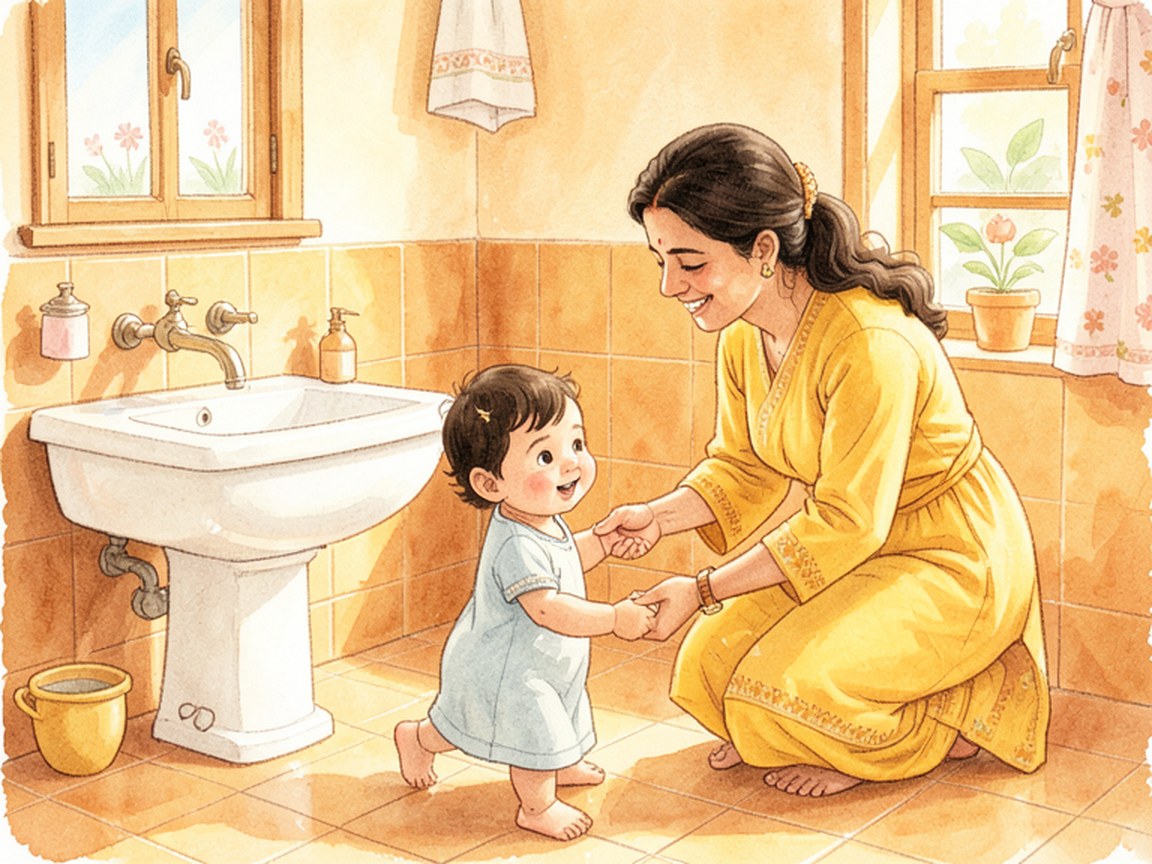
Readiness matters more than technique. A child who isn't physically and developmentally ready won't be trained by a better method, only by more conflict. The reliable signals are staying dry for longer stretches, awareness of the moment they are going, and genuine interest in the toilet. Once those are present, most approaches work; before them, most don't.
Read this first
One thing this programme doesn't replace. If your child is in real pain when passing stools, is holding on until it hurts, or has ongoing constipation, that is a medical question before it is a behavioural one — and forcing toilet training through it usually makes both worse. See your paediatrician first. Once the physical side is settled, the approach here works far better.
One ordinary week in your house.
Monday
The preschool wants your child out of nappies by a fixed date, and the date is close.
Tuesday
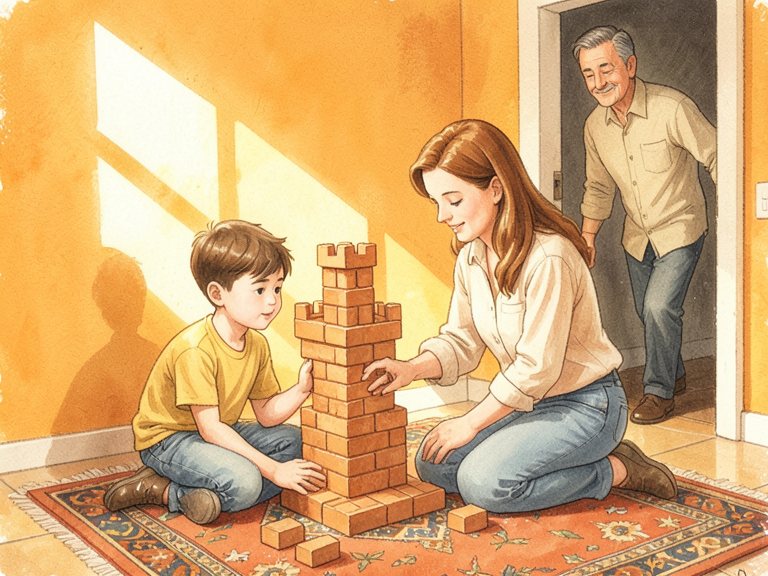
You started, it went well for three days, and then it stalled completely.

Wednesday
A new sibling arrived, and a child who was doing fine has gone back to accidents.
Thursday
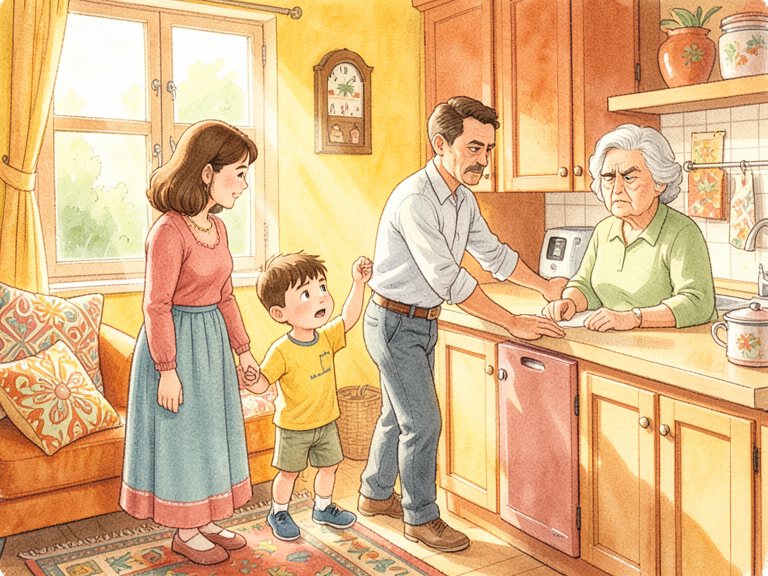
The whole family has an opinion about the 'right' age — and they don't agree with each other, or with you.

Friday
You can feel it becoming a power struggle, and some part of you knows that's a fight you can't win.

Saturday
Daytime is mostly sorted, but nights are still wet, and you don't know whether to worry.
Swipe through the day
There is a quiet myth around toilet training: that it is a skill parents teach, and that a better method or a firmer hand produces a faster result. It is a comforting idea, because it puts you in charge. It is also, mostly, wrong.
Toilet learning depends first on physical and developmental readiness — the child's body and brain being able to notice the signal, hold on for a moment, and get to the right place in time. No amount of technique installs that readiness before it arrives. When you try, what you actually produce is conflict: a child who isn't yet able to do the thing, and an adult who has decided they should.
This is why two families using the same approach can have completely different experiences. It usually isn't the approach. One child was ready and one wasn't, and everything downstream followed from that.
The three signals worth watching are simple. Your child stays dry for longer stretches, which means the body can hold on. They show awareness in the moment they are going — a pause, a face, a word. And they take an interest in the toilet itself. When those are present, most reasonable approaches work. Before them, most reasonable approaches don't, and the failure gets blamed on the method or the child when the real answer is timing.
Every parent knows the feeling of a battle of wills with a small child. Toilet learning is one of the worst places to have one, and it's worth understanding why.
Going, or not going, is one of the very few things a young child controls completely. You cannot make it happen and you cannot prevent it. When toilet training becomes a contest, you have picked a fight on the one piece of ground where the child holds all the cards. The harder you push, the more the whole subject becomes charged — and a child who senses that charge often responds by holding on, refusing, or regressing, which is precisely the opposite of what you wanted.
To be honest about scope: this programme will not make an unready child ready, and any method that claimed to would be selling you a fight dressed up as a technique. What it will do is help you tell the difference between not-yet-ready and a stalled approach, and keep the process calm enough that readiness, when it comes, can actually do its work.
The counter-intuitive move, when you're mid-struggle, is often to stop. A week back in nappies with no comment isn't a defeat. It drains the charge out of the situation, and a great many stalled attempts restart easily once the pressure is gone.
Sooner or later many children who were doing fine start having accidents again. A new sibling arrives. The family moves house. Daycare starts, or an illness passes through. And suddenly you're finding wet clothes you thought you'd left behind.
This is regression, and it is ordinary. A young child under stress tends to reach back for whatever felt safe and controllable, and the toilet — being one of the few things fully theirs — is a common place for that to show up. It is a signal about how your child is coping with change, not a verdict on your parenting or a sign that the earlier progress was fake.
The response that works is almost boringly consistent: less pressure, steadier adults, and time. What extends a regression is alarm — disappointment, extra drills, a sense that something has gone wrong that must be fixed hard and fast. Held calmly, most regressions pass on their own.
One of the most useful things you can do for your own peace of mind is to separate two things that get lumped together.
Daytime toilet learning is one process. Night dryness is another, it arrives later, and it is largely outside a child's conscious control — it depends on physical maturation, not on effort, willpower or training. A child who is reliably dry through the day and still wet at night is not lagging, lazy, or failing. Those are simply two different developmental timelines that happen to involve the same room.
When families treat them as one task, they generate a lot of unnecessary worry and, sometimes, a lot of unnecessary pressure on a child for something they genuinely cannot yet control. Keeping the two apart in your own head is half the battle.
Two forces make this harder here than the developmental picture alone would suggest.
The first is the preschool admission deadline — the fixed date by which a child is expected out of nappies, arriving on a calendar that has no interest in your child's readiness. This is a real bind, and it deserves a real plan rather than either panic or denial. Sometimes a calm, well-timed approach gets there. Sometimes it means a frank conversation with the school, or accepting a different timeline. What almost never works is forcing a not-yet-ready child to hit an external date, because the stress of that is a common trigger for exactly the accidents and regression the deadline was meant to prevent.
The second is family opinion, which around this topic is unusually loud. Relatives will tell you that you've started too late, or too early, that in their day children were trained by eighteen months, that something must be wrong. Much of this is memory and custom rather than fact, and the ages quoted rarely account for how readiness actually varies. You don't have to argue every point. You do need one clear read on your own child, so that the noise doesn't push you into a fight you'll regret.
None of this requires a special technique. It requires reading your own child honestly, keeping the process calm, and holding your nerve against a calendar and a chorus that are both, in their way, ignoring the one thing that matters.
Three signals matter most: staying dry for longer stretches, showing awareness in the moment they are going, and interest in the toilet itself. If most of these aren't there yet, the problem isn't your method — and pushing harder will cost you more than waiting.
Back into nappies, no comment, no disappointment, for one week. A power struggle over the toilet is unusually hard to win, because it's one of the few things a small child fully controls. Removing the pressure often does more than any technique.
That helps in the moment. Changing the pattern takes something else.
A focused month on the one thing that decides whether toilet learning is calm or a fight — readiness — and on what to do when preschool deadlines and family opinion won't wait for it.
Before choosing any approach, we look at where your child actually is: the physical and developmental signals, what's real interest versus what's pressure from elsewhere, and why starting too early is the single most common reason toilet training turns into a fight. Most of the family debate about the 'right' age dissolves once you're looking at your own child instead of an average.
A low-conflict way to make the shift: what to offer, how to respond to accidents without turning them into a moment, and why praise and pressure are easier to confuse than they look. We keep the whole thing small and unhurried, because a calm approach is what makes the readiness pay off.
Why regression after a new sibling or a big change is normal rather than a failure, and how to hold steady through it. Why night dryness is a separate, later, largely involuntary process — not the same task and not on the same timeline. And a plain plan for the collision every Indian parent knows: a preschool admission deadline that has arrived before your child has.
Small group — deliberately. Few enough that everyone is known, and no one is a spectator.
Message us to hear about dates, structure and fees for the next cohort.
Purnam is an AI-native parenting companion for modern Indian families. A structured programme, a smart companion that knows your family, and a small, honest community of parents — built to take you from surviving the day to thriving across the years.
Parenting that hasn't been handed down — for the generation that wants to parent differently than they were parented, but has no cultural template for it.
Purnam · our positioning
Purnam is built by a founding team with 18+ years across big tech, startups, and growth-stage technology companies — and, more to the point, by parents currently inside the early-childhood years themselves.
Parents to a toddler ourselves — building Purnam to help Indian families move from surviving to thriving.
Purnam's approach draws on modern developmental psychology — attachment, emotional regulation, behavioural coaching — held alongside Indian contemplative traditions as practical tools rather than belief.
We are advised by senior practitioners in human transformation and behavioural coaching. Where the evidence for something is strong, we say so. Where it is contested, we say that too.
Message us on WhatsApp about Ready When They're Ready — dates, structure, fees, and whether it fits your situation.
Or just ask your actual question. That's what the line is for. Someone from the Purnam team will get back to you.
Purnam offers parenting support and education. This is not paediatric, medical, or mental-health treatment, and it is not a substitute for care from a qualified professional. Every child and family is different; nothing here is a promise of any particular outcome.