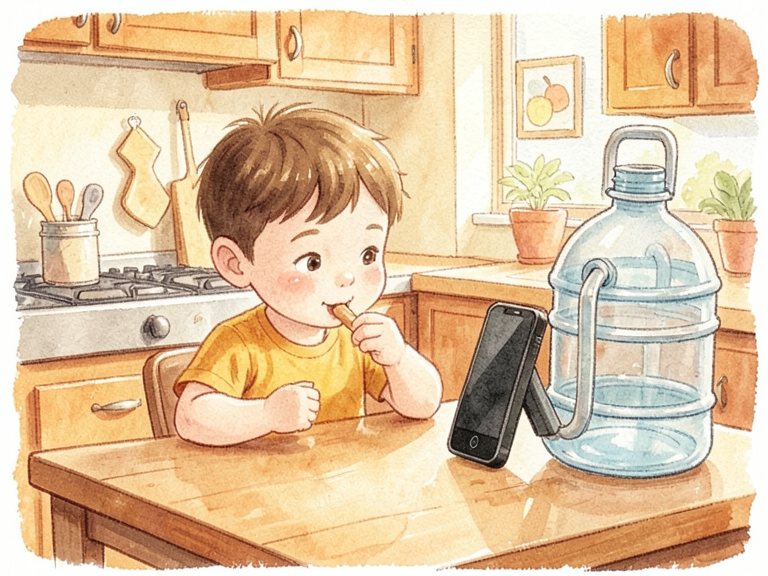
07:10
The only way a full meal goes in is with a phone propped against the water jug — and the second it's switched off, the eating stops.
The Table Without the Battle ·3 months ·1 – 10 years
If your child only eats with a phone propped against the water jug, and every attempt to switch it off turns dinner into a standoff, the problem is rarely the food. This is a focused programme on calm meals — off the screen, and without the daily battle at the table.
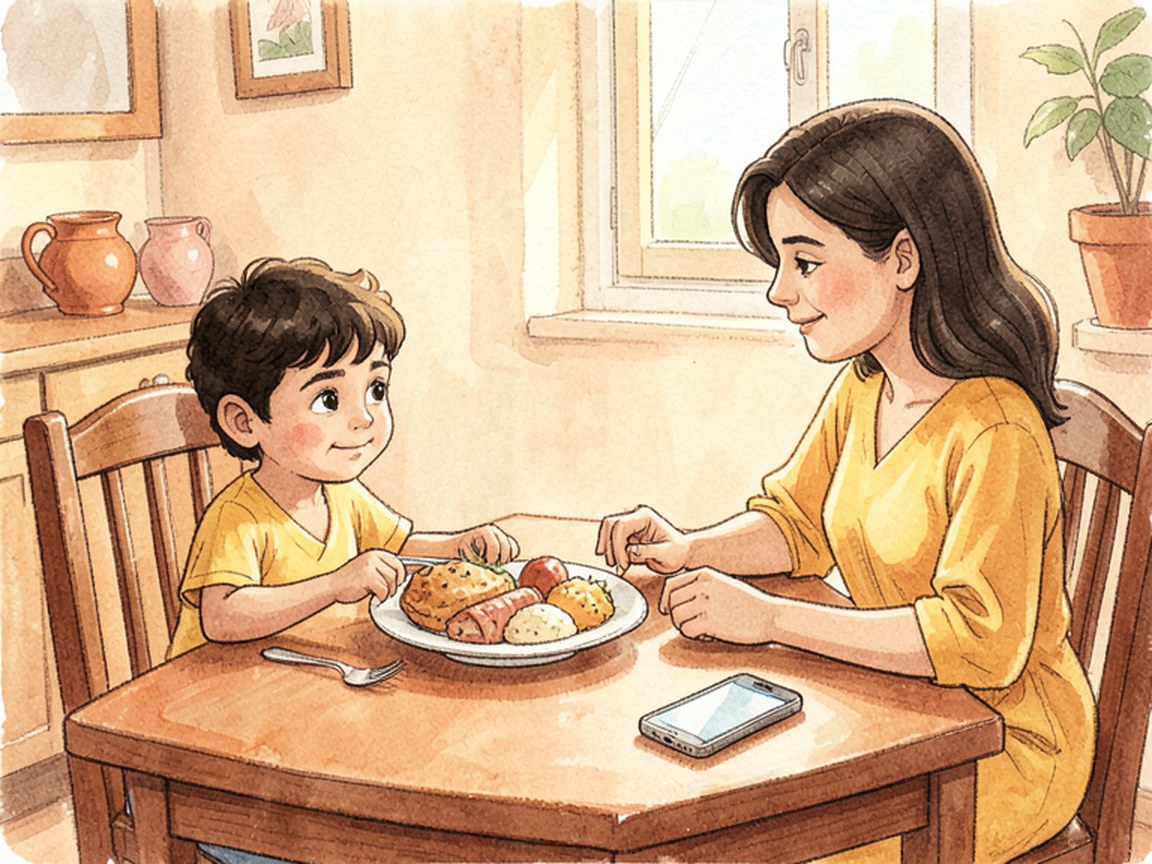
When the only way a child will eat is with a screen on, the screen quietly becomes the meal — and the tantrum arrives the moment it goes off. The way through is rarely a new recipe or a stricter rule. It is taking the pressure off the child and out of the room, so that eating stops being a contest and the screen stops being the thing holding the meal together.
Read this first
One thing to take to a doctor, not a programme. If your child is genuinely losing weight or not gaining it, eating an extremely narrow range that keeps shrinking, gagging or choking at meals, or if a health worker has raised a concern about growth, please see a paediatrician first. Those are medical questions with medical answers. This programme is for the far more common situation of a healthy child and a stressful table — and it works best once a doctor has set your mind at rest about the body.
Six moments from a single ordinary day at the table.
07:10
The only way a full meal goes in is with a phone propped against the water jug — and the second it's switched off, the eating stops.
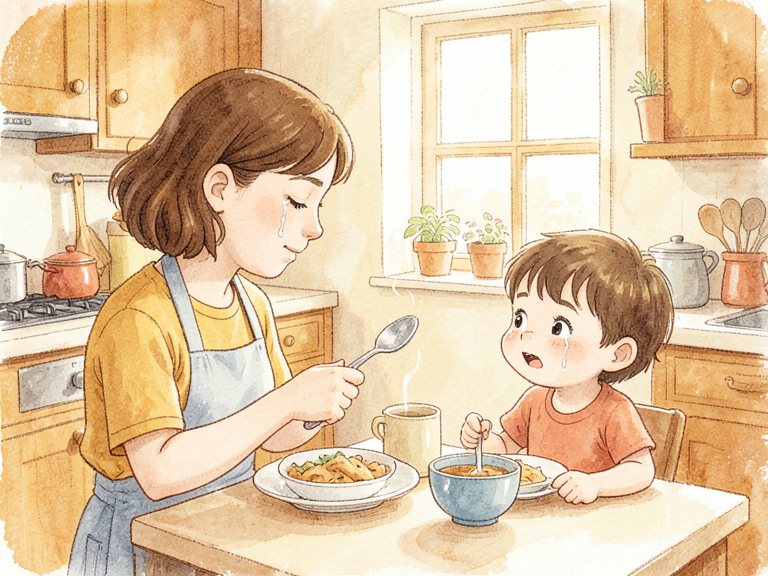
09:30
You try one dinner without the screen, and it becomes a forty-minute standoff — tears, a spoon chasing them around the room, and eventually the phone again.
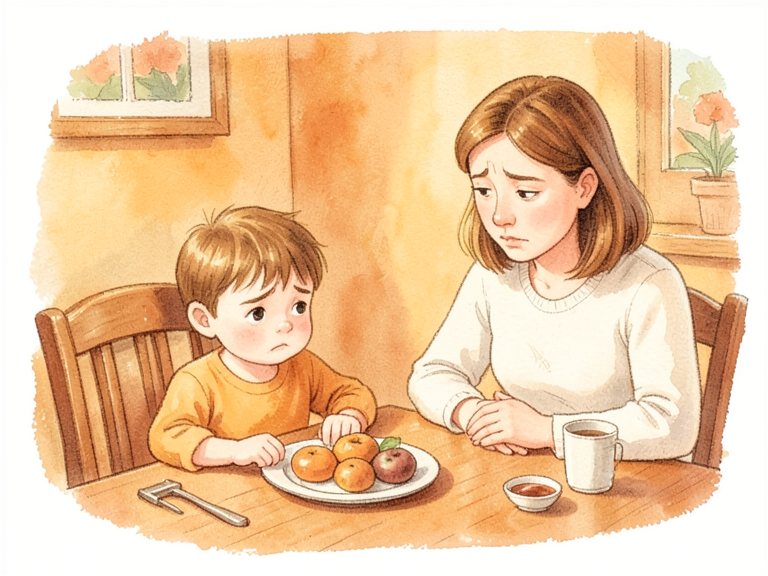
13:00
The same three foods, on repeat, for months — and a quiet fear about what they're missing.
16:45
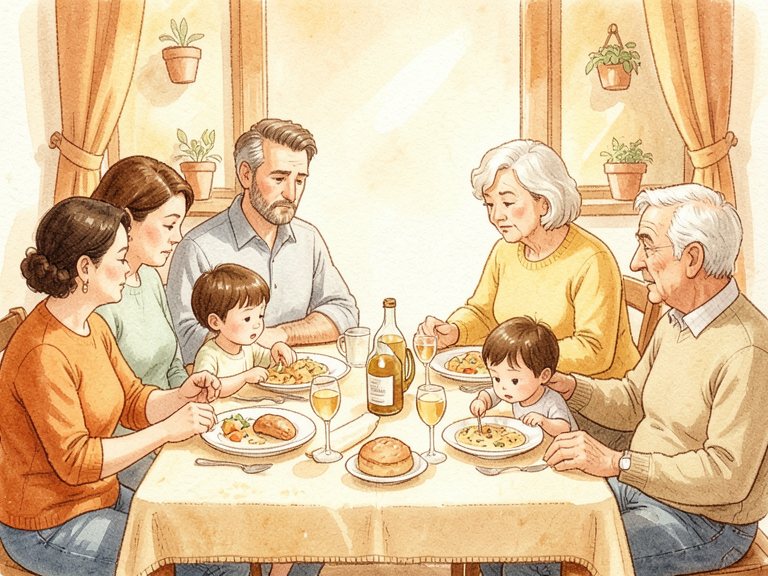
A relative who comments on how thin the child looks, usually within the child's hearing.
18:30
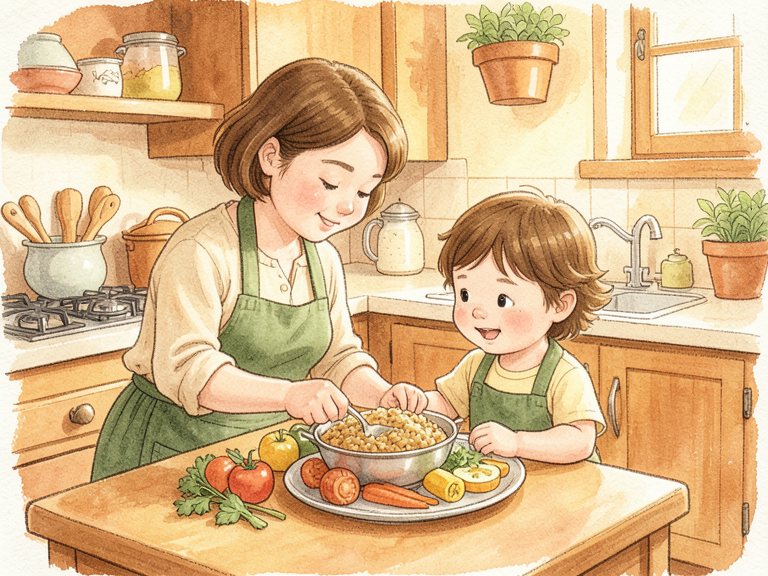
You've hidden the vegetables, disguised the dal, bargained dessert — and it works once, then never again.
20:15
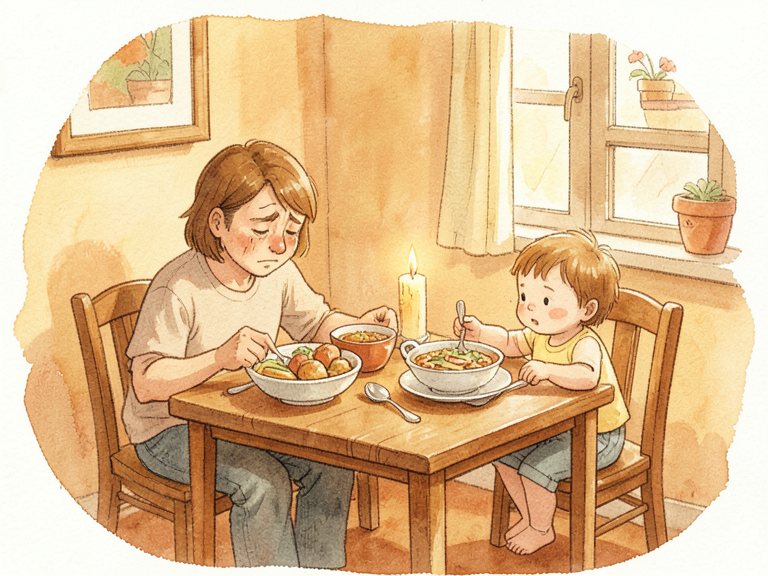
You end most meals feeling like you've failed at something everyone else seems to manage.
Swipe through the day
There is a cruel logic at the centre of picky eating. The more a parent worries, the harder they push; the harder they push, the more the child digs in; and the digging in produces more worry. Round it goes, three times a day, for months.
It feels as though the solution must be a better technique — a cleverer recipe, a firmer rule, a chart with stars on it. But the thing that actually keeps most selective eating going is not a lack of technique. It is the pressure itself.
A child has very little control over most of their day. What they eat, and how much, is one of the few levers they can pull that reliably produces a reaction in the adults around them. When a meal becomes a contest, refusing food stops being about the food. It becomes about the contest. And a contest at the table is one a small child can always win, simply by keeping their mouth shut.
This will not make a fussy eater suddenly love everything on the plate, and any programme that promised to would be lying. What it does is take the fight out of the room, so that eating can go back to being ordinary.
For a great many families, the screen didn't arrive as a treat. It arrived as a solution — the one reliable way the plate got finished on a bad evening. And it works, in the narrow sense that food goes in. The trouble is what it quietly trains.
A child staring at a video while a spoon arrives is not eating so much as being loaded. They are not noticing taste or texture, not registering hunger at the start or fullness at the end, not learning any of the things a meal is supposed to teach a body. The eating and the watching fuse into one habit, and after a few months the meal genuinely cannot stand up without the screen — because the screen has been doing all the work the child never had to.
That is why switching it off in a single step so often ends in a meltdown. The tantrum is rarely about the food; it is the withdrawal of the thing that was making an unpleasant, high-pressure situation bearable. Take the distraction away while leaving the pressure in place, and you have simply removed the anaesthetic from an operation that is still happening.
So the order matters. You unpick the two habits — the watching and the eating — and you take the pressure off the meal at the same time, so that the table becomes a place a child can sit at without needing to be numbed to get through it. A calm, low-stakes meal needs a screen far less than a tense one does. Done in that order, the screen can come off without the evening falling apart.
None of this produces a child who never once protests a switched-off screen — any programme that promised that would be lying, and children protest lost screens the way they protest most endings. What changes is that the meal no longer depends on the device to happen at all, and the protest, when it comes, is a passing thing rather than the wall the whole dinner runs into.
The single most useful idea in feeding is also the simplest, and it is about a division of labour.
The adult's job is to decide what food is served and when it is served. A reasonable meal, at a reasonable time, at a table. That is the whole of the adult's job.
The child's job is to decide whether to eat what's offered, and how much. All of it, some of it, none of it. That is the whole of the child's job.
Almost every mealtime battle is an adult who has, out of love and fear, quietly taken over the child's half of the job. The coaxing, the one-more-bite, the aeroplane spoon, the chasing around the flat — all of it is an adult trying to control the amount, which was never theirs to control. Hand that half back, and the pressure that fed the whole cycle simply has nowhere to sit.
This is hard, because handing it back means watching a meal go uneaten and doing nothing. For an anxious parent that can feel like negligence. It isn't. A healthy child offered food at regular times will eat what their body needs across a day, even a week — just not always at the meal, or in the amount, an anxious adult would choose.
Parents are often told to be patient, which is true but useless without knowing what to be patient about.
New foods enter a child's diet through repeated, low-stakes exposure. A food that is unfamiliar and slightly threatening on the first encounter becomes, by the tenth or fifteenth time it appears on the plate with nothing riding on it, merely a familiar object — and familiar objects eventually get tried. The mechanism is boredom, not persuasion.
Everything that adds stakes interrupts this. Praise for a bite, disappointment at a refusal, a reward for finishing, a punishment for not — all of it tells the child that this food is a big deal, and big deals are worth resisting. The most powerful thing you can do with a new food is put it there, say nothing, and let it be unremarkable.
Screens and distraction feeding work against the same grain. A child staring at a video while a spoon arrives is never learning what the food tastes like, whether they're hungry, or when they're full. Feeding on the move does the same. The body learns to eat by paying attention, and attention needs a plate, a place, and a bit of quiet.
Everything above is harder in a house where you are not the only adult deciding what a full stomach means.
In many Indian homes, a child's weight is read as a report card on the family's care. A round child is proof of love and plenty; a thin child is a quiet accusation, usually aimed at the mother. Into that meaning walk grandparents, aunts, neighbours and domestic help, each with a spoon and a conviction. The household habit of following a child around with a plate is not laziness or indulgence — it is love, expressed in the only grammar many people were given.
This is why a low-pressure approach so often fails in exactly the homes that need it most. You can take the pressure off, and the grandmother can put it right back on at the next meal. Fighting her at the table teaches the child only that food is now a battlefield with two armies.
The work here is not to win that fight. It is to have a different conversation, away from the food, about what you are trying to do and why — and to give the people who love your child a role in it that isn't force-feeding. That conversation is slower and warmer than a rule, and it is the part of this that lasts.
The change parents notice first is not in the child. It is in the room.
Meals get shorter, because there's no negotiation to conduct. The plate stops being a scoreboard. You stop ending every meal with a knot in your stomach, and the table stops being the place where the adults get upset. What a child eats on any given day still varies wildly — that never stops being true — but the variation stops feeling like an emergency.
Over months, quietly and without fanfare, the range usually widens too. Not because anyone made it, but because food stopped being a fight and a bored child eventually tries the thing that's been sitting on their plate for a fortnight.
None of this requires a different child. In most cases it requires a different table — and a household that has agreed, for once, to stop chasing.
A child watching a screen isn't tasting the food; they're being loaded like cargo. Pick one meal, put the device away, and — this is the part that makes it survivable — drop every other demand at the same time. No coaxing, no bargaining, no counting bites. Expect it to be messier and shorter. You are trading a quiet, screen-fed meal for a real, slightly chaotic one, which is the trade that eventually works.
The screen usually stands in for pressure — it keeps a child at the table who is otherwise being chased, coaxed, or made anxious by the meal. Decide before one meal that you will not manage how much is eaten at all. Serve the food, sit with them, let the amount be their business. A calm table needs a screen far less than a tense one does.
Put something you know they'll eat on the plate, and a small, no-comment portion of something new next to it. There is no requirement to touch the new food. Familiarity is built by it simply being there, meal after meal, without a negotiation attached.
That helps in the moment. Changing the pattern takes something else.
Three months on the one relationship in the house that runs three times a day — and on why the harder you try to make a child eat, the less they tend to.
The idea the whole programme rests on: you decide what is served and when, your child decides whether and how much. We map where responsibility has blurred in your house — the coaxing, the separate menus, the last-spoon bargains — and rebuild a clear line. Most parents find they have quietly taken on a job that was never theirs to do.
Pressure takes many forms, and most of them don't feel like pressure — praise for eating, disappointment at not eating, one more bite, the aeroplane spoon. We work through the specific forms in your household and take them off the table one at a time, so that food stops being a contest anyone can win or lose.
Why feeding on the move and feeding to a screen keep a child from ever learning what hunger and fullness feel like, and how to bring meals back to a place and a plate. And the quiet mechanism that actually widens a diet: the same new food offered calmly, again and again, with no reward and no consequence attached.
The part no recipe addresses. What to say to the relative who force-feeds, who comments on thinness, who treats a full plate as proof of love. How to hold a low-pressure table when the adults around it don't agree with you yet — and how to bring them along rather than fight them at every meal.
Small group — deliberately. Few enough that everyone is known, and no one is a spectator.
Message us to hear about dates, structure and fees for the next cohort.
Purnam is an AI-native parenting companion for modern Indian families. A structured programme, a smart companion that knows your family, and a small, honest community of parents — built to take you from surviving the day to thriving across the years.
Parenting that hasn't been handed down — for the generation that wants to parent differently than they were parented, but has no cultural template for it.
Purnam · our positioning
Purnam is built by a founding team with 18+ years across big tech, startups, and growth-stage technology companies — and, more to the point, by parents currently inside the early-childhood years themselves.
Parents to a toddler ourselves — building Purnam to help Indian families move from surviving to thriving.
Purnam's approach draws on modern developmental psychology — attachment, emotional regulation, behavioural coaching — held alongside Indian contemplative traditions as practical tools rather than belief.
We are advised by senior practitioners in human transformation and behavioural coaching. Where the evidence for something is strong, we say so. Where it is contested, we say that too.
Message us on WhatsApp about The Table Without the Battle — dates, structure, fees, and whether it fits your situation.
Or just ask your actual question. That's what the line is for. Someone from the Purnam team will get back to you.
Purnam offers parenting support and education. This is not paediatric, medical, or mental-health treatment, and it is not a substitute for care from a qualified professional. Every child and family is different; nothing here is a promise of any particular outcome.