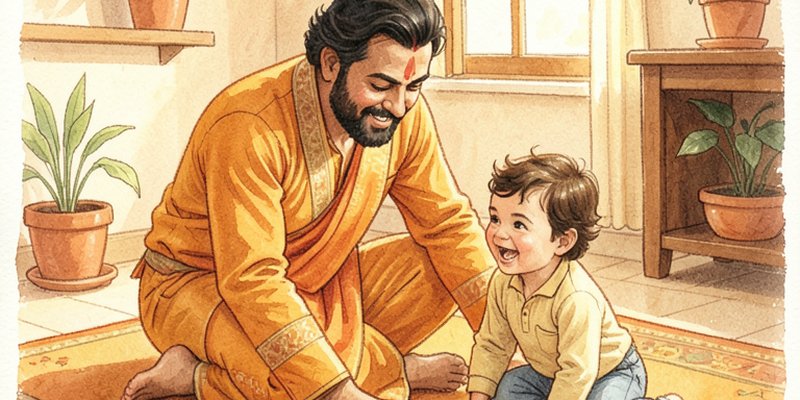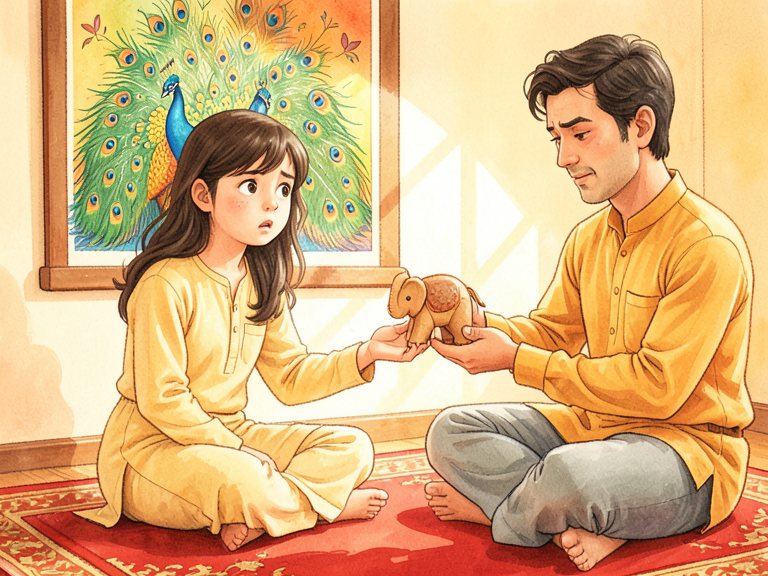
07:10
Someone asks what you want, and you genuinely don't know anymore — the question feels almost foreign.
More Than the Role ·6 months ·All ages
Losing your sense of self in full-time caregiving is extremely common, and it isn't a sign that you love your family any less. This is a quiet programme on getting a little of yourself back — protected, and real — and on the conversations at home that make room for it.
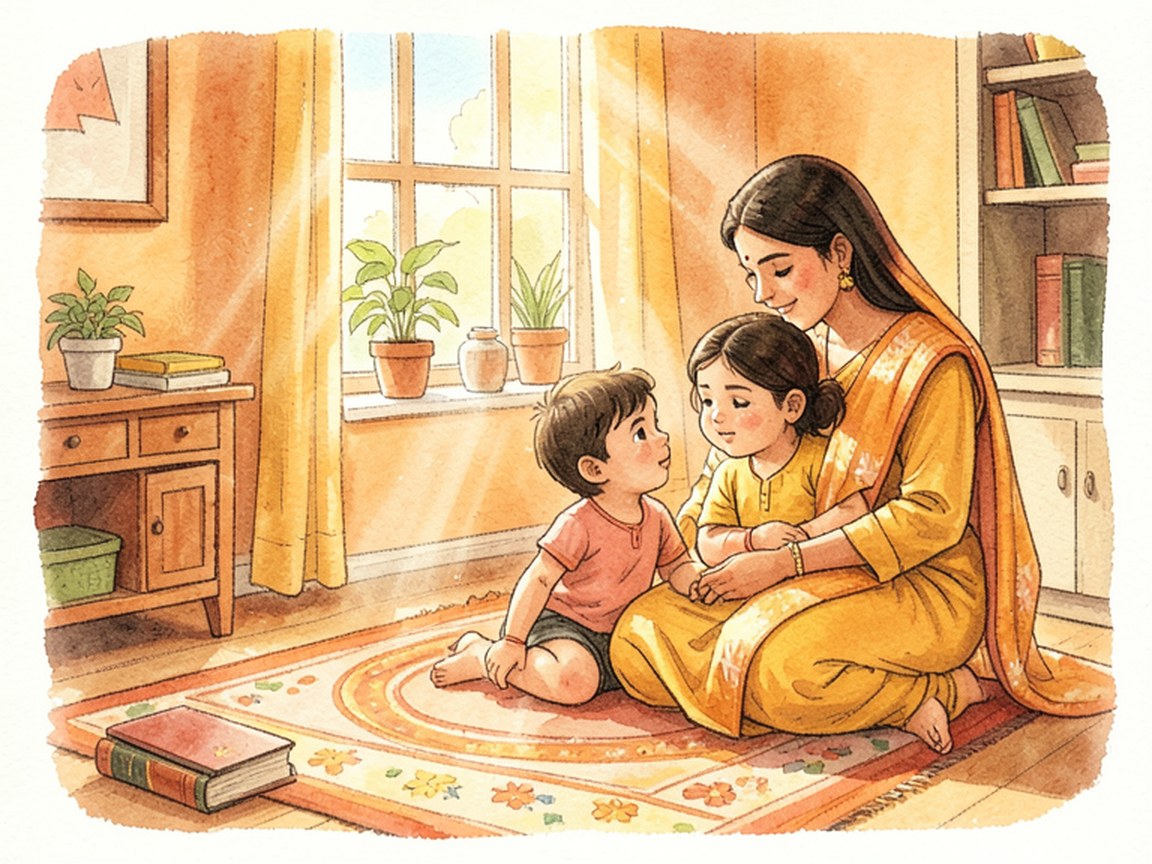
Losing your sense of self in full-time caregiving is extremely common and isn't a failure of commitment — it happens when every hour is allocated to someone else's needs. Recovering it starts with something small and genuinely your own, protected the way a work commitment would be, and with an honest conversation at home about the labour that stays invisible.
Read this first
One thing worth naming. There is ordinary depletion, and there is something heavier — a flatness that doesn't lift, a loss of interest in things you used to reach for, or days that feel hard to get through. If that's closer to what you're living with, this programme is not the right first step. Please speak to a doctor or a mental-health professional; that is care you deserve, not an overreaction. This work can sit alongside it, but it shouldn't stand in for it.
Six moments from a single ordinary day.
07:10
Someone asks what you want, and you genuinely don't know anymore — the question feels almost foreign.
09:30
You hear yourself say "I'm just a housewife" and wince, but you keep saying it.
13:00
There's resentment you can't fully justify, and then guilt about the resentment sitting on top of it.

16:45
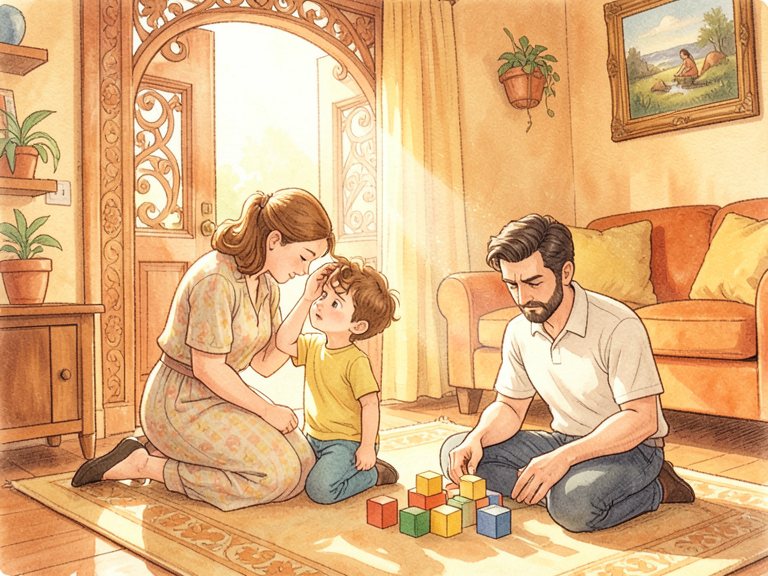
Your partner assumes you're available for everything, because on paper you are.

18:30
You realise you haven't had a single conversation today that wasn't about the children or the house.

20:15
The work you do all day is real and constant, and somehow it's the one kind of work nobody counts.
Swipe through the day
Ask a woman who has been at home with young children for a few years what she wants — not for the family, for herself — and there is often a pause. Not because she's being modest, and not because the answer is complicated. Because the question has stopped being one she asks. When every hour of every day is allocated in advance to someone else's needs, the part of you that used to have preferences, plans and idle wants simply goes quiet from disuse.
This has a name, and naming it helps: identity foreclosure. It happens when a single role expands to fill all the available space until there is no room left for the person who took it on. It is not a sign that you love your family less than other women love theirs. It is what tends to happen to anyone whose days contain no push-back, no separate context, no hours in which they are addressed as themselves rather than as somebody's mother.
And it will not be fixed by a grand gesture or a weekend away, and any programme that promised to hand your old self back intact would be lying. What got thinned out over years doesn't return in an afternoon. But it does return, in pieces, when the conditions change — and the conditions are more changeable than they feel from inside the fog.
The instinct, once a mother decides to reclaim something, is often to reach for something large. Go back to studying. Start a business. Reclaim a whole former life at once. It's an understandable instinct and it almost always collapses, because a large commitment is the first thing to give when a child is unwell or the house needs something or a hundred small demands arrive at once — which, in a full-time caregiving life, is daily.
The thing that survives is small and defended. Two hours a week for something that is genuinely yours — not useful to the family, not productive in any way anyone else would count, simply yours — held with the same firmness you'd hold a work meeting. The size is the point. Something small enough to protect completely rebuilds the muscle of having a self far more reliably than something ambitious enough to be constantly sacrificed.
What matters as much as the claiming is the defending. In most households, a mother's time is treated as the elastic that stretches to absorb everyone else's needs. Protecting a small piece of it is less about scheduling and more about a quiet renegotiation of that assumption — which is why we treat it as real work, not a life-hack.
There is a particular kind of work that a full-time mother does which is almost impossible for the person not doing it to see. Not the visible tasks — the cooking, the pickups, the baths — but the layer underneath: the remembering, the anticipating, the holding of a hundred small threads so that nothing is dropped. The mental load. It is constant, it is genuinely tiring, and because it produces no visible object, it is the easiest work in the world to not notice.
Much of the resentment that full-time mothers feel and then feel guilty about lives right here. Not in the tasks themselves, but in carrying the entire invisible layer alone while being treated as infinitely available for the visible one. The fix is not to suffer it more nobly. It is to make the load nameable — to move it from something felt to something that can be pointed at and discussed.
That conversation is hard to start, which is why so few households have it. It's easy for it to sound like an accusation, and easy for a partner to hear "you don't do enough" and get defensive rather than curious. We work on the actual language: how to name the mental load as information rather than indictment, how to ask for specific ownership of a domain rather than vague help, and how to stay in the conversation when it gets uncomfortable.
For many full-time mothers there is a dimension underneath all of this that rarely gets spoken aloud: financial dependence. When you don't earn, asking for time or money for yourself can feel like asking permission, or like spending something you didn't contribute. That feeling is common and it is corrosive, and pretending it isn't there makes the whole subject harder to raise.
So we name it directly. The work a full-time mother does has real economic value even though no salary attaches to it — and the household's money is a shared resource built partly on that unpaid work, not a favour extended by the earning partner. Getting to a place where you can say that, calmly and without apology, changes what else becomes sayable. It is not a comfortable conversation for most couples. It is also one of the most freeing to have actually had.
There is an Indian layer to all of this that deserves saying out loud. Homemaking is simultaneously expected of women and quietly devalued by the same culture that expects it — held up as a duty and dismissed as "not really working" in almost the same breath. That contradiction lands on individual women as a private confusion: doing exactly what was asked, and feeling somehow lesser for it.
And the nuclear-family homemaker in a metro carries a particular isolation. The extended family that once meant other adults in the house, shared caregiving and constant company is often a train journey or a flight away. The days can be genuinely solitary in a way the previous generation's rarely were — long stretches with no adult conversation that isn't logistics. None of this is your imagination, and none of it is a personal failing. It is a real set of conditions, and this programme treats it as the actual subject rather than something to push past on the way to talking about the children.
Not two hours if nothing comes up. Two hours that are booked, non-negotiable, and treated the way a work meeting would be. Small and protected beats ambitious and abandoned every single time. Put it on the calendar this week.
The next time you do something invisible — the planning, the remembering, the anticipating — say it out loud to your partner, plainly and without apology. Not as a complaint. As information they may genuinely not have.
That helps in the moment. Changing the pattern takes something else.
Six months on the self that got quietly folded into the role — and that almost no parenting programme is willing to treat as its actual subject.
Before anything changes, we look honestly at how it happened — not as a personal failing, but as what tends to occur when every waking hour is spoken for by someone else's needs. We name the specific shape of it for you: the interests that quietly lapsed, the version of yourself that used to have opinions and plans, and the way a role can slowly become an identity when nothing pushes back.
The practical core of the work. We start small on purpose, because small and defended survives where ambitious and abandoned does not. We work on choosing something that is genuinely yours rather than useful to the family, on the logistics that make it possible, and — the harder part — on holding the boundary when the household treats your time as the first thing that can be given up.
The conversation about invisible labour, done in a way that informs rather than accuses. We work on naming the mental load so it can be seen, on asking for specific ownership rather than vague help, and on the financial-dependence dimension named honestly — because for many full-time mothers it is real, it is rarely discussed, and pretending it isn't there makes everything else harder to say.
Making the changes durable rather than a good few weeks that quietly reverse. And, if you want it, an honest look at the question underneath many of these — whether you want to return to paid work, and what it would actually take. No pressure in either direction; just clarity you can act on.
Small group — deliberately. Few enough that everyone is known, and no one is a spectator.
Message us to hear about dates, structure and fees for the next cohort.
Purnam is an AI-native parenting companion for modern Indian families. A structured programme, a smart companion that knows your family, and a small, honest community of parents — built to take you from surviving the day to thriving across the years.
Parenting that hasn't been handed down — for the generation that wants to parent differently than they were parented, but has no cultural template for it.
Purnam · our positioning
Purnam is built by a founding team with 18+ years across big tech, startups, and growth-stage technology companies — and, more to the point, by parents currently inside the early-childhood years themselves.
Parents to a toddler ourselves — building Purnam to help Indian families move from surviving to thriving.
Purnam's approach draws on modern developmental psychology — attachment, emotional regulation, behavioural coaching — held alongside Indian contemplative traditions as practical tools rather than belief.
We are advised by senior practitioners in human transformation and behavioural coaching. Where the evidence for something is strong, we say so. Where it is contested, we say that too.
Message us on WhatsApp about More Than the Role — dates, structure, fees, and whether it fits your situation.
Or just ask your actual question. That's what the line is for. Someone from the Purnam team will get back to you.
Purnam offers parenting support and education. This is not paediatric, medical, or mental-health treatment, and it is not a substitute for care from a qualified professional. Every child and family is different; nothing here is a promise of any particular outcome.