07:10
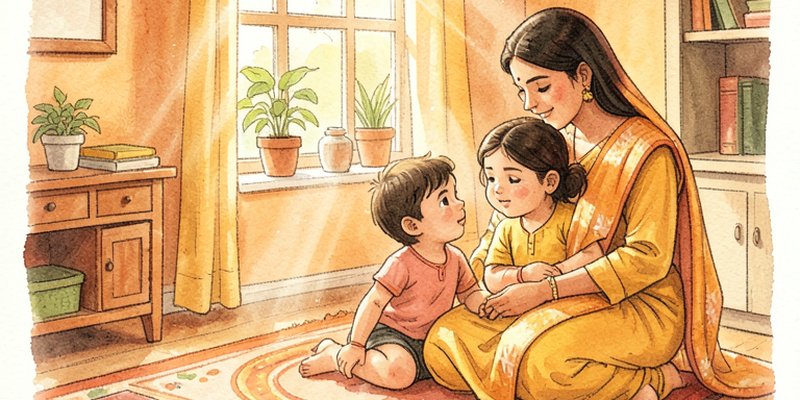
You're the helper, not a parent — you do what you're asked, but the deciding and the remembering sit with someone else.
Fathers, Fully In ·6 months ·All ages
Most fathers who want to be more present aren't held back by willingness. They were raised on provision and authority, and were never shown the daily version of fathering. This is a programme about building that — by owning something completely, not by helping more often.
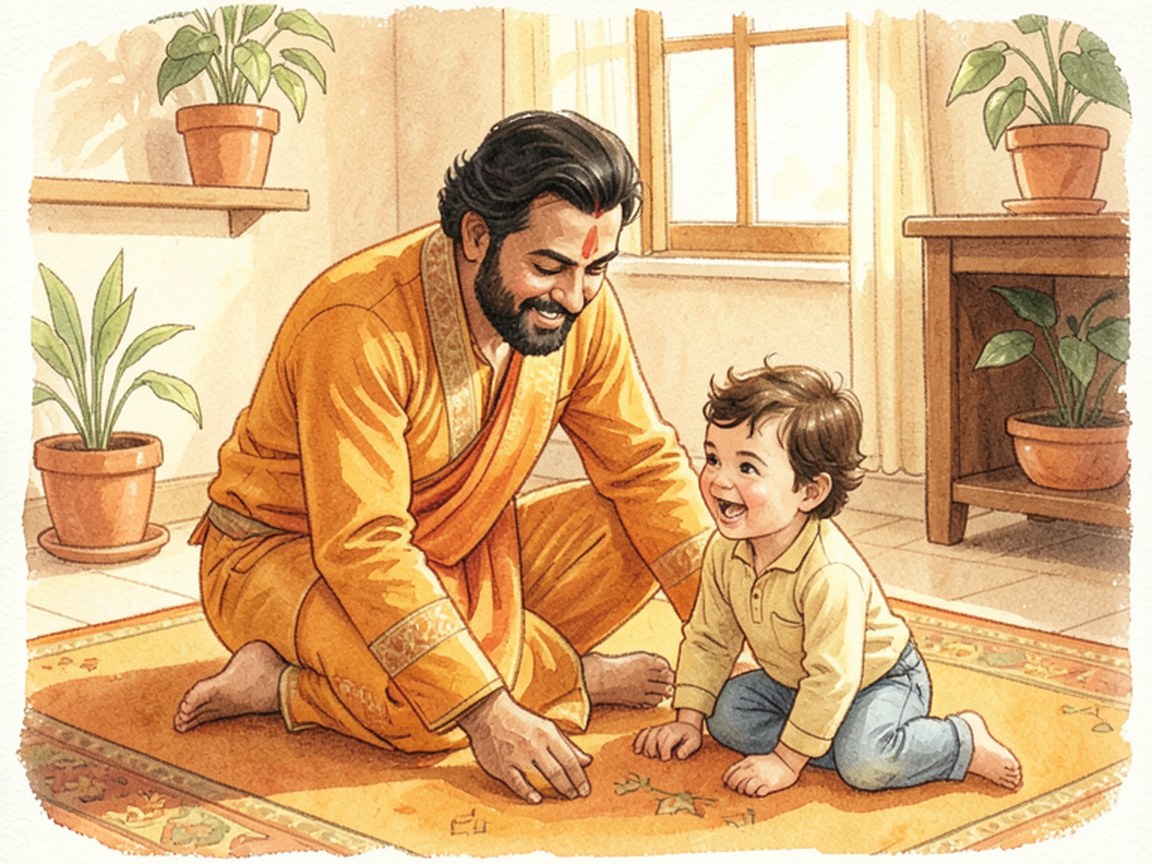
Most fathers who want to be more involved aren't held back by willingness but by never having seen it done — the previous generation's model was provision and authority, not daily care. Involvement is built by owning specific domains of your child's life completely, rather than by assisting with everything occasionally.
Six moments from a single ordinary day.
07:10
You're the helper, not a parent — you do what you're asked, but the deciding and the remembering sit with someone else.
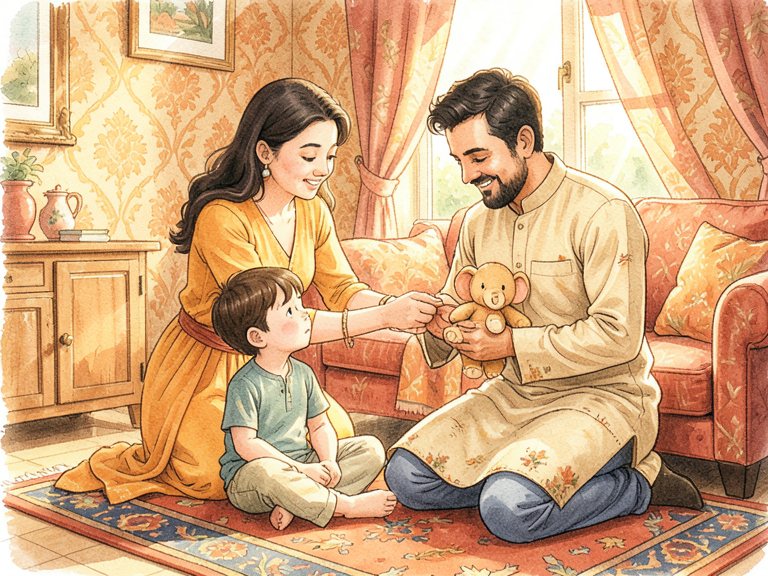
09:30
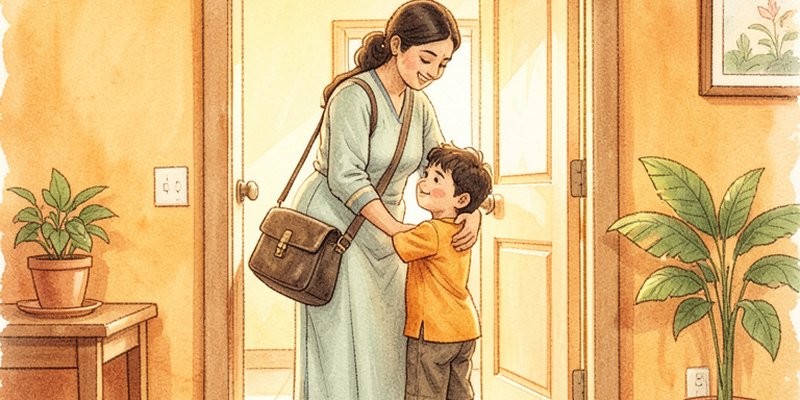
You don't actually know the routines: what time, which bag, which doctor, what they eat.

13:00
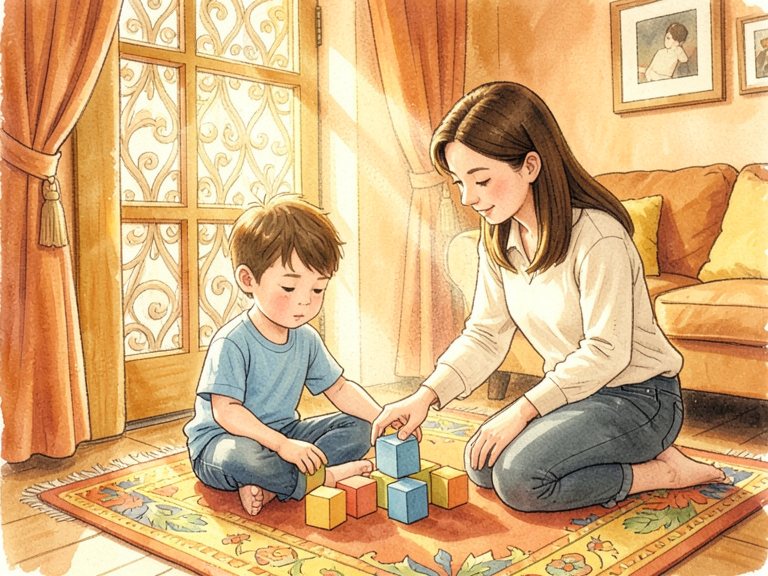
Your child goes to their mother by default, and you tell yourself that's just how it is at this age.

18:30
The only model of a father you have is your own — and he provided and presided, but wasn't in the daily thick of it.

20:15
Every article, every account, every class you come across is addressed to mothers, as though you weren't in the room.
Swipe through the day
There's a familiar story about the uninvolved father — that he doesn't want to be there, doesn't care to change a nappy, would rather be at work or on his phone. For some men that's true. But it's a poor description of the fathers who actually go looking for help.
The father who searches for how to be more involved has already cleared the willingness bar. What he's missing is something quieter and harder to name: a model. He has almost never seen, up close, a man doing the daily work of raising a child. His own father provided and decided and was respected, and was largely absent from the meals and the baths and the long ordinary hours. That was the assignment of that generation, and it was honourably met. But it hands down no template for the thing this father is trying to do.
So he arrives willing and blank. And into that blankness, the easiest available role slides: the helper.
Being the helper feels like involvement. You do the dishes when asked, you take the baby for a walk so your partner can rest, you say — sincerely — "just tell me what you need and I'll do it." It looks like contribution, and in a narrow sense it is.
But the helper is not a parent. The helper is staff.
The tell is where the load sits. When you help, someone else is still holding the whole thing in their head — remembering the vaccination, noticing the shoes have gotten small, tracking that the afternoon nap has started shifting later. You supply hands. They supply the mind. And "just tell me what to do," however well meant, quietly locks this arrangement in place, because it puts the other parent permanently in charge of knowing, planning and delegating. You've made yourself useful and kept yourself dependent in the same breath.
This is why more helping never adds up to more parenting. You can help harder for years and the fundamental structure — she carries it, you assist — doesn't move an inch.
The way out isn't to help more. It's to own something.
Take one part of your child's life and hold it end to end. Bedtime is a good place to start, but it could be the mornings, the meals, the doctor and the health record, the school and its endless WhatsApp groups. What matters is that you own the whole thing — not the visible steps, but the invisible ones: the planning, the remembering, the noticing when something's off, the deciding what to do about it.
When bedtime is genuinely yours, nobody reminds you it's coming. You know the toothbrush is running low before it runs out. You handle the negotiation over one more story without looking up to check whether you're doing it right. It has become a thing you carry, not a thing you assist with.
This is narrower than "being more involved" and far more powerful, because depth in one domain teaches you things breadth never does. And it changes the load in the household in a way that helping cannot — one whole thing has genuinely moved off someone else's plate and onto yours.
To be honest about scope: owning a domain will not make you an equal overnight, and it won't dissolve every tension about who does what — any programme that promised that would be lying. What it does is give you one real place to stand as a parent, and a method you can extend from there.
Once you're doing the work, a second misconception surfaces: that involvement is a quantity, and more is always better.
It isn't, quite. A father who is fully present for a reliable stretch of each day — genuinely there, not half-watching while scrolling — builds something that a distracted all-day presence does not. Children read attention accurately. They know the difference between a parent in the room and a parent with them.
What presence looks like depends entirely on your child's age. With a baby, it's the care itself — the feeding and carrying and soothing are the relationship, not a chore around it. With a toddler, it's getting on the floor and entering whatever small world they've built. With an older child, it's showing up in the thing they care about, on their terms, without turning it into a lesson. None of this requires enormous blocks of time. It requires that your involvement be predictable rather than occasional, so your child learns they can count on it.
Underneath the routines and the domains is a question worth sitting with: what do you want your child to be able to say about you when they're grown?
Very few men, asked this, answer "that he provided well and was respected." They say things about being known, being close, being someone their child came to. And then most of them, without meaning to, live a daily life that quietly points somewhere else — busy, peripheral, helping at the edges.
The work of this programme is closing that gap: taking the father you want to be and translating him into what this specific week has to contain. Not a heroic burst of involvement that impresses everyone for a fortnight and then fades, but a sustainable version of the thing — small enough to keep doing, real enough to matter.
And there's a reason this has to be built rather than borrowed. Look at the entire Indian parenting-education landscape and you'll find it addressed, almost without exception, to mothers. The fathers who want in have had nowhere designed for them to start. That absence isn't a small oversight; it's the whole reason this page exists.
Not 'help with' bedtime. Own it. That means the timing, the wind-down, the missing toothbrush, the negotiation, all of it. Ownership includes the mental load, not just the physical steps — and that's the part that's usually still being carried by someone else.
'Just tell me what you need' sounds helpful, but it keeps you the assistant and keeps the load with your partner. For the domain you've taken, work it out yourself. Getting it wrong and adjusting is how you learn a routine — being told each step is how you stay dependent on the person telling you.
That helps in the moment. Changing the pattern takes something else.
Six months on stepping out of the helper role, because the shift from assisting to owning takes longer than a workshop and doesn't hold if you rush it.
Before you can build a way of fathering, it helps to see the one you're working against. For most Indian men, the template is provision and authority — a father who paid, decided, and was respected, but was rarely in the daily texture of care. That model isn't a failure; it was the assignment of its time. But it gives you almost nothing to draw on for feeding, soothing, or the ordinary hours. We start by naming what you actually saw growing up, and separating the parts worth keeping from the parts you've simply never questioned.
The core of the programme. Rather than helping with everything occasionally, you take one part of your child's life and own it end to end — the mornings, the meals, the bath and bed, the school liaison, whichever fits your household. We work through what full ownership actually means, including the planning and remembering that usually stays invisible, and how to hold it when your first instinct — and sometimes your partner's — is to hand it back.
Involvement isn't audited in hours. A father who is fully present for a short, reliable stretch of the day builds something a distracted all-day presence doesn't. We work on what presence looks like at your child's specific age — how you bond with a baby who can't yet talk to you, how you show up for a school-age child who has stopped needing you for the obvious things — and on making your involvement predictable rather than occasional.
Stepping back from routines and domains to the longer question: what do you want your child to be able to say about you in twenty years, and what does today have to look like for that to be true? We turn that into something concrete and sustainable — not a burst of effort that fades, but a version of fathering you can actually keep being.
Small group — deliberately. Few enough that everyone is known, and no one is a spectator.
Message us to hear about dates, structure and fees for the next cohort.
Purnam is an AI-native parenting companion for modern Indian families. A structured programme, a smart companion that knows your family, and a small, honest community of parents — built to take you from surviving the day to thriving across the years.
Parenting that hasn't been handed down — for the generation that wants to parent differently than they were parented, but has no cultural template for it.
Purnam · our positioning
Purnam is built by a founding team with 18+ years across big tech, startups, and growth-stage technology companies — and, more to the point, by parents currently inside the early-childhood years themselves.
Parents to a toddler ourselves — building Purnam to help Indian families move from surviving to thriving.
Purnam's approach draws on modern developmental psychology — attachment, emotional regulation, behavioural coaching — held alongside Indian contemplative traditions as practical tools rather than belief.
We are advised by senior practitioners in human transformation and behavioural coaching. Where the evidence for something is strong, we say so. Where it is contested, we say that too.
Message us on WhatsApp about Fathers, Fully In — dates, structure, fees, and whether it fits your situation.
Or just ask your actual question. That's what the line is for. Someone from the Purnam team will get back to you.
Purnam offers parenting support and education. This is not paediatric, medical, or mental-health treatment, and it is not a substitute for care from a qualified professional. Every child and family is different; nothing here is a promise of any particular outcome.