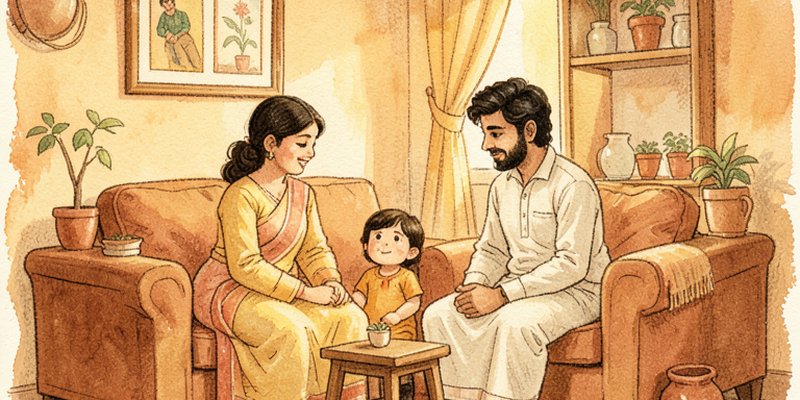
Monday
Toilet training or sleep quietly unravels the week the baby comes home, with no obvious cause.
Making Room for Two ·1 month ·18 months – 8 years
The regression, the clinginess, the sudden 'send it back' — these are not your older child turning difficult. They are your older child checking whether they still have a place. This is a short programme on making sure they know they do.
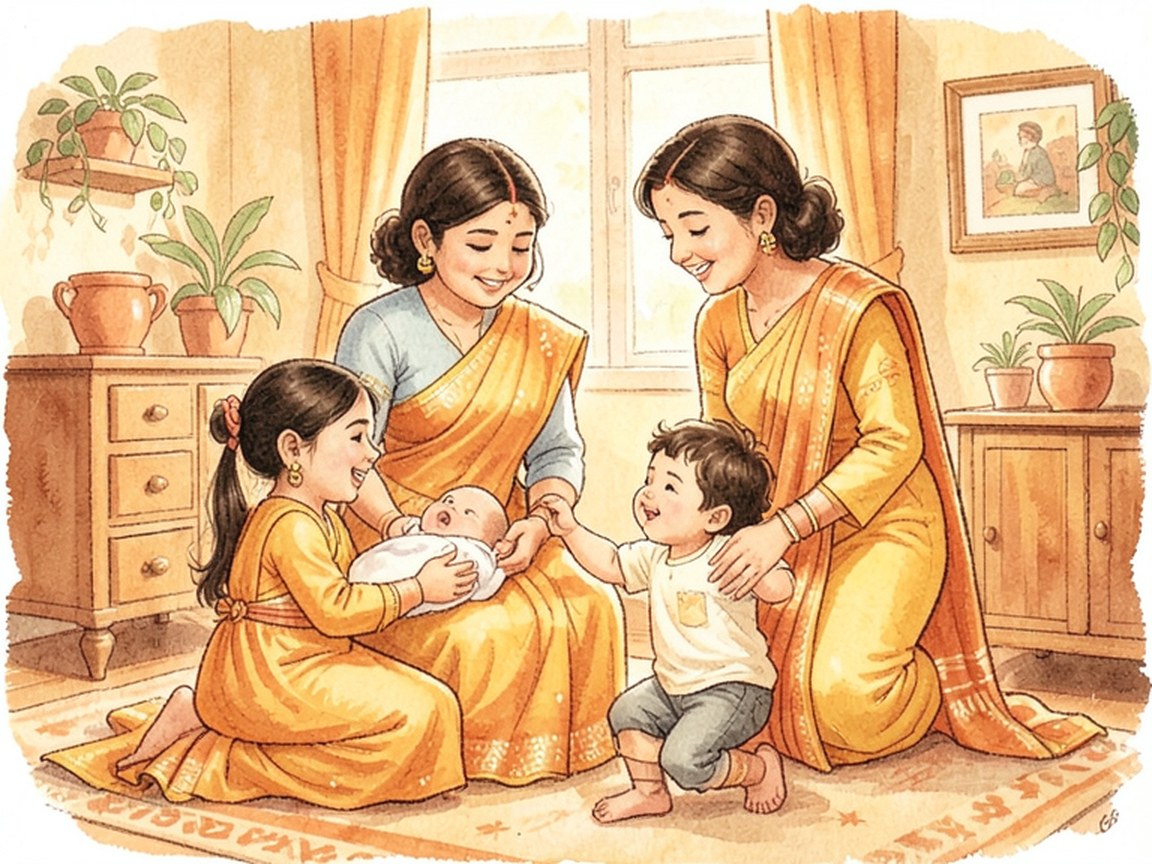
Regression after a new baby is normal and usually temporary — your older child is checking whether their place is still secure. It resolves fastest through small, reliable one-to-one time rather than through explanations about being a big brother or sister. What helps most is protecting a little of the day that stays entirely theirs.
Read this first
One thing to take seriously rather than manage. The months around a new baby are heavy for a mother too, and low mood, exhaustion and worry are common. But if what you're carrying feels darker or heavier than tiredness — if the days feel flat, frightening, or hard to get through — please treat that as its own thing and speak to your doctor. It is not a parenting problem to work through slowly, and you deserve support for it directly.
One ordinary week in your house.
Monday
Toilet training or sleep quietly unravels the week the baby comes home, with no obvious cause.

Tuesday
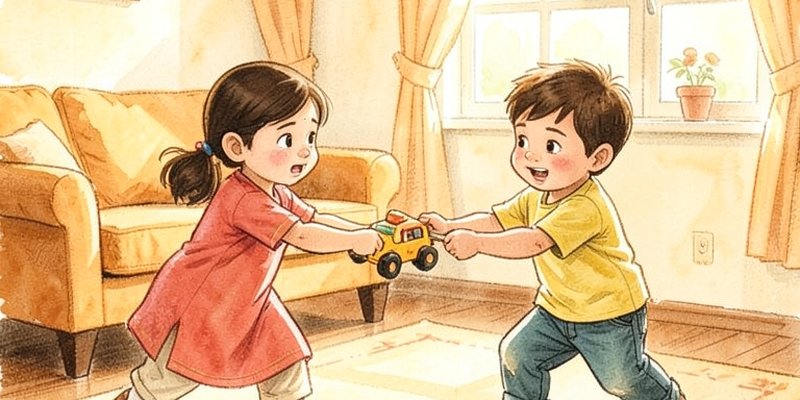
You catch a pinch, a shove, or a too-hard 'cuddle' aimed at the baby — and don't know how to respond.

Wednesday
"Send it back" — said flatly, or through tears, and it lands harder than you expected.
Thursday
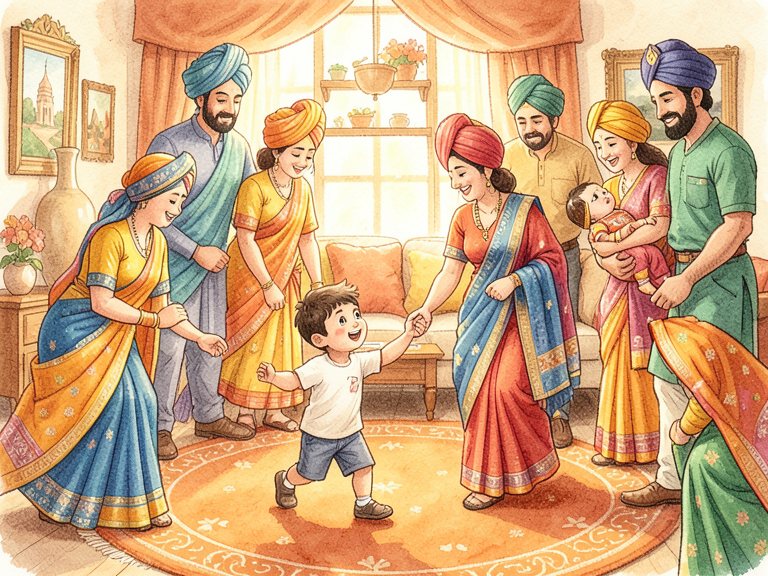
Every relative who visits walks straight past the older one to reach the newborn.

Friday
You're stretched across two children and carrying a low, constant guilt about the first.

Saturday
The 'you're the big one now' line was meant to help, and seems to have made things worse.
Swipe through the day
A second child is a joy you chose. For your first child, it is an event that happens to them.
Nobody consulted them. One day the house is theirs, and the adults in it are theirs, and the next there is a small, loud newcomer who takes up the lap, the nights, and most of the conversation. From the inside, this is not the arrival of a sibling so much as the quiet loss of a monopoly they didn't know they had.
Understanding it from their point of view changes almost everything about how you respond. What looks like your older child suddenly turning difficult is, far more often, your older child asking a single question in every way they can: do I still have a place here?
The most disorienting part for many parents is the regression. A child who was reliably dry starts having accidents. One who slept through the night is up again. Speech gets babyish; the cup gets swapped for a demand for the bottle.
It is tempting to read this as your child going backwards, or as deliberate attention-seeking to be corrected. It is neither. It is a security check. Your older child has noticed that the baby gets carried, fed, soothed and endlessly attended to — and, entirely reasonably, tests whether being babyish is what earns that care now.
The counterintuitive part is that pushing back hardest is what makes it last longest. A child scolded for regressing learns that the ground under them really has shifted. A child whose regression is met calmly — reassured, not shamed — usually gets their answer and quietly returns to where they were. The behaviour is a question. Answered warmly, it stops being asked.
This will not remove every ounce of jealousy, and any programme that promised to would be lying. Some rivalry between siblings is normal, and a little of it even does some good. The aim is narrower and more useful: to keep your older child feeling secure enough that the jealousy stays ordinary.
Almost every parent reaches for the big-sibling promotion. You're the big one now. You have to set an example. Look after your little brother. It is meant to flatter, to hand the older child a proud new role.
To a young child, it often lands as the opposite. The message they hear is that more is now expected of them and less is allowed — that the softness and the lap and the being-looked-after have been reassigned to the baby, and their consolation prize is a set of new responsibilities. The promotion reads as a demotion.
The alternative isn't to deny that they're older. It's to stop making their age the thing that costs them. A three-year-old does not want to be a big brother; he wants to still be your child. Keeping that intact — the cuddles, the routines, the small rituals that were his before the baby — does far more than any amount of proud framing.
If there is a single load-bearing idea in all of this, it is protected one-to-one time.
Not a grand outing. Ten reliable minutes a day that belong entirely to the older child — no baby in the room, no phone, and, as far as possible, led by them. Its power is not in the quantity, which is small, but in the consistency. A child who knows that a piece of every day is still theirs, without fail, stops needing to fight for it through regression or aggression.
Protecting it in the chaos of a newborn week is genuinely hard, and much of the work is practical: when it happens, who holds the baby, how you keep it from being the first thing that gets sacrificed. Small and reliable beats large and occasional, every time.
There is a particularly Indian layer to all of this, and it deserves naming plainly.
When a baby arrives, the relatives arrive too — often en masse, often for weeks. Their attention pours, almost entirely, onto the newborn. The older child, who a fortnight ago was the centre of every visit, watches a stream of people walk straight past them to reach the baby. And when they protest, the old instinct surfaces: you're older, you have to adjust.
That instinct made sense in a different structure and does real damage here. The elder child is not less in need of reassurance at this moment; they are more. Part of this programme is practical diplomacy — how to give the older child a visible role when guests come, how to gently brief the relatives who matter most, and how to hold a kinder line without turning a happy occasion into a standoff. You will not re-educate an entire extended family in a month. You can protect one child's standing inside it, and that is enough.
Sometimes the security check turns physical — a pinch, a shove, a hug that is a little too hard. It frightens parents, and it should be taken seriously, but it is rarely what it looks like.
The aggression is almost never real malice toward the baby. It is the older child's fear of being replaced, expressed in the most direct way a small body knows. The response that works holds both things at once: you keep the baby safe and make it unmistakably clear that hurting isn't allowed — and you do it without shame, because shaming a frightened child for being frightened only feeds the fear underneath. Getting that response right, consistently, is a large part of what we work on together.
None of this makes the first months easy. It makes them navigable — with a clear structure for the older child, a calm response for the hard moments, and a household that, before long, settles into being a household of two.
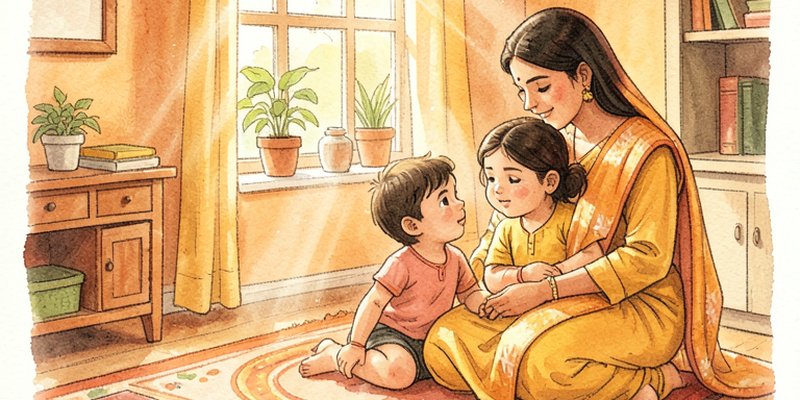
Find ten minutes a day that belong only to your older child — no baby, no phone, led by them. It sounds too small to matter. It is the single most reliable thing you can do, precisely because it is consistent rather than grand.
The big-sibling promotion is meant to flatter, but to a young child it often reads as a demotion — more expected of them, less allowed. Stop using it for a week and watch what eases.
When relatives arrive and head straight for the baby, hand the older child a role: they show the guest their drawing, or lead them to the baby. A small redirection that stops them feeling invisible.
That helps in the moment. Changing the pattern takes something else.
One month, arriving around the moment your household becomes a household of two children — on the child whose world is about to change the most, and who has the least say in it.
Before changing anything, we make sense of what you're seeing. Why toilet training, sleep and speech can slip backwards; why this is a security check rather than manipulation or a step back in development; and why it passes fastest when it is met with reassurance rather than pressure to 'act your age'.
The heart of it: building small, reliable one-to-one time that survives a chaotic newborn week, and framing the new arrival in a way that doesn't quietly cost the older child. We also work on the aggression response — what to do, calmly and without shaming, when a pinch or a shove is aimed at the baby.
The particularly Indian part: relatives arriving en masse and pouring every ounce of attention onto the newborn, and the old 'elder must adjust' default. How to steer the visitors, protect the older child's standing in a full house, and hold your ground kindly when the pressure is to let it slide.
Making the one-to-one time a habit that holds once the newborn intensity fades, reading whether the regression is resolving on its own, and knowing the small set of signs that would be worth a professional's eye rather than time.
Small group — deliberately. Few enough that everyone is known, and no one is a spectator.
Message us to hear about dates, structure and fees for the next cohort.
Purnam is an AI-native parenting companion for modern Indian families. A structured programme, a smart companion that knows your family, and a small, honest community of parents — built to take you from surviving the day to thriving across the years.
Parenting that hasn't been handed down — for the generation that wants to parent differently than they were parented, but has no cultural template for it.
Purnam · our positioning
Purnam is built by a founding team with 18+ years across big tech, startups, and growth-stage technology companies — and, more to the point, by parents currently inside the early-childhood years themselves.
Parents to a toddler ourselves — building Purnam to help Indian families move from surviving to thriving.
Purnam's approach draws on modern developmental psychology — attachment, emotional regulation, behavioural coaching — held alongside Indian contemplative traditions as practical tools rather than belief.
We are advised by senior practitioners in human transformation and behavioural coaching. Where the evidence for something is strong, we say so. Where it is contested, we say that too.
Message us on WhatsApp about Making Room for Two — dates, structure, fees, and whether it fits your situation.
Or just ask your actual question. That's what the line is for. Someone from the Purnam team will get back to you.
Purnam offers parenting support and education. This is not paediatric, medical, or mental-health treatment, and it is not a substitute for care from a qualified professional. Every child and family is different; nothing here is a promise of any particular outcome.