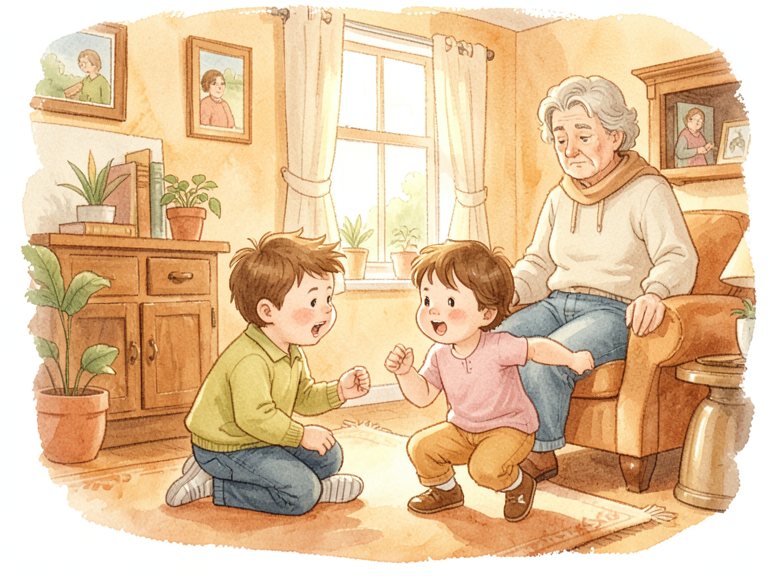
Monday
The same fight, six times a day — same trigger, same escalation, same helpless feeling that you've already handled this and it changed nothing.
Siblings Without the War ·3 months ·2 – 12 years
Sibling rivalry is rarely about the toy or the seat or whose turn it is. It is a competition for a scarce resource — your attention, your approval, the sense of being the favoured one. This is a three-month programme on making that resource feel reliable enough that competition for it has less to feed on.
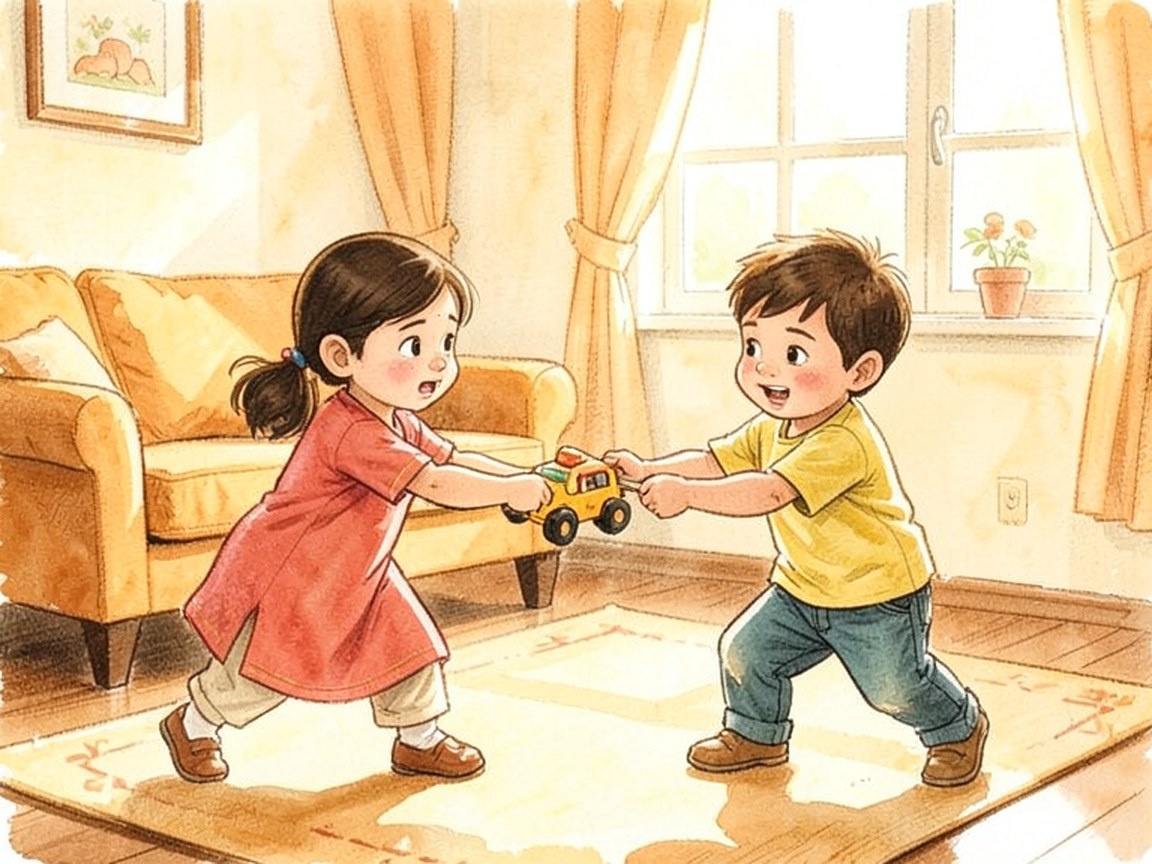
Sibling fighting is usually a competition for something finite — your attention, your approval, or the sense of being the favoured one. What helps most is rarely refereeing individual fights more fairly; it is making each child's supply of you feel reliable enough that there is less to compete over.
Read this first
One thing that is not ordinary rivalry. If one child is being genuinely hurt, or is consistently the one targeted — the same child, over and over, on the receiving end — that is not sibling rivalry and does not belong in a twelve-week programme. It deserves individual professional assessment. Please act on it rather than waiting for the fighting to settle on its own, and seek help for that child directly.
One ordinary week of refereeing.
Monday
The same fight, six times a day — same trigger, same escalation, same helpless feeling that you've already handled this and it changed nothing.
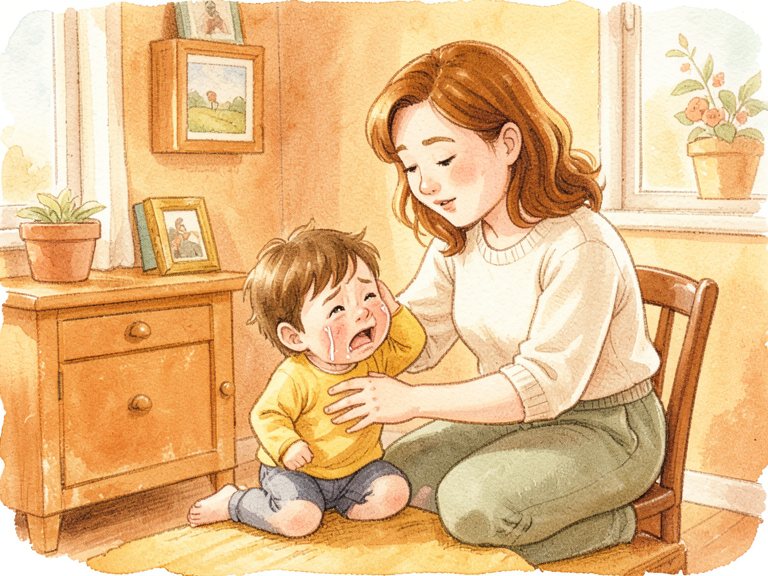
Tuesday
One child hurts the other, and afterwards you're left with the guilt about how sharply you reacted, and whether you were fair.
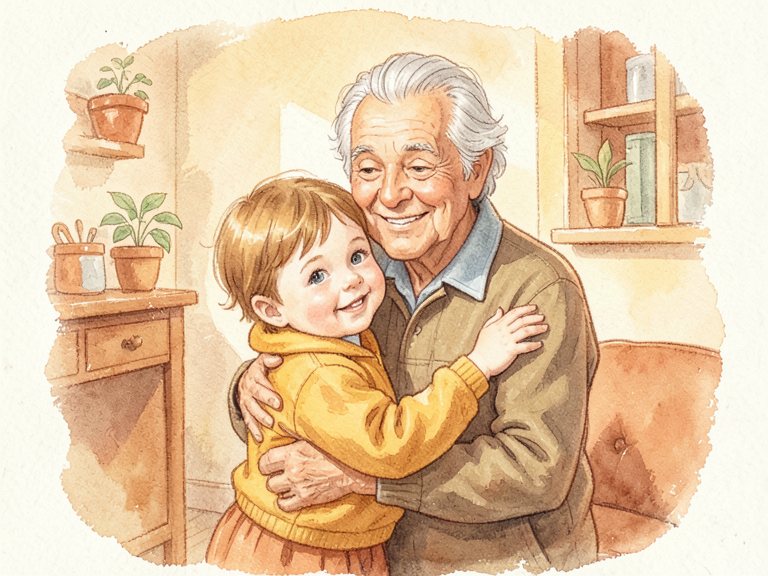
Wednesday
The older one, who was managing fine, has started wetting the bed and clinging and babbling like a toddler again since the baby arrived.
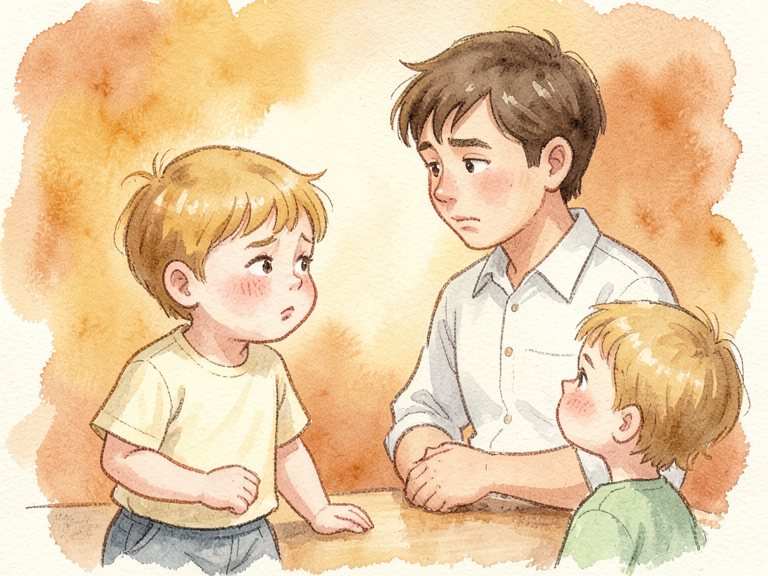
Thursday
You're accused of favouritism to your face — and privately, quietly, you wonder whether there's something to it.
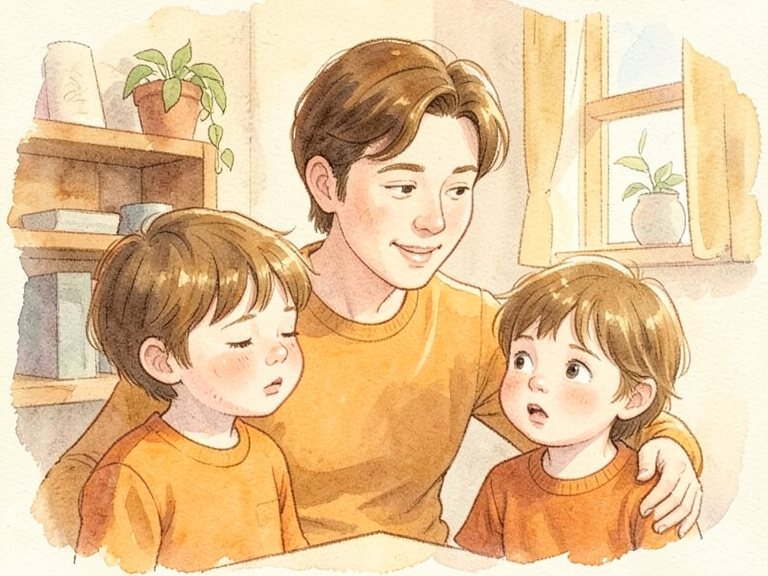
Friday
A comparison slips out that you never meant to make — "why can't you be more like your sister" — and you watch it land.
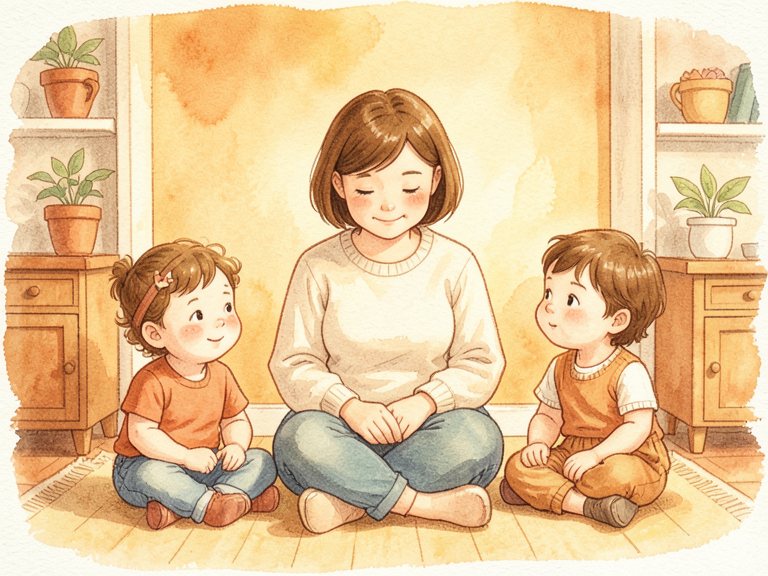
Saturday
You realise you haven't had a single moment alone with either of them in weeks, only the two of them together, competing.
Swipe through the day
Stand in the doorway during a sibling fight and it looks like a dispute over an object. The ball, the seat by the window, the last piece, whose turn it is on the tablet. Resolve that object — hand the ball to one of them — and within the hour there is a new object and the identical fight.
That is the first clue that the object was never the point. What your children are competing over is not finite in the way a ball is finite. It is you: your attention, your approval, the standing of being the one who is, right now, most loved. Those feel scarce to a child in a way that is hard for an adult to remember. A child cannot see the whole supply of your love. They can only see who has it at this moment — and if it looks like the other one has more, the alarm goes off.
This matters because it changes what the fighting is. It is not a character flaw in the aggressive one or a weakness in the sensitive one. It is not evidence that you have raised badly behaved children. It is two people competing for a resource they experience as scarce, doing exactly what any of us would do when something we need feels rationed.
The instinct, when two children fight, is to arrive and judge. Who started it. Who had it first. Who is telling the truth. You gather evidence, you weigh it, you deliver a verdict, and you hand the disputed object to the deserving party.
It feels like justice. It is, unfortunately, the thing that keeps the fighting alive.
The moment you become the judge, you become the prize. Every fight is now also an audition for your ruling — a chance to be found in the right, to watch the other one be found in the wrong, to secure a moment of your undivided attention and approval. You have accidentally made winning your judgement more valuable than the ball ever was. And because the supply of your verdicts is, unlike the ball, genuinely unlimited, the fights multiply to meet it.
There is a second cost. When you decide who is right, you take the problem away from them. They never build the muscle of resolving a conflict themselves, because you keep resolving it for them. So they stay dependent on your rulings, which means they keep fighting in front of you to get one.
The way out is not to referee more fairly. It is to stop being the judge and start being the coach.
A judge stands above the dispute and imposes an outcome. A coach stays beside it and builds the players' skill. The coach does three things the judge does not. They hold the safety line — no hurting, and that is not negotiable. They describe rather than decide: "Two children, one ball, both of you want it right now. That's a hard problem." And then they hand it back: "I know the two of you can work out something that feels fair. I'll be right here."
The first few times, this is uncomfortable. The children want the verdict; they may escalate to get it. But when the verdict reliably doesn't come, the fight loses its audience and its purpose. There is no prize to be won by being found right, because nobody is handing out that prize any more. What is left is an actual problem between two children — which, it turns out, they are far more capable of solving than we give them credit for, once we stop doing it for them.
None of this means walking away. Abandonment and adjudication are both easier than coaching, and both make it worse. Standing beside the fight, calm and unmoved, holding only the line that nobody gets hurt, is the harder and more useful place to be.
If refereeing is the thing to stop, one-to-one attention is the thing to start. It is not a nice extra. It is the mechanism by which the whole competition winds down.
Here is the counter-intuitive part. Fifteen minutes alone with one child does more than an hour with both of them together. In the hour together, each child spends the whole time watching the other — measuring who got the bigger laugh, the longer look, the last word. Shared attention is, from the child's seat, still a competition. Undivided attention is the opposite: for fifteen minutes, the supply is not rationed and not contested. It has their name on it. That is what makes the scarcity ease.
Special time works best when it is named, predictable, and genuinely undivided — no phone, no other child, no agenda beyond being with them. It does not have to be long or elaborate; a reliable ten minutes beats a lavish afternoon that happens once. The reliability is the medicine. A child who knows their turn is coming can tolerate their sibling's turn, because the alarm about scarcity has been switched off.
Three months will not stop your children from fighting, and any programme that promised siblings who never clash would be selling you something. Children who love each other argue; that is not the target. What tends to ease is the intensity and the frequency — and, as much as anything, your own place in the middle of it, which is where most of the exhaustion actually lives.
The age gap changes the flavour of the rivalry, though not its nature. A narrow gap produces head-to-head competition over the same toys, the same milestones, the same lap. A wide gap produces more comparison and more of the elder-must-adjust dynamic. In both, the underlying move — undivided attention, reliably given — is the same; only the packaging differs.
Everything above is true anywhere. In an Indian household it runs through a particular set of amplifiers, and pretending otherwise produces advice that doesn't fit the actual home.
The first is the joint household. When grandparents, uncles, aunts and cousins share the space, the comparisons multiply and they are often spoken aloud, warmly, as if they were compliments. "See how well she eats, why can't you." "He's the sharp one." Children do not experience these as passing remarks. They store them, and they return them to each other as ammunition in the next fight — your comparison, made by someone else, weaponised by your children.
The second is the cultural weight of being the elder. "You're older, you adjust" is said so often it can feel like a law of nature. But adjusting by default is not fairness; it is a standing tax on one child for the accident of birth order, and the younger one learns quickly that pressure is rewarded. The elder learns that their needs come second as a matter of policy. Both lessons feed the rivalry rather than settling it.
The third is the different weather for brothers and sisters. Expectations often diverge by gender — who is indulged, who is expected to give way, who is held to which standard — and children register that difference precisely, long before they can name it. A rivalry that looks like it's about a toy is sometimes about a fairness the children can feel but not articulate.
And the fourth is the visiting relative. The aunt who arrives for a week, declares one child the favourite over lunch, and leaves — and whose single sentence your children will quote at each other for a month. Part of this work is learning to interrupt those moments without a scene, and to repair them privately with the child afterwards, so that a guest's careless comparison does not become the theme of the next four weeks.
None of these amplifiers can be switched off, and the programme does not pretend they can. What changes is how you stand inside them — what you let land, what you interrupt, and how reliably each child's own share of you is protected from the whole noisy chorus.
Take one child aside for ten uninterrupted minutes and say what it is: "This is our time, just you and me." The naming matters as much as the minutes. It tells the child the supply exists and has their name on it.
Next fight, resist the verdict. Say what you see — "two children, one ball, both want it" — and stop there. You are not the judge who awards the ball. Withdrawing the verdict removes the prize they were competing for.
For one week, stop asking the elder child to give way simply for being older. Adjusting by default isn't fairness; it's a tax on the elder that quietly teaches the younger that pressure works.
That helps in the moment. Changing the pattern takes something else.
Three months on the conflict that fills your house from morning to night — why it happens, why refereeing makes it worse, and the small daily structure that lowers the temperature more than any rule about sharing ever will.
Before changing anything, we look honestly at what the fighting is really about — because it is almost never the object being fought over. We map the flashpoints across a real week and work out, for each child, whether they are competing for your attention, your approval, or the standing of being the favoured one. The trigger and the true stake are rarely the same thing.
The single change that lowers the temperature most: stepping down as the judge who decides every case. We work on why arriving to adjudicate makes you the prize both children are performing for, and on the coach's alternative — narrating, holding the safety line, and handing the problem back to them to solve rather than solving it for them.
One-to-one attention is the actual mechanism, and fifteen focused minutes with one child outperforms an hour of the two of them together. We build a version that fits your genuine week — the school runs, the work, the help at home, the second parent — so it survives contact with a Tuesday rather than living only in theory.
The forces underneath the fighting: comparison you didn't intend, the roles children get cast into and can't escape, and the relatives whose remarks become ammunition. We address the Indian layer directly — the elder-child duty to adjust, the different weather for brothers and sisters, and the visiting aunt whose comparison your children will quote back at each other for a month.
Small group — deliberately. Few enough that everyone is known, and no one is a spectator.
Message us to hear about dates, structure and fees for the next cohort.
Purnam is an AI-native parenting companion for modern Indian families. A structured programme, a smart companion that knows your family, and a small, honest community of parents — built to take you from surviving the day to thriving across the years.
Parenting that hasn't been handed down — for the generation that wants to parent differently than they were parented, but has no cultural template for it.
Purnam · our positioning
Purnam is built by a founding team with 18+ years across big tech, startups, and growth-stage technology companies — and, more to the point, by parents currently inside the early-childhood years themselves.
Parents to a toddler ourselves — building Purnam to help Indian families move from surviving to thriving.
Purnam's approach draws on modern developmental psychology — attachment, emotional regulation, behavioural coaching — held alongside Indian contemplative traditions as practical tools rather than belief.
We are advised by senior practitioners in human transformation and behavioural coaching. Where the evidence for something is strong, we say so. Where it is contested, we say that too.
Message us on WhatsApp about Siblings Without the War — dates, structure, fees, and whether it fits your situation.
Or just ask your actual question. That's what the line is for. Someone from the Purnam team will get back to you.
Purnam offers parenting support and education. This is not paediatric, medical, or mental-health treatment, and it is not a substitute for care from a qualified professional. Every child and family is different; nothing here is a promise of any particular outcome.