Age 6
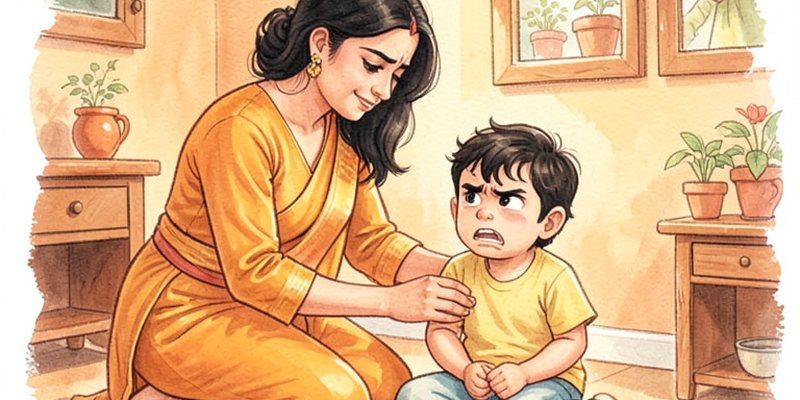
You ask what's wrong and get 'I don't know' — and you believe them, because they genuinely don't have the word.
Naming the Feeling ·3 months ·3 – 10 years
You're convinced this matters. What you're unsure of is the method. Naming a feeling is taught less by charts and lessons than by adults describing feelings out loud — including their own — and this is a focused programme on how to do exactly that at home.
Children who can name a feeling are better able to manage it, because naming moves the experience from something happening to them into something they can observe. This is taught mostly by narration — adults describing feelings out loud, including their own — rather than by lessons, charts, or being asked to explain how they feel.
How this changes as they grow.
Age 6
You ask what's wrong and get 'I don't know' — and you believe them, because they genuinely don't have the word.
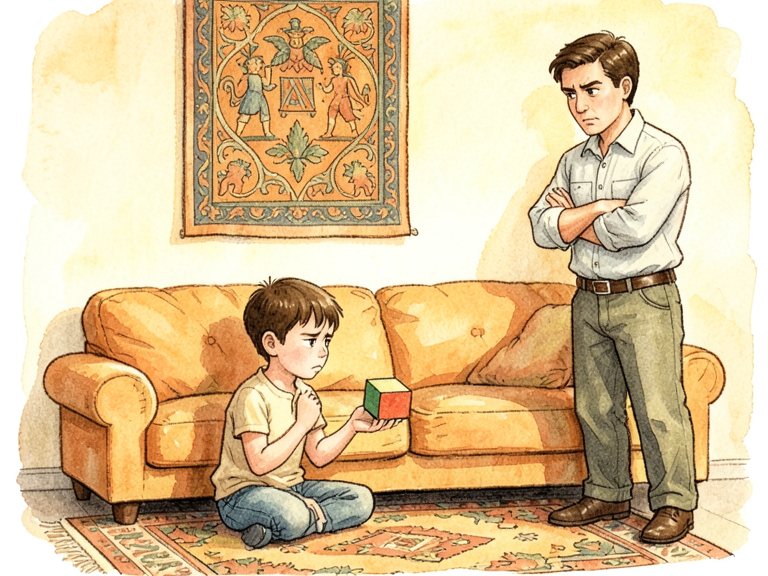
Age 9
Their entire emotional vocabulary is angry, sad, and fine, and everything gets forced into one of the three.
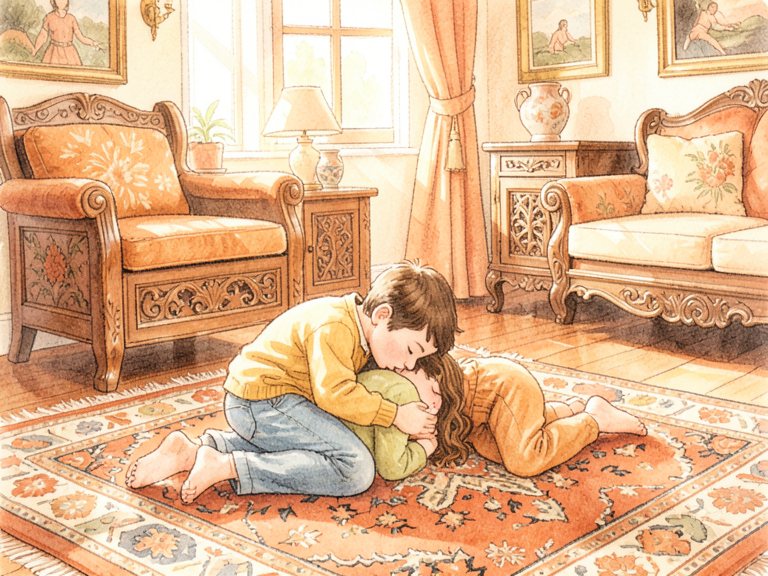
Age 12
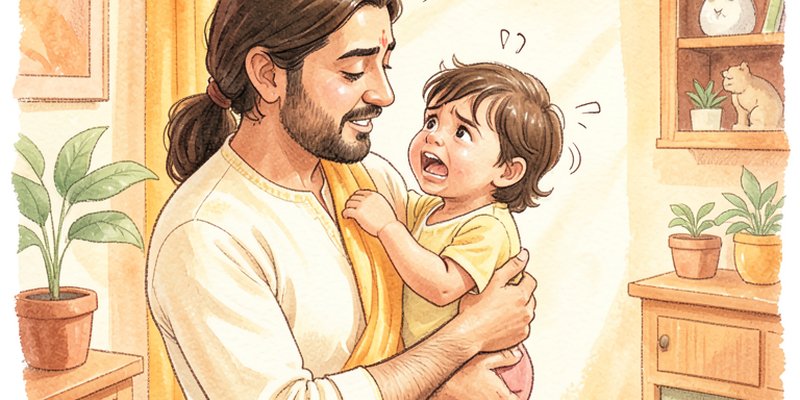
A big feeling arrives with no words attached, so it comes out as a body on the floor instead.
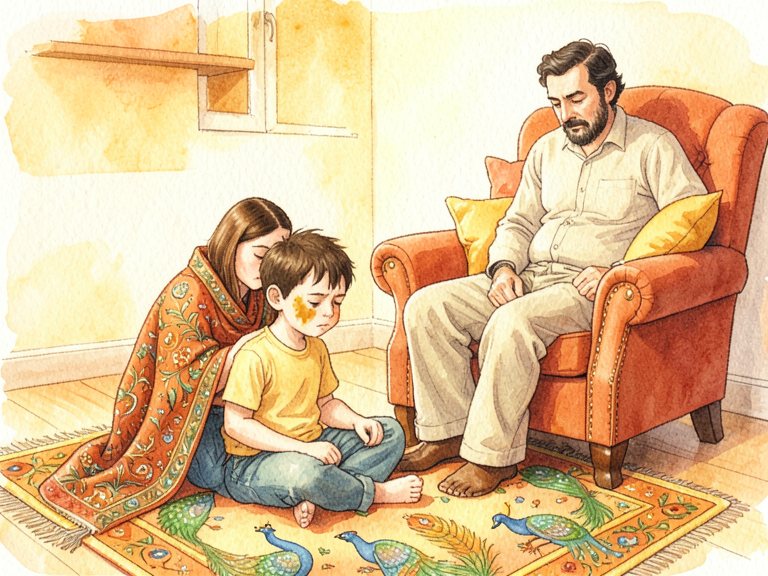
Age 14
You're convinced this matters and want to teach it, but you have no idea what teaching it actually looks like.
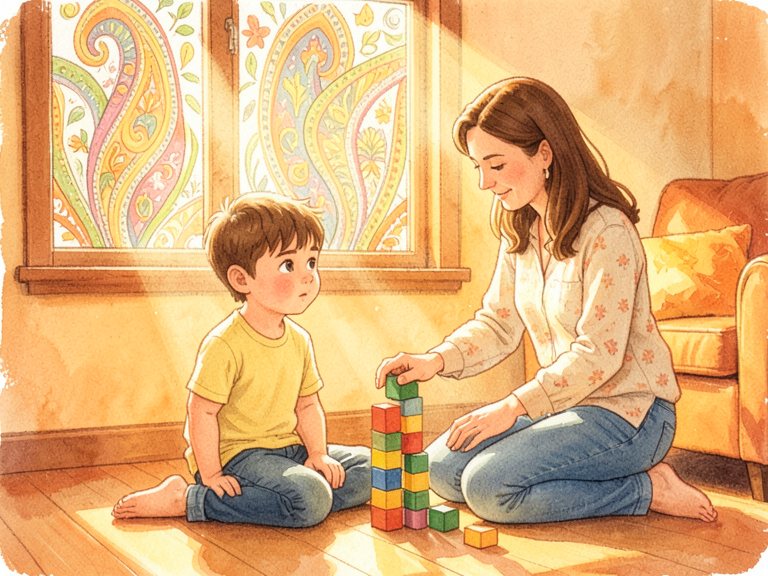
Age 16
You weren't raised talking about feelings, so there's no script in your head to fall back on.
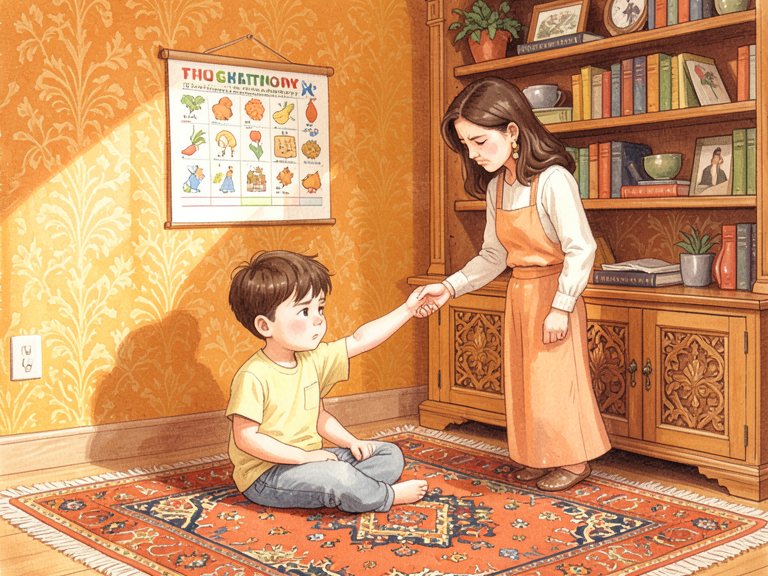
Now
You reach for a feelings chart, and it sits on the wall doing very little.
Swipe through the day
There is a reason "use your words" is such common parenting advice and such useless parenting advice. It assumes the words are there and the child is simply choosing not to reach for them. Often they are not there at all.
A young child in the grip of a feeling is inside it. There is no gap between them and the experience — the feeling isn't something they have, it's something they are, for the duration. This is why a small disappointment can look like the end of the world, and why "calm down" achieves nothing. You are asking someone to step back from a thing they are standing inside of.
Naming is what creates the gap. The moment a feeling has a name — disappointed, left out, nervous — it becomes something the child can point at rather than only something that has them. That small act of pointing is the beginning of managing it. Not because the word makes the feeling smaller, but because it makes the feeling observable. You cannot work with something you cannot see.
This is the whole idea, and everything else in the programme is a way of putting it into practice.
If naming feelings is a skill, the instinct is to teach it the way we teach other skills — sit the child down, explain the categories, quiz them afterwards. This almost never works, and it's worth understanding why.
Emotional vocabulary is picked up the way a first language is picked up: ambiently, from hearing it used, in context, by the people around you, about real situations. No child learns to speak from flashcards. They learn from being immersed in speech until the words become theirs. Feelings are the same. A child learns that the tight, hot thing in their chest is called frustrated by hearing an adult, in a frustrating moment, say the word out loud.
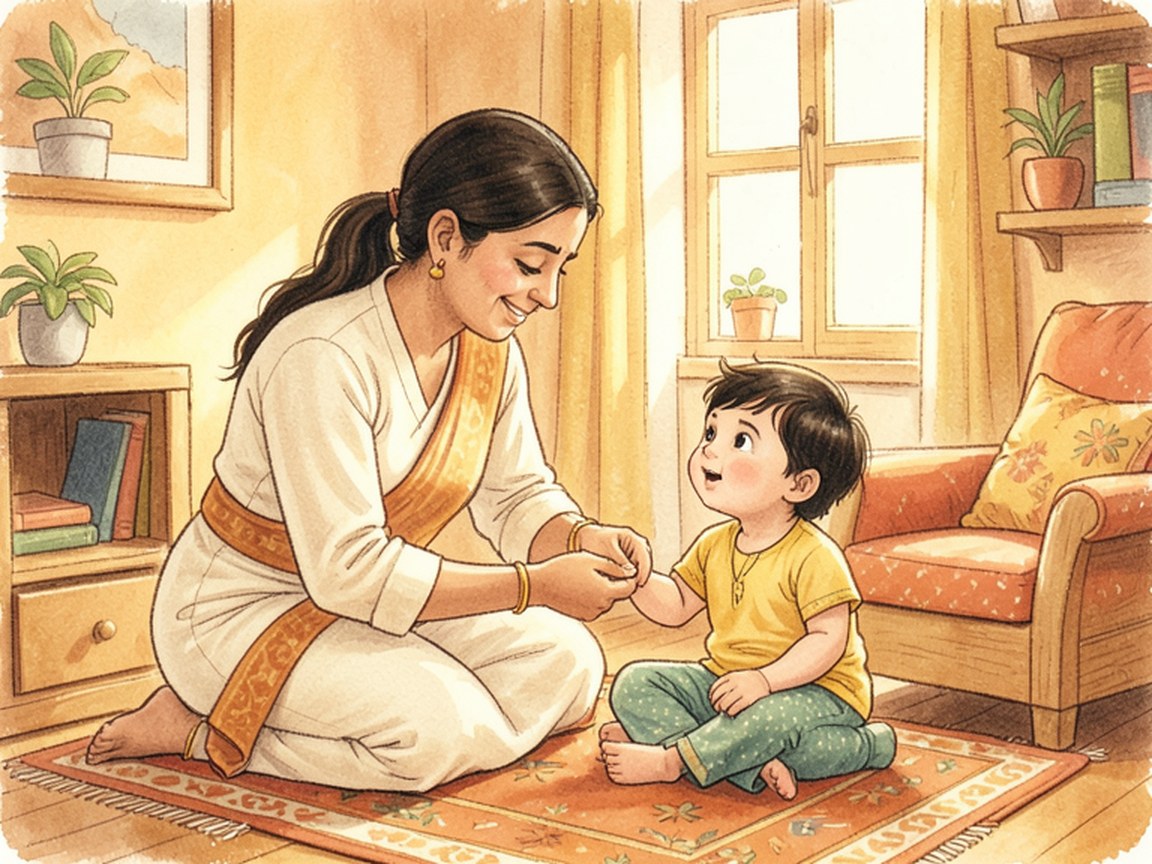
So the central practice is narration. You describe feelings as they happen — your child's, and your own. "You look disappointed that the game got cancelled." "I'm feeling impatient because we're running late." It is closer to sports commentary than to teaching. You are not asking anything of the child. You are simply making the invisible weather of the house visible, in words, over and over, until the words are available to them too.
Asking, by contrast, tends to backfire. "What are you feeling?" is a demand for a skill the child is still building. It often produces "I don't know," which is frequently the literal truth. Narration asks for nothing and gives them everything — a word, attached to a moment, that they can borrow the next time the moment comes.
The half of narration that parents find hardest is the half about themselves.
There is real power in a child hearing a parent name their own feelings — it shows that feelings are ordinary, survivable, and speakable, and it demonstrates the exact skill you want them to have. A parent who can say "I got angry and I need a few minutes" is teaching more than any lesson could.
But there is a line, and it matters. Narrating your feeling is not the same as making the child responsible for it. "I'm feeling frustrated, so I'm going to take a moment" models regulation. "I'm so stressed because of you" hands a child a weight they cannot carry. The programme spends real time on this distinction, because it's the place where good intentions most often go slightly wrong. The aim is a child who sees that adults have feelings and manage them — not a child who becomes the manager of yours.
Most families operate on a starter set: happy, sad, angry, and some version of fine. It's not wrong, it's just small. And a small vocabulary forces large, different experiences into the same few boxes — so nervousness, disappointment, embarrassment, and loneliness all come out as "angry" or "sad," which tells neither the child nor you very much.
Widening the set is gradual and age-shaped. A three-year-old can hold frustrated and disappointed. A six-year-old can hold left out, nervous, embarrassed. A nine-year-old can hold overwhelmed, jealous, and the useful discovery that two feelings can be present at once. You don't teach these as a list. You reach for the more precise word in the moment it fits, and the child slowly collects them.
To be clear about scope: this will not end tantrums, and any programme that promised to would be lying. A child with a rich emotional vocabulary still has big feelings, still falls apart, still has days that go sideways. What changes over months is not the presence of feelings but what becomes possible around them — a little more observing, a little less drowning, and a shared set of words for the two of you to use when it's hard.
For many Indian parents, the obstacle isn't method — it's that they are being asked to hand down something they were never given.
In a great many households, adult feelings simply weren't discussed. They were managed privately, or through action, or not at all, and certainly not narrated to children. If that was your childhood, you don't have a store of language to draw on. You are building the vocabulary at the same time as you're trying to teach it, which is genuinely harder than starting from a full cupboard.
This is workable, and it's a real part of what we do. It means getting comfortable saying words out loud that feel unnatural at first. It means tolerating the self-consciousness of narrating a feeling when no one ever narrated one to you. It sometimes means an older relative finding the whole thing strange, and knowing how to hold your practice steady anyway. The reassuring part: you do not have to be fluent to start. A child learns the language from a parent who is learning it too — and often the learning, done side by side, is the closest part.
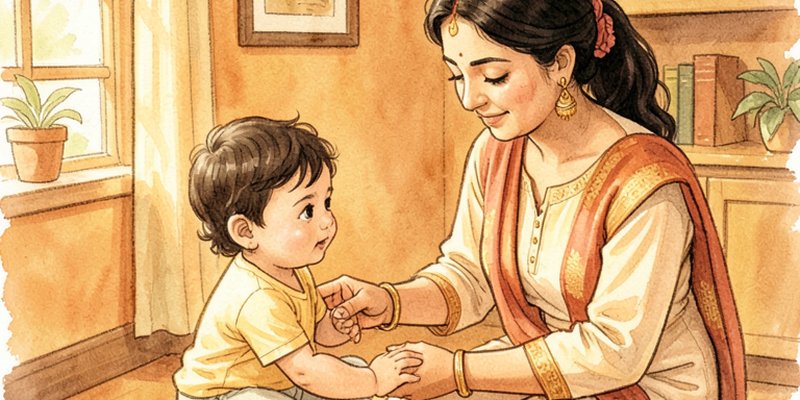
Not a lecture — a sentence. 'I'm feeling frustrated because I've been stuck in traffic and I'm tired.' Children learn this vocabulary the way they learn any other: by hearing the adults around them use it, naturally, about themselves.
'What's wrong?' asks a child to do something they can't yet do. 'Are you feeling angry, or are you feeling left out?' hands them two words to choose between. Choosing is far easier than generating, and over time the choosing becomes generating.
That helps in the moment. Changing the pattern takes something else.
Three months on the quiet skill underneath most of the hard moments — giving your child, and often yourself, the words for what is actually going on.
We start with the mechanism, because believing it makes you consistent. A named feeling is a feeling you can look at rather than one you are simply inside of. We look at what that means in practice, why it calms rather than inflames, and why 'stop crying' asks for something the child can't yet do while 'you're disappointed' hands them a handle.
The core method, made into a habit. Describing your child's feelings out loud without interrogating them, and — the harder half — describing your own appropriately. We work on the specific language, in Hindi and English, on when to narrate and when to stay quiet, and on the line between modelling a feeling and burdening a child with it.
Going beyond the four words everyone starts with. What a three-year-old can hold versus a nine-year-old, and how to widen the set gradually — from angry to frustrated, disappointed, left out, nervous, embarrassed. You leave with a working list suited to your own child, not a generic chart.
Many of us grew up where adult feelings simply weren't discussed, so there is no inherited vocabulary to pass down — you are building it from scratch while using it. We work on doing this without self-consciousness, on what to do when older relatives find it strange, and on making the practice durable enough to outlast the programme.
Small group — deliberately. Few enough that everyone is known, and no one is a spectator.
Message us to hear about dates, structure and fees for the next cohort.
Purnam is an AI-native parenting companion for modern Indian families. A structured programme, a smart companion that knows your family, and a small, honest community of parents — built to take you from surviving the day to thriving across the years.
Parenting that hasn't been handed down — for the generation that wants to parent differently than they were parented, but has no cultural template for it.
Purnam · our positioning
Purnam is built by a founding team with 18+ years across big tech, startups, and growth-stage technology companies — and, more to the point, by parents currently inside the early-childhood years themselves.
Parents to a toddler ourselves — building Purnam to help Indian families move from surviving to thriving.
Purnam's approach draws on modern developmental psychology — attachment, emotional regulation, behavioural coaching — held alongside Indian contemplative traditions as practical tools rather than belief.
We are advised by senior practitioners in human transformation and behavioural coaching. Where the evidence for something is strong, we say so. Where it is contested, we say that too.
Message us on WhatsApp about Naming the Feeling — dates, structure, fees, and whether it fits your situation.
Or just ask your actual question. That's what the line is for. Someone from the Purnam team will get back to you.
Purnam offers parenting support and education. This is not paediatric, medical, or mental-health treatment, and it is not a substitute for care from a qualified professional. Every child and family is different; nothing here is a promise of any particular outcome.