Minute 0
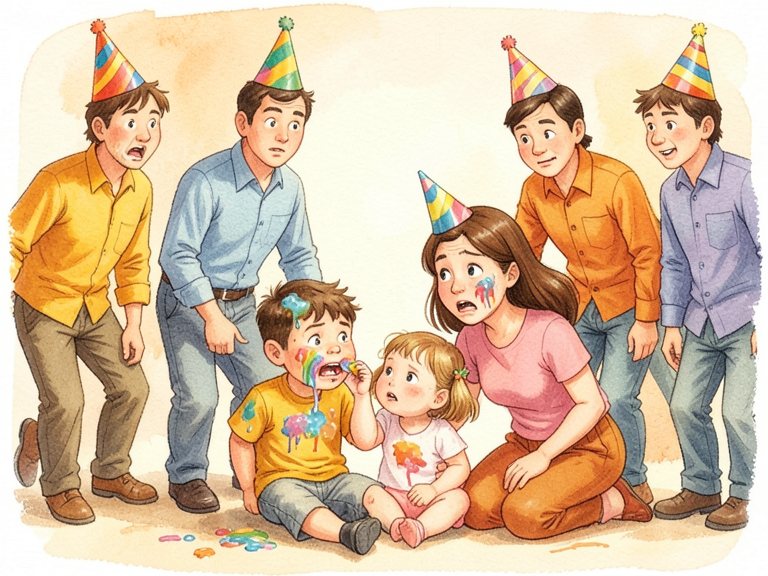
Your child bites another toddler at a birthday party, and every adult in the room turns to look at you.
Hands and Words ·1 month ·18 months – 5 years
Hitting and biting at this age are almost never aggression. They're what happens when a strong feeling arrives faster than the language to express it. This is a focused month on your response in the moment, and on the words your child doesn't have yet.
Hitting and biting in toddlers are almost always communication failures rather than aggression — the impulse arrives faster than the language to express it. They ease as language and impulse control develop, and as the adult response stays consistent rather than escalating. What helps is blocking the action while accepting the feeling, and handing the child words to use instead.
Read this first
One thing worth saying plainly. Most hitting and biting at this age is ordinary development and eases with time and a steady response. But if the aggression is directed at animals, or if it stays intense and deliberate well past age six, that is a different matter and worth a proper look. Speak to your paediatrician or a qualified child psychologist — not because something is certainly wrong, but because that question deserves a trained pair of eyes rather than a month of coaching.
How one of these actually unfolds.
Minute 0
Your child bites another toddler at a birthday party, and every adult in the room turns to look at you.
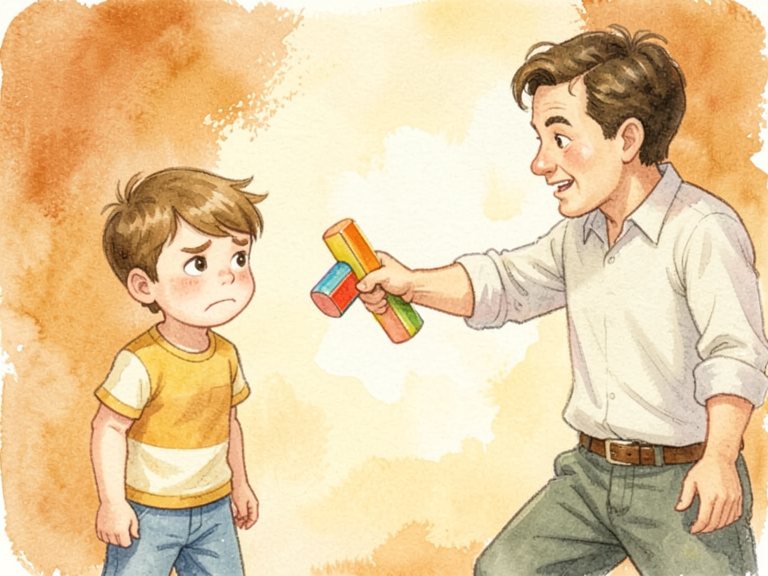
Minute 2
The hitting is aimed at you — when they're tired, frustrated, or told no — and it stings more than it should.
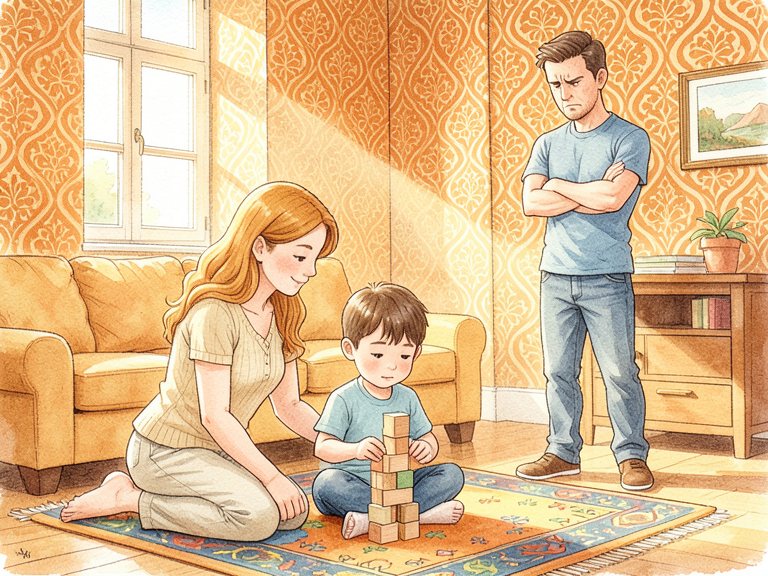
Minute 5
Daycare sends home a note, gently or otherwise, and you spend the evening worried it means something.

Minute 9
A relative says the child is spoilt, and that a firm hand would have sorted this out already.
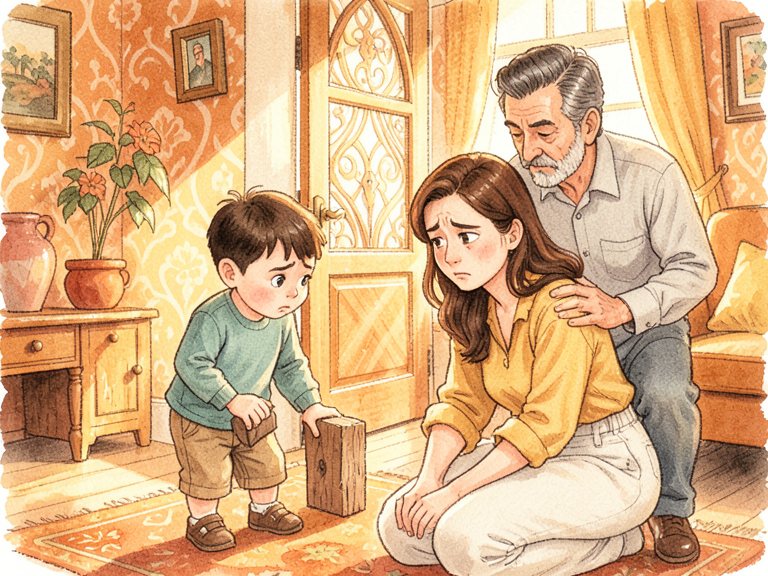
After
Someone advises you to hit or bite back "so they learn how it feels" — and part of you wonders.
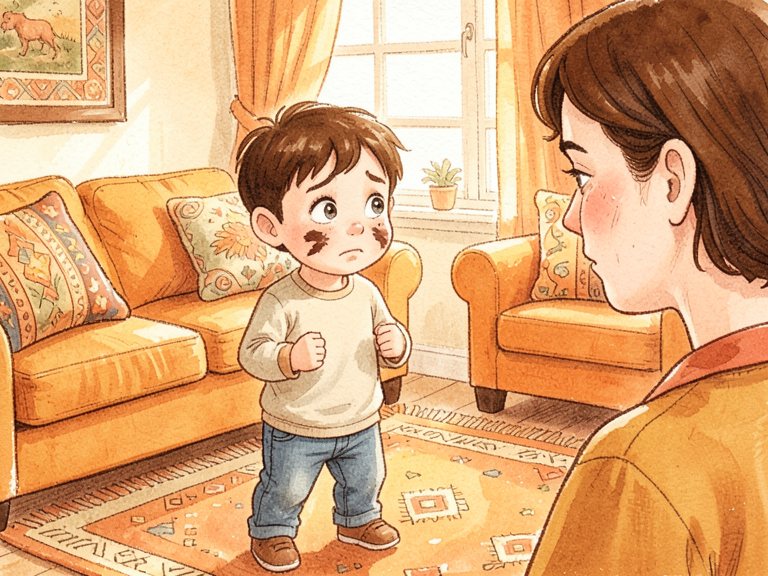
Later
You've said "no hitting" a hundred times, in the same firm voice, and it has changed nothing.
Swipe through the day
Picture the moment from the inside. A two-year-old wants the toy another child is holding. The want is total — there is no part of them standing slightly outside it, weighing options. And the tools they have for acting on that want are almost entirely physical, because the machinery for anything else is still being built.
So they grab. And if grabbing meets resistance, they push, or their mouth finds a shoulder. It looks like aggression because it produces the same result aggression would. But there is no plan in it, no intent to harm, often not even much awareness of the other child as a person with their own feeling. There is only a big wanting and a body that acts.
This is the single most useful thing to hold onto. Your child is not being cruel. Your child is being two. The hitting and biting are what a strong feeling looks like when it arrives faster than any other way of expressing it — and the fix is not to shame the feeling but to close the gap.
Most parents do the obvious thing first. They say no, firmly, every time. And they are puzzled when weeks of this produce nothing.
The reason is that "no hitting" is an instruction about what to stop, and it assumes the child already has something to do instead. They don't. Telling a child not to hit when hitting is their only available response to frustration is a bit like telling someone not to limp before their leg has healed. The behaviour you want requires a skill that isn't there yet.
There is a second reason, and it's harder to see. A large adult reaction — the raised voice, the sharp scold, the whole room turning — is, to a small child, a very interesting event. It is proof that hitting is powerful, that it makes big things happen. For some children, that hidden lesson quietly keeps the behaviour going even as you're actively trying to stop it.
None of this means you do nothing. It means the response has to do two things at once: stop the action reliably, and build the missing skill patiently. One without the other doesn't move.
The response that works can be held in a single sentence: block the action, accept the feeling, offer the words.
Blocking the action is physical and calm. You stop the hand, or move your child gently back, so the hitting doesn't land. This is non-negotiable and it happens every single time — consistency here is what teaches, far more than the volume of your voice.
Accepting the feeling is the part parents often skip, because it feels like taking the child's side. It isn't. "You're so angry, you wanted that" is not approval of the bite; it's an accurate description of what's driving it. A child whose feeling is named feels understood, and a child who feels understood is far more open to the next part.
And the next part is the words. "You can say — stop, that's mine." Short, borrowable, the same each time. You are lending your child language until they build their own. Do this often enough, in calm moments as well as hot ones, and one day the words arrive before the hand does. That's the whole game.
In many Indian households, none of this happens in private. There are grandparents, relatives, a helper, other parents at the party — and a running commentary. The child is spoilt. In our day this was handled with one slap. Hit them back, they'll learn.
This audience effect is real and it deserves naming rather than pretending away. It raises the temperature of every incident, it makes a calm response feel like weakness in front of people whose respect you want, and it delivers advice that is confident, well-meant, and mostly wrong.
The "hit back so they learn" advice is the clearest example. It feels like it should work through some rough justice, but a toddler doesn't draw the lesson you intend. They learn that big people hitting small people is simply what happens — which is the opposite of what you're trying to teach. Part of this programme is giving you a settled, unshowy way to hold your own approach in a room full of opinions, without turning every family gathering into an argument.
It's worth being straight about the shape of this. This will not end hitting in a week, and any programme that promised to would be lying. What changes first, and fastest, is you — your response becomes calm, consistent, and the same every time, which is entirely within your control from day one.
The behaviour itself eases more slowly, over weeks, as the language and the small pause between feeling and action develop. And it doesn't ease in a straight line. There will be a good stretch and then a bad afternoon, usually when your child is tired or hungry or overwhelmed, and it will feel like everything has come undone. It hasn't. A bad day inside a steady month is not a failure; it's just a tired toddler, which is a thing that will keep happening for years.
What you're left with at the end is not a child who never gets frustrated — no such child exists — but a response you trust, a set of words that are becoming theirs, and a clear enough read on the pattern that the moments stop catching you off guard.
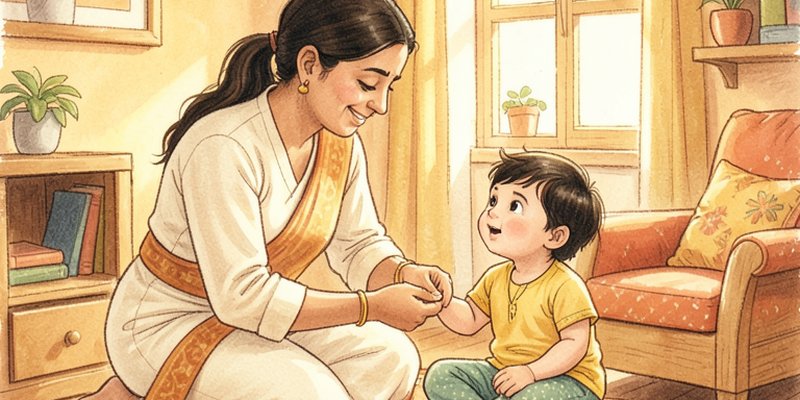
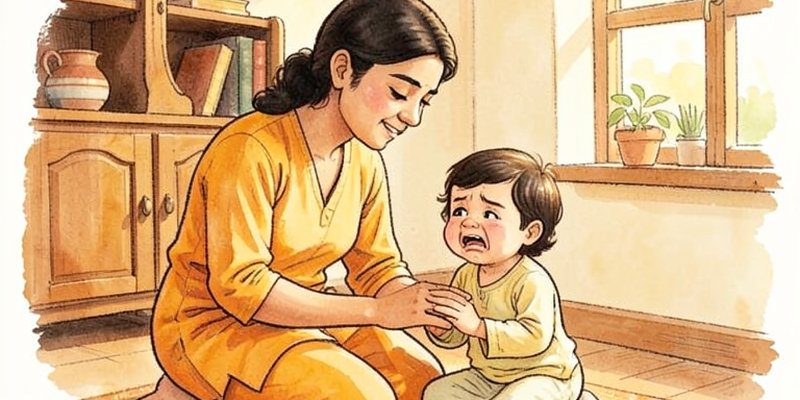
The order matters. Physically stop the hand or move the child back — calmly, without a lecture — and then say what you saw: "You're angry. You wanted that toy." You are not agreeing the hitting was fine. You're separating the feeling, which is allowed, from the action, which isn't.
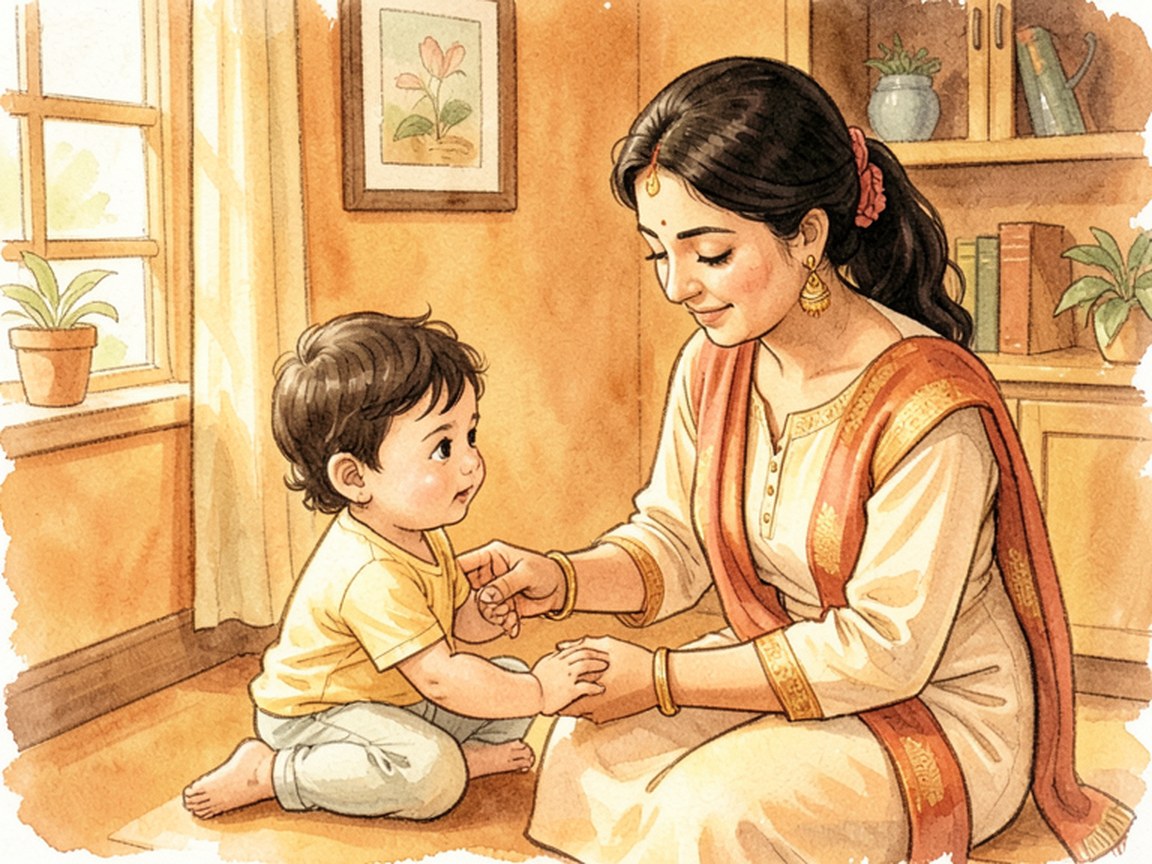
A toddler who could say "that's mine" usually wouldn't have bitten. So say it for them: "You can say — that's mine." One short line, the same one each time, until it becomes theirs. You're lending them the words until they grow their own.
That helps in the moment. Changing the pattern takes something else.
One month on the small, repeatable response that changes how these moments go — and on the developmental gap underneath them that no amount of scolding can close.
Before you change your response, it helps to see the moment clearly. We map when the hitting and biting happen — tiredness, frustration, wanting something, being crowded — and separate the real picture from the fear that it signals something worse. Almost every parent finds the trigger is more predictable than it felt.
The calm, repeatable thing you do every single time: block the action, stay level, name the feeling, offer the words. We work on the specific language, in Hindi and English, and on holding your own reaction — because a big adult reaction often teaches the child that hitting is a powerful way to get one.
Punishment can stop a hand in the moment but it doesn't build the thing that's missing — the language and the pause. This week is about growing that: naming feelings out loud through the ordinary day, rehearsing the words when everyone is calm, and setting up the situations that go wrong most often so they go better.
The joint-household audience effect, the relatives who watch and comment, and the "hit them back" advice that circulates freely — handled directly. We also set your expectations for the weeks ahead, so a hard day doesn't read as failure, and so you know the shape of what normal improvement actually looks like.
Small group — deliberately. Few enough that everyone is known, and no one is a spectator.
Message us to hear about dates, structure and fees for the next cohort.
Purnam is an AI-native parenting companion for modern Indian families. A structured programme, a smart companion that knows your family, and a small, honest community of parents — built to take you from surviving the day to thriving across the years.
Parenting that hasn't been handed down — for the generation that wants to parent differently than they were parented, but has no cultural template for it.
Purnam · our positioning
Purnam is built by a founding team with 18+ years across big tech, startups, and growth-stage technology companies — and, more to the point, by parents currently inside the early-childhood years themselves.
Parents to a toddler ourselves — building Purnam to help Indian families move from surviving to thriving.
Purnam's approach draws on modern developmental psychology — attachment, emotional regulation, behavioural coaching — held alongside Indian contemplative traditions as practical tools rather than belief.
We are advised by senior practitioners in human transformation and behavioural coaching. Where the evidence for something is strong, we say so. Where it is contested, we say that too.
Message us on WhatsApp about Hands and Words — dates, structure, fees, and whether it fits your situation.
Or just ask your actual question. That's what the line is for. Someone from the Purnam team will get back to you.
Purnam offers parenting support and education. This is not paediatric, medical, or mental-health treatment, and it is not a substitute for care from a qualified professional. Every child and family is different; nothing here is a promise of any particular outcome.