09:30
The whining starts in the shop and doesn't stop until the thing is in the trolley.
The Whine Cycle ·1 month ·2 – 7 years
A child whines because, often enough, it gets them what they want. Not every time — which is what makes it so hard to shift. This is a focused month on the one thing that actually reduces it: a response you can hold, even when you're worn down.

Whining persists because it works, intermittently, and intermittent reward is the pattern hardest to unlearn. It reduces when the same request made in a normal voice reliably gets a faster, warmer response than the whined one, so the child learns which voice actually moves you. Consistency, not volume, is what changes it.
Read this first
One distinction worth making. Whining is a habit that gets rewarded. If what you're seeing is different — a previously settled child who has turned persistently clingy, tearful, or distressed in a way that doesn't track with tiredness or a want — that isn't a reinforcement pattern, and it isn't something to wait a month on. Talk to your paediatrician or a qualified child professional. This programme is for the ordinary, grinding whine, not for a child who seems to be struggling.
Six moments from a single ordinary day.
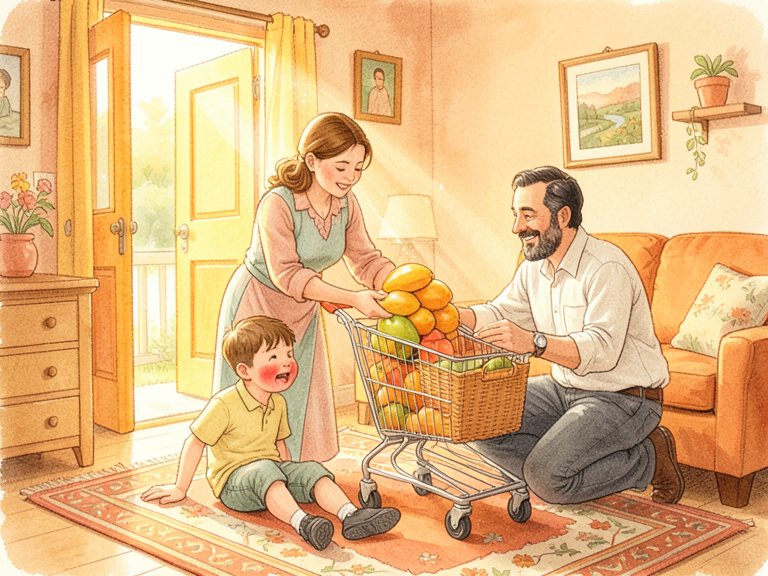
09:30
The whining starts in the shop and doesn't stop until the thing is in the trolley.
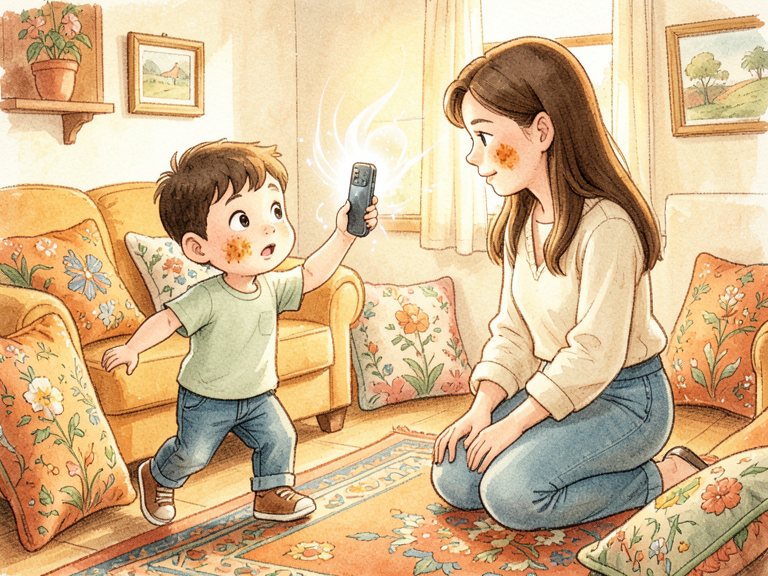
13:00
The voice appears the exact moment you pick up the phone — never a second before.
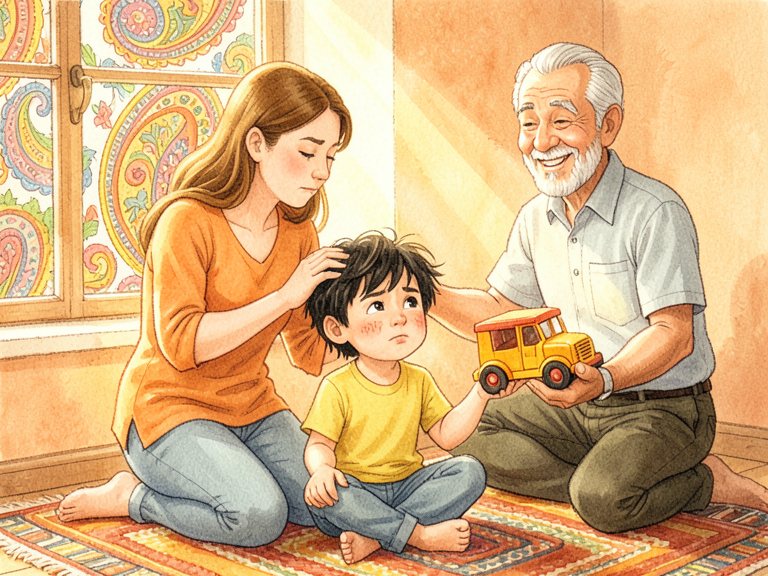
16:45
The teacher and the grandparents say your child is lovely — the whine is reserved for you.
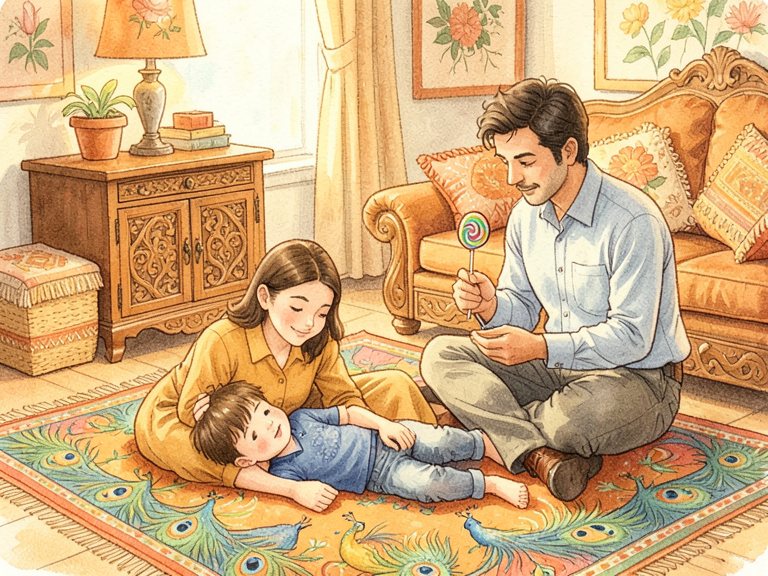
18:30
It's the end of a long day, you're depleted, and you cave just to make it stop.
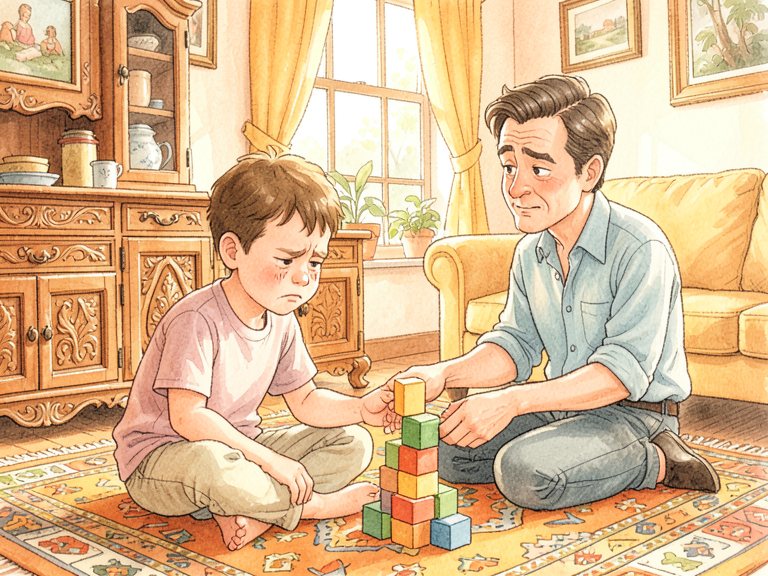
19:15
You've said no four times, and by the fifth you're not even sure why you're holding the line.
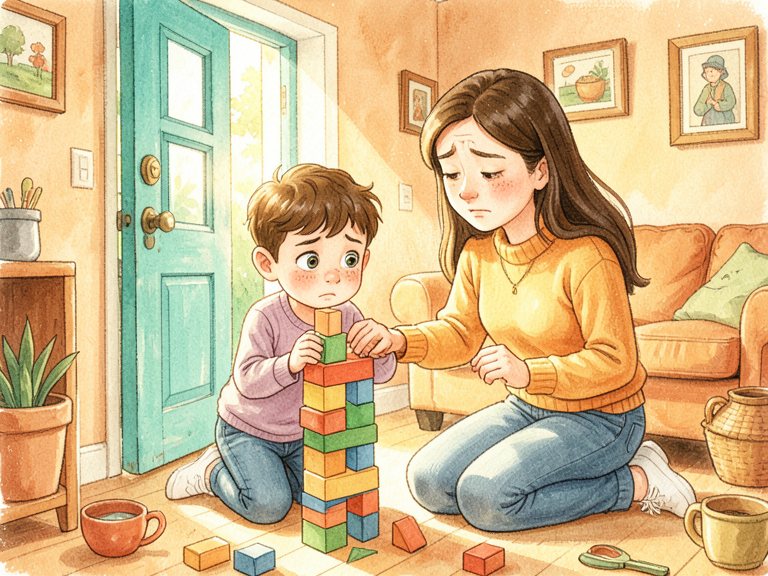
20:15
You know giving in makes it worse, and you give in anyway — and then feel it.
Swipe through the day
There is a particular sound that gets under a parent's skin like almost nothing else. Not crying, which pulls at you, and not shouting, which alarms you — the whine. The drawn-out, rising, grating request that arrives for the fourth time in five minutes, usually when you have the least left to meet it with.
Most parents assume the problem is the child, or the sound, or their own patience. It is none of those. The whine is hard to shift for a specific, almost mechanical reason: it works. Not every time — that's the crucial part — but often enough. And a reward that arrives sometimes, unpredictably, is the single most durable thing you can build into a behaviour.
This is the whine cycle, and it is worth understanding before you try to change anything.
Imagine two machines. The first gives you a chocolate every time you press the button. The second gives you a chocolate sometimes — you never know which press will pay off. Take the chocolate away from both, and the first machine gets abandoned quickly: you press once, nothing happens, you walk away. The second machine keeps you pressing for far longer, because "nothing this time" doesn't mean "nothing ever." It just means keep going.
Your response to whining is the second machine. Nine times you hold firm; the tenth time, exhausted, you give in — and in that moment you have not simply lost one battle. You have taught your child that persistence pays, eventually, if they just keep pressing. You have made the whine more resistant, not less.
This is why inconsistency, rather than the whining itself, is the real fuel. A parent who caved every single time would, paradoxically, be easier to learn from than one who caves one time in ten. The unpredictability is the trap.
None of this makes you a weak parent. Caving at the end of a long day is not a character flaw; it's what a depleted person does when a machine won't stop buzzing. The point of the work is not to shame the caving. It's to change the machine.
Here is where most advice fails. It tells you what the ideal response is — stay calm, don't reward the whine, ask for a normal voice — and then leaves you to produce that response at 7pm on a Tuesday when dinner is late and you are running on nothing.
A response that only works when you are fresh is not a response. It's a fair-weather intention. The whine does not arrive in fair weather; it arrives precisely when you are worn down, which is why the design of the response matters more than its content.
So the response has to be simple enough to run on empty. One line, said the same way every time: I can't hear that voice — tell me in your normal voice. Then, when the normal voice comes, a fast and genuinely warm reply — faster than you would give the whine, so the contrast is unmistakable. The child is running a live experiment on which voice moves you. Your only job is to make the answer boringly consistent: the normal voice works, the whine doesn't, every time, in every weather.
That consistency is not a personality trait you either have or don't. It's something you build, and it's most of what this month is for.
If you only watch the whine, you will spend the month fighting episodes. If you watch what comes before it, you can prevent half of them.
Whining is far more often a tired or hungry child with no better tool than it is a calculated bid for a toy. The child who whines relentlessly at 6:30 is usually not more manipulative than the child who doesn't — they're hungrier, or they skipped the nap, or they've just been dragged from the park to the car with no warning. The want is real, but the whining is riding on a body that has run low.
This changes where you put your effort. The pre-dinner dip, the missed snack, the hard transition between two activities — these are reliable, and reliable means preventable. A snack at the right time, a five-minute warning before a change, an earlier bedtime on a heavy day: these upstream adjustments quietly remove more whining than any in-the-moment technique, because they address the state the whine grows out of.
This will not stop your child from ever whining again, and any programme that promised it would be lying to you. Whining is a normal, universal, deeply reinforced piece of childhood, not a defect to be eliminated. Children whine; the ones who grow out of it do so because the whine gradually stops working, not because a parent found the perfect sentence.
What is realistic is this. Fewer episodes, because you've caught the precursors. A response you can actually hold when tired, because it was built for tired. Fewer public standoffs, because you're no longer negotiating with the sound. And a household where the other adults respond the same way, so your child isn't quietly learning who to ask.
The whine gets quieter for one reason, in the end: it stops paying. Your steadiness is what stops paying it. That is unglamorous and slow and entirely within reach — and it is a great deal more honest than a promise of silence.
Say it plainly: "I can't understand that voice — tell me again in your normal voice." Calm, not sarcastic. You're not shaming the sound; you're telling the child which channel actually reaches you.
When the same request comes in an ordinary voice, respond quickly and warmly — faster than you would to the whine. The child is running an experiment on which voice works. Make the answer obvious.
Whining rides on tiredness, hunger, and transitions far more than on genuine want. When you spot the setup — the pre-dinner dip, the switch from park to car — you can head off half of it before it starts.
That helps in the moment. Changing the pattern takes something else.
Four weeks on the sound that wears you down, and on building a response steady enough to survive a bad evening.
Before changing your response, we map when the whining works. Which requests get results, which times of day, which parent. Most parents find the honest picture is uncomfortable — the whine is being rewarded far more often than they'd admit, usually at the moments they have least left to give.
The core of the month. A single, calm response to the whined request, and a faster, warmer one to the same request in a normal voice. We work on the specific words — in Hindi and English — and, more importantly, on making it something you can repeat when you're depleted, because a response that only works when you're fresh isn't a response.
Most whining is a tired or hungry child with no better tool. We look at your child's real day and find the reliable setups — the late nap, the missed snack, the hard handover between activities — and adjust upstream, so you're managing far fewer episodes in the first place.
The shop, the restaurant, the relative's living room — where the audience makes caving tempting and consistency hardest. We work on what to do when it happens in front of people, and on getting the other adults in the house responding the same way, so the child isn't learning who to ask.
Small group — deliberately. Few enough that everyone is known, and no one is a spectator.
Message us to hear about dates, structure and fees for the next cohort.
Purnam is an AI-native parenting companion for modern Indian families. A structured programme, a smart companion that knows your family, and a small, honest community of parents — built to take you from surviving the day to thriving across the years.
Parenting that hasn't been handed down — for the generation that wants to parent differently than they were parented, but has no cultural template for it.
Purnam · our positioning
Purnam is built by a founding team with 18+ years across big tech, startups, and growth-stage technology companies — and, more to the point, by parents currently inside the early-childhood years themselves.
Parents to a toddler ourselves — building Purnam to help Indian families move from surviving to thriving.
Purnam's approach draws on modern developmental psychology — attachment, emotional regulation, behavioural coaching — held alongside Indian contemplative traditions as practical tools rather than belief.
We are advised by senior practitioners in human transformation and behavioural coaching. Where the evidence for something is strong, we say so. Where it is contested, we say that too.
Message us on WhatsApp about The Whine Cycle — dates, structure, fees, and whether it fits your situation.
Or just ask your actual question. That's what the line is for. Someone from the Purnam team will get back to you.
Purnam offers parenting support and education. This is not paediatric, medical, or mental-health treatment, and it is not a substitute for care from a qualified professional. Every child and family is different; nothing here is a promise of any particular outcome.