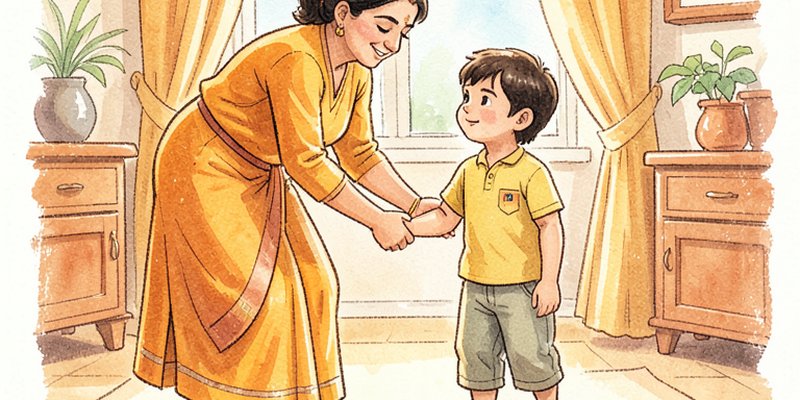
Monday
You say it eight times, and nothing moves until the eighth — the one with the raised voice attached.
Listening Without Shouting ·3 months ·2 – 10 years
If you say it eight times and nothing moves until you shout, your child hasn't decided to defy you. They've learned where the instruction actually begins. This is a focused programme on closing that gap — giving an instruction that lands the first time, without the volume.
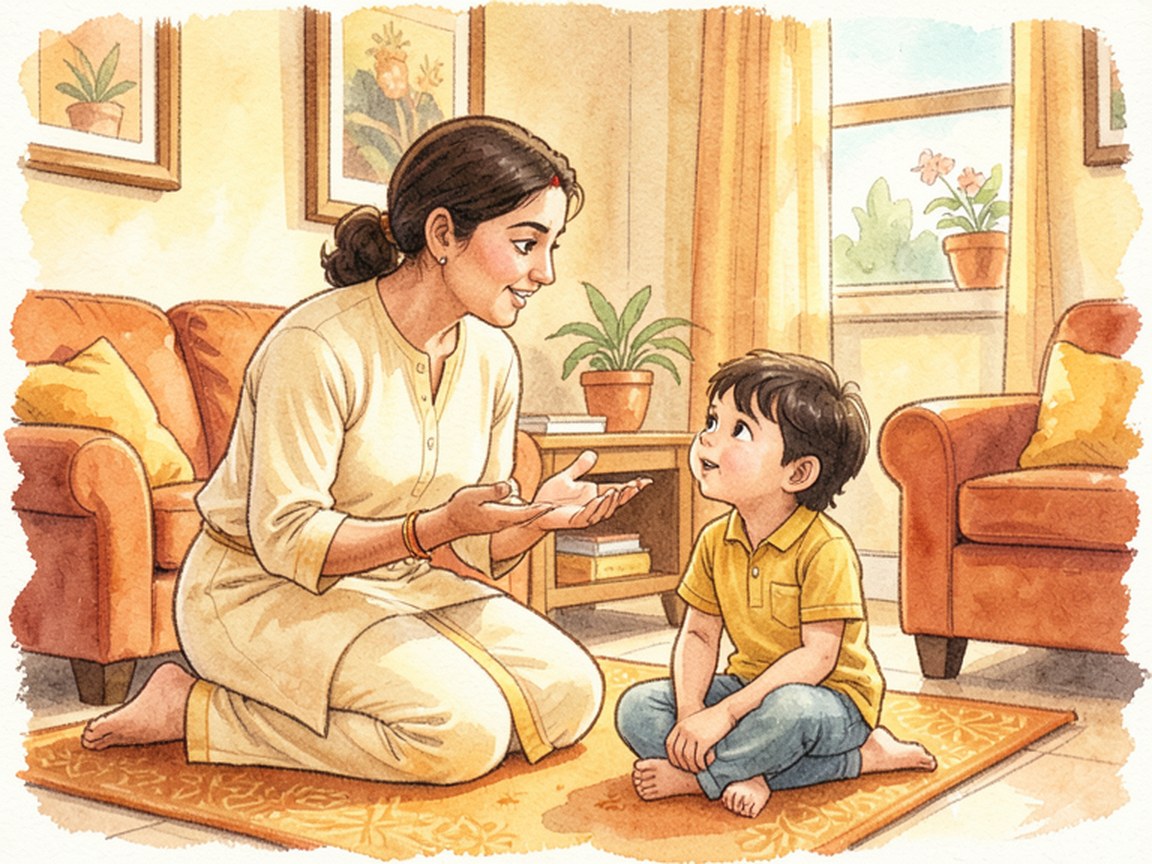
Most children who "don't listen" are not defying you. They are either not actually receiving the instruction, or they have learned that nothing happens until the third repetition. Cooperation improves most reliably when you close the distance before speaking and follow through the first time, rather than raising volume across repeats.
Read this first
One thing worth ruling out first. If your child seems not to hear you even up close, in a quiet room, with your full attention on them — or if not-listening comes with trouble focusing, following two-step instructions, or catching what's said — that may not be a cooperation issue at all. Hearing, attention and processing can look exactly like "not listening." Before you work on any of this, it's worth a check with your paediatrician or a qualified assessment. Ruling it out costs little and changes everything.
One ordinary week in your house.
Monday
You say it eight times, and nothing moves until the eighth — the one with the raised voice attached.
Tuesday
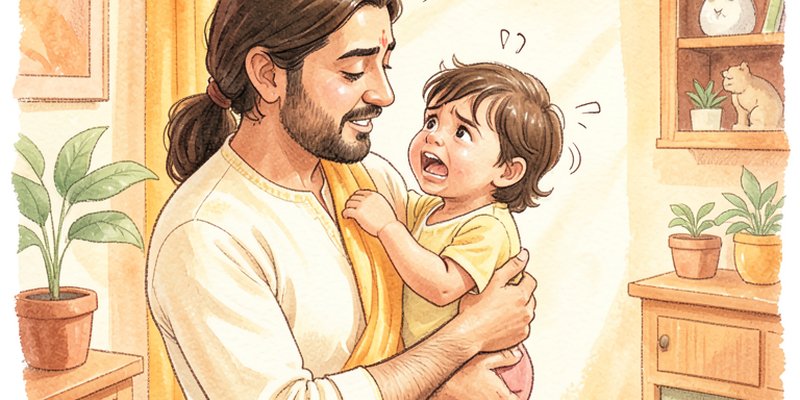
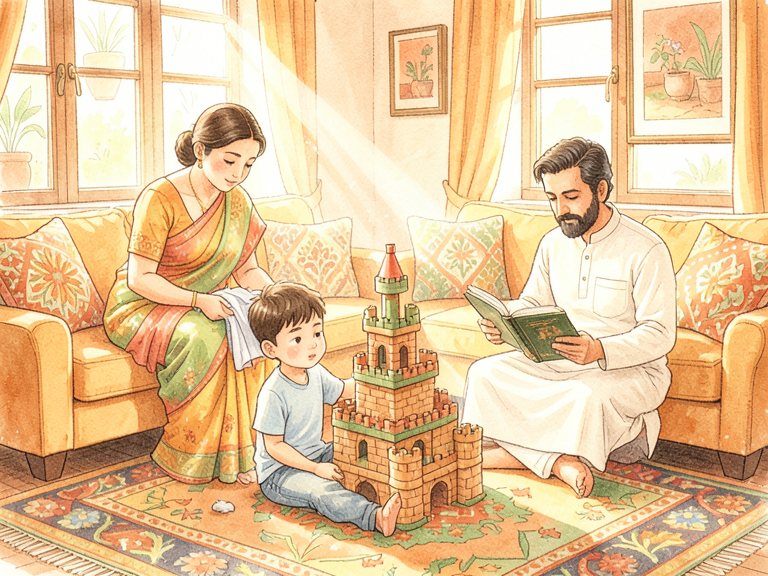
You're ignored until you shout, and then you feel terrible about the shouting for the rest of the evening.
Wednesday
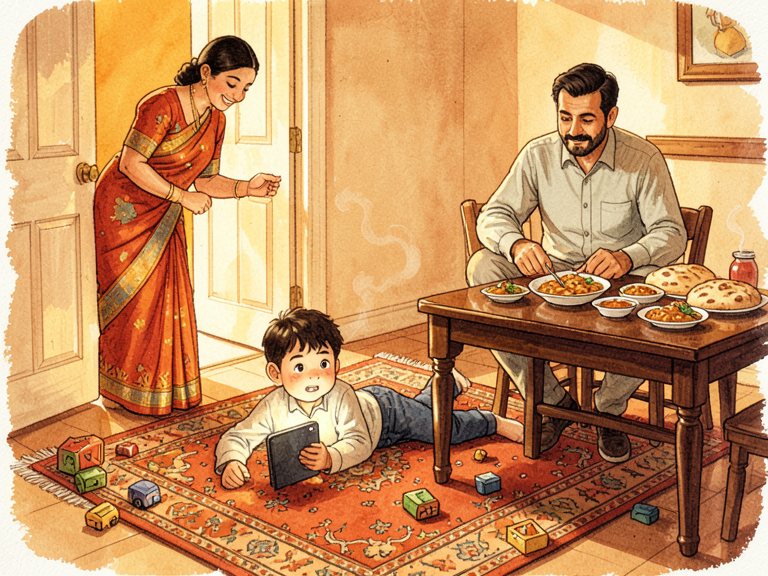
Shoes, screens, dinner, bedtime — the same four battles, in the same order, every single day.

Thursday
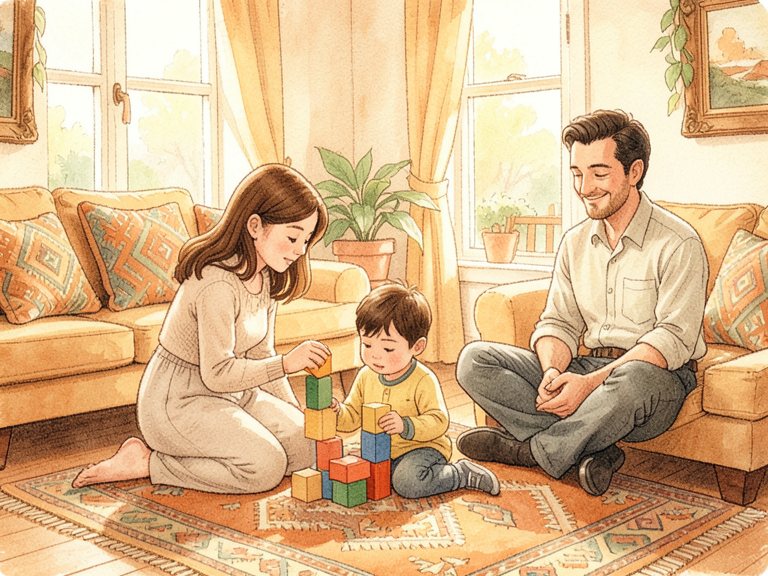
Your child does it instantly for your spouse and not at all for you, and you can't work out why.

Friday
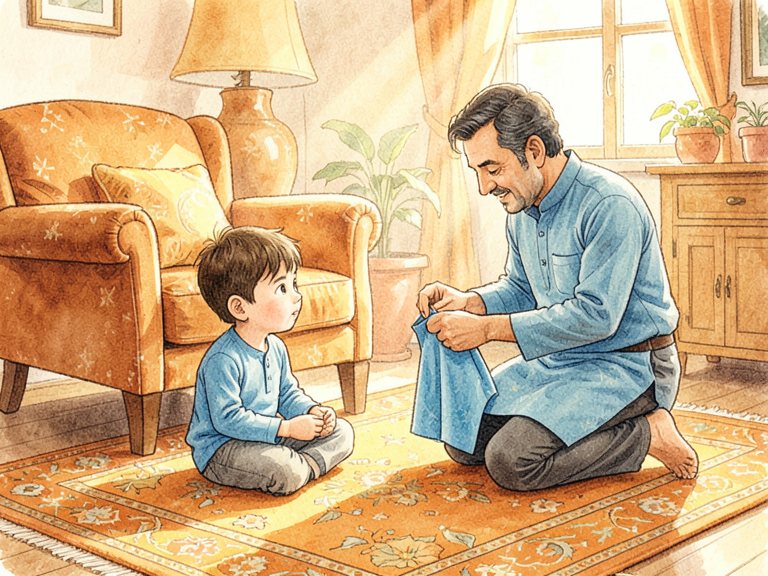
Someone in the family calls you soft, and part of you wonders if they're right.
Saturday
You realise, one day, that your child is simply waiting for the shout — because that's the real instruction, and the rest is noise.
Swipe through the day
When a parent says their child doesn't listen, they usually mean one thing. But there are two very different problems wearing the same coat, and they have opposite solutions.
The first is that the instruction was never received. You called it from the kitchen while your child was three rooms away, mid-game, with a sibling talking over you. To an adult that counts as having said it. To a child's attention it never happened. A surprising share of "not listening" is simply this — an instruction that lost a competition for attention it was never really in.
The second is that the instruction was received and nothing followed. Your child heard you perfectly well and has learned, correctly, that heard and acted-upon are different events with a gap between them. That gap is where the repeating happens.
These need opposite fixes. The first is solved by how you deliver — closing the distance, getting attention, speaking once and clearly. The second is solved by what happens next. Almost every household is quietly failing at both, and treating them as one problem, which is why the volume keeps climbing. The first thing this programme does is pull them apart, because you cannot fix a delivery problem with follow-through, or a follow-through problem by explaining more clearly.
Here is the uncomfortable mechanism. Shouting usually does work in the moment — the child moves. And because it works, it gets used again. And because it gets used again, your child learns something you never meant to teach: that the instruction isn't real until it arrives at volume.
Think about it from their side. If nothing actually happens after the first, second and third time you say something, then the first three times aren't instructions at all — they're a warm-up. The real signal is the fourth one, the loud one, the one with the change in your face attached. A child who waits for the shout is not being defiant. They are being accurate. They have read where the instruction begins and are responding to that, sensibly, and no earlier.
This is why raising the volume feels effective and gets worse over time. Every time the shout is what finally moves things, the earlier rounds get a little more optional, and the threshold creeps up. Next month it takes a slightly louder shout, or one more repetition before it. You are not failing to be firm enough. You are training the very thing you're trying to end.
The way out is not to shout better or sooner. It is to make the first instruction the real one — given up close, said once, and followed, calmly, by action rather than by a louder version of the same words. This will not end every standoff, and any programme that promised your child will simply start obeying would be lying to you. What it changes is the pattern underneath: the first instruction becomes the real one, so there is no later, louder signal left to wait for.
You'll have read, somewhere, that you should connect with your child before correcting them. It's easy to hear that as a soft idea — be warm, be gentle, and cooperation follows. That's not quite why it works, and the softer framing makes it easy to dismiss.
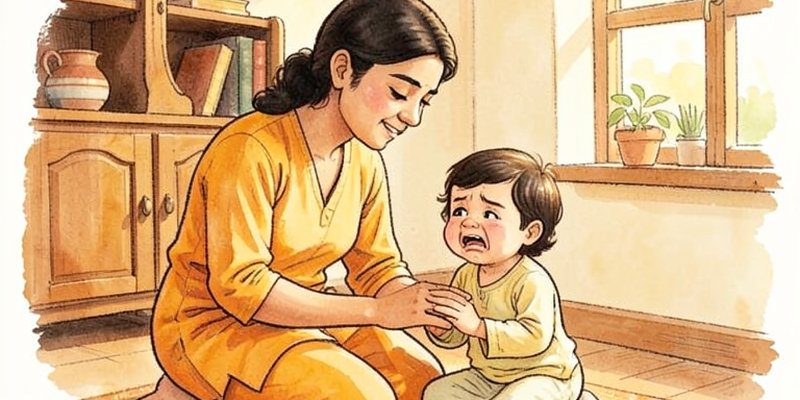
Closing the distance works for a plainer reason: it's how the instruction gets received at all. When you walk over, crouch to your child's level, and wait the half-second until they're actually with you, you have done the mechanical work of winning their attention before spending your instruction. You are not being warmer for its own sake. You are making sure there is someone listening before you speak.
There is a second effect. A child mid-activity — a game, a show, a world of their own — is not being rude by not surfacing instantly. Transitions are genuinely hard for young children, harder than most adults remember. Arriving beside them, giving a moment's notice that a change is coming, and then giving the instruction respects how a child's attention actually moves. It costs you ten seconds and saves you the next eight repetitions. Across a day, that is not a small trade.
A great deal of instruction failure is really an age mismatch. We ask a four-year-old to do what an eight-year-old can, decide the four-year-old is being difficult, and escalate — when the honest problem is that the instruction asked for more than that child can currently hold.
A young child can keep roughly one thing in mind at a time. "Go upstairs, brush your teeth, put on your pyjamas and bring your book down" is four instructions delivered as one, and somewhere around the stairs three of them have evaporated. That's not defiance; that's the size of the container. An older child can hold the chain but may still lose it under tiredness or transition, exactly when you most need it to hold.
Part of the work here is calibrating what you ask to what your child can genuinely manage — fewer steps, one at a time, with the next one given when the first is done. It feels slower. It is faster, because you stop spending the evening reissuing an instruction that was too big to survive the trip upstairs. Knowing where your particular child sits — what's a reasonable expectation and what's a hopeful one — takes the heat out of a remarkable number of daily standoffs.
Much parenting advice assumes a two-adult household making decisions in private. That is not the house most of this happens in, and the difference is not a detail.
Many of us were raised on obedience-first parenting — "because I said so," compliance as the goal, questioning read as disrespect. It's worth being honest about what that produces. It produces compliance in the room, reliably. What it produces less of is cooperation over time, because a child who obeys only under a watching authority has learned to manage the authority, not to hold the reason. The moment the authority isn't looking, there's nothing underneath. Trading "because I said so" for a short, real reason isn't going soft. It's the difference between a rule your child carries and a rule that only exists while you're standing there.
Then there is the audience. In a joint household, an instruction is rarely a private exchange — there are grandparents, an uncle, a caregiver, all present, all with a view. A child behaves differently with an audience, and so, if we're honest, do parents. Correcting your child in front of your mother-in-law is a different act from correcting them alone, and pretending otherwise produces advice that doesn't survive contact with a real Indian living room.
And underneath both sits the single biggest amplifier of "my child doesn't listen": adults who give different instructions. When you say no screens, your mother says a little is fine, and the didi hands over the tablet to keep the peace, your child is not confused. Your child is doing something intelligent — working out who to ask. No amount of consistency from you alone can overcome inconsistency between the adults, which is why a full phase of this programme is not about your child at all. It is about getting the grown-ups, gently and across some real generational gaps, to say the same thing.
An instruction called from another room mostly isn't received — it competes with the television, the game, the sibling. Walk over, get down to eye level, make sure you have their attention, and then speak. The single change of not instructing from a distance does more than any change of words.
Pick one instruction today and give yourself a rule: you'll say it once, calmly, and if nothing happens you'll walk over and help it happen — not repeat, not raise your voice. Following through gently the first time teaches more than following through loudly the fifth.
The boundary holds; the child gets a say in how. Not 'will you have a bath' but 'bath now or after this one show — you pick.' Shoes on the stairs or at the door. Choice within a limit lowers the fight without moving the line.
That helps in the moment. Changing the pattern takes something else.
Three months on the four battles you have every single day, and on the small mechanical change — how an instruction is given and what happens after — that quietly decides whether it's heard.
Before changing anything, we separate the two things that hide inside 'not listening' — not receiving the instruction, and not acting on it. We map where and how you give instructions on a normal day, what a child of your child's age can actually hold, and where the real gap is. Most parents find at least half their instructions never landed at all.
The mechanics of an instruction that gets received — distance, attention, clarity, and one repetition rather than ten. Then the harder half: what happens after. We work on follow-through that doesn't need volume, and on why escalation quietly trains a child to wait for the escalation.
Shoes, screens, dinner, bedtime — or whatever yours are. We take them one at a time and build a specific plan for each, because a general principle dissolves the moment a real four-year-old is lying on the floor by the door. Choice within a boundary, transitions, and the recurring flashpoints that eat your evenings.
The single biggest amplifier of 'my child doesn't listen' is not the child — it's the adults giving different instructions. We work directly on alignment across parents, grandparents and caregivers, on the audience effect in a joint household, and on how to hold a boundary when someone in the room is quietly undoing it.
Small group — deliberately. Few enough that everyone is known, and no one is a spectator.
Message us to hear about dates, structure and fees for the next cohort.
Purnam is an AI-native parenting companion for modern Indian families. A structured programme, a smart companion that knows your family, and a small, honest community of parents — built to take you from surviving the day to thriving across the years.
Parenting that hasn't been handed down — for the generation that wants to parent differently than they were parented, but has no cultural template for it.
Purnam · our positioning
Purnam is built by a founding team with 18+ years across big tech, startups, and growth-stage technology companies — and, more to the point, by parents currently inside the early-childhood years themselves.
Parents to a toddler ourselves — building Purnam to help Indian families move from surviving to thriving.
Purnam's approach draws on modern developmental psychology — attachment, emotional regulation, behavioural coaching — held alongside Indian contemplative traditions as practical tools rather than belief.
We are advised by senior practitioners in human transformation and behavioural coaching. Where the evidence for something is strong, we say so. Where it is contested, we say that too.
Message us on WhatsApp about Listening Without Shouting — dates, structure, fees, and whether it fits your situation.
Or just ask your actual question. That's what the line is for. Someone from the Purnam team will get back to you.
Purnam offers parenting support and education. This is not paediatric, medical, or mental-health treatment, and it is not a substitute for care from a qualified professional. Every child and family is different; nothing here is a promise of any particular outcome.