Age 6
You believe in the mindset and want to pass it on, but you have no idea how to actually teach it.
Makers and Doers ·12 months ·8 – 16 years
You can't teach a child to be entrepreneurial with a curriculum, and the camps that claim to are mostly selling glamour. What transfers is the habit of noticing problems, testing small ideas cheaply, and being unbothered when one doesn't work — built through real ventures, not simulations.
Entrepreneurial capability in children is less about business instruction than about a set of transferable habits — noticing problems, testing small ideas cheaply, and being comfortable when something doesn't work. Those habits are built through actual small ventures a child owns, not through a curriculum, and certainly not through a summer camp that packages the startup story without the ordinary, unglamorous practice underneath it.
Read this first
A note on where this stops. This programme builds a habit, not a business, and it is not investment or financial advice. If a child's venture starts involving real sums, other people's money, or contracts, treat that as a moment to bring in a qualified adult — an accountant or a lawyer — rather than something to work out over a WhatsApp thread. The learning is the point; the money is a teaching tool, never the goal.
How this changes as they grow.
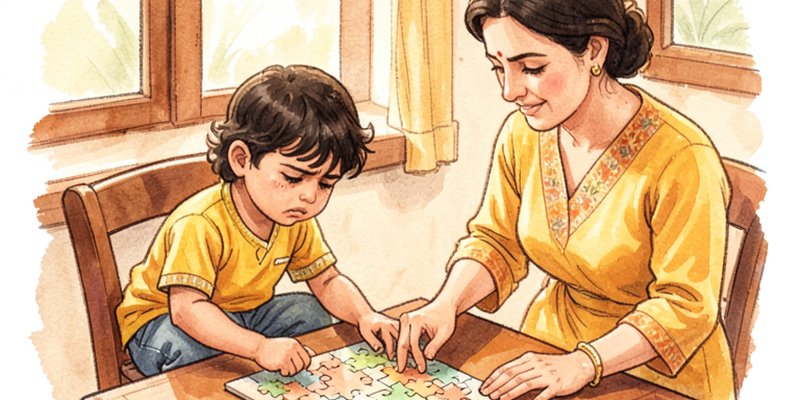
Age 6
You believe in the mindset and want to pass it on, but you have no idea how to actually teach it.
Age 9
Your child has ideas by the dozen and finishes none of them — the follow-through never comes.
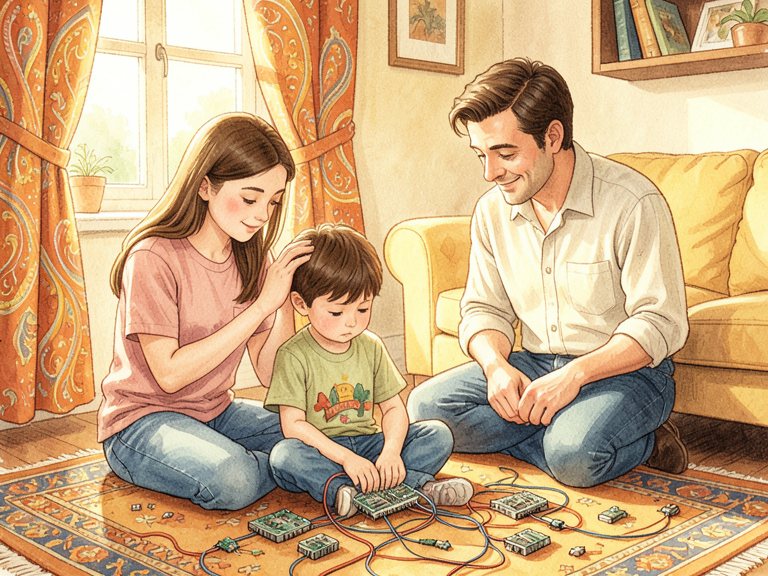
Age 12
A summer entrepreneurship camp is on offer, priced like a holiday, and you can't tell if it's substance or theatre.

Age 14
You want them ambitious, but not the kind of ambitious that falls apart the first time something goes wrong.

Age 16
Your own instinct is to rescue every idea before it can fail, and you suspect that's the problem.

Now
School rewards getting the answer right; you want your child to be comfortable getting things wrong on purpose.
Swipe through the day
Most parents who want this for their child are picturing an outcome — a confident young person who spots an opportunity and goes after it. That's a reasonable thing to want. The trouble is that it's an outcome, and you can't teach an outcome. You can only build the habits that tend to produce it.
There are really only three that matter at this age, and none of them is a business skill.
The first is noticing problems. Entrepreneurial people walk through the world seeing things that don't work and quietly asking whether they could. That's a habit of attention, and it can be practised at seven or seventy. The second is testing cheaply — trying a small version of an idea before betting anything real on it, so that being wrong costs almost nothing. The third, and the one everything hinges on, is being comfortable when something doesn't work. Not indifferent to it, but not undone by it either.
Notice what isn't on that list. Writing a business plan. Pitching. Anything that looks like the curriculum a camp would sell you. Those things can be learned in an afternoon by a child who has the three habits, and they're useless to a child who doesn't.
There is a whole industry built on the promise that entrepreneurship can be taught the way multiplication is — in modules, with a certificate at the end. It's an appealing promise and it doesn't survive contact with how the habits actually form.
You cannot lecture a child into being comfortable with failure. You can only let them fail at something small and be there while they discover they survived it. You cannot explain problem-noticing into existence; it grows from a child having a real reason to look. And cheap testing only means something when there's a real idea and real, if tiny, stakes — otherwise it's a worksheet, and children know the difference between a worksheet and their own money on a table.
This is the honest limit of the thing. This programme will not turn your child into a founder, and any programme that promised to would be lying. What it can do is build three habits, through real practice, in a form that tends to stay for life.
So the work is not a syllabus. It's one small, real venture that your child owns.
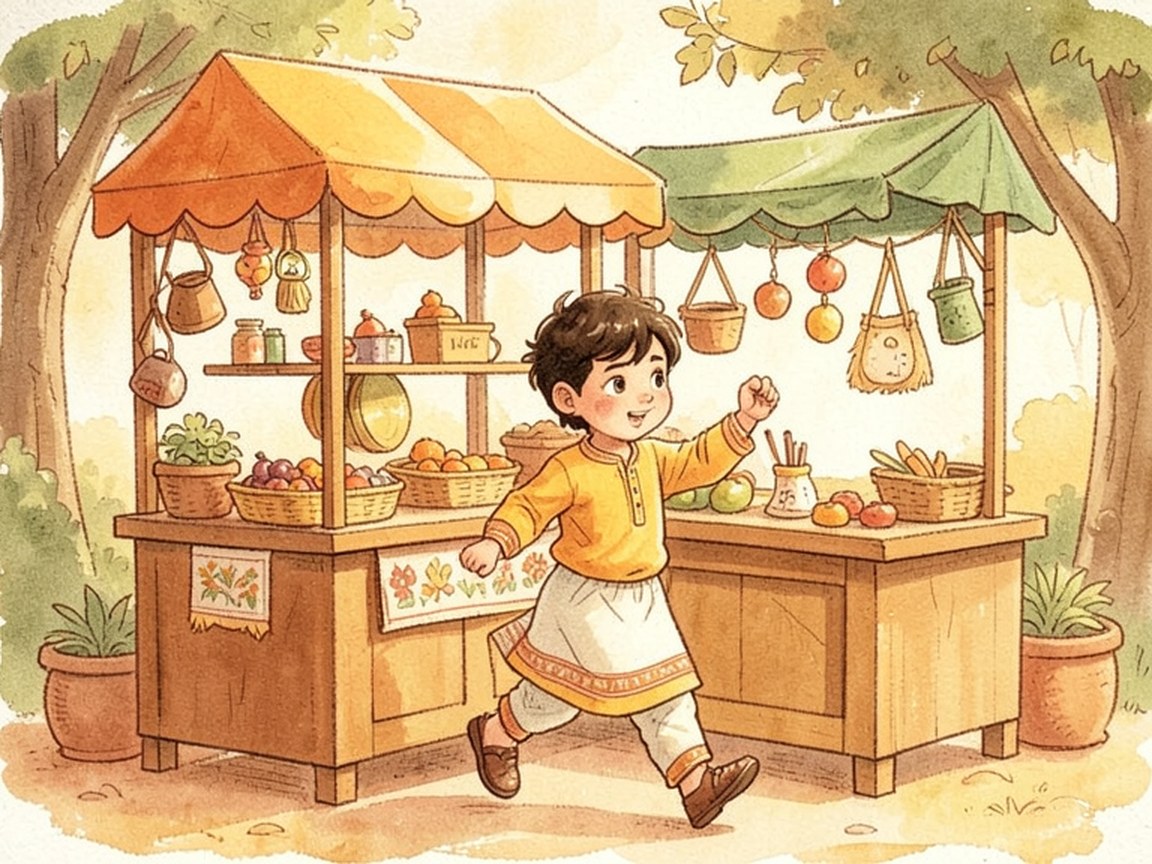
Real matters more than it sounds. A simulated business — play money, pretend customers, a teacher grading the outcome — removes the exact thing that does the teaching, which is that it could genuinely not work. A child selling something to actual neighbours for actual rupees is in a completely different situation from a child completing an assignment about selling. The stakes are small, but they are real, and real is where the learning lives.
The venture itself can be almost anything scaled to the age: a weekend stall, a small making-and-selling operation, a service offered to people nearby, a tiny online thing for an older child. What it is matters far less than that it belongs to the child — theirs to run, theirs to get wrong, theirs to abandon and start again. The parent's role is to fund it modestly and then, crucially, to get out of the way.
That last part is where most well-meaning households come unstuck, which is why so much of this programme is aimed at you rather than your child.
The single most useful moment in this entire programme is the one where a venture doesn't work and nobody rescues it.
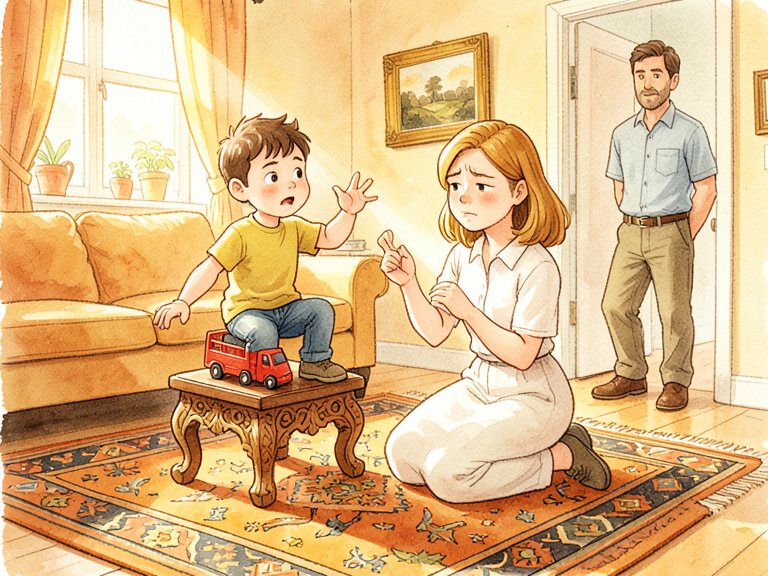
It is also the moment most parents cannot bear. Watching your child's small effort run out of customers, or money, or steam, the instinct to step in — to buy the last of the stock yourself, to quietly fix the thing, to soften the landing — is close to overwhelming. And every time you act on it, you remove the lesson. A failure that a parent absorbs teaches the child nothing except that failures get absorbed.
A small, survivable failure at nine or twelve is a gift. It is failure tolerance built in a safe dose, at an age when the stakes are a few hundred rupees and a bruised afternoon rather than a career or a marriage. The child learns, in their own body rather than from your reassurance, that a thing can not work and the world continues. That single piece of knowledge protects an ambitious person more than almost anything else you could give them.
What replaces the rescue is one question, asked calmly: what did we learn about the problem? It turns the setback from a verdict into information. Done enough times, it becomes the child's own default — and that default is most of what entrepreneurial resilience actually is.
Two things make this harder in an Indian household, and it's worth naming both.
The first is schooling built almost entirely around getting the answer right. Twelve years of training a child that error is punished and certainty is rewarded is close to the opposite of what a venture requires, where being wrong quickly and cheaply is the whole method. A child who has absorbed the exam mindset deeply may need real permission — repeated, and meant — to try something that might not work.
The second is family risk-aversion about anything off the conventional path. It usually comes from love and memory of scarcity, and it's not wrong to want security for a child. But it can quietly communicate that experimenting is dangerous and that only the known road is safe. Part of the work here is separating a healthy respect for risk from a blanket fear of it — so that a child can hold ambition and prudence at once, rather than being pushed to choose. That's the balance most parents are actually reaching for when they say they want their child to be entrepreneurial, and it's the one this programme is built around.
Not a lesson, not a worksheet — a real thing with real money at stake, however small. A stall, a service to neighbours, a thing they make and sell. Hand over a small amount of capital and let it be genuinely theirs to spend, lose, or grow.
The hardest part is yours, not your child's. When the venture wobbles, resist stepping in to save it. A failure they survive on their own teaches more than a success you engineered — and the rescuing is usually what stops the habit forming.
After anything doesn't work, ask one question: what did we learn about the problem? It turns a setback into information, and it's the single question entrepreneurs ask that most people don't.
That helps in the moment. Changing the pattern takes something else.
Twelve months walking one real, tiny venture from idea to failure or modest success — and learning to read what your child gains either way.
Before any venture, we build the underlying habits: noticing problems worth solving, sizing an idea cheaply before committing, and separating a real need from a passing enthusiasm. This is also where we set expectations honestly — most first ideas go nowhere, and that is the point, not a failure of the exercise.
Your child picks one idea and actually runs it. Something small, real, and theirs — with real customers, however few, and real money, however little. We work on the unglamorous middle: getting the first version out, adjusting when nobody wants it, and the ordinary persistence that no camp simulation can manufacture.
The practical mechanics — what things cost, what they earn, the difference between money in and money kept. And the more important half: how to sit with a venture that didn't work without it becoming a verdict on the child. This is where failure tolerance is actually built, in a small, safe, survivable dose.
A second, smarter venture that carries the lessons of the first — because the habit only takes when it repeats. We also step back and separate genuine entrepreneurial capability from the startup-glamour narrative your child absorbs online, and address the family risk-aversion that quietly makes non-conventional paths feel forbidden.
Small group — deliberately. Few enough that everyone is known, and no one is a spectator.
Message us to hear about dates, structure and fees for the next cohort.
Purnam is an AI-native parenting companion for modern Indian families. A structured programme, a smart companion that knows your family, and a small, honest community of parents — built to take you from surviving the day to thriving across the years.
Parenting that hasn't been handed down — for the generation that wants to parent differently than they were parented, but has no cultural template for it.
Purnam · our positioning
Purnam is built by a founding team with 18+ years across big tech, startups, and growth-stage technology companies — and, more to the point, by parents currently inside the early-childhood years themselves.
Parents to a toddler ourselves — building Purnam to help Indian families move from surviving to thriving.
Purnam's approach draws on modern developmental psychology — attachment, emotional regulation, behavioural coaching — held alongside Indian contemplative traditions as practical tools rather than belief.
We are advised by senior practitioners in human transformation and behavioural coaching. Where the evidence for something is strong, we say so. Where it is contested, we say that too.
Message us on WhatsApp about Makers and Doers — dates, structure, fees, and whether it fits your situation.
Or just ask your actual question. That's what the line is for. Someone from the Purnam team will get back to you.
Purnam offers parenting support and education. This is not paediatric, medical, or mental-health treatment, and it is not a substitute for care from a qualified professional. Every child and family is different; nothing here is a promise of any particular outcome.