07:10
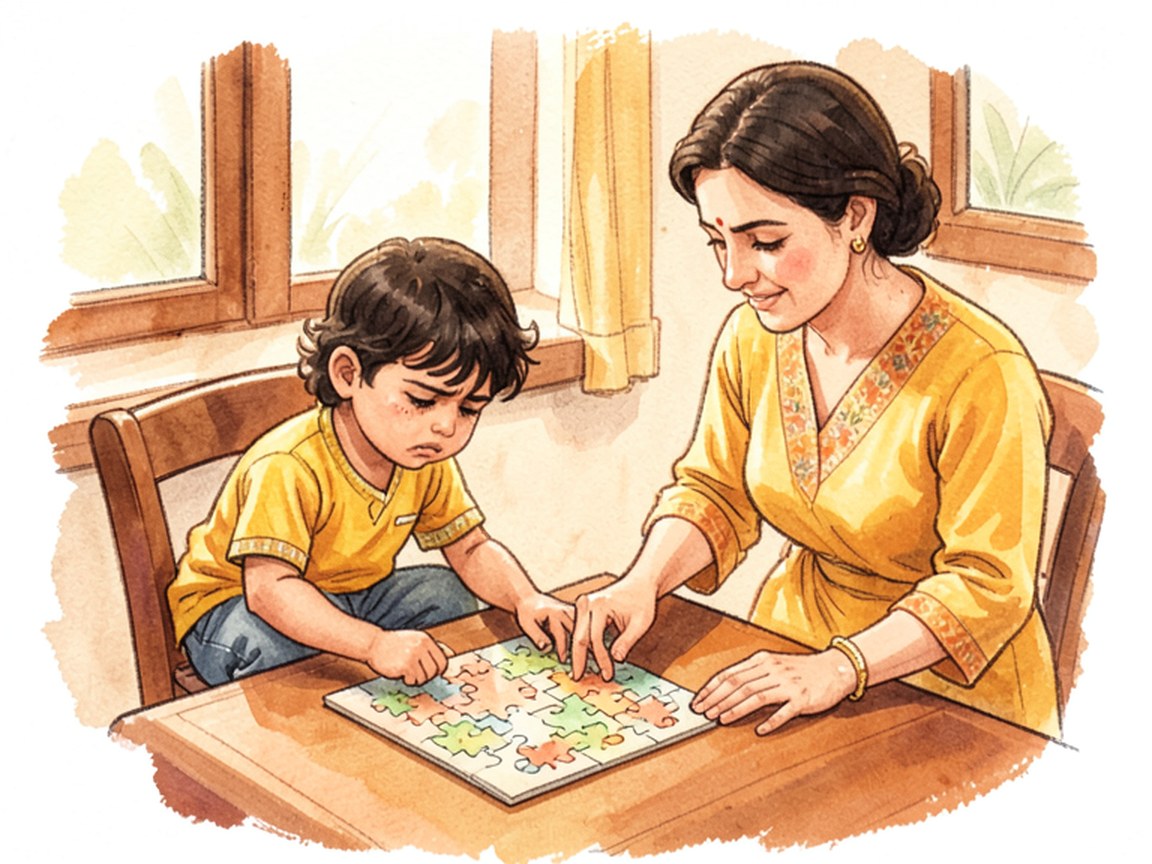
The puzzle piece doesn't fit on the first try, and it's already been pushed away — 'I can't do it.'
Learning to Lose ·3 months ·4 – 12 years
Your child gives up the moment something gets hard, and every instinct you have says step in and fix it. This is a programme on the harder, quieter skill — staying present while they struggle, without solving it for them.
Resilience is built by surviving manageable difficulty, not by avoiding it — which means the parental instinct to remove every obstacle is usually what slows it down. The useful move is to stay present while your child struggles, rather than solving the thing for them. Struggle, kept within reach, is the mechanism itself.
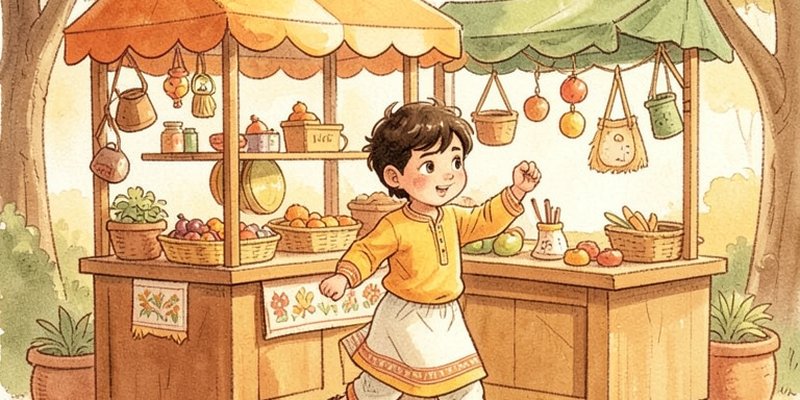
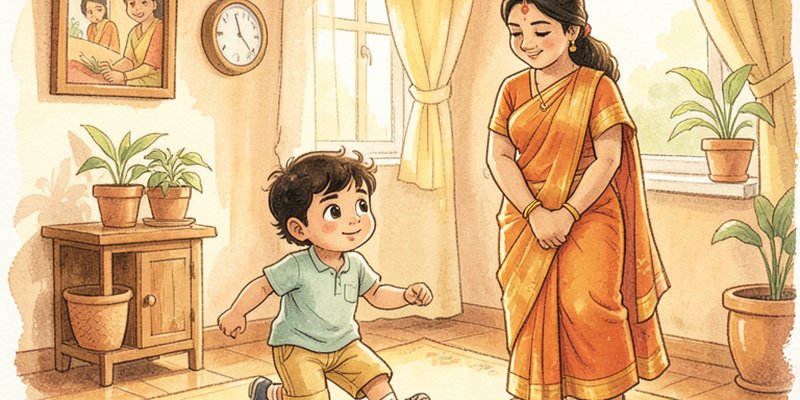
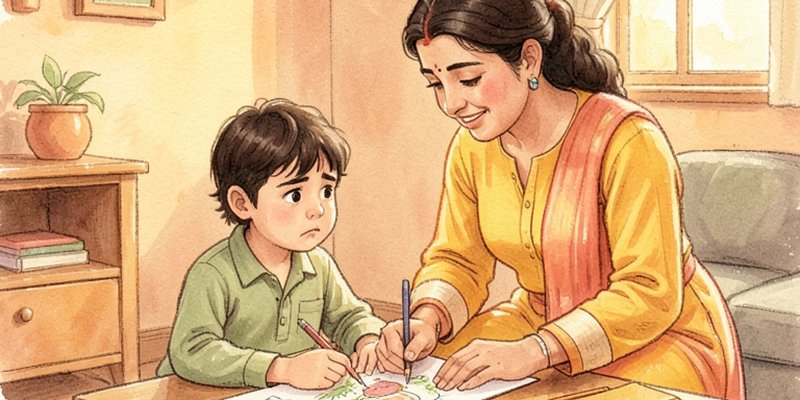
Six moments from a single ordinary day.
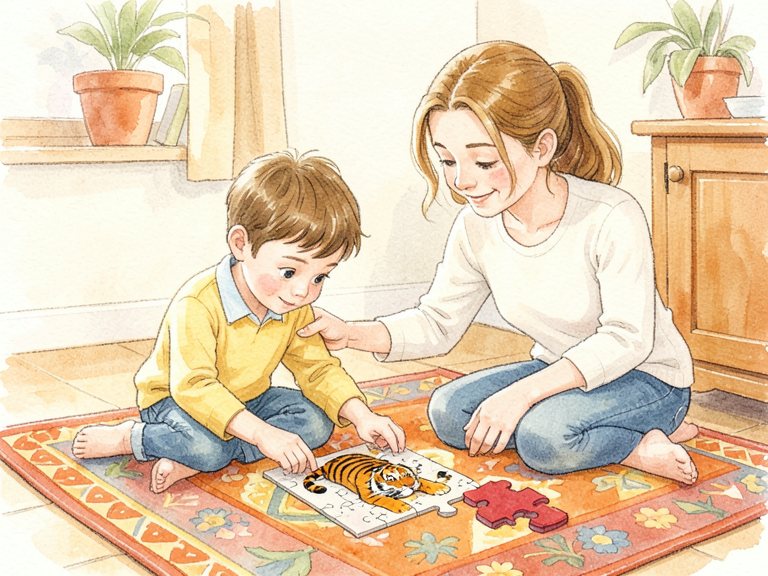
07:10
The puzzle piece doesn't fit on the first try, and it's already been pushed away — 'I can't do it.'
09:30
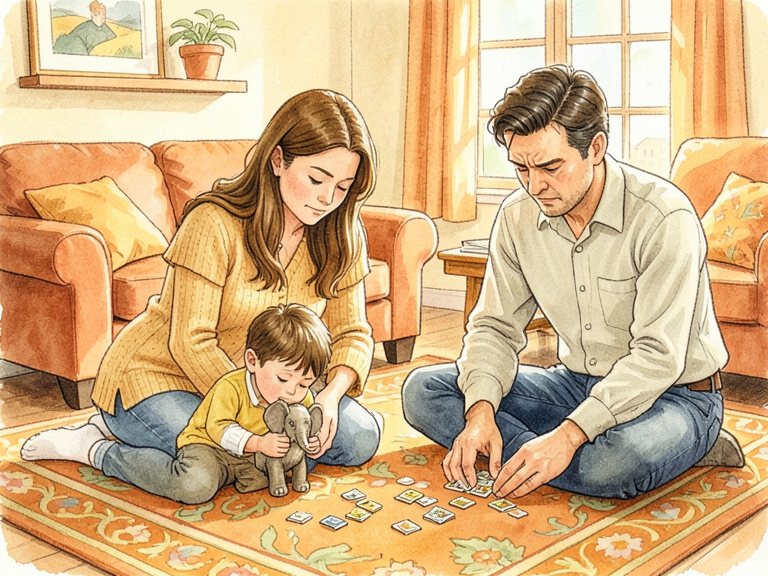
A board game ends in tears, or a flipped board, the moment they realise they might lose.
13:00
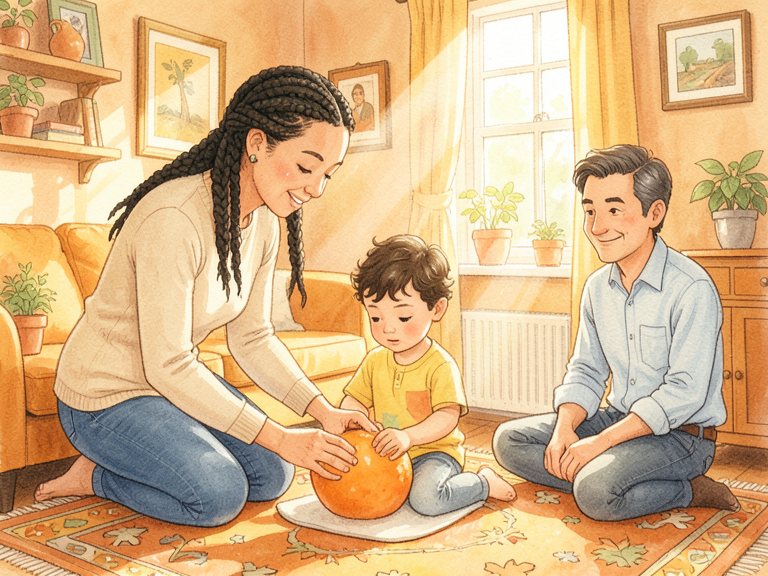
They won't try anything new unless they're already fairly sure they'll be good at it.
16:45
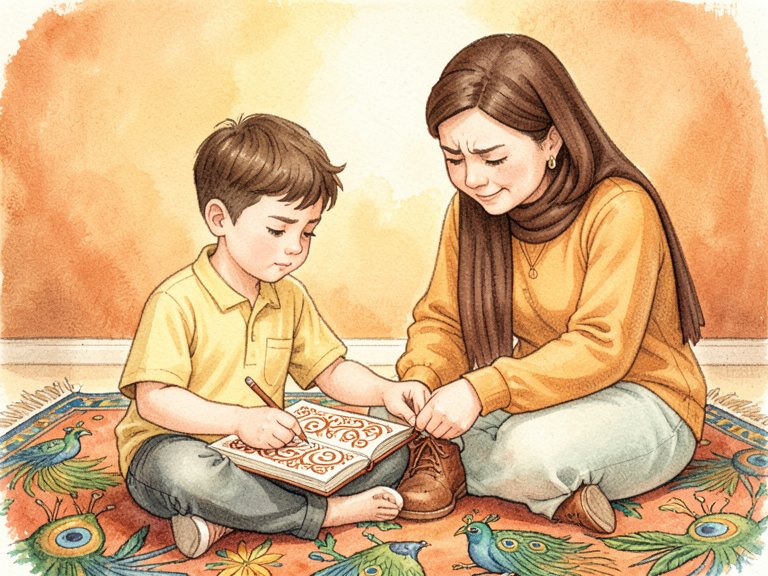
You find yourself finishing their sentences, their homework, their shoelaces — long past the age they could.
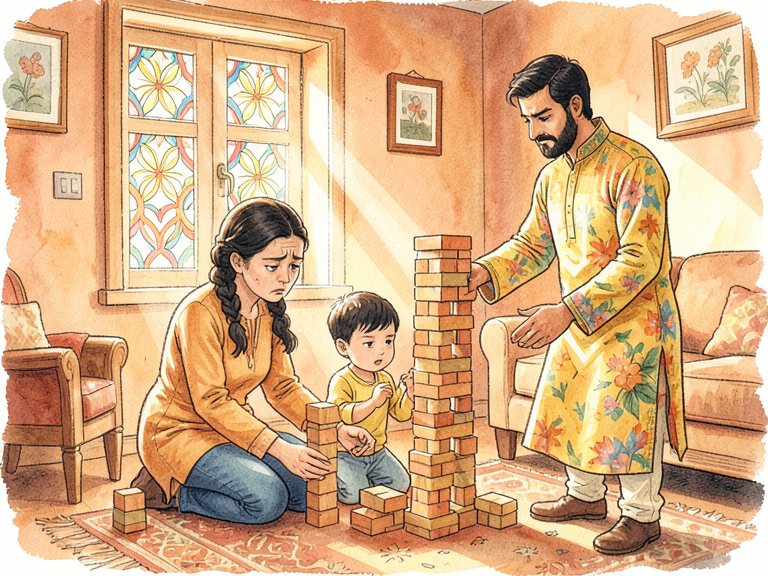
18:30
You step in three seconds into a struggle, because watching them fumble is genuinely uncomfortable.
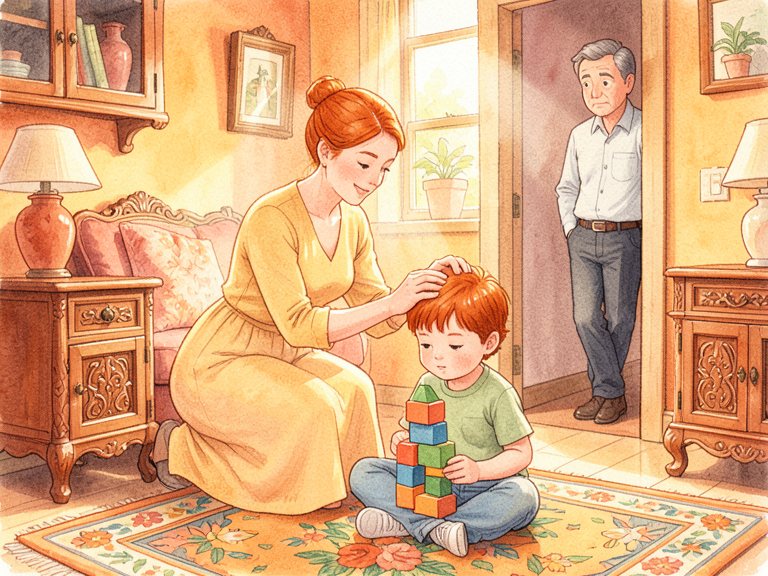
20:15
You've made everything smooth for years, and now you quietly wonder whether that was the mistake.
Swipe through the day
There's a quiet contradiction at the centre of modern parenting. We want our children to be resilient — to bounce, to persist, to handle a setback without falling apart. And then we spend a great deal of energy making sure they never encounter a setback in the first place.
The two goals are incompatible, and the second one usually wins, because it operates second by second and the first one only shows up in the abstract. You don't decide to make your child fragile. You decide, forty times a day, to smooth one small thing — reach the piece that won't fit, answer the question before it's fully asked, tie the lace, carry the bag, end the boredom. Each choice is reasonable. The sum of them is a childhood with the friction sanded off.
And friction is the mechanism. A child learns they can survive difficulty by surviving difficulty — there is no other route to it. Every time you step in a beat too early, you remove one repetition of the only exercise that builds the thing you're worried about.
This is not an argument for hardship. It's an argument for letting the ordinary, manageable difficulties of a child's day actually reach them, instead of intercepting each one on its way.
The fear underneath most rescuing is that the alternative is abandonment — that if you don't step in, you're leaving your child alone in something painful. So it's worth being precise, because the whole programme turns on this distinction.
Abandoning a struggle sounds like figure it out yourself said over a shoulder as you walk away. Accompanying a struggle sounds like nothing at all — it's sitting down next to your child, staying calm, and letting your presence say this is hard, and you're not alone in it, and I'm not going to take it from you.
Children can feel the difference immediately. A child left alone in frustration often does give up, because frustration plus isolation is genuinely too much. A child who is frustrated but accompanied will, surprisingly often, take another run at it — not because you've helped, but because your steadiness tells them the situation is survivable.
Most of the skill is in your body and your restraint. Where you sit. Whether your hands stay still. How long you can tolerate the silence before you fill it with a hint they didn't need. Parents are often startled by how hard it is to do nothing well, and how much changes once they can.
Nowhere is this harder than losing.
A great many Indian households play games with children in which the adult quietly makes sure the child wins. It comes from love, and it teaches something unfortunate: that the point of playing is to win, and that a loss is an emergency the grown-ups will avert. So when a real loss arrives — a game with a friend, a mark, a match — the child has no practice at the one thing they most need, which is losing and being fine anyway.
Letting a child lose a low-stakes game, cleanly, with you sitting calmly beside them, is one of the kindest things you can do. The meltdown that may follow is not a sign it went wrong. It's the child meeting a feeling they've been protected from, in the safest possible setting, with a regulated adult right there. What you do on the other side of that loss — not fixing it, not lecturing, just staying warm and unbothered — is where the learning is.
None of this is fast, and it's worth saying plainly: this programme will not turn a child who quits into a child who never quits, and any programme that promised to would be lying. What changes is the range. A child who could bear ten seconds of difficulty last month can bear thirty this month, and that widening, repeated over years, is what resilience actually is.
Two forces make this harder in most Indian families, and pretending they aren't there produces advice that doesn't survive contact with a real household.
The first is achievement pressure. In an environment of ranks, cut-offs, comparison and public marks, failure doesn't read as a normal step in learning — it reads as a verdict. When a wrong answer feels like a threat to the child's whole future, no wonder the child avoids anything they might fail at, and no wonder the parent rushes to prevent it. Loosening this starts with the adult, because a child reads catastrophe off your face before they read it anywhere else.
The second is the deep, affectionate family habit of doing things for children — feeding, dressing, carrying, arranging — well past the age they could do it themselves. It's an expression of care, and it's often bound up with grandparents and the whole texture of a loving joint household. But a child who is never allowed to do the slightly harder version of a task never gets the small daily wins that resilience is quietly assembled from.
We work with both directly. Not by importing a colder culture, but by finding the places where your particular home can let a little more difficulty through — and by changing how the adults react when it does.
Parents who get some traction here describe a similar shift, and it's smaller and steadier than they expected.
The pause arrives. There's a beat now, between the child hitting a snag and the parent's hand moving, and useful things happen in that beat. Praise starts landing on effort, so it can be given more freely and creates less pressure. A lost game stops being a household event. And the child — not transformed, but expanded — starts attempting things they'd have refused a season ago, because the cost of possibly failing has come down.
The aim was never a child who never struggles. It's a child who has learned, in a hundred small survivable doses, that struggling is something they can do — with you nearby, and eventually without you.
The next time your child hits a small snag, count to ten before you move. Most of the time something happens in that gap — a second attempt, a different grip, a solution you'd have robbed them of. The pause is the whole intervention.
Play something this week and don't throw it. Don't soften the ending, don't engineer a draw. Losing a low-stakes game while a calm adult sits beside them is one of the safest places a child ever gets to practise it.
Catch one moment of effort — 'you kept going even when it was annoying' — instead of the usual 'clever girl' or 'so talented.' Notice how differently it lands, and how much more it can be repeated.
That helps in the moment. Changing the pattern takes something else.
Three months on the one skill no shortcut can teach — sitting with your child inside a hard moment instead of rushing to end it, and slowly widening what they can bear.
We start with the mechanism, because it's counter-intuitive. Struggle isn't the obstacle to learning resilience — it is the thing that builds it. We look honestly at your own rescue reflex: how fast it fires, what it's protecting you from, and why a childhood engineered to be frictionless leaves a child with nothing to stand on when friction finally arrives.
The core skill, and the hardest one: staying warmly present inside a hard moment without taking it over. There is a real difference between abandoning a child to a struggle and accompanying them through it, and it lives in small things — where you sit, what you say, and how long you can bear to say nothing. We practise the specific language.
Games, competition, marks, and the meltdown that follows a loss. Why letting a child lose is a gift and not a cruelty, how to let a real failure stand without piling on, and how to be the calm presence on the other side of it so that trying again feels possible rather than terrifying.
We reshape how approval flows at home — praising effort and strategy rather than raw ability — and we tackle the very Indian habit of doing things for children long past the age they could do them themselves. Achievement pressure that makes failure feel catastrophic gets named directly, and we build a home response that outlasts the programme.
Small group — deliberately. Few enough that everyone is known, and no one is a spectator.
Message us to hear about dates, structure and fees for the next cohort.
Purnam is an AI-native parenting companion for modern Indian families. A structured programme, a smart companion that knows your family, and a small, honest community of parents — built to take you from surviving the day to thriving across the years.
Parenting that hasn't been handed down — for the generation that wants to parent differently than they were parented, but has no cultural template for it.
Purnam · our positioning
Purnam is built by a founding team with 18+ years across big tech, startups, and growth-stage technology companies — and, more to the point, by parents currently inside the early-childhood years themselves.
Parents to a toddler ourselves — building Purnam to help Indian families move from surviving to thriving.
Purnam's approach draws on modern developmental psychology — attachment, emotional regulation, behavioural coaching — held alongside Indian contemplative traditions as practical tools rather than belief.
We are advised by senior practitioners in human transformation and behavioural coaching. Where the evidence for something is strong, we say so. Where it is contested, we say that too.
Message us on WhatsApp about Learning to Lose — dates, structure, fees, and whether it fits your situation.
Or just ask your actual question. That's what the line is for. Someone from the Purnam team will get back to you.
Purnam offers parenting support and education. This is not paediatric, medical, or mental-health treatment, and it is not a substitute for care from a qualified professional. Every child and family is different; nothing here is a promise of any particular outcome.