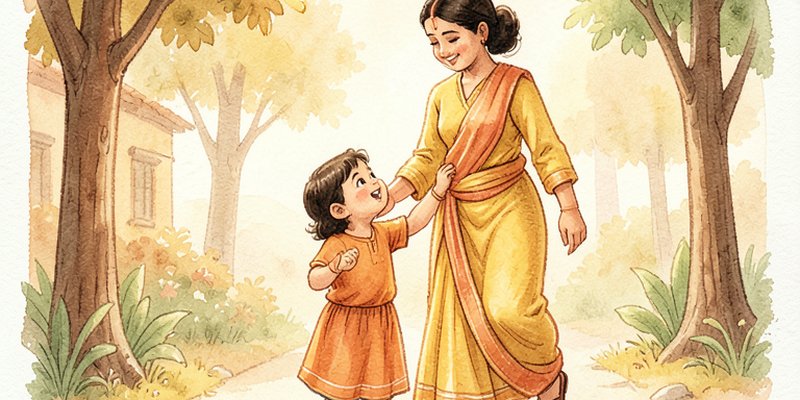
Age 6
The homework is torn up because one line wasn't right — and the rest of it was fine.
Room to Get It Wrong ·3 months ·6 – 14 years
You were proud of the high standards, and then you saw what they cost. A programme on the difference between a child who wants to do well and a child who is frightened of doing badly — and on how the adults at home can change the way a mistake feels.
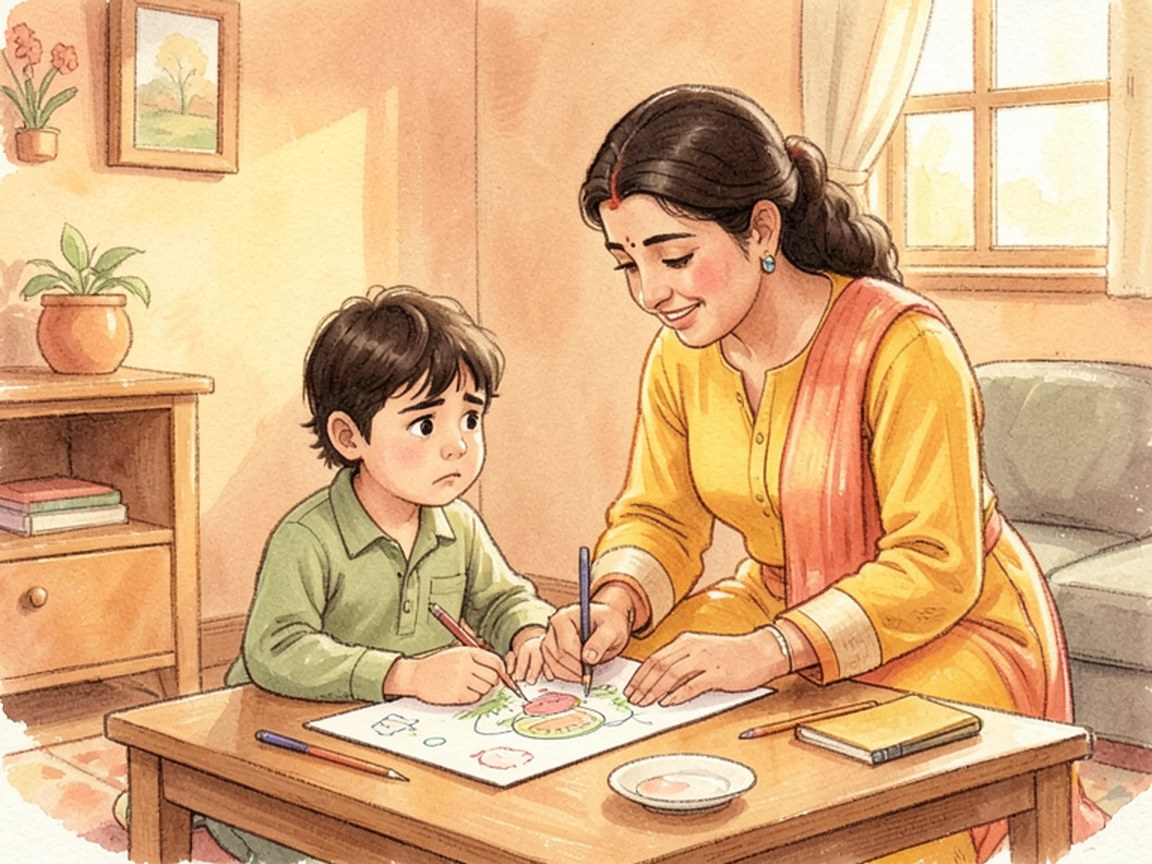
Perfectionism in children usually isn't high standards — it's a fear that their worth depends on performance. It softens when mistakes are treated as ordinary and unremarkable by the adults around them, including in how those adults handle their own mistakes. The lever is at home, in how error is met, more than in the child.
Read this first
One thing worth naming. If the perfectionism comes with food restriction, any self-harm, or a level of distress that frightens you, that is beyond what a parenting programme should be carrying. Please have your child seen by a child psychologist or paediatrician — a proper assessment is the right next step, and it is not an overreaction to ask for one.
How this changes as they grow.
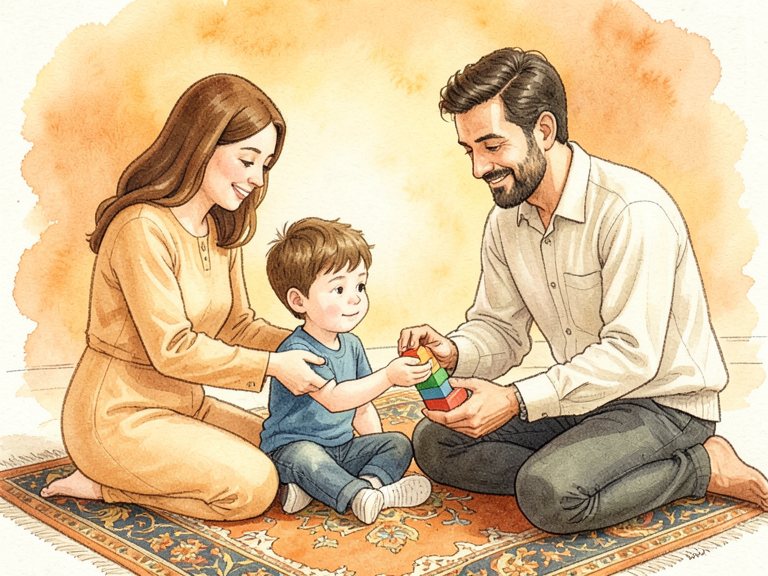
Age 6
The homework is torn up because one line wasn't right — and the rest of it was fine.
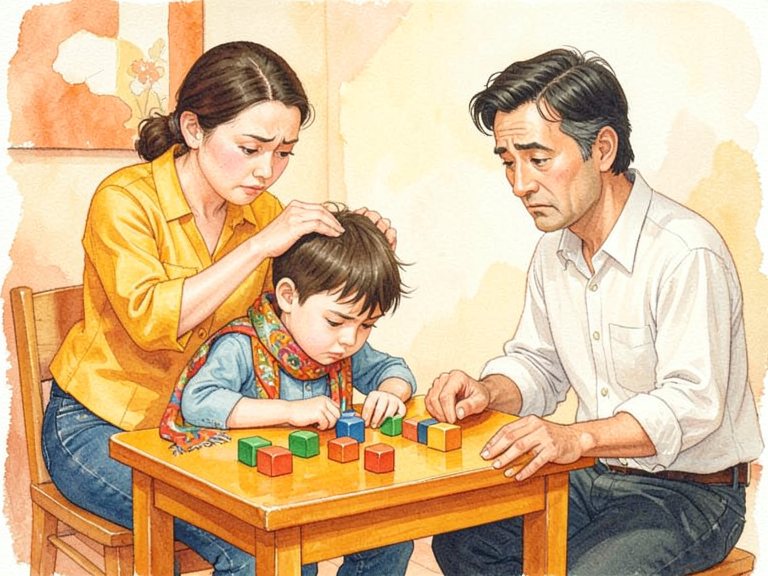
Age 9
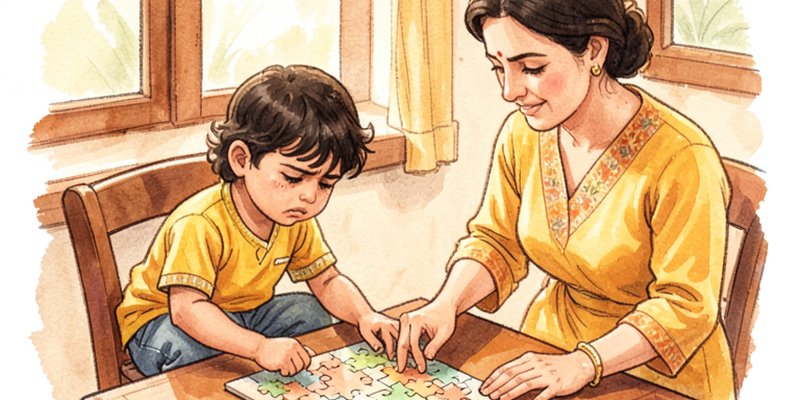
They won't try anything new unless they already know they'll be good at it.
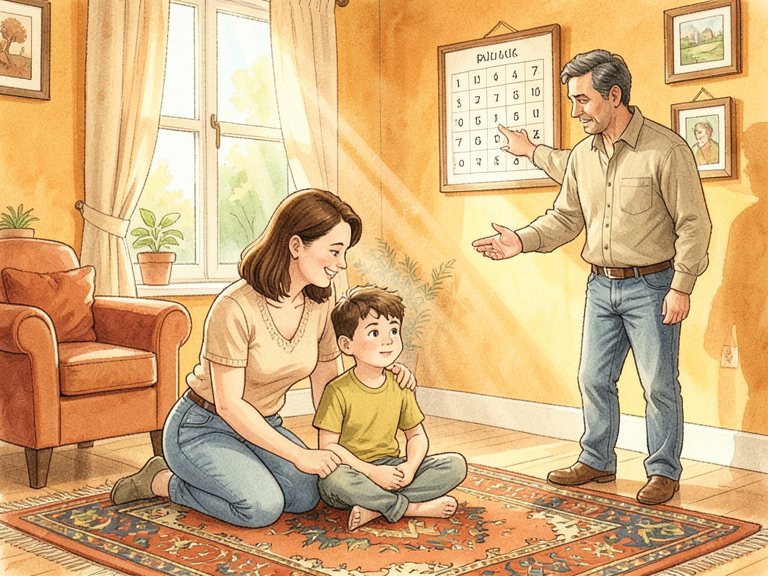
Age 12
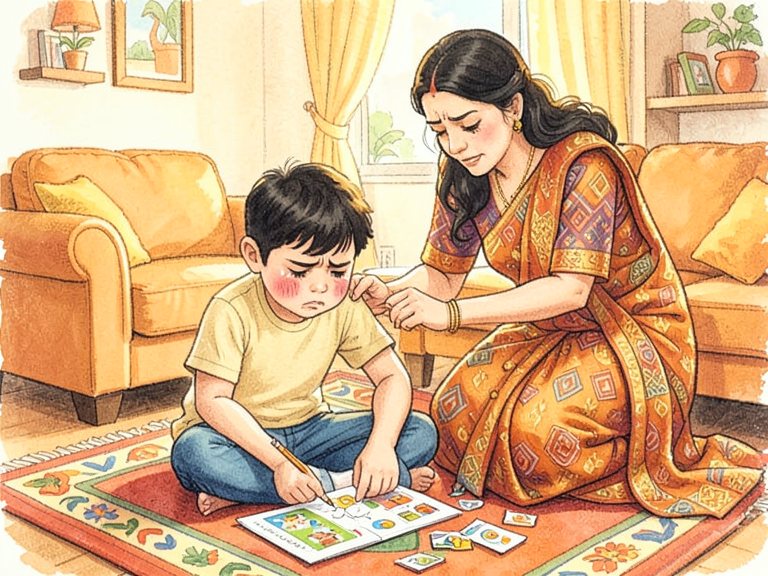
A small mistake — a spelling, a wrong answer — produces distress far out of proportion to the error.
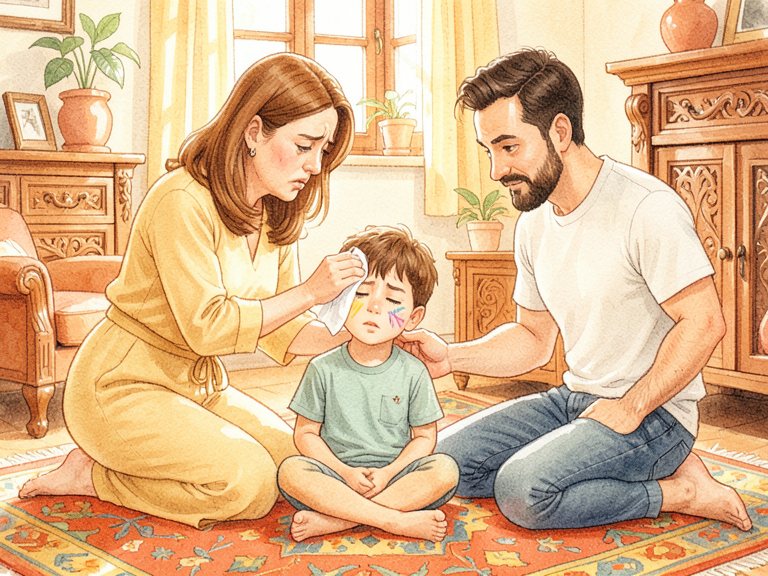
Age 14
The first question after any test is not how they did, but where they came in the class.
Age 16
You praised the marks, meant it warmly, and somehow watched the pressure go up rather than down.
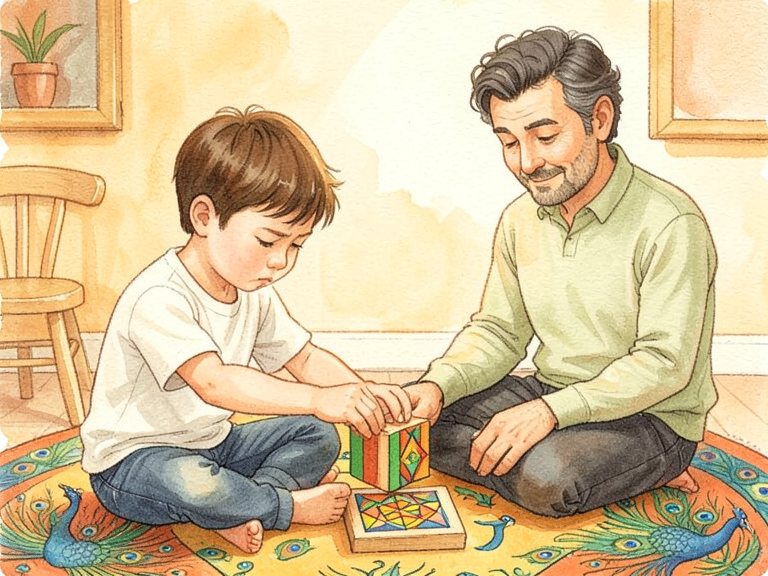
Now
You recognise the pattern because it was, or is, yours too.
Swipe through the day
There is a version of this that looks like a virtue. The child who redoes their work until it's right, who is upset by a careless error, who wants to come first — from a distance, this is the child every ambitious household hopes for.
Then you get closer, and you see the cost. The redone work is redone because the first attempt felt unbearable, not because it was poor. The upset over a careless error isn't disappointment; it's something closer to panic. And the wanting to come first has quietly become a fear of coming anywhere else.
That is the distinction this programme is built around. High standards are about the work. Perfectionism, in most children, is about the self — a belief, usually unspoken, that being loved and being acceptable depend on getting it right. When that belief is in place, a wrong spelling is not a wrong spelling. It is evidence.
This will not turn your child into someone who shrugs at everything, and any programme that promised to make a driven child stop caring would be describing a different, worse problem. The aim is narrower and more useful: to loosen the knot between performance and worth, so that effort can stay and fear can go.
No parent decides to teach a child that they are only as good as their last result. It gets taught anyway, in small increments, through channels nobody is watching.
One of the most common is praise. It feels loving to tell a child they're clever, brilliant, a topper. But ability praise has a hidden edge: if you are clever when you succeed, then what are you when you fail? Praise aimed at the fixed quality — the brain, the talent, the rank — quietly raises the stakes of every future task, because every task now tests whether the label still holds. Praise aimed at the process — the effort, the strategy, the persistence — does the opposite. It points at something the child controls, and something a mistake doesn't threaten.
The other channel is contingency: the sense a child picks up about when warmth arrives and when it withdraws. If the household lights up for a good report card and goes quiet for a poor one, a child does the arithmetic long before they could explain it. They learn that approval is a variable, and that performance is the dial.
None of this is about a lack of love. Most perfectionist children come from homes with a great deal of love in them. It is about where that love appears to be pointed — and pointing it, visibly, at the child rather than the child's output is a large part of the work.
If there is a single place where this shifts, it is the first few seconds after something goes wrong.
A child who has just made a mistake is watching the nearest adult's face. Not their words — their face, their breath, the small tightening around the eyes. That reaction, repeated across years, teaches the child what a mistake means far more powerfully than any conversation about resilience. If the reaction is alarm, correction, or disappointment, the child learns that error is dangerous. If it is calm and matter-of-fact — noticed, addressed, moved past — they learn that error is ordinary.
This is why so much of the programme lives in your own conduct rather than your child's. Children raised by adults who treat their own mistakes as small disasters tend to inherit the response. So part of the work is making your own errors visible and undramatic — the wrong turn narrated without self-punishment, the forgotten item handled without a scene. You are not performing failure for their benefit. You are simply letting them see that a competent, loved adult gets things wrong all the time and remains competent and loved.
The everyday response is the other half. We work on concrete language for the moment a child is distressed over an error — how to acknowledge the feeling without feeding the catastrophe, how to help without taking over, when to say nothing at all. Small changes, repeated daily, do more than any single big conversation about the value of trying.
It would be dishonest to talk about perfectionism in Indian children without talking about the environment they grow up in.
Rank-based schooling makes comparison structural. Marks are often read aloud. Children know precisely where they stand relative to everyone else, sometimes down to the decimal. Tuition adds a second layer of assessment on top of the first, and the wider family frequently treats a child's achievement as a shared asset to be discussed, compared, and celebrated in public. A child inside this system is being measured almost continuously, by more people than you can control.
You cannot switch that environment off, and pretending it doesn't exist helps no one. What you can do is decide whether your home amplifies it or buffers it. When a child comes home, is the first question about how they did or about how they are? When a rank comes up, does it get weighed in front of relatives or held quietly between you? Does achievement get discussed at dinner as the day's headline, or does it take its place among everything else?
We work on the specifics of this — because the difference between a home that echoes the examination hall and a home that offers a break from it is one of the strongest protective factors a driven child has.
Parents who do this work describe a similar set of shifts, and none of them involve the child caring less.
The distress around mistakes comes down, because a mistake no longer means what it used to. The child begins to attempt things they might not immediately excel at, because the price of failing has dropped. The report-card evening stops being a reckoning. And the parent, often, finds their own relationship with getting things wrong has eased too — which was frequently part of the picture from the beginning.
What you are left with is not a child who has abandoned their standards. It is a child who can hold high standards and survive falling short of them — which is the only version of high standards that lasts. The ambition stays. The fear underneath it, slowly, lets go.
Get something wrong out loud this week — a wrong turn, a burnt dish, a misremembered fact — and treat it as completely ordinary. Not a performance of failing well; just a mistake, noticed, shrugged off, corrected. Children read how error is handled long before they can be told.
For one week, catch yourself before 'well done' and 'so clever', and say what you actually saw instead: you kept going when it got hard, you tried it a different way, you checked your work. Ability praise raises the stakes; effort praise lowers them.
Pick one piece of work that is good enough but not perfect, and let it go to school exactly as it is. The lesson a child needs is not that perfect is possible, but that imperfect is survivable.
That helps in the moment. Changing the pattern takes something else.
Three months on the quiet fear that hides inside a high-achieving child — and on the small, repeatable changes at home that loosen its grip.
Before changing anything, we look honestly at what is driving the fear — because perfectionism has more than one source. We separate temperament from what the child has learned about approval, and we map the specific moments where the distress shows up. Most parents find at least one place where the message 'you are loved for how you perform' is being sent without anyone intending it.
The core of the work. We rebuild the everyday response to error — your language, your face, the first three seconds after something goes wrong — and shift the household's praise habit from ability to effort. This is also where we work on your own relationship with mistakes, because a child cannot learn that error is ordinary from an adult who treats their own as catastrophes.
Rank-based schooling, marks read out in class, and the constant sideways glance at how everyone else did. We work on what you can influence and what you can only buffer — how to receive a report card, how to answer 'what was my rank', and how to keep the home from becoming a second examination hall on top of the first.
Consolidating the change so it survives a bad term, a hard exam, and the wider family's commentary. We work on the long game — what a resilient relationship with achievement looks like at twelve, at sixteen — and on how to hold your line when relatives, tuition, and the school are all pulling the other way.
Small group — deliberately. Few enough that everyone is known, and no one is a spectator.
Message us to hear about dates, structure and fees for the next cohort.
Purnam is an AI-native parenting companion for modern Indian families. A structured programme, a smart companion that knows your family, and a small, honest community of parents — built to take you from surviving the day to thriving across the years.
Parenting that hasn't been handed down — for the generation that wants to parent differently than they were parented, but has no cultural template for it.
Purnam · our positioning
Purnam is built by a founding team with 18+ years across big tech, startups, and growth-stage technology companies — and, more to the point, by parents currently inside the early-childhood years themselves.
Parents to a toddler ourselves — building Purnam to help Indian families move from surviving to thriving.
Purnam's approach draws on modern developmental psychology — attachment, emotional regulation, behavioural coaching — held alongside Indian contemplative traditions as practical tools rather than belief.
We are advised by senior practitioners in human transformation and behavioural coaching. Where the evidence for something is strong, we say so. Where it is contested, we say that too.
Message us on WhatsApp about Room to Get It Wrong — dates, structure, fees, and whether it fits your situation.
Or just ask your actual question. That's what the line is for. Someone from the Purnam team will get back to you.
Purnam offers parenting support and education. This is not paediatric, medical, or mental-health treatment, and it is not a substitute for care from a qualified professional. Every child and family is different; nothing here is a promise of any particular outcome.