Monday
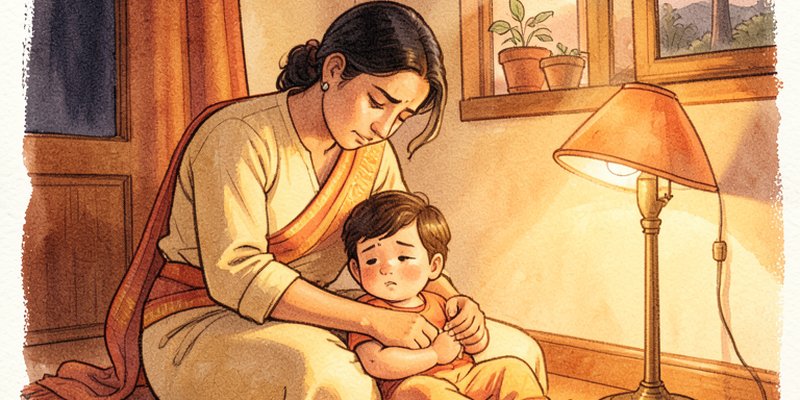
One of you says no, the other says yes, and the child is standing right there watching it happen.
Same Page ·6 months ·All ages
Two people who love the same child can hold two different ideas of how to raise them. What a child takes in is less the difference than the argument about it. This is a focused programme on alignment for couples who parent together — not on winning.
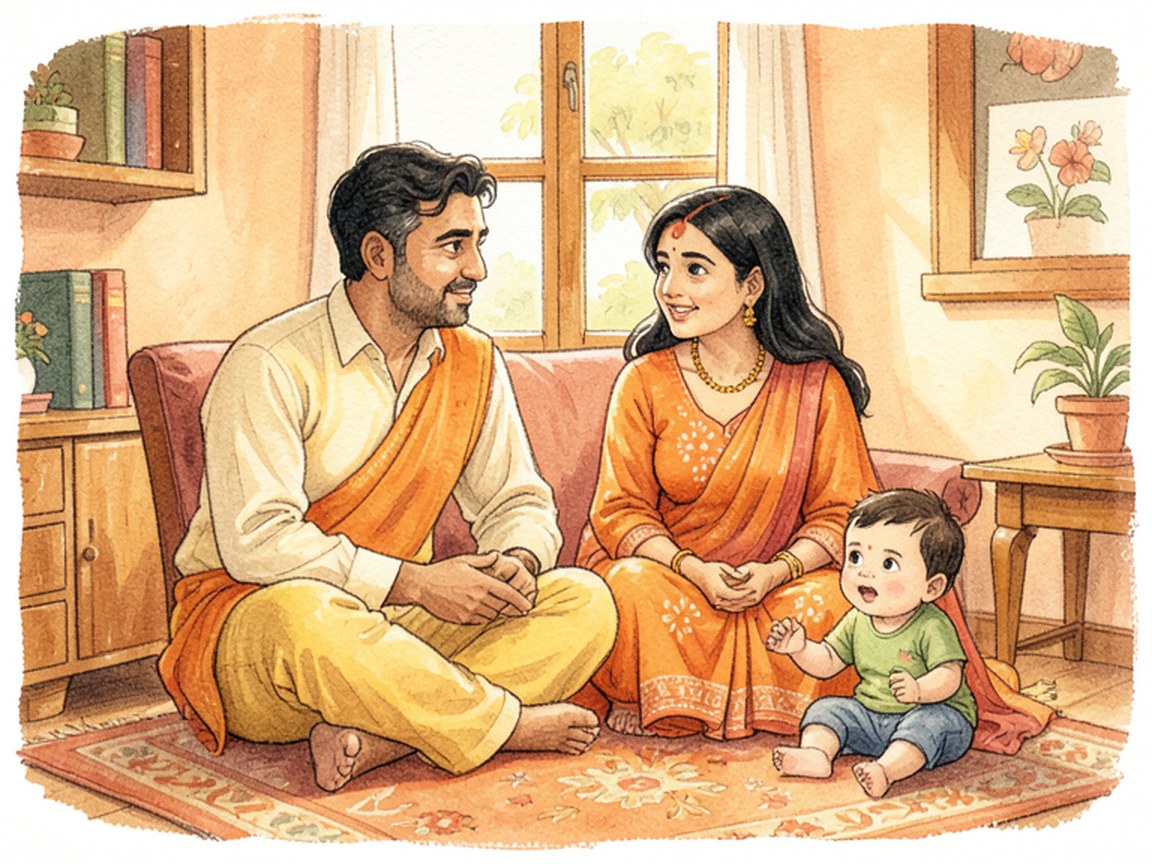
Children are affected less by which parenting approach you use than by watching the two of you fight about it. Alignment does not require agreement. It requires a small set of shared non-negotiables, and a standing agreement to take the disagreements offstage — out of the room, away from the child, into a conversation the two of you have as equals.
Read this first
One thing this programme is not for. If what you're describing isn't a difference in parenting style but a partner who controls, frightens, or coerces you — who isolates you, monitors you, or makes you afraid to disagree — that is not something to align on, and no alignment method will make it safe. Please speak to someone qualified: a counsellor you trust, or a domestic-support helpline such as India's national women's helpline on 181. You deserve help built for that, not for this.
One ordinary week in your house.
Monday
One of you says no, the other says yes, and the child is standing right there watching it happen.
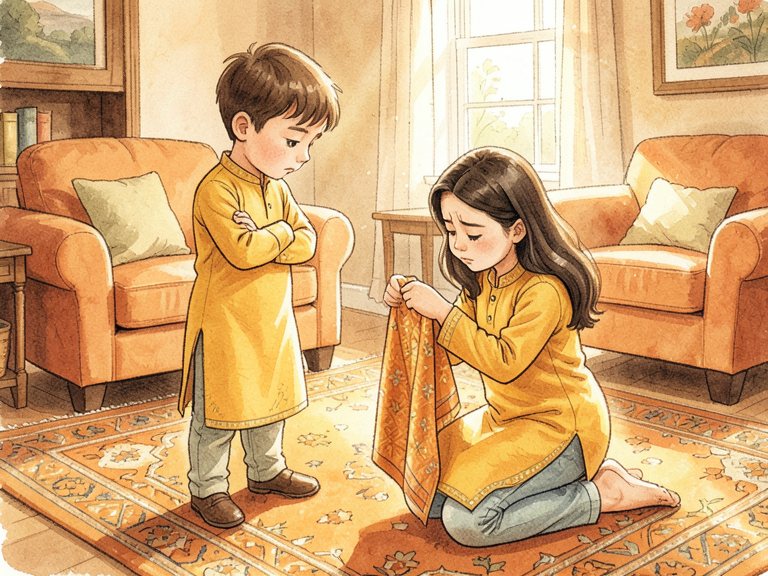
Tuesday
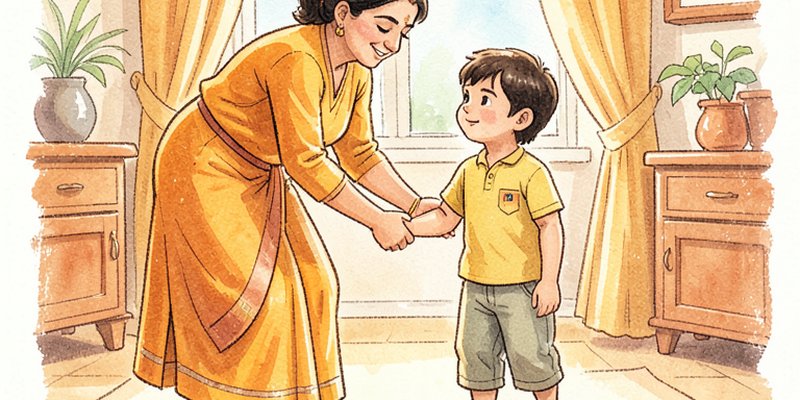
You've become the strict one by default, and you didn't choose the role.
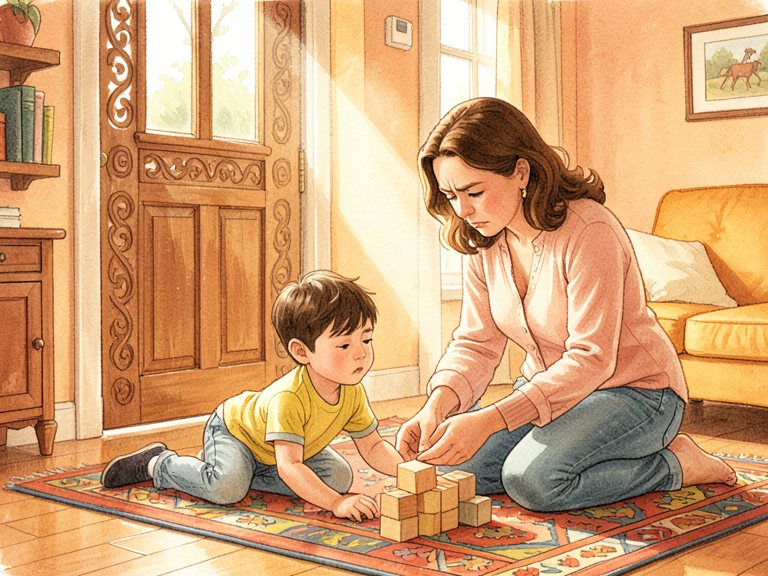
Wednesday
Your partner has quietly disengaged, and every rule in the house is now yours to enforce alone.
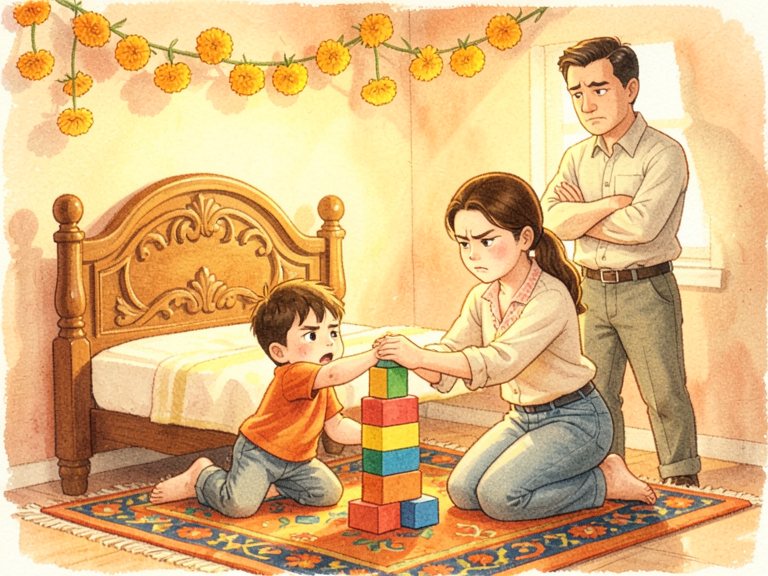
Thursday
The real fight starts after bedtime, and it's the same fight, most nights.
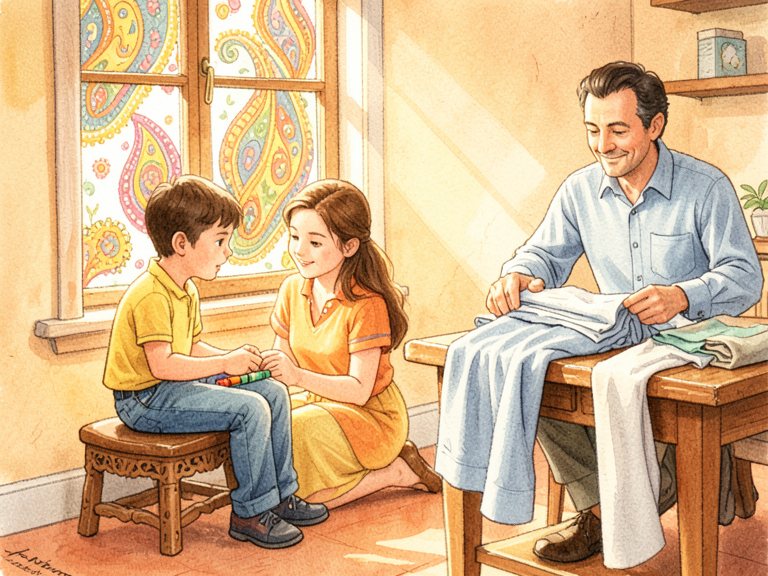
Friday
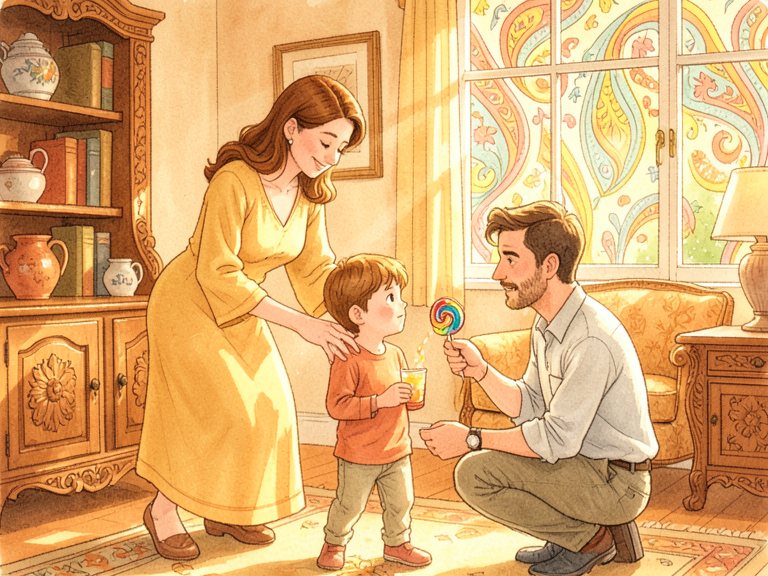
Your child has worked out which parent to ask for which thing — and asks accordingly.

Saturday
You've discovered you disagree about something you assumed you'd never have to discuss.
Swipe through the day
If you sat down and listed every parenting fight you've had this month, you'd probably find they aren't really about bedtime, or screens, or how much to push at homework. Those are the surfaces. Underneath, the same argument keeps returning: whose way is right, and why won't you back me up.
That's worth naming, because it changes what needs fixing. Two people who love the same child can hold two genuinely different pictures of how to raise them, and neither picture has to be wrong. What wears a household down isn't the difference. It's living inside an unresolved contest about the difference — one that surfaces at every flashpoint and gets re-litigated after every bedtime.
This programme starts from a claim that surprises most couples: you do not need to agree in order to parent well together. You need something narrower and much more achievable. A small set of things you both hold firm, room for difference on everything else, and an agreement about where the disagreeing happens.
There's a common fear that any conflict between parents damages a child, and it leads couples to either paper over every difference or feel quietly guilty about the ones they can't hide. Both responses come from getting the picture slightly wrong.
What's hard on a child is not the existence of disagreement. It's conflict that is frequent, hostile, and never resolved — the kind that leaves the emotional weather of the house permanently unsettled. A child living in that doesn't learn your positions. They learn that the ground moves, and they organise themselves around keeping it still: becoming careful, becoming the peacemaker, becoming invisible.
The reassuring half of the same point is this. A child who watches two parents disagree and then work it out is not being harmed — they are being shown, in the most durable way there is, that people who love each other can differ and stay connected. That is not a thing to hide from them. It's one of the more useful things they'll learn at home. This programme will not make you a couple who never disagrees, and any programme that promised to would be lying. It will change what your disagreements do to the room.
Ask most parents why they hold a particular line and the honest answer, underneath the reasoning, is because of how I was raised — either to repeat it or to never repeat it. One of you grew up in a house where structure meant safety. The other grew up somewhere structure felt like control, and warmth was the thing in short supply. Now you're raising a child together, and every ordinary decision quietly pulls on those histories.
This is why parenting disagreements feel so much larger than their subject. When your partner overrules your bedtime rule, it doesn't land as a scheduling difference. It lands as a challenge to something you learned young and hold deep. And when you dig in, they feel the same thing from the other side.
Seeing this clearly is the first shift the programme makes, and it does more than any technique. It moves the conversation from you are wrong to we started from different places — which is not only kinder but truer, and it's the only ground on which two people can actually align. You can't negotiate with someone you've cast as the obstacle. You can with someone whose reasons you understand.
Here is the practical core, and it's deliberately small.
Most couples try to align by resolving disagreements one at a time as they arise — in the moment, in front of the child, when both of you are already depleted. It doesn't work, because the moment is the worst possible time to litigate a principle, and because there are too many moments.
The method that works runs the other way. In a calm hour, the two of you find your three non-negotiables — the handful of things that genuinely matter to both of you, the lines you'll both hold no matter which parent is on duty. Then, crucially, you give each other room on everything else. Not every hill is worth defending. Most of the daily friction lives on hills neither of you would choose, on reflection, to die on.
Alongside it sits the offstage rule: you don't overrule each other in front of the child; you take the disagreement out of the room and sort it out between you. This is harder than it sounds, especially in the heat of a bad evening, and much of the middle of the programme is spent making it a habit rather than a good intention. What it protects is precise. The child is no longer the audience for your disagreement, and the gap between you stops being a lever — the ask the other parent strategy every child discovers the moment that gap appears.
There's a pattern that forms slowly in a lot of households, and by the time it's visible it's already entrenched. One parent becomes the one who enforces — who says no, who holds the line, who remembers that teeth haven't been brushed and homework isn't done. The other becomes the relief, the fun one, the one the child runs to. Nobody chose this. It accretes, decision by decision.
Left alone, it curdles. The enforcing parent grows resentful and starts to feel like the villain in their own home. The child learns, sensibly, to route around the strict one. And the very imbalance produces more of itself, because the more one parent enforces, the more the other gets to be the escape.
Undoing it means looking at the whole load, not just the visible half. The tasks are the easy part. The harder part is the invisible work — the remembering, the anticipating, the noticing who needs what — which tends to sit almost entirely with one parent and rarely gets counted. Dividing that explicitly, out loud, is uncomfortable and it is where a great deal of quiet resentment either builds or finally drains. It's the last thing the programme works on because it's the thing that, once shared, holds the rest of the alignment in place.
Couples who get this right describe a similar set of shifts, and none of them is dramatic.
The nightly post-bedtime fight loses its fuel, because the big questions have been settled in daylight rather than re-fought every evening. The child stops receiving two contradictory answers to the same question. The strict parent stops feeling like the household's designated villain. And the disagreements that remain — because they will remain — happen between the two of you, as equals, out of the child's line of sight.
None of this requires you to become the same parent. In most cases it requires you to stop treating your differences as a contest that has to be won, and start treating the few that matter as things you decide together.
Not tonight's flashpoint — the bigger question. Each of you names the few things you genuinely cannot bend on. You'll usually find the list is shorter than the fighting suggests, and that most of what you argue about isn't on it.
One sentence, agreed in a calm moment: we don't overrule each other in front of the child; we sort it out after. It won't feel natural at first. It changes what the child sees almost immediately.
A word or a look that means I'm past my limit, take over. No explanation required in the moment. It lets the parent who still has patience step in before the one who's out of it says something they'll regret.
That helps in the moment. Changing the pattern takes something else.
Six months on the disagreement underneath most household tension — and on the difference between parents who differ and parents who are at war.
Before agreeing on anything, we look at where your instincts come from. Most parenting disagreements are two different childhoods meeting in one house — how you were raised, what you swore you'd repeat, what you swore you never would. Seeing this clearly changes the argument from you're wrong to we started from different places.
The core method. Rather than trying to agree on everything, the two of you find the handful of things that genuinely matter to both of you, and give each other room on the rest. We work on how to hold this conversation without it becoming a negotiation about who was right, and on writing the list down so it survives the next hard evening.
The offstage rule in practice, and it is harder than it sounds. What to do in the moment when your partner has just contradicted you in front of the child. How to raise a disagreement afterwards without it turning into the same fight. And how to repair, in front of the child, on the occasions it does spill over — because they will sometimes see you disagree, and what they see next matters.
The bad-cop trap, and how one parent ends up carrying all the enforcement while the other stays the fun one. Dividing not just the visible tasks but the mental load — the remembering, the planning, the noticing — explicitly rather than by default. This is where resentment either builds or drains away.
Small group — deliberately. Few enough that everyone is known, and no one is a spectator.
Message us to hear about dates, structure and fees for the next cohort.
Purnam is an AI-native parenting companion for modern Indian families. A structured programme, a smart companion that knows your family, and a small, honest community of parents — built to take you from surviving the day to thriving across the years.
Parenting that hasn't been handed down — for the generation that wants to parent differently than they were parented, but has no cultural template for it.
Purnam · our positioning
Purnam is built by a founding team with 18+ years across big tech, startups, and growth-stage technology companies — and, more to the point, by parents currently inside the early-childhood years themselves.
Parents to a toddler ourselves — building Purnam to help Indian families move from surviving to thriving.
Purnam's approach draws on modern developmental psychology — attachment, emotional regulation, behavioural coaching — held alongside Indian contemplative traditions as practical tools rather than belief.
We are advised by senior practitioners in human transformation and behavioural coaching. Where the evidence for something is strong, we say so. Where it is contested, we say that too.
Message us on WhatsApp about Same Page — dates, structure, fees, and whether it fits your situation.
Or just ask your actual question. That's what the line is for. Someone from the Purnam team will get back to you.
Purnam offers parenting support and education. This is not paediatric, medical, or mental-health treatment, and it is not a substitute for care from a qualified professional. Every child and family is different; nothing here is a promise of any particular outcome.