07:10
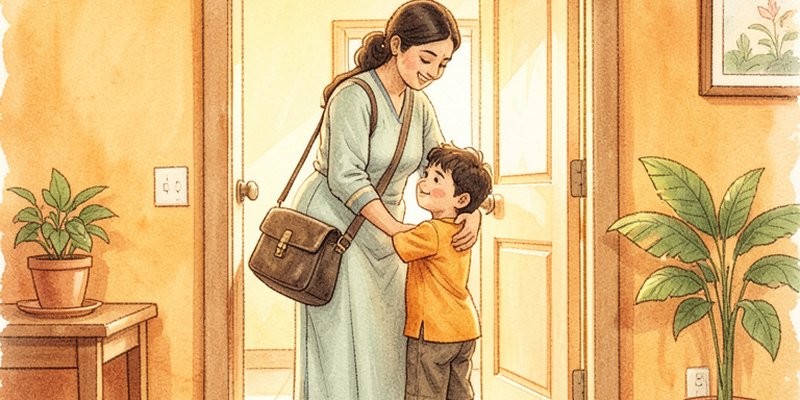
Your mother-in-law made a comment this morning and it's still lodged there, hours later.
The Honest Mirror ·6 months ·All ages
You lie awake asking it after a hard evening. But the question is unanswerable as posed, because it has no yardstick attached. This is a programme on swapping other people's approval — and Instagram's — for your own explicit values, and checking yourself against those instead.
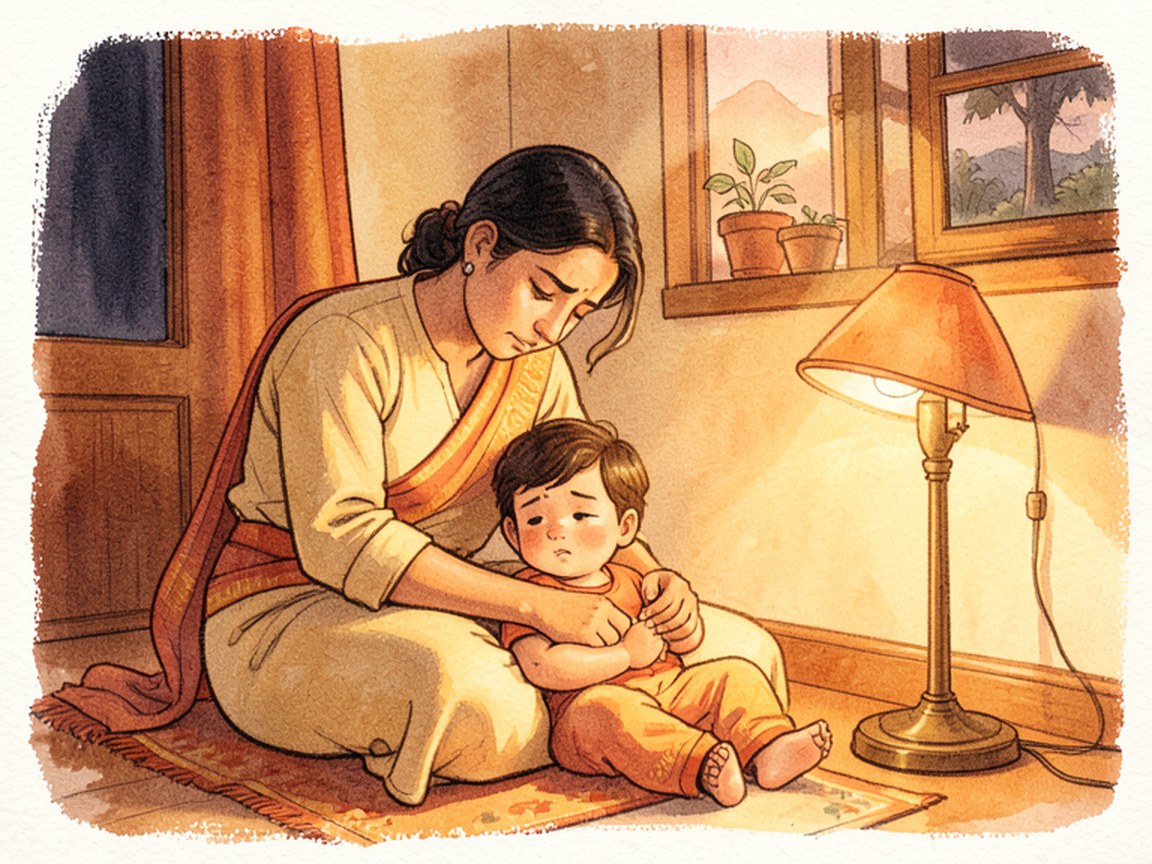
Asking whether you're a good parent is itself a reasonable sign that you're paying attention — the parents who never ask are rarely the ones to worry about. But the question is unanswerable as posed, because it has no standard attached. It becomes answerable when you replace social comparison with your own explicit values, and check yourself against those instead.
Read this first
One thing this programme is not for. There is a difference between the ordinary self-doubt of a parent who cares, and a low mood or hopelessness that sits on you and doesn't lift even on a good day. If what you're carrying feels less like a hard week and more like a weight that won't move — trouble sleeping, no pleasure in things, a sense that you're failing at everything — please treat that as its own thing and speak to a qualified professional. A doctor or therapist is the right place for it, and reaching out early is a sign of good judgment, not weakness.
Six moments from a single ordinary day.
07:10
Your mother-in-law made a comment this morning and it's still lodged there, hours later.
09:30
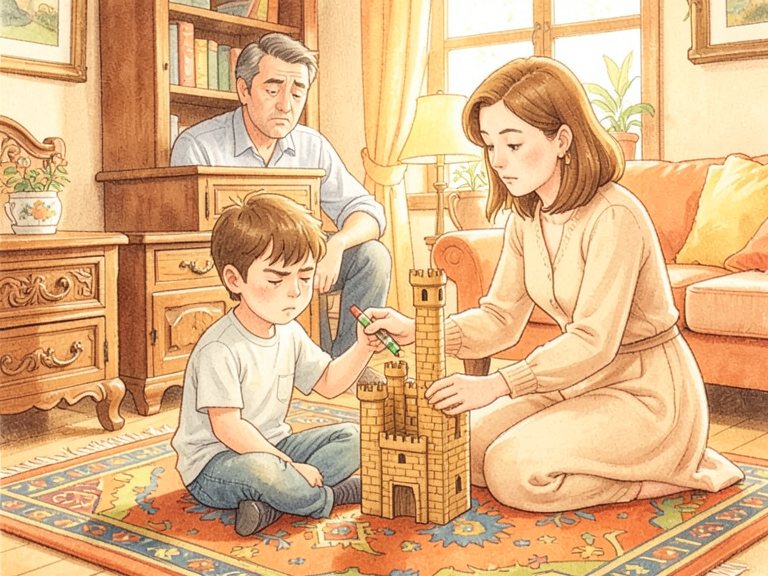
You are trying constantly, and you still feel behind — as though everyone else got a manual you missed.
13:00
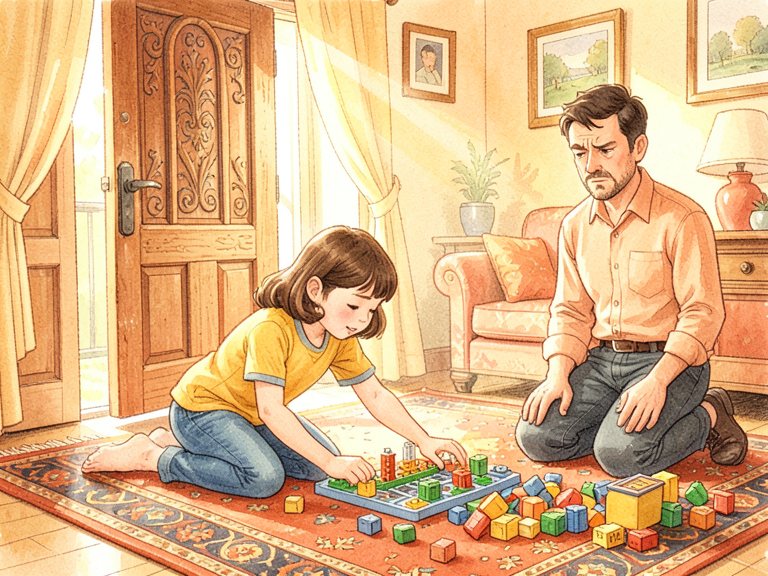
You did something today with your child and you genuinely have no idea whether it was the right call.
18:30
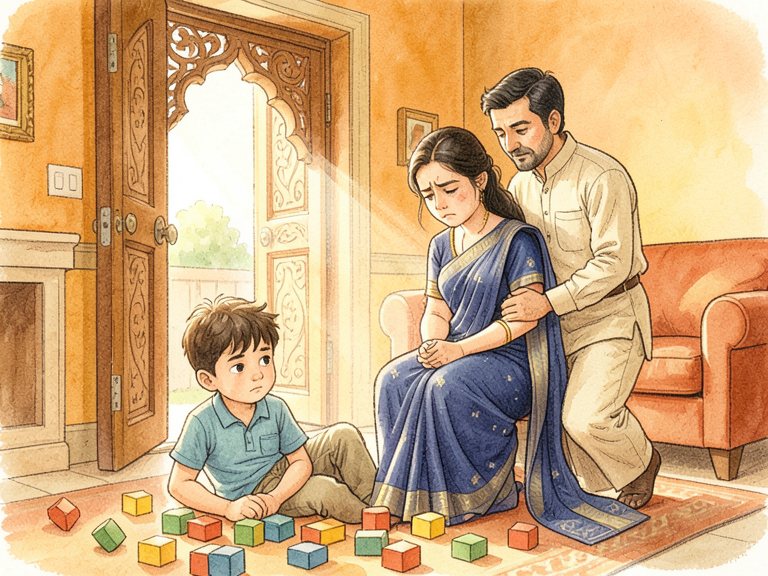
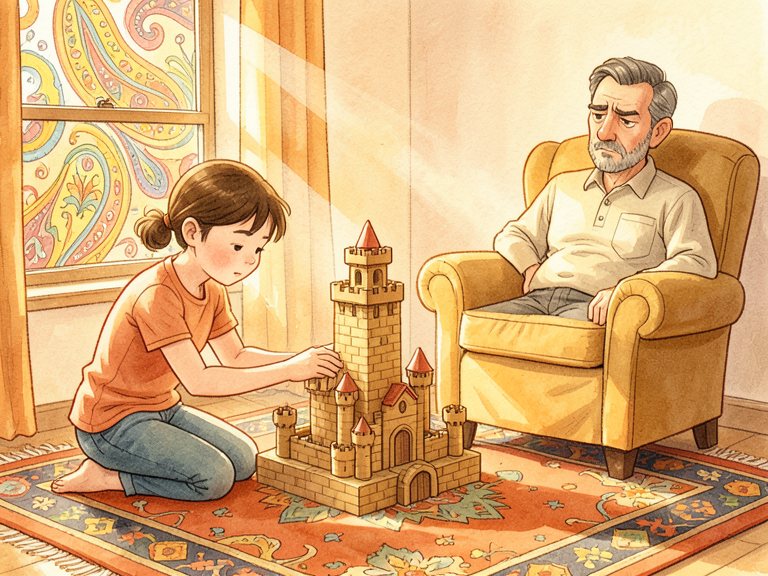
Your spouse implies you're too strict. Or too soft. You can't tell which of you is right.
23:00
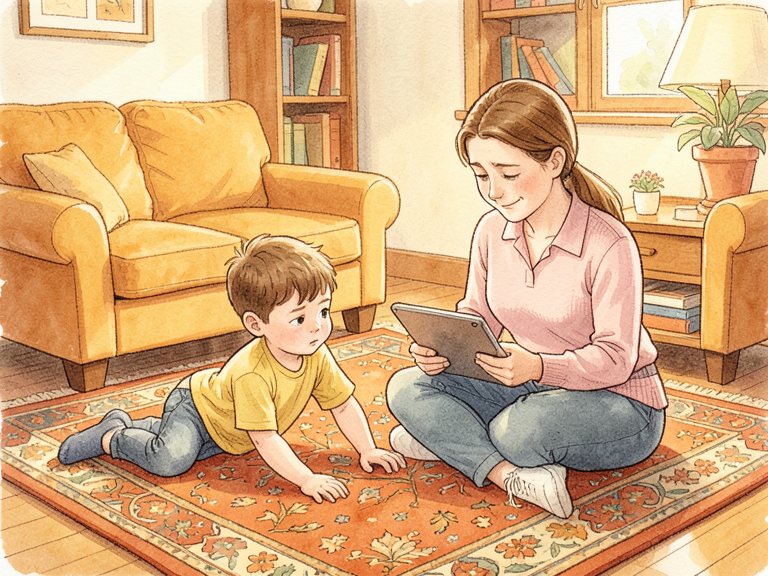
It's 11pm and you're scrolling — every other parent's feed looks calmer, more patient, more put-together than your day felt.

23:40
Lying awake after a bad evening, replaying the one moment you handled badly and none of the ten you handled well.
Swipe through the day
"Am I a good parent?" is the most common question parents ask, and one of the few that has no answer in the form it's posed.
The reason is simple once you see it. "Good" is a comparison, and a comparison needs something to compare against. Good compared to whom? Measured against what? Most of us never notice that we've quietly borrowed a yardstick — from a mother-in-law, a sibling whose children seem easier, a friend, or a feed — and we're failing a test we didn't set and can't see.
This is why the question produces so much suffering and so little clarity. You lie awake grading yourself against a standard you've never actually named, one that shifts depending on whose voice was loudest that day. No wonder the verdict keeps coming back guilty. A test with no fixed answer key can be failed indefinitely.
The question becomes answerable the moment you attach a standard of your own. Not the internet's, not your family's — yours, written down, specific to the child you actually have and the life you actually live. That single move is most of the work, and this programme is built around it.
There are really two separate things happening when a parent asks this question, and it helps to pull them apart.
The first is external. Somewhere, you are seeking someone's approval — and it's worth knowing whose. For many Indian parents it's an in-law whose comment at breakfast lodges for a week. For others it's a spouse who signals you're too strict, or too soft. For almost everyone now, it's a feed at eleven at night where other parents look calmer and more patient than your evening felt. The first question is not "am I passing?" but "whose court am I standing in, and is that judge fair?"
Because often they aren't. A relative parenting through the lens of a different era, or an algorithm optimised to make you feel slightly behind, is not a reliable authority on your particular child. Some external judgment carries real information and deserves a hearing. A great deal of it does not, and learning to tell the two apart is a skill you can build.
The second layer is internal — the mirror you hold up to yourself when no one else is in the room. This is the harder one, because you can't walk away from it. The goal here isn't to make the mirror flatter you. It's to make it honest without being cruel: a self-check that tells you the truth about a hard day without turning that day into a verdict on the whole of you.
Some of the sharpest pain in modern parenting comes from a measuring tool that was never built to measure anything real.
A social feed shows you the assembled best of many people's parenting — the calm morning that got filmed, the craft that worked, the birthday that came together. It does not show the meltdown twenty minutes later, the shouting in the car, the evening that fell apart off camera. When you compare your full, unedited day against that reel, you are not comparing like with like. You are comparing your behind-the-scenes with everyone else's highlights, and losing a contest that was rigged before you entered it.
The same distortion runs through in-person comparison, just more slowly. You see other families in their public, composed moments — school pickup, a wedding, a Sunday lunch — and you fill in the private hours with an imagined competence that no household actually has. Every home has its hard evenings. You simply aren't in the room for theirs.
None of this means comparison can be switched off by willpower; the instinct is old and strong. But it can be starved. When you have your own values written down and a check-in that runs on them, a stranger's post has far less to grab onto. You're no longer auditioning for a standard someone else set.
Here is the frame this programme is built on, stated plainly.
If you are the kind of person who lies awake wondering whether you're getting it right, you are almost certainly already a good parent — because that wakefulness is what caring looks like. The question itself is the evidence. The parents genuinely worth worrying about are, as a rule, not the ones asking.
So the work is not to earn a verdict you already qualify for. The work is quieter and more useful: to become, over time and by choice, the specific parent you want to be. That is a direction, not a grade. It doesn't have a pass mark you're failing to reach. It has a next step, and then another.
It also means being clear-eyed about what actually shapes a child over the long run, versus what merely keeps parents awake. What matters, consistently, is warmth — that your child feels genuinely liked, not just managed. It's reasonable consistency, so the world is predictable enough to relax into. And it's repair: coming back after you've lost your temper or got it wrong, which teaches something no perfect record ever could. Notice that none of these require you to be calm every hour, or to never raise your voice, or to run a household that photographs well.
This programme will not make you feel like a flawless parent, and any programme that promised to would be lying — the feeling you're chasing isn't available to anyone, and reaching for it is part of what keeps you up at night. What it can do is give you a standard that's yours, a way to check yourself that's honest without being punishing, and the ability to let a bad evening be a bad evening rather than a referendum on the whole of you.
Parents who do this work tend to describe a similar shift, and it's rarely dramatic. It's quieter than that.
The eleven o'clock scroll loses some of its sting, because you're no longer measuring your life against a stranger's editing. A relative's comment still registers, but it stops running in the background for a week, because you've decided in advance whose judgment has earned a place in your head. The evening replay gets shorter — one honest question instead of a full inventory of the day's failures. And the underlying question, "am I a good parent," slowly gets replaced by a better one: "am I moving toward the parent I want to be?" — which, unlike the first, actually has an answer, and usually a hopeful one.
None of this requires becoming a different person. In most cases it requires putting down a borrowed yardstick you never chose, and picking up one that's finally your own.
Not aspirations, not what your family expects — five things that actually matter to you in how you raise your child. Most parents have never written these down, which is exactly why the question feels unanswerable. You can only measure yourself against a standard you've named.
Instead of 'was I a good parent today', ask one question: 'did I act like the parent I want to be more often than not?' It takes two minutes, it survives a bad day, and it doesn't collapse into a list of everything you got wrong.
For one day, notice whose approval you're actually chasing — an in-law, a spouse, a feed, a parent from school. Write the names down. Then ask, honestly, which of them is a fair judge of your particular child and your particular life.
That helps in the moment. Changing the pattern takes something else.
Six months on the most universally asked and least answerable question in parenting — and on building a self-check you can actually live with, rather than one that turns into self-attack.
Before you can answer the question, you have to find the yardstick you've been quietly measuring yourself against — and it's almost never your own. We locate it: the in-law, the sibling whose kids seem easier, the curated feed, the version of your own parents you're either copying or rejecting. Naming the borrowed standard is what makes it possible to put it down.
The slow, central work: writing what you actually believe a good parent is, in your own words, for your own child. We move past slogans to something specific enough to act on — including where your values sit inside an Indian family that has its own strong opinions about all of this. This is the standard everything else gets checked against.
A self-check is only useful if you'll actually use it, which means it can't turn every evening into an inventory of your failures. We build one that's honest without being cruel — that registers a hard day as information rather than a verdict, and that treats warmth, consistency, and repairing after you get it wrong as what actually counts.
How to hold the fact that you'll get it wrong regularly — every parent does — without that fact swallowing you. We work on catching the spiral early, on separating a bad moment from a bad parent, and on quieting the comparison instinct so a stranger's eleven o'clock post stops rearranging how you feel about your own day.
Small group — deliberately. Few enough that everyone is known, and no one is a spectator.
Message us to hear about dates, structure and fees for the next cohort.
Purnam is an AI-native parenting companion for modern Indian families. A structured programme, a smart companion that knows your family, and a small, honest community of parents — built to take you from surviving the day to thriving across the years.
Parenting that hasn't been handed down — for the generation that wants to parent differently than they were parented, but has no cultural template for it.
Purnam · our positioning
Purnam is built by a founding team with 18+ years across big tech, startups, and growth-stage technology companies — and, more to the point, by parents currently inside the early-childhood years themselves.
Parents to a toddler ourselves — building Purnam to help Indian families move from surviving to thriving.
Purnam's approach draws on modern developmental psychology — attachment, emotional regulation, behavioural coaching — held alongside Indian contemplative traditions as practical tools rather than belief.
We are advised by senior practitioners in human transformation and behavioural coaching. Where the evidence for something is strong, we say so. Where it is contested, we say that too.
Message us on WhatsApp about The Honest Mirror — dates, structure, fees, and whether it fits your situation.
Or just ask your actual question. That's what the line is for. Someone from the Purnam team will get back to you.
Purnam offers parenting support and education. This is not paediatric, medical, or mental-health treatment, and it is not a substitute for care from a qualified professional. Every child and family is different; nothing here is a promise of any particular outcome.