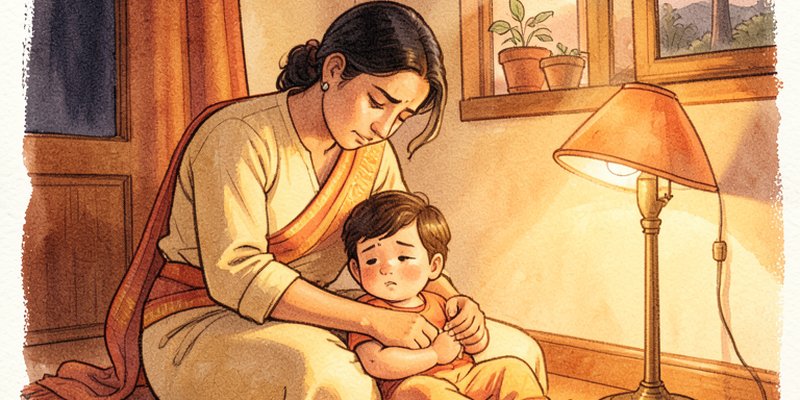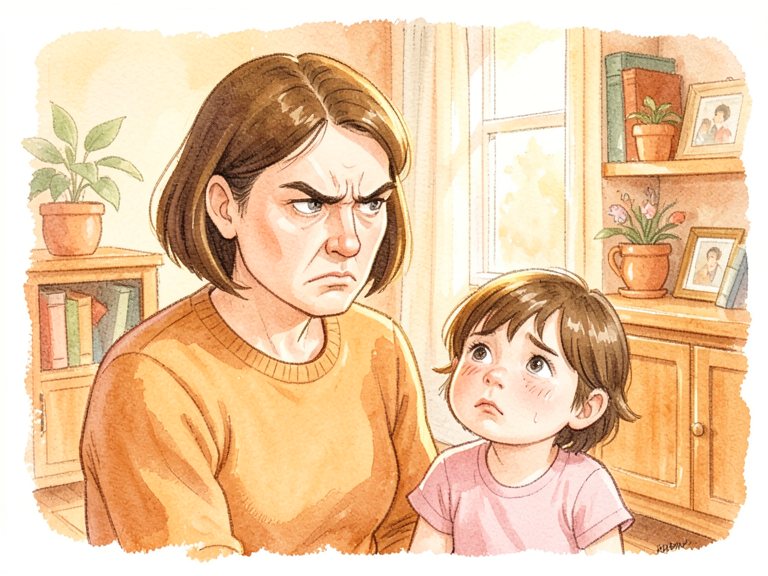
Minute 0
You shout over something small — a spilled glass, a slow shoe — and you watch their face change in real time.
The Repair Program ·1 month ·2 – 14 years
Every parent loses their temper. What separates the households where it leaves a mark from the ones where it doesn't is not whether the rupture happened — it's whether anyone came back and repaired it. This is a one-month programme on how to do that well.
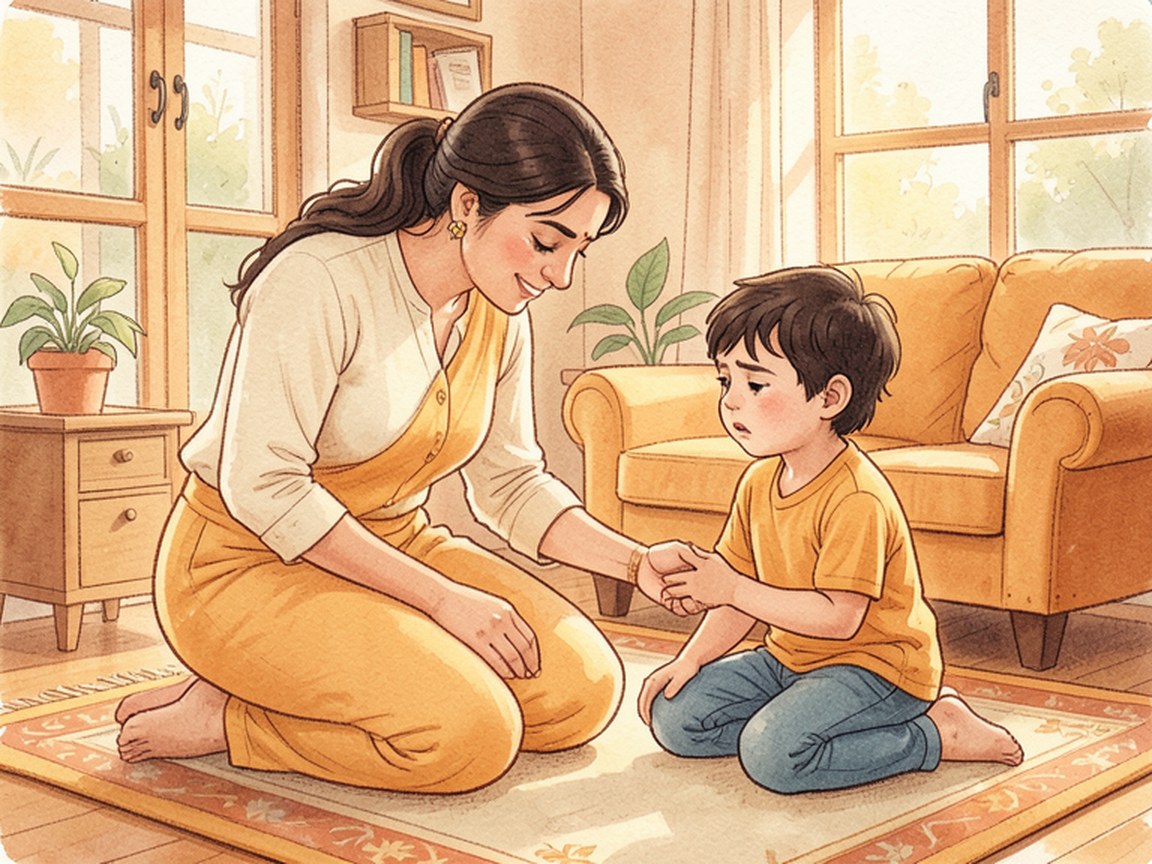
Rupture is not the thing that harms children — unrepaired rupture is. Repair is a skill with a shape: you acknowledge what you did without excusing it, without making your child responsible for your feelings, and without requiring their forgiveness in order to close it. Done that way, an apology doesn't cost you authority. It is authority.
Read this first
One line that is not a programme matter. If hitting or physical discipline is happening, or if there is any situation where your child may be at risk of harm, this is not something to work on over a month. Stop, and seek qualified help now — a paediatrician, a child psychologist, or a helpline. That is not a failure or a judgement. It is the right and responsible next step, and it matters more than any course.
How one of these moments actually unfolds.
Minute 0
You shout over something small — a spilled glass, a slow shoe — and you watch their face change in real time.
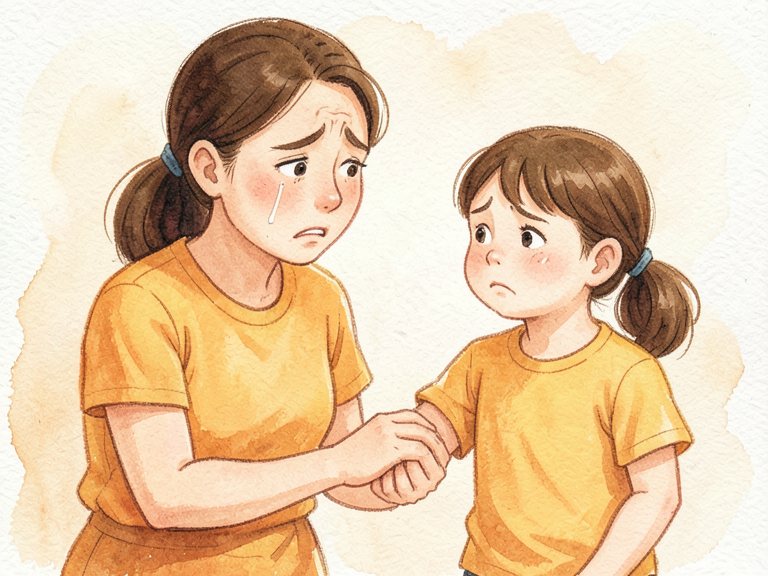
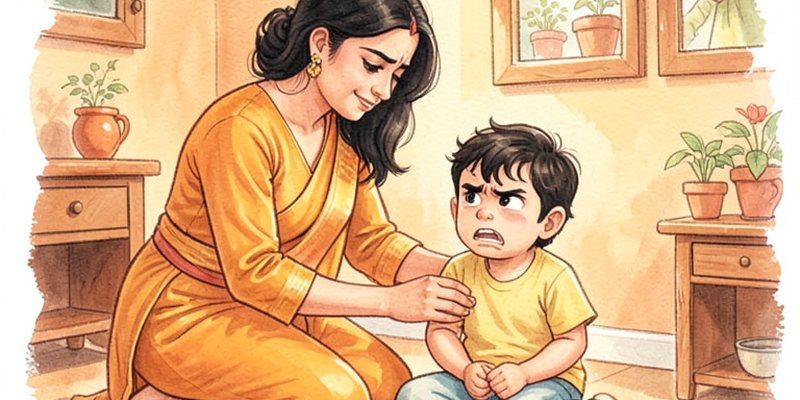
Minute 2
You grab an arm harder than you meant to, and the grip stays in your memory long after the moment has passed.
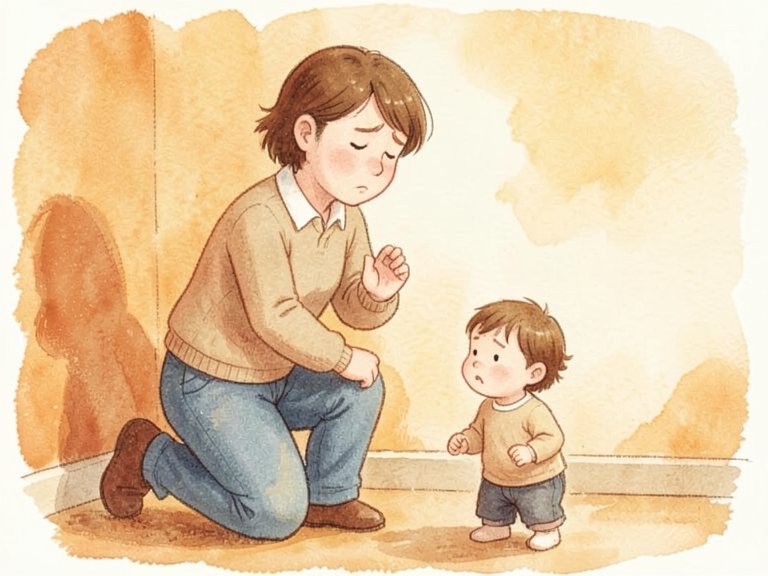
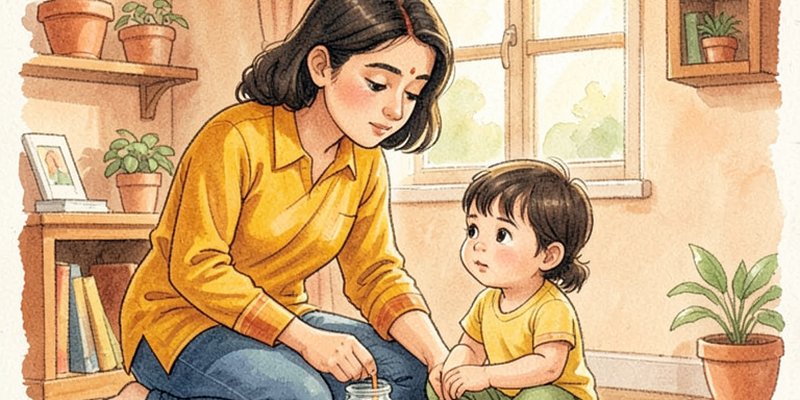
Minute 5
You hear yourself say the exact thing you swore, as a child, you would never say to your own.
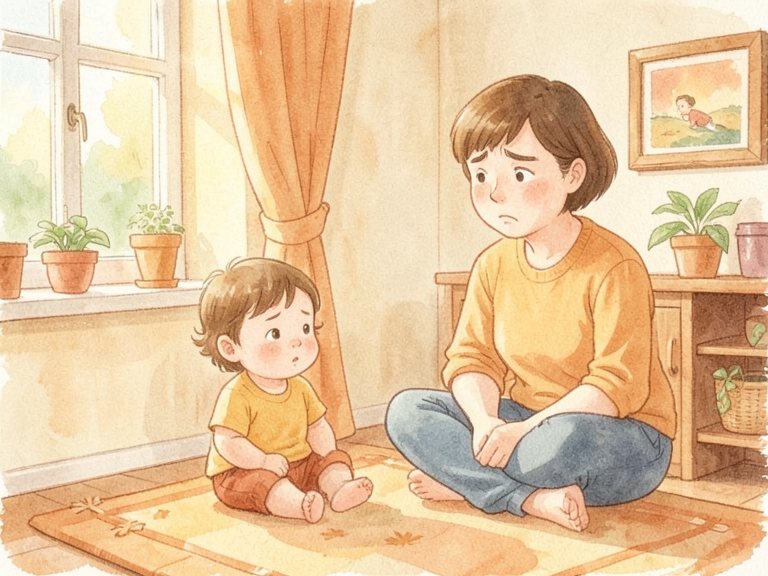
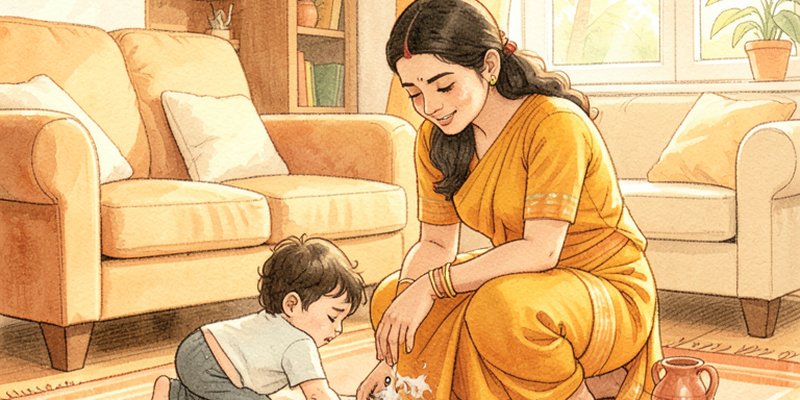
Minute 9
Afterwards they go quiet and careful and agreeable, and it is somehow worse than if they had cried.
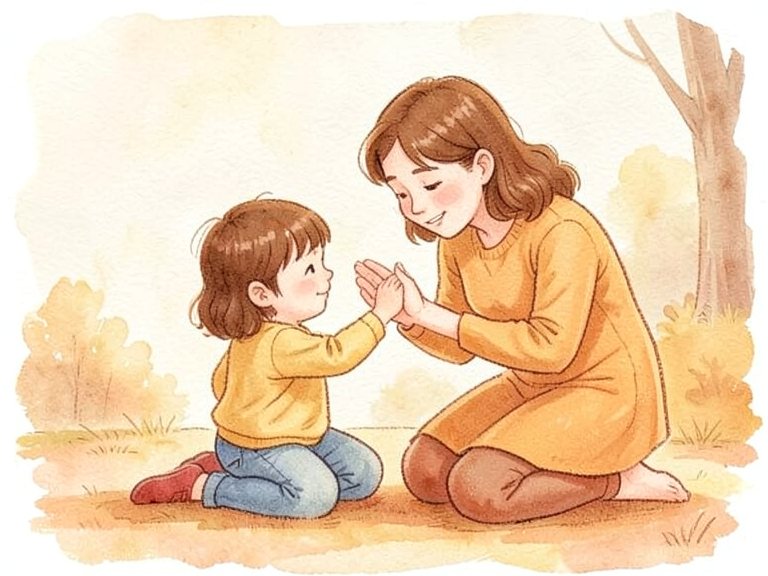
After
You apologise, they say 'it's fine, Mumma,' and you both know it isn't — and you don't know what to do with that.
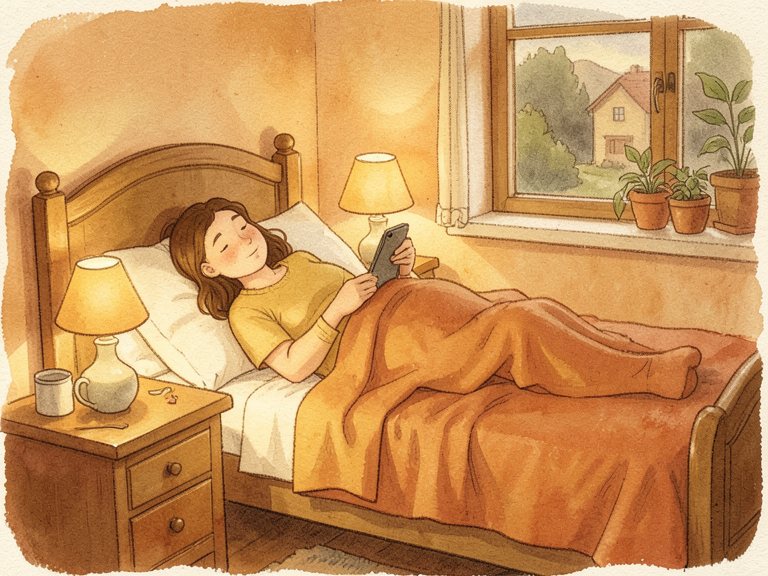
Later
It's 2am and the whole scene is replaying, frame by frame, and you can't switch it off.
Swipe through the day
Almost every parent carries a private conviction that the shouting itself is the damage — that each time they lose it, they are subtracting something from their child that cannot be added back. It is a heavy way to live, and it is not quite true.
This has been understood for a long time. Relationships between parents and children are not smooth; they are a continuous cycle of small ruptures and repairs. The child does something, the parent reacts, connection breaks for a moment, and then — in a securely functioning relationship — it is restored. The restoration is not a nice extra. It is the mechanism. A child who lives through rupture followed reliably by repair learns something no amount of gentle parenting on its own can teach: that closeness can withstand conflict, that a bad moment is not the end of being loved, that people come back.
So the question is not whether you rupture. You will. The question is whether you repair — and whether you know how.
Here is where well-meaning parents go wrong in the opposite direction. Having understood that repair matters, they over-correct into a flood of apology — long, remorseful, tearful, repeated. It feels like taking responsibility. To the child, it often lands as a weight.
The problem is a reversal of roles. When a parent's apology becomes an outpouring of guilt, the emotional centre of the moment shifts from the child, who was hurt, to the parent, who now needs comforting. A seven-year-old watching a parent dissolve does not feel repaired; they feel recruited. They learn that after Mumma or Papa gets angry, their next job is to manage the parent's feelings. That is a load no child should carry, and it is the reason a good repair is short.
Repair is a demonstration, not a confession. You are showing your child what an adult does after getting something wrong: names it, owns it, moves forward. You are not asking them to preside over your absolution.
Strip it down and repair has a structure you can hold in your head.
First, you name it, plainly and without softening it into fog. "I shouted at you." Not "things got a bit heated," not "we both got upset" — the specific thing you did, said in a way a child can recognise.
Second, you own it, and this is the part that fails most often, because it fails on a single word. The word is but. "I'm sorry I shouted, but you weren't listening" is not a repair; it is a charge sheet with an apology stapled to the front. It hands your child the responsibility for your reaction and takes back with the second half everything the first half offered. Real ownership sounds like: "That wasn't okay, and it wasn't your fault that I lost my temper." You can address their behaviour later, separately, when you are not repairing.
Third, you state what you'll do differently — not a grand promise you can't keep, just a direction. "I'm going to work on catching myself before it gets that loud." This is what turns an apology into something a child can trust, because it points forward.
Name it, own it, state the change. Three sentences. It is genuinely that short, and the shortness is not a shortcut — it is what keeps the moment about your child rather than about you.
There is a reason this is harder for our generation than any curriculum can fully explain, and it has nothing to do with willingness.
Most of us were never apologised to by a parent. Not once. In the households many of us grew up in, an adult admitting fault to a child was close to unthinkable — it read as a loss of standing, an inversion of the natural order, a crack in the authority that held the family together. So when you sit down to repair with your own child, you are not just doing something difficult. You are doing something you have never seen done. There is no memory to draw on, no template, no felt sense of how it is supposed to go. It can feel, in the body, like you are giving something away.
You are not. This is the reframe the whole programme turns on. Apologising to your child does not lower you in their eyes; it shows them what accountability looks like from the inside, modelled by the most important person in their world. A child who watches a parent own a mistake grows up knowing it is survivable to be wrong — and becomes far more able to own their own mistakes later, precisely because they saw it done. You are not surrendering authority. You are teaching the thing authority is actually for.
That it feels like a loss is not a sign that it is one. It is a sign that you are doing something your own parents were never able to, and that the ground under it is new. New is not the same as wrong.
The aim of this programme is not a parent who never raises their voice. That parent does not exist, and chasing them is how guilt becomes a second full-time job.
The aim is narrower and more reachable. By the end of the month you will have a repair you can say without rehearsing, a clear picture of your own anger and where it still leaves you a choice, and a way to hold your authority and your accountability in the same hand instead of setting one down to pick up the other. The shouting will not vanish overnight. But the moments will stop compounding, because each one now has a way to be closed — and a child whose ruptures are reliably repaired is carrying something very different from a child whose ruptures just accumulate in silence.
That is the whole of it. Not a parent who never breaks. A parent who knows how to come back.
You don't need a speech. Name what happened ('I shouted at you'), own it without a 'but' ('that wasn't okay, and it wasn't about you'), and say what you'll do ('I'm going to work on catching myself sooner'). Three sentences. That is a complete repair.
A repair does not expire at bedtime. If the moment has passed, the day has ended, or a week has gone by, it still counts — and children can feel the difference between 'we never speak of it' and 'my parent came back.' Late is not too late.
You are not unburdening yourself; you are showing your child what a person does after they get it wrong. Keep it short, keep it about your behaviour, and don't hand them the job of making you feel better.
That helps in the moment. Changing the pattern takes something else.
One month on the thing almost every parent does and almost nobody was taught to undo — said plainly, in the order the moments actually happen.
Before changing anything, we map your own pattern — the times of day, the specific triggers, the point in the escalation where you still had a choice and the point after which you didn't. Most parents have never looked at their anger this closely, and are surprised by how predictable it turns out to be.
What repair sounds like changes with the child in front of you. A three-year-old needs something short and physical; a nine-year-old is listening for whether you mean it; a teenager can smell a performance. We work on the actual words for the age you're parenting — and on the difference between an apology and an explanation dressed up as one.
Repair is the safety net, not the plan. In the final stretch we work on the front end — recognising the escalation earlier, building the pause, and finding what to do with your own anger so it doesn't have to land on a child. The aim is not a parent who never feels rage. It's a parent who has somewhere to put it.
Small group — deliberately. Few enough that everyone is known, and no one is a spectator.
Message us to hear about dates, structure and fees for the next cohort.
Purnam is an AI-native parenting companion for modern Indian families. A structured programme, a smart companion that knows your family, and a small, honest community of parents — built to take you from surviving the day to thriving across the years.
Parenting that hasn't been handed down — for the generation that wants to parent differently than they were parented, but has no cultural template for it.
Purnam · our positioning
Purnam is built by a founding team with 18+ years across big tech, startups, and growth-stage technology companies — and, more to the point, by parents currently inside the early-childhood years themselves.
Parents to a toddler ourselves — building Purnam to help Indian families move from surviving to thriving.
Purnam's approach draws on modern developmental psychology — attachment, emotional regulation, behavioural coaching — held alongside Indian contemplative traditions as practical tools rather than belief.
We are advised by senior practitioners in human transformation and behavioural coaching. Where the evidence for something is strong, we say so. Where it is contested, we say that too.
Message us on WhatsApp about The Repair Program — dates, structure, fees, and whether it fits your situation.
Or just ask your actual question. That's what the line is for. Someone from the Purnam team will get back to you.
Purnam offers parenting support and education. This is not paediatric, medical, or mental-health treatment, and it is not a substitute for care from a qualified professional. Every child and family is different; nothing here is a promise of any particular outcome.